
What to Eat in Perugia: Local Food Guide to Umbrian Dishes
A practical Perugia food guide to torta al testo, strangozzi, wild boar and black truffle, plus where to eat from Piazza IV Novembre to quieter streets.
On this page
Perugia sits in the middle of Umbria, the landlocked region often called Italy's green heart, and its cooking follows from that geography: pork, legumes, olive oil, truffles and freshwater fish rather than sea produce. For a visitor, the practical consequence is simple. Order the dishes that come from here, and you eat far better than if you fall back on a generic Italian menu.
Start with torta al testo, a flatbread cooked on a cast-iron plate called a testo and served plain, as an antipasto, or split and filled as a sandwich. It is the cheapest way into the local repertoire and the one item you can eat at almost any hour. Everything else in this guide layers on top of that first order.
The Perugian Pantry: What Grows, Cures and Forages Here
Umbrian cooking grew out of cucina povera, peasant cooking that made the most of local vegetables, grains, pork and olive oil. The region has no coastline, so the table leans on legumes, cured meat, black truffles and the freshwater fish of Lake Trasimeno rather than anything from the sea. Expect simple preparations with strong, earthy flavours instead of elaborate sauces.
Two pantry items define the region's reputation. Umbria produces PDO extra virgin olive oil from groves across named zones such as Colli Martani and Colli del Trasimeno, and it also produces more truffles than most of Italy, which is why truffle appears as an everyday ingredient rather than a luxury garnish. Castelluccio lentils, prized for their nutty flavour, and pecorino cheeses round out the savoury side.
Perugia's own identity runs through chocolate as much as through pork and pasta. The city is known for Baci, the foil-wrapped chocolate kisses with a love message tucked inside, and chocolate shops appear across the centre alongside the usual cafés and bakeries. Treat a chocolate stop as part of the food crawl rather than a souvenir errand at the end.
Torta al Testo Explained: What It Is and What Goes Inside
Torta al testo is an unleavened flatbread made from flour, salt, baking soda, olive oil and water, cooked on a round cast-iron plate. It is not pizza and it is not a piadina, even though the folded sandwich format looks similar. Order it plain with cured meats and cheese as an antipasto, or ask for it filled.
At a casual counter you typically choose your own fillings, and a drizzle of olive oil and a pinch of sea salt go on the bread before the meat and cheese. Familiar combinations include prosciutto, rocket, burrata and tomato. Because the bread is made to order in front of you, it makes a fast lunch that costs far less than a sit-down trattoria meal.
One local detail explains why torta al testo pairs so well with cured meat: traditional Umbrian bread is unsalted, a legacy of historic salt taxes. The flatbread's own seasoning and the salt in the prosciutto or pecorino do the work instead. If you order bread with a board of salumi, this is why it tastes flatter than you expect.
Pasta Worth Ordering: Strangozzi, Wild Boar and Norcina
Strangozzi are Umbria's signature hand-rolled noodles, made from flour, semolina, oil and water, and served with black truffle, a spicy tomato sauce or a lamb ragù. Locals also name pappardelle and tagliatelle with cinghiale, wild boar, or lepre, hare, as the pasta to seek out. Homemade pasta with a slow-cooked meat sauce is the benchmark dish of a Perugian dinner.
Pasta alla norcina takes its name from Norcia, the Umbrian town famous for pork butchery, and combines pork sausage meat with a cream sauce, white wine and a heavy grating of pecorino. Some versions add black truffle. Fettuccine con la ricotta is the gentler alternative, tossed in a creamy ricotta sauce with olive oil and pepper.
For a first dinner, one plate of strangozzi with truffle or wild boar ragù plus a shared antipasto tells you more about Umbria than any three-course menu built around generic Italian staples. Ask what the kitchen made that morning; fresh pasta is the item most likely to run out. Menus rotate with what is locally available, so the dish list changes more than you might expect.
Cured Meats and the Norcia Connection
Norcia, a small town in the region, built its reputation on pork butchery, and the butchers known as norcini were historically held in such regard that their skills were called on well beyond the kitchen. The town's norcinerie are family-run shops specialising in cured pork, and the tradition shaped how the whole region eats. Prosciutto di Norcia has held protected PGI status since 1997 and must be dry-salted, coated with lard and rice flour, seasoned with black pepper and aged for at least a year.
Beyond prosciutto, look for corallina, a salami named for its coral-branch shape, made with pork, salt, pepper and wine-marinated garlic and matured near wood-burning stoves so it picks up a light smoke. Capocollo is made from the upper back muscles, seasoned with salt, pepper and coriander and washed in white wine. Coppa di testa uses offcuts of the head, boiled and set with pine nuts, sultanas and citrus zest.
A mixed board is the efficient way to try several at once, and it doubles as a light meal rather than a starter. Vegetarians should note that these boards are unambiguously pork-led. Ask for pecorino, ricotta and roasted vegetables instead, and the kitchen will usually oblige. Further visitor details appear in Ask a local: what should I do, see, and eat in Perugia, Italy? | Gigi Griffis | Official Website.
Chocolate, Truffle and the Sweet Side of a Food Crawl
Perugia's chocolate reputation rests on Baci, the foil-wrapped chocolates with a message inside, and on a scattering of chocolate shops and cafés through the historic centre. A reasonable route is a coffee and pastry stop mid-morning, a chocolate shop in the afternoon, and a gelato after dinner. Perugia's chocolate history is part of the city's identity, so it deserves more than a last-minute airport purchase.
Black truffle is the other luxury that Umbrians treat as ordinary. It appears in crostini topped with a truffle, anchovy and olive oil paste, grated over strangozzi, and folded into pecorino. If you only try truffle once, put it on pasta rather than on a meat dish, where a modest amount goes further.
Where to Eat in the Historic Centre
The busy centre runs along Corso Vannucci and around Piazza IV Novembre, where the Fontana Maggiore, the Palazzo dei Priori and the cathedral frame the square. This is where you will find the highest concentration of trattorie and osterie, and where a reservation is worth making for dinner, particularly at weekends and during festival periods. The trade-off is that the centre is the most tourist-facing part of town.
Among the traditional options cited by local writers are Osteria a Priori on Via dei Priori, Ristorante Il Cantinone and Trattoria Oberdan. Osteria a Priori is described as the place for a nicer traditional meal with seasonal menus, while Il Cantinone and Oberdan are named for classic Umbrian cooking. Make a reservation ahead if you can, especially at the more popular addresses.
Note that a Perugian dinner unfolds slowly. Bars and restaurants here follow local rhythms rather than tourist hours, so an early empty room at eight in the evening is normal rather than a warning sign. Plan a late aperitivo and accept that the kitchen will fill up later than you expect.
Quieter, More Residential-Feeling Streets: Corso Cavour and Borgo XX Giugno
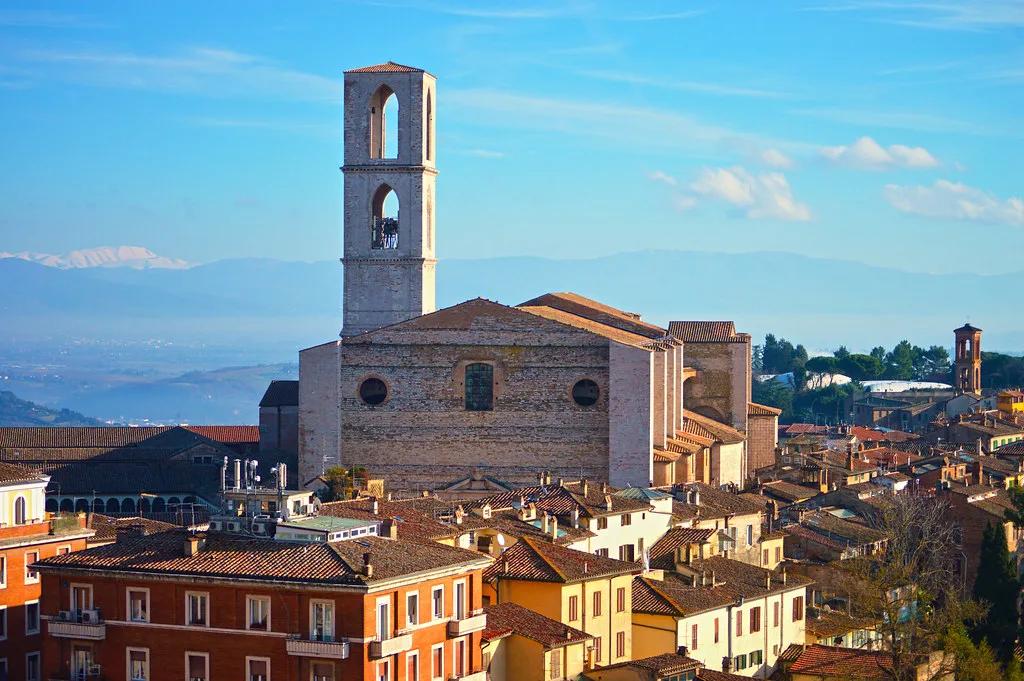
If the centre feels crowded, walk south. Corso Cavour is calmer than the main Corso and has a more local feel, with cafés, restaurants and wine bars along its length, and it also leads toward the Abbazia di San Pietro and the Frontone Gardens. Borgo XX Giugno, the street and quarter around the abbey, is another quieter address with old workshops to look into. Both are comfortable territory for a long lunch away from the busiest flow of visitors.
These southern streets are a good base if you want to split a day between eating and looking at churches. The abbey complex is a short walk from the centre and warrants a detour, so pair a late lunch nearby with a visit rather than eating in the busiest square and walking afterward.
Casual Stops, Budget Meals and Non-Italian Breaks
The cheapest satisfying meal in Perugia is usually a torta al testo sandwich from a counter rather than a sit-down lunch. A shared board of salumi and cheese is the next most economical option, and pizza by the slice covers the late-night gap. Budget-conscious students tend to eat this way, and these places cluster around the university end of the centre.
If you want a break from Umbrian cooking, Perugia has options beyond pasta, including Greek pita wraps and some international menus aimed at the student population. That is useful for a long stay but unnecessary on a short first visit. Keep the non-Italian meal for the day you need a reset rather than as a default.
For wine, look for Sagrantino di Montefalco, the region's best-known red, or a glass of Orvieto white, and try a wine bar rather than staying on the same restaurant list all evening. Perugia's wine bars are often busy with regulars, so an early evening stop fits neatly into the local routine.
Etiquette and Timing: Cappuccino, Scarpetta and Booking Ahead
Order cappuccino in the morning and alongside sweet pastries, not after a plate of pasta. Locals also dislike seeing courses mixed on one plate, so keep your pasta and salad separate rather than treating them as one dish. Both habits are about pacing rather than rules for their own sake.
Scarpetta, mopping up the last of the sauce with bread, is expected rather than rude, though the unsalted Umbrian bread will taste plainer than you expect. Finishing your plate is welcome. Arriving late for a reservation or lingering over one course for an hour when there are people waiting are the more likely missteps.
Book ahead for dinner at the better-known osterie and trattorie, particularly if you are a group. For lunch at a torta al testo counter or a slice of pizza, walk in. For weekend dinners during Umbria Jazz, the July festival, reserve earlier than you would otherwise.
Optional Paid Experiences: Food Tours and Cooking Classes
A guided food tour is a reasonable way to build context before you eat independently, and local food tours in Perugia visit shops and stalls that sit outside the obvious restaurant list. Treat it as an orientation rather than as a substitute for your own eating. Prices and availability change, so check directly with the operator before booking.
Cooking classes run in the region too, including farmhouse settings where you prepare Umbrian recipes with a chef. These suit travellers staying several nights and can be combined with a market visit. Confirm the language, menu and group size before you commit, since classes vary widely.
Plan Your Perugia Food Day
A workable plan is torta al testo at lunch, a chocolate stop and a walk along the medieval aqueduct or up to a viewpoint in the afternoon, then strangozzi or wild boar ragù for dinner with a booked table. That sequence keeps your appetite aligned with the city's rhythms and avoids eating your biggest meal at the quietest hour.
Before you travel, check the official Umbria tourism site and the Perugia city site for current festival dates and city notices, and confirm any restaurant booking directly with the venue. If you are planning a longer Italian eating trip, the Bologna local food guide and the Turin local Food guide are useful comparisons for how regional cooking changes across the country.
Frequently Asked Questions
What food is Perugia famous for?
Perugia is associated with torta al testo, strangozzi and other hand-made pasta, wild boar ragù, black truffle, pork products from the Norcia tradition, Castelluccio lentils and chocolate, particularly Baci. The cooking is Umbrian rather than coastal Italian, so expect legumes, olive oil, pecorino and cured meats rather than seafood.
What is torta al testo and how is it served?
It is an unleavened flatbread cooked on a cast-iron plate called a testo. You can eat it plain with cured meats and cheese as an antipasto, or split and filled as a sandwich, often with prosciutto, rocket, tomato and soft cheese. It makes a cheap, fast lunch.
Where do locals eat in Perugia?
Residents eat across the centre and in quieter streets such as Corso Cavour and Borgo XX Giugno, and student traffic keeps many casual and budget places busy. There is no single local zone. Book ahead for traditional osterie at dinner and walk in for torta al testo counters and pizza by the slice.
Is it rude to not finish your plate in Italy?
Finishing your plate is welcome, and scarpetta, mopping up the sauce with bread, is standard practice rather than a faux pas. If a portion defeats you, say so politely. The more common missteps are ordering cappuccino after a meal or treating pasta and salad as a single course.
What should I order for a first Perugian dinner?
Start with a shared board of Umbrian cured meats and pecorino, then order strangozzi with truffle or wild boar ragù, or pasta alla norcina if you want the Norcia pork flavour. Ask what the kitchen made fresh that day, since the pasta is the item most likely to run out.
Do I need to book restaurants in Perugia?
Booking is sensible for dinner at the more established osterie and trattorie, especially for groups and around festival periods such as Umbria Jazz. Casual counters and slice shops do not require reservations. Confirm current booking practice directly with the venue, since policies change.
Sources
- Perugia Recommendations from a Local • Anthony in Italy
- Best Spots to Eat on a Budget in Perugia: Lexi’s Selection – The Umbra Institute – Study Abroad in Italy – Perugia
- Umbria's Food Guide: Taste Italy's Hidden Treasure | Cellar Tours™
- Ask a local: what should I do, see, and eat in Perugia, Italy? | Gigi Griffis | Official Website
- Official event website
- Perugia – Tour Guide Umbria
- 13 Wonderful Things To Do in Perugia, Italy — ALONG DUSTY ROADS
- Perugia, Italy – A Complete Travel Guide to The Capital of Umbria
Continue exploring
More guides you'll find useful





