Padua Local Food Guide: What to Eat and Where to Try It
A practical Padua food guide: spunciotti, bigoli with duck sauce, pazientina and mint coffee, with the bacari, osterie and pastry shops where you can try them.
On this page
Padua's food scene runs on the daily market under Palazzo della Ragione and on the four central piazzas around it: delle Erbe, della Frutta, dei Signori and del Duomo. Start there. The ground-floor market is a working food market, so a morning loop past the produce stalls tells you what is in season before you pick a dish for lunch. The compact centre means you can move between a wine bar, a kiosk and a pastry shop on foot in a few minutes.
A suggested half-day eating route, described later in this guide, is enough to sample spunciotti, a panino and a coffee without rushing. Treat it as a suggestion: seasonal menus and small kitchens mean availability changes, and no single dish is guaranteed on any given day.
How Paduan food fits into Veneto cooking
Paduan cooking is rustic and tradition-bound, built on fresh local ingredients rather than restaurant polish. It shares the Veneto's fondness for slow-cooked and preserved preparations, but keeps an inland, market-and-farm character: less lagoon seafood, more poultry, pork and garden produce.
The university keeps the range wide. Old-school wine bars sit beside modern wine bars and cheap student spots in the same few streets, so you can eat well at a bacaro on a small budget and equally well at a sit-down trattoria. Aperitivo time is busy; lunch is calmer, which is worth factoring into a food-focused day.
Start with spunciotti, the Paduan cousin of cicheti
Spunciotti are Padua's name for the small bar snacks that Venice calls cicheti. The word comes from spunciare, to pierce, because you spear them with a toothpick. Expect sweet-and-sour sardines, crostini with creamed cod, meatballs and tramezzini. Knowing the local word helps when you read a menu.
For the drink, local wines come from the Euganean Hills about 20 minutes from the centre, though Prosecco from neighbouring Treviso is common. The spritz split is Aperol for a lighter drink and Campari for a bitter one; Cynar versions also exist. A spritz with a couple of spunciotti is the standard aperitivo move and the cheapest way to sample several flavours in one stop.
Three central addresses: All'Ombra della Piazza on via Pietro d'Abano, a few metres from Piazza della Frutta, with a long list of wines by the glass and a calm side-street setting; Frascoli Bacaro near the Basilica of Saint Anthony; and Corte Sconta in via dell'Arco, a minute from the squares. All'Ombra della Piazza is busy at aperitivo but tucked far enough from Piazza dei Signori to be peaceful, which makes it a good first stop if you want to talk rather than shout.
Street food: octopus, porchetta and the panini wall
La Folperia is a small kiosk in a corner of Piazza della Frutta selling baby octopus and other fish specialties, with fish bought each morning at the Chioggia market. There is an informal arrangement that lets you take your plate to the nearby Bar dei Osei and order a glass of white wine there — one of the most distinctly Paduan experiences in the centre. The kiosk does not keep predictable hours, so check its social channels before you build a meal around it.
Bar dei Osei, next door, is known for porchetta panini and tramezzini, and its spritz misto blends Aperol, Campari and Cynar. It gets busy at weekends, so go early or accept standing room. For a sit-down snack with a view, Bar Nazionale in Piazza delle Erbe serves heated tramezzini; the food is simple, but the tables face one of the city's most attractive squares and its market.
Dalla Zita on via Gorizia is a hole-in-the-wall whose walls are papered with coloured cards listing its many panini. A regular size leaves room for a second round, and the maxi is the option if you are skipping a sit-down meal. Popular choices include the Scozzese with gorgonzola, mascarpone, walnuts and salad leaves, plus porchetta and sopressa versions — a practical lunch stop a short walk from the squares.
Pizza at Orsucci, near Prato della Valle, is a different proposition: small, focaccia-like pizzas from a tiny room with only a handful of seats, which makes it an evening stop rather than a lunch one. Because seating is so limited and hours can change, check before making it the centrepiece of a meal. If you are staying nearby, the Padua Neighborhoods Guide: Where to Stay by Vibe and Budget explains which areas put you within walking distance of the centre's food streets.
First courses: bigoli and liver risotto
Bigoli are Padua's own pasta, said to date from the seventeenth century and made from soft wheat, eggs, water and salt. The two condiments you will see most often are in salsa, with sardines, and with duck sauce or ragù. The phrase di corte or all'antica on a menu simply means the meat is cut by knife or shredded, so the sauce clings better.
You can find bigoli almost everywhere in and around the city, including at Da Nane della Giulia on via Santa Sofia, an old-school trattoria popular with locals where the pasta e fagioli with maltagliati and the bigoli with chicken ragù are both worth ordering. It is a warm, no-frills room with brisk service and a seasonal, meat-heavy menu, so go hungry and expect the menu to change through the year. Booking ahead is advisable given its local following.
Risotto with chicken livers, hearts and gizzards, onions and spices, often finished with Grana Padano, is the other first course to seek out. It appears sometimes at the restaurant Uva on Piazza dei Signori, which also does a contemporary take on the classic and has outdoor tables facing the astronomical clock. Because liver risotto is not on every menu, treat finding it as a bonus rather than a plan.
Heritage mains and preserved specialties
Paduan hen in saor is a boned hen cut into strips, cooked and layered with onion, pine nuts and raisins, usually served as an appetiser with vegetables. The Paduan hen itself, recognisable by its tuft, is a Slow Food presidium, which tells you how seriously the dish is taken locally. Osteria dal Capo on via Obizzi is one place in the centre that serves it, but it is not constantly on the menu, so ask when you sit down.
Goose in onto is another Slow Food presidium: pieces of goose cooked with herbs and a little red wine, packed into glass jars under melted fat and sealed. Only two producers still make it, one at Sant'Urbano near Padua and one at Tarzo near Treviso, which explains why it appears so rarely. You can sometimes find it at the Gourmetteria on via Zabarella or at La Tavolozza on the hills, but availability depends on season and supply, so call before travelling for it.
Gran bollito alla Padovana is a mixed boiled-meat stew of veal, beef, cotechino, chicken and capon with sauces, and it is only offered at a handful of restaurants because it takes so long to prepare. It is also an autumn and winter dish, so a summer visit is the wrong time to look for it. Montagnana prosciutto, properly Prosciutto Veneto Berico Euganeo DOP, is easier to find as an antipasto in most restaurants in town.
Sweets and coffee
Pazientina is the cake to try first: layers of almond shortcrust, sponge soaked in liqueur and zabaglione, covered with gianduia, and elaborate enough that its name comes from pazienza, patience. Pasticceria Breda on via Umberto I makes a version with chocolate, almond and polenta shortcrust and a zabaione filling. Pasticceria Graziati in Piazza della Frutta is another central stop for a slice, and its millefeuille is a popular non-traditional alternative.
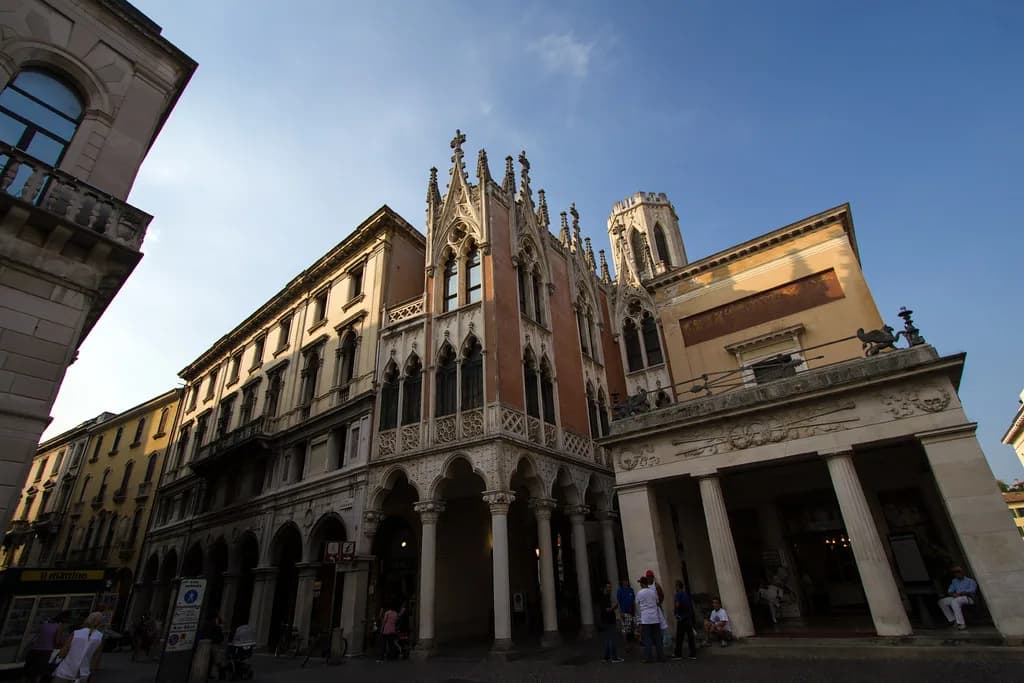
Caffè Pedrocchi, open since 1831, serves the city's signature coffee with fresh mint cream and a dusting of cocoa, and its zabaione Stendhal is the other house order. It is a historic café rather than a quick bar stop, so budget time for it rather than treating it as a takeaway. Further out, Pasticceria Biasetto near Ponte Corvo is where pastry chef Luigi Biasetto's Sette Veli — a seven-layer chocolate, hazelnut and almond cake — won gold at the Coupe du Monde de la Pâtisserie; you can buy a whole cake or a portion to eat there.
Two smaller sweets round out the list. The Dolce del Santo, dedicated to Saint Anthony, combines amaretti sponge, apricot jam and orange, and is sold at pastry shops along via del Santo. Tadiotto al Duomo, next to the cathedral, is known for a cream and wild strawberry tart available by the slice — useful when you want one clean, seasonal dessert rather than a heavy cake.
A suggested eating route through the centre
This half-day route is a suggestion, not an official itinerary. Start mid-morning at the Palazzo della Ragione market to see what is in season, then take a spritz and a couple of spunciotti at All'Ombra della Piazza before the lunch rush. Walk five minutes to Dalla Zita for a panino, or hold out for La Folperia if its social channels show it is open that day.
In the afternoon, walk to Prato della Valle — Italy's largest piazza at more than 90,000 square metres — and loop back through via del Santo for pastries. Finish with a mint coffee at Caffè Pedrocchi. If you have a full day, book a table at Da Nane della Giulia for dinner and use the afternoon for the frescoes and churches listed in the Padua Attractions hub, which separates free visits from ticketed interiors so you do not lose eating time to queues.
Beyond the city: the Colli Euganei
The Euganean Hills are about 20 minutes from the centre and make a natural extension of a food trip, with vineyards, villas and thermal baths in easy reach. The cuisine out here is simple and seasonal, built on game, fresh pasta and vegetables, and a bowl of bigoli with duck ragù at La Tavolozza in Torreglia is the classic lunch. If you want to build a day around it, our guide to Day Trips from Padua covers nearby excursions without locking you into a fixed schedule.
Moscato Giallo is the local white, grown in volcanic soil and vinified both sweet and dry, while reds lean toward Bordeaux blends. Producers such as Monteforche, Farnea and Maeli work with low-intervention methods and are worth visiting if you want to taste the hills rather than just read about them. The Abbey of Santa Giustina in the city is a different kind of stop, but it is one of the quieter corners covered in our guide to hidden gems in Padua if you want to balance eating with a little walking.
Practical notes before you travel
Venue details change: menus rotate with the season, hours shift, and some dishes — gran bollito, goose in onto, hen in saor — are only sometimes available. None of the named places should be treated as guaranteed to serve a specific dish on your date. Check the venue's own page or social account for current hours, and expect prices to differ from what any guide says.
The city's official site publishes civic information and events, which is the sensible place to confirm whether a market or public space is affected by works or a holiday. For food specifically, the practical rule is to order what the market is selling and to ask staff what is in season that week. If you are planning around a particular dish, call ahead rather than arriving and hoping.
Plan Your Visit
Padua's food scene rewards a slower plan: one market visit, two or three bar stops, a proper trattoria meal and a pastry or coffee to finish. If you are weighing when to come, the Best Time to Visit Padua: Avoiding Crowds explains how the seasons change the feel of the centre, and the cooler months are also when the heaviest traditional dishes appear. For the evening side of the city, Padua at Night: Evening Activities and Dining is the companion read.
To extend the trip, compare with the Bologna local food guide for a different Emilia-Romagna approach to pasta and cured pork, or the Turin local Food guide if you want Piedmontese richness next. Book sit-down trattorias ahead, keep a street-food stop as backup rather than the centrepiece, and confirm current details before you travel.
Frequently Asked Questions
What food is Padua, Italy known for?
Padua is known for rustic Veneto cooking: spunciotti bar snacks, bigoli pasta with duck sauce or sardines, risotto with chicken livers, Paduan hen in saor, goose in onto, gran bollito alla padovana and Montagnana prosciutto. For sweets, look for pazientina and the mint coffee at Caffè Pedrocchi. Several of these are seasonal or only occasionally on menus, so ask what is available rather than assuming a fixed list.
What are spunciotti and how do they differ from Venetian cicheti?
They are essentially the same thing under a different name: small bites such as sardines in saor, crostini with creamed cod, meatballs and tramezzini, speared with a toothpick. The Paduan word comes from spunciare, to pierce. You eat them standing at a bar with a glass of wine or a spritz, usually before a sit-down meal rather than instead of one.
Is Padua good for street food?
Yes, particularly around Piazza della Frutta and Piazza delle Erbe. La Folperia sells baby octopus from a kiosk, Bar dei Osei does porchetta panini and tramezzini, and Dalla Zita lists dozens of panini on cards covering its walls. Hours vary, so check a venue's own social account before making a special trip.
Do I need to book ahead at traditional Paduan trattorias?
For popular local places such as Da Nane della Giulia, booking ahead is advisable because they fill with residents. Smaller bars and street-food stops generally do not take bookings. If you are travelling for a specific dish, call first and ask whether it is on the menu that week, since seasonal availability varies.
How does Paduan food compare with Venetian food?
Padua is inland, so its cooking leans on poultry, pork, garden produce and preserved meats rather than the lagoon seafood that defines Venice. You still find shared Veneto habits such as bacari, spritz and risotto, but the signature dishes are different: bigoli, hen in saor and gran bollito rather than lagoon fish. Venice is a short train ride away, which makes comparing the two easy.
Sources
Continue exploring
More guides you'll find useful