
Orvieto Self-Guided Walk: Duomo, Lanes and Cliff-Edge Views
A self-guided walk through Orvieto's compact centre: the Duomo, medieval lanes, the Torre del Moro area and the tufa cliff, with honest pacing tips.
On this page
Orvieto rewards travellers who walk it slowly. The historic centre sits on a volcanic tufa outcrop above the Umbrian plain, packed into a small area where a cathedral, medieval lanes, churches and underground spaces sit within easy reach of one another. This guide suggests an order for a self-guided day that starts at the Duomo and drifts toward the cliff edge, letting you add or drop stops as energy and interest dictate. It is an editorial suggestion, not an official route, and no official distance or walking time is published here.
One planning reality shapes the day: Orvieto's tourism listings organise the old city by type once you are there, including monuments, museums, churches, a medieval quarter and underground spaces. Treat the sequence below as a wandering spine rather than a timetable, and confirm what is open on the day rather than relying on an old blog post.
What a Self-Guided Walk in Orvieto Covers
A self-guided day in Orvieto works best when you aim for the historic centre rather than a checklist of every monument. The town's tourism material groups sights into monuments, museums, churches, historic palaces, a medieval quarter and underground spaces, which is a helpful way to divide your time. Build the day around two or three of those groups and you will have room to look properly.
This suggested plan strings together the Duomo, a wander through the medieval lanes, the area around Torre del Moro, a look at churches and palaces, and a pause at the tufa outcrop where the town meets the cliff. Each piece is short. The real challenge is not distance but decision-making: knowing which interiors are ticketed, which are free and when to stop adding stops.
Why Orvieto Works Well Without a Guide
Orvieto is compact in a way that suits independent travellers. The main sights cluster inside the old centre, so you can move between a cathedral facade, a medieval street and a cliff view without needing transport in between. That density means a self-guided walk gives a good return on a small amount of walking, provided you accept the uphill return through town as part of the deal.
The setting does most of the storytelling. The tufa cliff, the Duomo and the surviving medieval streets give Orvieto a coherent character that is easy to follow on foot. You do not need a theme to make the day work, though picking one, such as churches and underground spaces or artisan food and wine, helps you avoid trying to see everything.
Before You Set Off: Station, Funicular and Cliff Orientation
Many visitors arrive by train and continue up to the historic centre. Orvietoviva, a local guide run from the city, lists the funicular and city bus together with parking, a city map and a free city app under getting around, which is the practical set of tools to look at before travelling. Confirm current operation on the ground rather than relying on pre-trip notes.
Once you are in the centre, orient yourself before committing to a direction. The town's tourism material describes the centre as narrow streets between the Duomo, Saint Patrick's Well and the tufa outcrop, which is a sensible mental map: put the cathedral at one end of your mental picture and the drop to the plain at the other. A downloaded map plus a paper backup covers the usual gaps in mobile signal among the lanes.
A Suggested Duration and Pace
Our suggested duration is a half day if you keep mostly to exteriors and one ticketed site, and up to a full day if you add churches, an underground route and a long lunch. This is a Yondli editorial estimate, not an official figure, and no official distance or walking time is published for the centre. The town is small, so walking distances are modest; time disappears into interiors, not strides.
Build in slack rather than a strict schedule. Orvieto rises and falls over short stretches, and the return toward the centre is generally uphill. If you are travelling with children or with anyone who tires on stairs, make the cliff-edge views come before the steepest climbing and finish near a cafe rather than the far end of town.
Stop 1: The Duomo and Its Facade
Start at the Duomo, the obvious anchor of the historic centre and the building that shapes most first impressions of Orvieto. Spend time outside before you decide whether to go in: the facade rewards slow looking, and setting it first lets you judge how much time you want to give the interior.
Separate the exterior, which anyone can see, from anything paid inside. Ask at the cathedral for its own ticket arrangements on the day rather than assuming that one payment covers every part of the building or any separate collection. That habit of asking on the spot, rather than trusting an old post, keeps the rest of your day predictable.
Stop 2: The Medieval Lanes
From the cathedral, treat the old streets as a wandering spine rather than a fixed route. The medieval quarter is one of the categories the local tourism guide uses to organise the old city, and it is worth giving yourself permission to follow lanes that look interesting and back out when they end. A closed lane or a dead end here costs you minutes, not an afternoon.
Watch for the artisan tradition while you walk. The town's tourism material says shops and craft workshops in ceramics, lace, goldsmithing, leather and wood can be found in the streets of the historic centre, and that food and wine shops stock Orvieto DOC wine and local olive oil. Window shopping here is free and gives you a natural pause between sights.
Stop 3: The Torre del Moro Area
The Torre del Moro is listed among the city's attractions, and its central position makes it a practical place to reorient before choosing between churches, a museum or the cliff. We cannot confirm current entry details, hours or pricing, so treat a climb as something to confirm when you arrive rather than a fixed plan. If it is closed or time-limited, the surrounding lanes still justify the walk.
Use the stop to reassess energy levels. The official town site publishes a rolling events calendar covering theatre performances and seasonal programmes, so if something is scheduled during your stay it can reshape the afternoon. Pick up a local programme rather than relying on a pre-trip plan alone.
Stop 4: Churches, Palaces and Underground Spaces
Orvieto's heritage splits into categories that matter for budgeting: churches, historic palaces, museums and the underground. The local tourism guide keeps churches of Orvieto and museums as separate sections and lists underground visits and guided tours among the things to do, which is a useful clue that these are managed and paid for separately. Do not assume that one payment unlocks a neighbourhood.
Ask at each site whether a ticket is required and what exactly it includes. If you only have time for one paid interior, pick the one that matches your curiosity rather than trying to cover them all. Part of the guide's value is that it prompts you to check the scope of each ticket instead of guessing.
Stop 5: The Tufa Outcrop and Cliff Edge
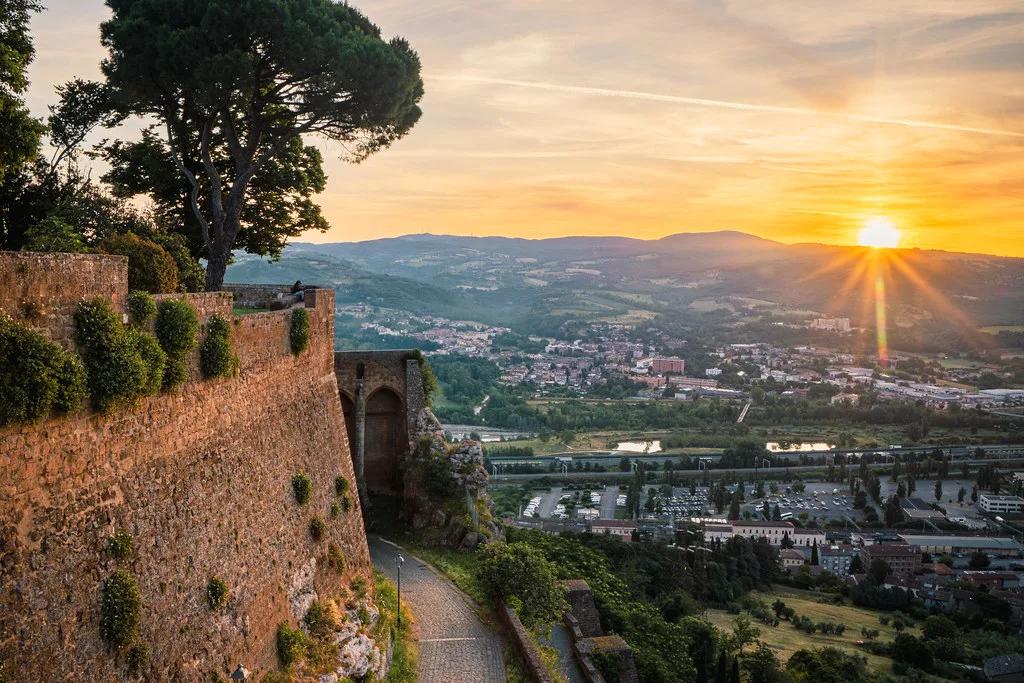
Finish at the edge of town, where the streets meet the volcanic tufa drop. The town's tourism material describes the tufa outcrop alongside the Duomo and Saint Patrick's Well as one of Orvieto's defining features, and the cliff is a good place to end a walk because the view does the work. Stay on public paths and take in the plain wherever the town opens up rather than hunting for a named viewpoint.
This is also where seasonal atmosphere shows most clearly. The local guide describes autumn here through the colours of the leaves against the tufa and the mist around the cliff, and points to its walking-route pages for the season. A late-afternoon stop at the edge, if your timing allows, tends to give the best light.
Food and Drink Pauses
Orvieto's food identity runs through the walk. The local tourism guide highlights Orvieto DOC wine, extra-virgin olive oil and delicatessens as typical products to look for in the historic centre. Plan one proper sit-down lunch rather than several snacks, because the afternoon climb is more comfortable on a real meal.
If you want a structured tasting, look for wine and food tasting listings in town rather than improvising a cellar visit. The guide separates tastings from restaurants and specialty shops, which helps you choose between a quick glass and an organised session. Either way, finish with a coffee before the afternoon loop.
Optional Add-Ons: Saint Patrick's Well and Underground Visits
The two additions worth considering are Saint Patrick's Well and an underground route. Both appear as their own entries in the town's tourism listings, so give each a proper slot rather than squeezing one into the minutes before your train. Check access and ticket arrangements locally before committing.
If you want a longer walk rather than more interiors, the surrounding Umbrian countryside is served by organised multi-day self-guided routes, including sections of the Cammino of St Francis through Umbria. Hidden Italy, a walking-tour operator, publishes graded self-guided itineraries with daily distances and support details, which is useful context if you are turning one city stop into a walking trip.
Seasonal Notes: Autumn Colours, Mist and Heat
Orvieto's seasons change how the walk feels. Autumn gets its own page on the local tourism guide, with a description of mist enveloping the cliff and a pointer to recommended walking routes, so a light layer and shoes with grip are sensible. In summer the exposed squares around the Duomo offer little shade at midday.
Season also affects what is on. The official town calendar lists a Christmas programme running through much of December, plus theatre and festival events through the autumn and winter months, so a self-guided walk can be paired with an evening performance. Check the published calendar for your dates rather than assuming a season's shape from a previous year.
Practical Self-Guided Kit
The kit for this walk is ordinary. Comfortable shoes with grip, a light rain layer, water and a day pack cover most of it; step awareness matters more than distance, since the town rises and falls over short stretches. A paper map backstop is worthwhile because narrow lanes and thick walls can interrupt mobile coverage.
For app-led navigation, look for tools that work offline and offer a city map. Orvietoviva publishes a free city app and a downloadable PDF map, which pairs well with an offline walking app for tracking your route. Set both up before you leave your accommodation so you are not debugging downloads in a windy piazza.
Common Mistakes to Avoid
Three mistakes recur on a first visit. The first is overpacking the day by assuming every sight can be fitted in around lunch. The second is assuming one ticket covers everything, when churches, museums and underground spaces are typically managed and paid for separately. The third is forgetting the uphill return to the centre, which can undo a relaxed afternoon if you leave it too late.
A fourth, quieter error is treating the official event listing as a fixed plan. The town publishes a rolling calendar, and not every line item will suit a walking day. Pick your sights and your pace, then add an evening event if the calendar has something that fits, rather than building the whole day around it.
Where to Go Next
Once you have walked the core, the next step is to pick out the corners that interest you most and read them individually. Our collection of hidden gems in Orvieto goes deeper on quieter corners such as Orvieto Underground and the Pozzo della Cava, while the attractions hub covers specific monuments such as the Duomo di Orvieto and the Museo Claudio Faina in more detail.
Beyond Orvieto, the region supports longer walking. Hidden Italy's self-guided tours describe Umbria as Italy's green heart and publish route-by-route itineraries with daily walking notes and support, which is useful context if you are turning one city stop into a walking trip across the region.
Plan Your Visit
Orvieto suits travellers who like to walk without a guide. The historic centre is compact, the Duomo and medieval lanes are within easy reach of each other, and the tufa cliff gives the day a natural end point. Our suggested order, from cathedral to lanes to the edge, keeps the climbing manageable and leaves room for one paid interior.
Before you go, check two things: the opening and ticket arrangements for the interiors you care about, and the official town calendar for what is on during your dates. Everything else, from the pace to the lunch stop, can be decided in the moment. For related planning, see Best Time to Visit Orvieto: Seasons, Crowds and Quiet Hours.
Frequently Asked Questions
Is Orvieto worth visiting?
Yes, if you like dense historic towns rather than sprawling cities. The centre sits on a tufa outcrop and packs a cathedral, medieval streets, churches and underground spaces into a compact area that works well on foot. It suits half a day or a full day, and it pairs naturally with a wider Umbrian trip.
How long does a self-guided walk in Orvieto take?
Our editorial estimate is a half day if you keep mostly to exteriors and one ticketed site, and up to a full day if you add churches, an underground route and a long lunch. Walking distances inside the centre are modest; the time goes into stops, not strides. Treat this as a suggestion, not an official figure, since no official duration is published.
Do you need tickets for Orvieto Underground?
Underground visits are generally ticketed separately from churches and from each other, so do not assume a single ticket covers the whole town. Check the current arrangement and price at the ticket point or the tourism office when you arrive, because details change by season and operator.
Can you walk Orvieto without a guide?
Yes. The historic centre is compact and its sights are listed and signposted, so a guide is optional rather than essential. A guide adds context at specific monuments, but the town itself is easy to explore on foot, provided you budget energy for steps and slopes.
What should you see first in Orvieto's historic centre?
Start with the Duomo. It anchors the centre and sets the tone for the rest of the day, and looking at the facade first lets you decide whether to pay for an interior visit. Then wander the medieval lanes and finish toward the tufa cliff for views over the plain.
Sources
Continue exploring
More guides you'll find useful





