
Orvieto Rainy Day: Indoor Plans From the Duomo to Underground Caves
Plan a rainy day in Orvieto around the Duomo, the San Brizio chapel, cathedral museums and the underground cave tour, with practical sequencing advice.
On this page
Orvieto rewards a wet day better than most Umbrian hill towns, because its strongest sights are indoors or underneath the streets. The guided Orvieto Underground route starts from Piazza Duomo 23 and, as the operator's site lists, runs at fixed daily departure times of 11:00, 12:15, 16:00 and 17:15. That single fact reshapes your day: you can anchor everything else around one booked slot rather than drifting between attractions in the rain.
This plan treats the cathedral and the cave tour as two separate bookings, because they are separate operators. The wells and smaller underground sites remain optional stops you confirm on the day, not fixed promises. Use the Orvieto Attractions hub to check individual sight guides before you commit, and treat every time and ticket detail as something to re-verify close to your visit.
What Orvieto Weather Actually Does
Climate summaries for Orvieto put daytime averages between roughly 9°C in January and 31°C in July, with night temperatures dipping to about 2°C in the coldest month. More useful for planning is the rain pattern: November is recorded as the wettest month with around 11 rainy days, while July has the fewest at about 5. October, when many people visit, sits between those extremes with roughly 9 rainy days.
The practical reading is that a wet day in Orvieto is rarely a freak event in autumn, so indoor sights expect damp visitors and the town keeps functioning. Build your day around two or three interior blocks rather than six, and leave gaps so a downpour does not force you to sprint between them. Summer visitors get the reverse trade-off: heat, not rain, is the reason to head underground in July.
Start at the Duomo: Exterior First, Then the Chapels
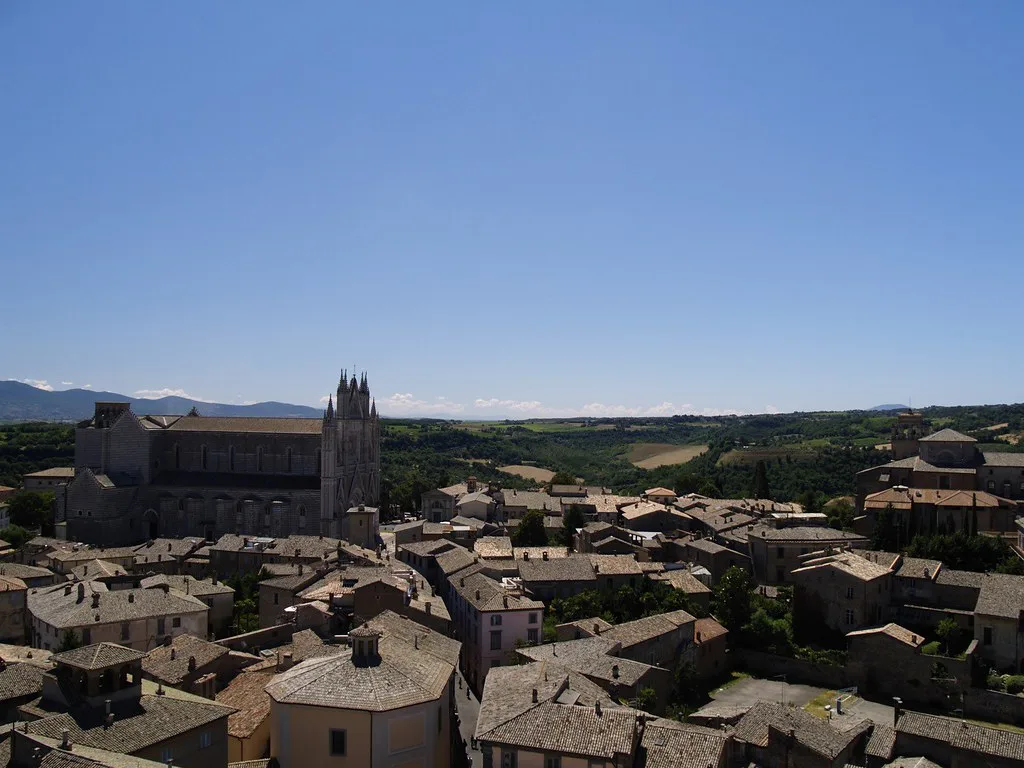
Begin on Piazza del Duomo, where the cathedral facade gives you the one outdoor moment worth braving weather for. The Opera del Duomo, which runs the complex, describes the Cappella di San Brizio as home to the fresco cycle of the Last Days, begun by Beato Angelico in 1447 and finished by Luca Signorelli between 1499 and 1504. That chapel alone justifies a slow, seated look rather than a hurried pass.
The Cappella del Corporale, built in the mid-14th century, takes its name from the relic of the Sacred Linen linked to the Bolsena miracle and is the second core indoor stop. Between the two chapels, the nave and the crypt, you can fill a focused indoor block without stepping back into the rain. If your wider interest is the town's quieter corners, the hidden gems in Orvieto guide pairs well with this cathedral stop.
Check the cathedral's own notices before you go, since access can be suspended for religious celebrations. The Opera del Duomo site publishes a running list of upcoming closures and access variations, including full-day suspensions of visits on certain feast days. Reading that page the week of your trip is more reliable than any planning article, including this one.
The Cathedral's Underground Layer and Museums
Beneath the transept and chapels, the cathedral's Sotterranei form a tunnel-like space of roughly 800 square metres that once served as the worksite's storage and now explains the long construction of the Fabbrica. It is a distinctly different experience from the brightly lit chapels above, and a sensible second indoor block when the rain sets in. The Opera del Duomo presents the Sotterranei, the Museo Modo and the Museo Emilio Greco as distinct places, so plan them as separate visits rather than assuming one entry covers all.
The Museo Claudio Faina, the Etruscan collection, is promoted alongside the cathedral as an add-on rather than part of the same visit. Current pricing and what each ticket includes should be confirmed on the operator's ticketing pages, because bundles change and this guide deliberately avoids quoting figures that may be out of date. Decide on the day whether your energy runs to a third museum or whether two interiors are enough in the wet.
One practical correction to a common assumption: nothing in the official material suggests the cathedral and the independent cave tour share a ticket. Budget for them as two separate purchases and check each operator's site for what is included. That also means a rainy day does not lock you into one complex if a tour slot sells out.
Orvieto Underground: The Guided Cave Route
The Orvieto Underground tour is a guided walk through cavities carved beneath the town over roughly 2,500 years, and the operator frames it as a route of about an hour. Departures leave from Piazza Duomo 23 at the times listed on the site, so pick a slot and build the rest of your day around it rather than arriving hopefully. Because the schedule can change, confirm the departure times on the operator's page before you travel.
The operator specifically advises booking by phone or email for weekend visits and high season, which is advice rather than a hard requirement. Treat that as a clear signal that walk-up space is uncertain at busy times, and book early if your trip falls on a Saturday or during a popular travel period. For a rain-heavy forecast, an indoor tour slot is worth securing in advance precisely because it is one of the few fixed appointments in your day.
The route is described as easy and largely level, but this guide makes no claims about step-free access or specific accessibility arrangements for the caves. If mobility or claustrophobia is a concern, ask the operator directly before booking rather than relying on general descriptions. Rain can also make stone surfaces and handrails damp, so grippy shoes matter more here than on the cathedral floor.
Wells and Other Underground Sites: Verify First
Orvieto's famous wells, including the Pozzo di San Patrizio and the Pozzo della Cava, are often recommended for wet days, and the logic is sound: they are covered and underground. What is not established here is whether each site is open, ticketed or bookable on your dates, so check the individual site or the town's tourism office before making one a fixed stop. Treat any well visit as a bonus rather than the backbone of the plan.
The same caution applies to smaller underground attractions and cave-adjacent venues. Opening patterns for minor sites shift with season and staffing, and a rainy day can coincide with a closure you did not anticipate. If a well is your priority, confirm it before you leave your hotel, then slot it into the gap between two confirmed indoor bookings.
Three Rainy-Day Sequences That Work
For a short visit of around four hours (a suggested duration, not an official one), do the Duomo chapels first, then the cathedral's Sotterranei, and finish with a coffee while you wait out the worst of the weather. This keeps you within a couple of minutes' walk of Piazza del Duomo and avoids committing to a fixed tour time. It suits travellers arriving by train who need to leave in the afternoon and want zero transport logistics.
For a half day of roughly five to six hours (again, a suggested estimate), pair the cathedral visit with the Orvieto Underground tour, using a late-morning or early-afternoon departure as your anchor. Build the cathedral block around whichever slot you secure, and keep the Faina museum as an optional third stop if time and energy allow. The appeal of this version is that two very different underground experiences, the cathedral's storage tunnels and the town's carved cavities, sit close together without a long wet walk.
For a full rainy day, add a museum block and a long lunch, and accept that you will not see the town's viewpoints or the outside of every church. Three indoor blocks plus two proper sit-down breaks is a realistic ceiling in steady rain, and cramming a fourth tends to produce a blur. Leave the final hour free so a delayed tour or a heavier downpour does not derail your departure.
Wet-Day Logistics and Handling Closures
Wear shoes with real tread, because Orvieto's streets are stone and the cathedral and cave floors stay damp for hours after rain stops. Carry a small folding umbrella rather than a large one, since interiors and narrow passages are easier to navigate without a dripping canopy. In churches, keeping an umbrella closed and out of the way is a matter of courtesy even where no sign says so.
Time your indoor blocks around the cave tour departure rather than the other way round, and arrive at Piazza Duomo 23 a little early if you have booked. Closures are the other variable: the cathedral publishes access variations for feast days, and individual museums can shut without much notice. Check the relevant operator page on the morning of your visit and keep one flexible alternative in reserve.
What to Skip and How to Keep the Day Slow
In heavy rain, skip the panoramic viewpoints, the long exterior walks along the rupe and any plan that depends on lingering in squares. None of them are wasted in better weather, and trying to force them in wet conditions just leaves you cold before the indoor highlights. Put the outdoor circuit on a separate, drier day.
The better rainy-day strategy in Orvieto is fewer stops, longer looks and one booked appointment. Two chapels, one set of underground rooms and a guided cave walk make a full, satisfying day without any sprinting between them. Confirm times and inclusions with each operator before you go, and let the weather decide only the order, not the ambition.
Frequently Asked Questions
How many hours do you need in Orvieto on a rainy day?
A suggested four hours covers the cathedral chapels and the Sotterranei at an unhurried pace. Five to six hours lets you add the Orvieto Underground guided tour and a proper lunch break. A full day works if you also include a museum, but expect three indoor blocks to be the realistic ceiling in steady rain. These are editorial estimates rather than official timings.
What is the weather like in Orvieto, and which month is rainiest?
Daytime averages run from roughly 9°C in January to about 31°C in July, with cool nights in winter. November is recorded as the wettest month, with around 11 rainy days, while July has the fewest at about 5. October typically sits between the two, which is why autumn visitors should plan at least one indoor block.
Is the Duomo underground included with the cathedral visit?
Treat them as separate elements until you confirm otherwise. The Opera del Duomo lists the Sotterranei, the cathedral museums and the cathedral itself as distinct places, and the independent Orvieto Underground cave tour is run by a different operator entirely. Check each operator's ticketing page for exactly what your ticket covers.
Do you need to book Orvieto Underground in advance?
Booking is not stated as mandatory, but the operator advises reserving by phone or email for weekend visits and high season. Given fixed daily departure times, securing a slot in advance is the safest approach on a rainy day when indoor options are in demand. Confirm current times on the operator's site before you travel.
What can you do in Orvieto when it rains?
Focus on the cathedral interiors, especially the Cappella di San Brizio and the Cappella del Corporale, then add the Sotterranei beneath the transept. The Orvieto Underground guided cave tour and the Museo Claudio Faina give you further indoor blocks. Wells can work too, but confirm each site is open before making it a fixed stop.
Are the wells in Orvieto a good rainy-day option?
They are covered and underground, so the idea makes sense, but opening arrangements for the Pozzo di San Patrizio and Pozzo della Cava should be checked with the individual site or the local tourism office. Treat a well visit as an optional extra rather than the anchor of your day, and keep a confirmed indoor booking as your fallback.
Sources
Continue exploring
More guides you'll find useful





