
Orvieto One Day Itinerary: Duomo, a Well and a Slow Walk
Plan one full day in Orvieto: the Duomo and San Brizio chapel first, one well or underground visit, lunch, wine and a cliff-edge walk, with what to skip.
On this page
Orvieto sits on a plateau of volcanic tuff above the Umbrian plain, and the historic centre is compact enough that a single day covers the essentials without rushing. The catch is that the best-known sights are paid interiors with their own tickets and their own schedules, so the day needs an order rather than a list.
A sensible suggestion is to give the cathedral and its San Brizio chapel the whole morning, choose exactly one well or underground visit before lunch, then spend the afternoon on foot with coffee, wine and views. Treat anything beyond that as a bonus rather than a target.
Why Orvieto Rewards One Full Day Rather Than a Rushed Stop
Orvieto is often treated as a quick stop between Rome and Florence, but its main attractions sit at different levels and in different buildings. Add a proper lunch and a walk to the viewpoints and a half-day becomes a scramble. A full day lets you see the cathedral properly and still have an hour for the quieter streets off the main Corso.
The city publishes a steady calendar of events across the year, from theatre seasons to food markets in the piazzas. The Comune di Orvieto lists current notices and dated events, and that page is the honest starting point for anything time-sensitive.
Plan a morning arrival rather than late afternoon. The light on the cathedral facade is better earlier, queues are shorter, and you leave yourself room for an unhurried lunch instead of eating on the move.
Orientation: The Funicular, Piazza Cahen and the Walk Up the Corso
The railway station sits in Orvieto Scalo at the foot of the cliff, and many visitors ride the funicular up to Piazza Cahen before continuing on foot. The funicular leaves from outside the station and saves the climb; from Piazza Cahen, Corso Cavour runs up into the historic centre.
If you come by car, a practical approach is to park on the outskirts and ride up rather than hunt for space inside the walls, since the centre cannot be driven through without a permit. Covered parking with lifts and escalators to the centre exists on the western side of town. Check current tariffs and payment arrangements on arrival rather than assuming an old figure.
Piazza Cahen is also the doorstep of the Pozzo di San Patrizio and the Albornoz fortress gardens, which makes it a useful anchor if you plan to visit the well first thing. Note the geography: the well is at the lower edge of town near the funicular, while the Duomo is a walk further in.
Start at the Duomo: Facade, Mosaics and What to Notice Before Going Inside
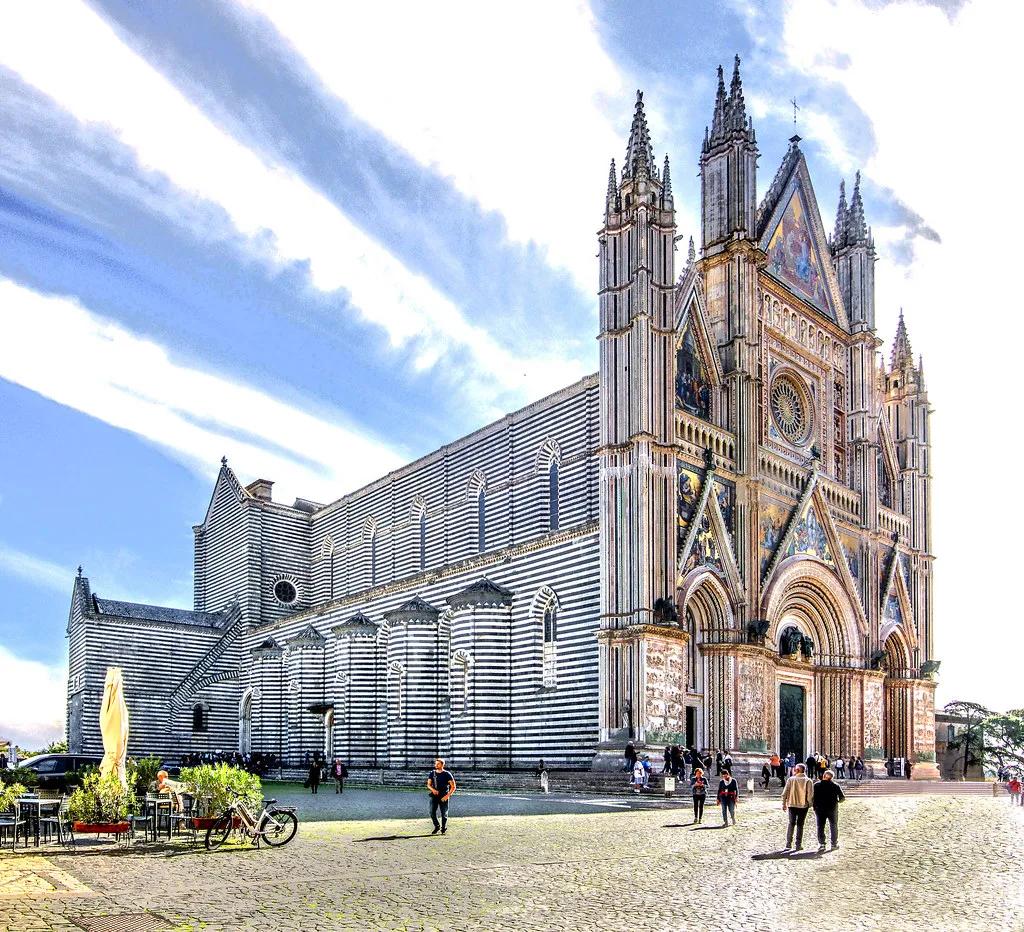
The cathedral dominates Piazza del Duomo with a facade of gold mosaics, carved marble pillars and a rose window, and it is worth ten minutes outside before you think about a ticket. Look at the four bronze evangelist symbols above the doors and the relief panels on the pillars before stepping through.
Entrance arrangements, ticket types and any timed slots are set by the Opera del Duomo, which publishes hours, fares and notices about closures on its own site. Check that page on the morning of your visit rather than relying on a guidebook figure, since services and feast days can suspend visits at short notice.
Budget the bulk of your morning here. The interior is long and striped in black and white marble, with side chapels that pull you in one at a time, and the crypt and underground areas under the cathedral are separate spaces with their own access. If you only do one paid interior in Orvieto, this is the one.
The San Brizio Chapel and the Signorelli Frescoes: Pacing This Properly
The Cappella di San Brizio holds the fresco cycle of the Last Days, begun by Beato Angelico in the mid-fifteenth century and completed by Luca Signorelli around the turn of the sixteenth, as the cathedral's own description of the chapel states. The result is a wall of judgement and resurrection that repays slow looking rather than a photo and exit. Give it twenty to thirty minutes at minimum.
Because the chapel sits inside the cathedral visit, there is no separate queue once you are in, but crowds gather mid-morning. Arriving close to opening gives you a quieter first ten minutes in front of the frescoes. If a service is underway, wait rather than talk through it.
The adjoining Cappella del Corporale holds the relic linked to the miracle at nearby Bolsena, the event that gave the cathedral its raison d'être. Together the two chapels explain why a small Umbrian town built something this ambitious.
Decision Point: Pozzo di San Patrizio or Orvieto Underground
After the cathedral, pick exactly one underground experience. The Pozzo di San Patrizio is a Renaissance water shaft commissioned under Pope Clement VII and designed by Antonio da Sangallo the Younger, with two helical ramps that let people and pack animals pass without meeting. It is the more architecturally singular of the two, and it is a short walk from the funicular and the fortress gardens.
Orvieto Underground, by contrast, is a guided tour through the caves and tunnels carved beneath the streets, covering olive presses, cellars and escape routes rather than one monumental structure. It suits travellers who want the city's hidden layer explained by a guide, and it needs booking ahead in practice. Do not try to do both plus the cathedral in one morning.
Entrance fees and opening times for the well are set by the operator and change by season, so confirm before you commit your afternoon. Any single figure you read elsewhere should be treated as provisional until the ticket office or the tourism office in Piazza del Duomo confirms it.
Whichever you choose, wear shoes with grip and accept that you will be going down and coming back up. Neither site is a quick in-and-out stop, and that is the point.
Lunch and a Wine Bar Pause on the Corso or Near the Cathedral
By early afternoon you will be hungry and slightly footsore, which is the right moment for a long lunch. Trattorias around the Corso and the side alleys serve Umbrian staples, and Orvieto Classico white wine is the local order. Pick a place with a visible menu rather than the first one facing the cathedral steps.
If you prefer to keep moving, a panino or a plate of local cheese and salumi in a wine bar works just as well, and there are several along Corso Cavour with outdoor tables. A glass of Orvieto Classico and a cheese board is a sensible pause before the afternoon walk. Prices vary by venue, so read the list before ordering.
Gelato is a good way to end lunch and start walking again, and the historic centre has plenty of options. Nothing here needs booking, which makes the middle of the day flexible if the morning ran long.
Afternoon Walk: Torre del Moro, Piazza della Repubblica and Piazza del Popolo
The afternoon is for the streets, which cost nothing. Walk the Corso to Piazza della Repubblica for coffee and the town hall, then look up at Torre del Moro, the clock tower at the junction of the Corso and Via del Duomo. The tower is a paid climb with its own ticket, so decide at the base rather than committing in advance.
Piazza del Popolo, with the Palazzo del Popolo and the Captain's Palace, is the quieter of the main squares and a good place to sit without ordering anything. From there, wander down towards the edge of the tuff cliff for the view over the Paglia valley.
The Giardini Comunali, on the site of the old Albornoz fortress, offer benches and a panorama in the late afternoon light, and the public grounds are free to enter. It is also the moment for the less prominent corners: ceramic workshops, small food shops and side lanes that the day-trippers skip, which you can find in our guide to hidden gems in Orvieto.
Optional Add-ons If You Still Have Energy
If the day has gone smoothly, the Etruscan necropolis of Crocifisso del Tufo sits below the cliff outside the walls, with rectangular tombs arranged on an orthogonal grid and family names still legible on the lintels. Opening days and entry conditions vary, so check with the tourist office before walking out there.
Pozzo della Cava, a privately run Etruscan-era well and cave complex in the heart of town, is another candidate if you skipped the big well. It is a shorter visit and easier to slot in late. Check its current hours directly, since it is a private site.
The Museo Claudio Faina, facing the cathedral, holds Etruscan finds from the surrounding necropolises and pairs logically with the cathedral visit. Its ticket is separate from the Duomo, so it is a genuine optional extra rather than part of the morning.
What to Skip on a Single Day
Skip the second underground site. Skip the tower climb if the queue is long or the light is flat, and skip the outlying churches unless you have a specific interest. Trying to add the necropolis, the well and the underground caves to the same day produces a checklist rather than a visit.
Also skip any attempt to see the wider Umbrian hinterland on the same day. Orvieto is close enough to Rome and Florence that visitors are tempted to combine, but the town plus its own sites already fills the day. Save Civita di Bagnoregio and the wine estates for a stay of two nights or more.
Practical Notes: Booking, Tickets and Checking Hours on the Day
Book what can be booked: the guided underground tours fill, and the cathedral's online ticket system saves time. Do not assume a single combined ticket covers the Duomo, the well and the cave tours, because they are run by different operators with separate fares. Buy each one for the site it actually covers.
Check hours the morning you go, not a week earlier. The Opera del Duomo publishes planned closures and access variations, and the municipal site carries current civic notices, including any works or events affecting the centre. Screenshot the pages you need in case the signal on the plateau is patchy.
Rail travellers should look up live departures from Orvieto Scalo rather than working backwards from a fixed train time, and allow a margin for the funicular and the walk down. If you are staying overnight, book directly with the hotel for the clearest cancellation terms. The day-trippers leave in late afternoon, and the town becomes noticeably calmer after that.
Plan Your Visit
The best version of an Orvieto day is not the fullest one. Cathedral and San Brizio in the morning, one underground choice before lunch, then food, wine and a walk with no fixed end point covers the town's character without exhausting it.
Before you go, confirm the cathedral's opening and any access notices, check the well or cave tour operator for that week's schedule, and decide in advance which single underground visit you want. Everything else can be improvised on the day. For related planning, see Orvieto Self-Guided Walk: Duomo, Lanes and Cliff-Edge Views.
Frequently Asked Questions
How long do you need in Orvieto for a one-day itinerary?
A full day is enough for the cathedral with the San Brizio chapel, one underground or well visit, lunch and a walk through the main squares. If you want the Etruscan necropolis or a wine estate as well, stay a night and spread it over two days. The town is compact, so the limit is opening hours and your own energy rather than distance.
Should you choose St. Patrick's Well or Orvieto Underground?
Choose the Pozzo di San Patrizio if you want one extraordinary piece of Renaissance engineering and a relatively self-guided visit. Choose Orvieto Underground if you prefer a guided tour through the caves and tunnels under the streets. Doing both in one day crowds out the cathedral and lunch, so pick one and check the current schedule before you commit.
Is the Duomo free to enter, and what costs extra?
Parts of the town, including the streets, squares and public gardens, are free to walk. The cathedral interior and its chapels are managed by the Opera del Duomo, which sets admission and any add-ons, and the well, tower and cave tours are separate operators with their own tickets. Check each site's own page for the current arrangement rather than assuming one ticket covers everything.
What can you skip in Orvieto if you only have one day?
Skip the second underground site, the tower climb when the queue is long, and the outlying churches and museums. Also skip combining Orvieto with another town on the same day. Protecting your departure time matters more than adding a fourth paid interior.
Is Orvieto worth visiting as a day trip, or should you stay overnight?
It works as a day trip, but staying overnight changes the experience because the day-trippers leave in late afternoon and the streets and wine bars get calmer. If you want the necropolis, a winery visit and a slow dinner, book a night or two rather than trying to compress it.
When is the best time of year to spend a day in Orvieto?
Spring and autumn give comfortable walking weather and fewer crowds than midsummer, while winter is quieter and colder. Weekdays are calmer than weekends in high season. Check the municipal events calendar before fixing a date, since festivals and holidays affect opening hours and hotel rates.
Sources
Continue exploring
More guides you'll find useful





