Getting Around Lucca: Transport and Arrival Guide
Plan how to get around Lucca: arriving by train or car, parking outside the walls, walking and cycling in the centre, and local bus basics.
On this page
Lucca is a city where the transport plan comes before the sightseeing plan. The historic centre is small and closed to traffic, so visitors move through it on foot or by bicycle, while drivers leave their cars in car parks outside the walls. Sorting out arrival and parking before you reach the gates turns the rest of the day into a short series of easy choices.
Why Lucca Works Best Without a Car
The heart of Lucca is deliberately unfriendly to cars: the historic centre is small and closed to traffic, so walking and cycling are the natural ways to visit it. For drivers, the city's own transport information says car parks are spread along the walled ring and connected to the centre by bus and shuttle services. That layout means convenience, but it also means you trade door-to-door access for a short transfer between car park and gate.
Think of the car as the way you reach Lucca, not the way you tour it. Once you have parked outside the walls, the city becomes a walking and cycling zone, which is also the setting for most of what you will want to photograph. If you plan to move between Lucca and other Tuscan towns by rail, the station edge of the walls is a better base than a hotel that requires a car every morning.
Arriving by Train
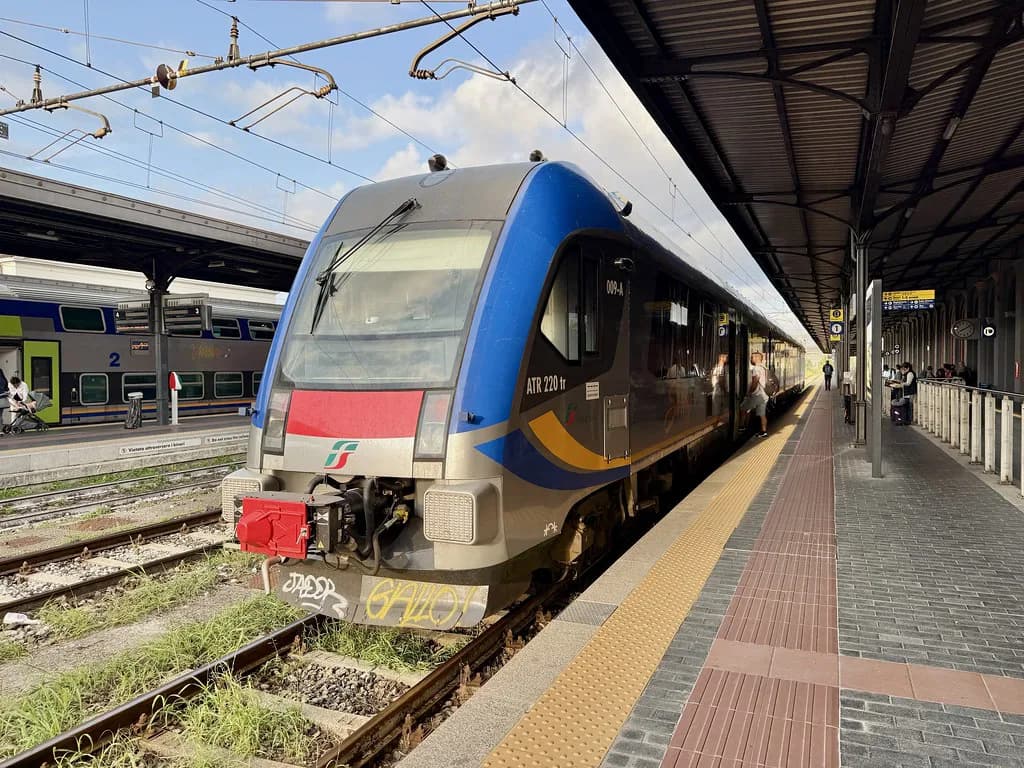
Lucca's railway station sits at Piazzale Ricasoli on the southern edge of the walled city, which makes rail a practical arrival mode for anyone staying inside the walls. Ticket desks, self-service machines and the station's relationship to the rest of the network can change, so use the operator's own site for current timetables and fares rather than relying on a printed schedule. Trenitalia is the reference point for train information, and the local tourist office is the place to ask about onward connections within Lucca.
From the station forecourt, the old town is close enough that the walk in is part of the experience, and taxi ranks at Piazzale Ricasoli serve travellers with luggage. If you arrive late, check the current bus and taxi situation before assuming a convenient connection; the city's transport page lists taxi ranks at Piazzale Ricasoli near the station along with ranks elsewhere in the centre. That list tells you where to queue, not that a car will necessarily be waiting.
Arriving by Car and Parking Outside the Walls
Drivers should expect to park outside the walls and walk in. Lucca has numerous parking options inside and outside the historic centre, and the car parks along the walled route are linked to the centre by bus and shuttle services. The practical distinction is between a car park close to a gate you will use and one that leaves you hauling luggage across town; choose the gate first, then the car park.
The trade-off is straightforward: a car gets you to Lucca, but inside the walls it becomes a liability, because the centre is closed to traffic. Parking outside also means you avoid driving through narrow medieval streets you cannot legally use. Current car park locations and tariffs should be checked with the city's parking map or the tourist office before you travel, since published fees change.
For planning a route that combines bus, train and walking, the Tuscany region provides a travel planner that uses regional network and schedule data to calculate intermodal journeys. It is useful when you are deciding whether to leave the car at the edge of town or take a train for a day out. Treat any single planner result as a starting point and confirm details with the operator before relying on them.
Moving on Foot Inside the Centre
Inside the walls, most distances are short and the streets are best covered on foot. The centre is compact enough that a morning walk can connect several squares without a single bus ride, and the traffic-free streets make that walking pleasant. Build in pauses rather than treating the day as a route march, because the appeal of Lucca is in looking up at the facades and pausing in the squares.
Separate free public ground from paid interiors when you budget your day. The walls themselves are a public promenade, the squares such as Piazza dell'Anfiteatro are open to everyone, and the exteriors of the churches are free to look at. Paid interiors are a separate decision: Palazzo Pfanner's baroque garden and museum are ticketed, and the current combined ticket should be checked with the palace itself before you go.
Piazza dell'Anfiteatro is a good example of how walking pays off in Lucca. The square traces the elliptical footprint of the ancient Roman amphitheater, with medieval houses built around the ring, and it now holds cafes and shops rather than gladiator combats. Walking through one of the entrance arches brings you into a space whose shape only makes sense when you are standing inside it.
Cycling the Walls and the City
Bicycles are one of the great small pleasures of a Lucca visit. The city's walls form a four-kilometre circuit that can be covered entirely by bike, and many rental shops are listed in and near the centre, including several around Piazza Santa Maria and one at the railway station. The circuit is short enough that a half-day rental is usually enough unless you also plan to ride out into the surrounding countryside.
Rental stock, opening hours and current prices should be confirmed directly with the shop you choose, because the operator lists change and prices vary. If you only want the classic wall loop, rent for a few hours and walk the rest of the day; if you want to explore the lanes of the old town by bike, check where you may ride, since not every footpath or lane is open to cyclists. Our Lucca cycling guide: walls and beyond covers the route choices in more detail.
City Buses: Useful, But Not All Evening
The urban bus service in Lucca is run by VAIBUS Lucca of the CTT Nord group, with offices at Piazzale Verdi and Viale Cavour. These buses are useful for connecting the edges of the city, the car parks and the outskirts, and they relieve you of a long walk if you are staying outside the walls. Stop locations matter more than memorising routes: find the stop nearest your accommodation and ask at the VAIBUS office which service to take.
One planning constraint is the evening. A third-party traveller report describes city buses running at intervals of around 10 to 20 minutes but stopping at about eight in the evening, which would mean walking or taking a taxi after an unhurried dinner. That report is undated, so treat it as a prompt to check current last departures with VAIBUS rather than as a firm closing time.
For evening plans, decide early whether you will return on foot or book a taxi. A restaurant on the far side of the centre can be a half-hour walk back to a car park, which is fine in good weather but less appealing in winter rain. The freedom is real: the walls are open at night, and walking back through lit streets is one of the pleasures of a small city.
Taxis and Driver Services
Lucca's taxi ranks are listed at Piazza Santa Maria, Piazzale Verdi and Piazzale Ricasoli near the station, with a radio taxi number also published by the city's transport page. Ranks exist, but that does not guarantee a car will be queuing at every hour, so it is wise to have the radio number as a backup. For short trips inside the walls, walking is usually faster than waiting for a taxi.
Camper Vans Near Lucca
Camper drivers have two distinct options near Lucca. Viale Luporini has a designated parking area on the immediate outskirts of the city, but the operator says it is not equipped for camping and is available for parking only. That suits a simple overnight stop rather than a stay with services.
The equipped alternative is Area Camper Il Serchio in Via del Tirassegno, which the operator describes as providing services for camper stays. Rates and availability should be checked directly with the area before you rely on a spot, because published information goes out of date. For anyone who needs water, waste disposal or laundry, the equipped area is the more convenient choice.
Two Simple Movement Plans
For a half-day, park outside the walls and walk in through the nearest gate. Circle part of the walls on foot, drop into Piazza dell'Anfiteatro to see its elliptical shape, and pick one ticketed interior such as Palazzo Pfanner's garden if it is open. Finish with a slow walk back to the car park rather than trying to see everything at once.
For a full day, add a bike rental to the morning and do the wall circuit early before the paths get busy. Spend the afternoon on foot in the centre and check one of the city's gardens or towers, then use the bus only if you need to reach a distant car park or your accommodation. If you are staying longer, the Lucca three-day itinerary stretches this pattern across more days.
Practical Pitfalls to Avoid
The most common mistake is assuming the car will take you to your hotel door inside the walls. It will not, so check where you can park and how you will move luggage before booking. A second mistake is assuming buses run late into the evening; plan dinner with a return on foot or a taxi in mind.
A third pitfall involves ticketed interiors. Palazzo Pfanner publishes a garden season that runs from mid-March to the end of December, subject to extraordinary openings and closures, so a visit in January would need checking. The wider lesson applies to Lucca's towers and gardens: verify opening days and seasons on the venue's own site before you plan a day around them.
Plan Your Visit
Treat transport in Lucca as a set of decisions made before you arrive. Choose train or car first, pick a car park or station-side base, then decide how much you will walk and whether a bike is worth renting. None of these choices needs to be complicated, but they are much easier to make before you are standing at a gate with a suitcase.
Confirm current fares, timetables and opening hours with Trenitalia, the tourist office and individual venues, because those details change more often than the walls do. With that done, Lucca becomes a city of short walks, quiet bike rides and unhurried evenings, where the logistics fade and the streets take over.
Frequently Asked Questions
Do you need a car to get around Lucca?
No. The historic centre is small and closed to traffic, so walking and cycling are the natural ways to move within the walls. A car is useful for reaching Lucca and for visiting the wider Tuscan countryside, but you should plan to park outside the walls and continue on foot, by bike or by bus.
Where is Lucca's train station relative to the old town?
Lucca's station is at Piazzale Ricasoli on the southern edge of the walled city, close enough that the walk into the centre is part of the visit. Taxi ranks are listed at the station forecourt, and local buses connect the area with the rest of the city. Check current train times and fares directly with Trenitalia.
How late do Lucca's city buses run?
One undated traveller report says city buses stop at about eight in the evening, but that should not be treated as current. Check last departures with VAIBUS Lucca, whose offices are at Piazzale Verdi and Viale Cavour, and plan an evening return on foot or by taxi as a fallback.
Can you walk the entire wall circuit in Lucca?
Yes. The walls form a roughly four-kilometre circuit that can be covered entirely on foot or by bike, and the route is a public promenade rather than a paid attraction. It is the easiest way to see the city from above the rooftops and makes a sensible first or last activity of the day.
Are taxis easy to find in Lucca?
There are taxi ranks at Piazza Santa Maria, Piazzale Verdi and Piazzale Ricasoli near the station, and a radio taxi number is published. A rank does not guarantee a car at every hour, so keep the radio number as a backup and expect to walk for short trips inside the walls.
Sources
Continue exploring
More guides you'll find useful