Santa Croce Quarter Lecce Guide: What to See and How to Visit
Plan a visit to Lecce's Santa Croce quarter: read the basilica facade, understand what the LeccEcclesiae ticket covers, and pair it with nearby churches.
On this page
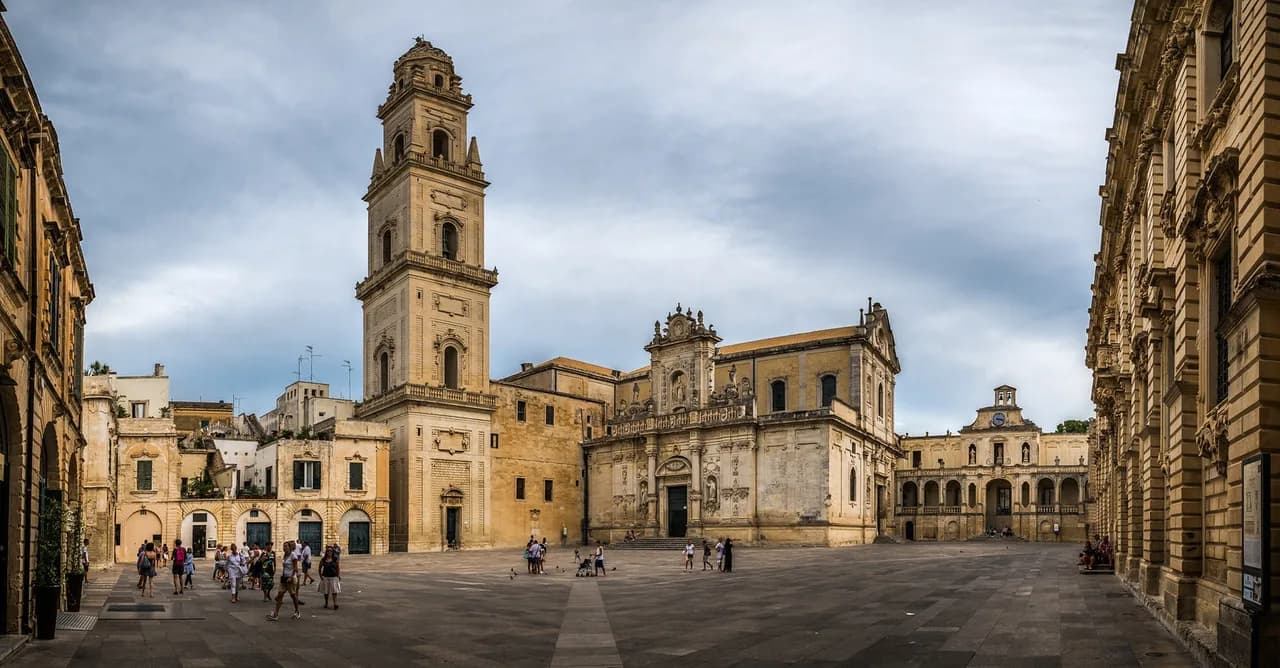
Santa Croce sits in the northern part of Lecce's historic centre, close to Porta Napoli and within easy strolling distance of Piazza Sant'Oronzo and Piazza del Duomo. Most visitors treat the basilica as a photo stop, yet the corner rewards a slower look: the facade is a dense sculptural programme, and the surrounding lanes hold smaller churches that are often quieter. This guide concentrates on that compact area rather than the whole city.
Plan the basilica as the anchor of a walk rather than a standalone errand. A sensible allowance is roughly one to two hours for the basilica plus two or three nearby churches, a duration that is a suggestion rather than an official figure. Anyone wanting deeper context can use the Basilica di Santa Croce Lecce visitor guide for the monument itself, then return here for the surrounding streets.
Where the Santa Croce corner sits in the historic centre
The basilica faces Piazza Santa Croce, with the former Celestini convent buildings alongside it. Guides and maps routinely place the church on Via Umberto I, and the wider ensemble of church and convent is treated as one of the defining sights of Lecce's Baroque old town. Because the streets are narrow and the stone facades close together, the square opens up abruptly as you approach.
Walkers coming from the station should expect a straightforward route into the centre, though this guide does not set out specific bus lines, timings or accessibility details. The practical point is orientation: Santa Croce lies on the northern side of the old town, so it pairs naturally with Porta Napoli and the Duomo rather than with sights on the southern edge. Comfortable shoes matter, since the historic lanes are paved with uneven stone.
Reading the Basilica di Santa Croce facade
The facade is the reason to linger. It developed over generations rather than in one campaign: construction began in 1549, the dome was finished in 1590, and the rose window followed in 1646 before the pediment at the top completed the composition. That long build explains the layered feel, with a lower order of columns and a richly carved upper tier that seem almost to belong to different designs.
Look first at the balustrade level, where carved figures and animals appear to carry the storey above. Some architectural historians link this ornament to the Christian victory at the Battle of Lepanto in 1571, reading the Atlantes as captive figures and the animals as symbols of the allied powers. Whether or not you follow that interpretation, the effect is theatrical: the stone is treated as a stage set of bodies, beasts and scrolls.
The central portal and the flanking doors carry coats of arms and inscriptions tied to local patronage, while the large rose window dominates the upper facade. Photographers should aim for side light, which throws the relief carving into shadow and makes the details readable; flat midday light tends to flatten the stone.
Inside the basilica and the Celestini complex next door
Inside, the church follows a Latin cross plan, with columns supporting the nave and a coffered wooden ceiling above. Side chapels hold a series of Baroque altars, and the apse walls carry paintings including an Annunciation and an Adoration of the Shepherds. Treat the interior as a working place of worship first, since services can restrict access to parts of the building.
The adjoining Celestini complex is architectural context rather than a confirmed visitor attraction. The Celestine monks administered the convent until the order was suppressed in 1807, and the palace now houses public offices. That administrative use is a reason not to assume you can wander inside, and no source consulted here confirms public opening.
Access to the church itself should not be confused with access to everything around it. One churches-focused guide notes that during its visit all churches were free to enter, but that a single ticket now provides access to the cathedral, Santa Croce, San Matteo and Santa Chiara. Wording like that makes the point: arrangements change, so check at the entrance rather than planning around a fixed rule.
What the LeccEcclesiae ticket actually covers
The LeccEcclesiae circuit is the clearest ticketing structure for this part of Lecce. One churches-focused account says a single ticket provides access to the cathedral, Santa Croce, San Matteo and Santa Chiara, while the walking guide published by the Lecce guide network describes it as valid for fifteen days. The organisation running the circuit sells tickets at its central office in the Antico Seminario in Piazza del Duomo and at the Santa Croce ticket office, as well as online.
Read that list carefully. The ticket covers named sites, not every chapel, cloister or room inside each complex, and separate guided tours or specific experiences may sit outside it. Rather than assuming a single purchase opens every door, check the site list at the ticket office and confirm what each entry includes on the day you visit.
Prices and hours are exactly the details to verify rather than carry in your head. Third-party guides circulate varied figures and opening windows, and those can be out of date or describe different ticket scopes. The reliable move is to check the operator's hours and rates page shortly before travelling, and to ask at the ticket office whether a combined ticket suits your plan.
Sant'Irene, San Matteo and Santa Chiara on the same loop
Three smaller churches make the Santa Croce area worth more than a single stop. Sant'Irene, near Piazza Sant'Oronzo, is dedicated to Lecce's patron saint and has a quieter interior with decorated side altars; its patronal feast is usually celebrated in May, when the surrounding streets become busy with processions and stalls.
San Matteo is the most distinctive of the group, with a curved facade that looks to Roman Baroque models rather than local convention. The operator's own page on the church records that it was built between 1667 and 1700 on the site of an earlier church, and that its interior holds twelve apostle statues and an organ moved there after earlier service in Santa Croce and the cathedral. Visit earlier in the day if you want the altars without a crowd in front of them.
Santa Chiara is often described for its cloister, a calm space with arcades and planting that offers shade in hot weather. Because it is a convent complex, not all areas are necessarily open at all times, and some parts may only be visible on organised visits. Ask parish staff what is accessible that day instead of expecting the whole complex.
A suggested one- to two-hour route
Start at Santa Croce in the morning, read the facade from the square, then step inside if services allow. From there, head south through the lanes toward Piazza Sant'Oronzo for Sant'Irene, then work west and south toward San Matteo and Santa Chiara before finishing at Piazza del Duomo. This order keeps the walking logical and puts the busiest square at the end rather than the beginning.
If you have a full half-day, add the Duomo interior and the museum collections inside the circuit, and consider climbing the bell tower when it is open. A guided city walk can also work well here: one small-group tour page describes a roughly two-hour route that starts at Porta Napoli and finishes at Santa Croce, which suits travellers who want commentary on the facade before seeing it.
Anyone building a longer day can fold in other corners of the old town, including the underground remains and lesser-known lanes covered in the hidden gems in Lecce material. If the walk prompts an appetite, the market and food guide covers the city's food stalls and traditional pastries in more detail. For wider planning, see A Lecce Market Food Guide.
Practical etiquette: dress, services and photography
These are active churches, so dress modestly, with shoulders and knees covered, and keep voices low. During Mass, sightseeing should pause; access to particular chapels or the whole building may be restricted while a service is under way. If in doubt, wait at the back until it finishes.
Photography is generally acceptable for personal use, but flash is best avoided, and some chapels may prohibit images altogether. Watch for signage inside each church rather than assuming one rule applies everywhere. A small donation in the parish box is a reasonable gesture if you have received special access or a volunteer explanation.
Finally, check before you go rather than trusting a printed schedule. Church opening windows shift with seasons, feast days and services, and a locked door is common outside published hours. The practical rule for this quarter is simple: confirm hours for the day of your visit, carry a little flexibility, and treat any ticketed element as something to verify at the office. The best time to visit Lecce and avoiding crowds offers broader seasonal context.
Plan Your Visit
The Santa Croce quarter works best as a compact, unhurried walk: one great facade, a handful of smaller churches and a ticketing system worth understanding before you arrive. Go early, read the stone before you photograph it, and confirm what the LeccEcclesiae ticket includes and when sites are open. That combination turns a quick photo stop into a proper morning in Lecce.
Frequently Asked Questions
Is the Basilica di Santa Croce free to enter?
Many Lecce churches allow free entry to the worship area, and Santa Croce is generally included in that pattern, but access arrangements vary with services and with the LeccEcclesiae circuit. The operator lists Santa Croce among the sites covered by the multi-site ticket, so check at the ticket office or entrance whether a ticket is needed for the areas you want to see on the day of your visit.
What does the LeccEcclesiae ticket include?
According to the operator, the single LeccEcclesiae ticket covers the Duomo, the bell tower, the MuDAS museum, Santa Croce, San Matteo and Santa Chiara, and is valid for fifteen days. It does not automatically cover every chapel, cloister or guided experience within those complexes, so confirm the scope at the ticket office in the Antico Seminario in Piazza del Duomo or at Santa Croce.
How long should I allow for the Santa Croce area?
A suggested allowance is roughly one to two hours for the basilica plus two or three nearby churches, though this is a planning suggestion rather than an official figure. If you add the Duomo interior, the MuDAS collections or a bell tower climb, allow a half-day instead, and check opening times in advance because church access shifts with services and seasons.
Can I visit the Celestini palace next to the basilica?
The Palazzo dei Celestini is the former convent complex adjoining Santa Croce and now houses public offices. No source consulted confirms that it is open to visitors as an attraction, so treat it as architectural context seen from outside unless you find current information from the city or the institution occupying it.
Is the Santa Croce cloister included with church entry?
Some sources describe a paid cloister or museum area at Santa Croce, but the arrangements are not fixed and should not be assumed to be included with church entry. Ask at the entrance or ticket office what is accessible that day, and check the LeccEcclesiae site list before relying on any combination of access.
What is the best time to photograph the Santa Croce facade?
Morning side light is generally the most flattering for the carved reliefs, because it creates shadow and makes the figures and scrolls legible. Arriving early also helps avoid tour groups. Midday light tends to flatten the stone, and the square can become crowded later in the day.
Do I need a guided tour to understand the basilica?
No, but a guide helps with the sculptural programme, which is dense and easy to miss without explanation. A small-group city tour of about two hours starting at Porta Napoli and ending at Santa Croce covers the facade in context. Independent visitors can manage by reading the interpretive material available at the site and checking current LeccEcclesiae information.
What should I wear and how should I behave inside?
Cover shoulders and knees, keep voices low and avoid flash photography. During Mass, pause your visit and respect any restriction on movement around the church. Some chapels may prohibit photographs, so follow posted signage rather than assuming a single rule applies everywhere in the building.
Sources
Continue exploring
More guides you'll find useful