Genoa Panoramas: Which Viewpoint or Tower Fits Your Trip
Compare Genoa's viewpoints and towers by effort, cost category and weather, from Spianata Castelletto to the Bigo, Castello d'Albertis and the Lanterna.
On this page
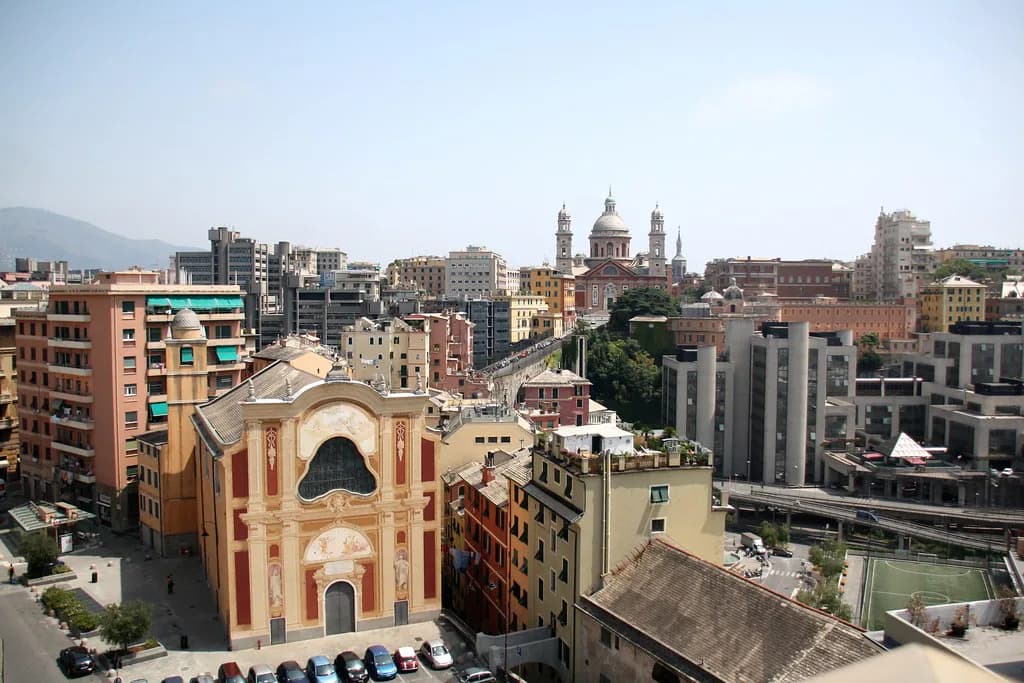
Genoa rises from its harbour in layers, so a panorama is never purely visual: it is a decision about how much climbing, paying and exposure to weather you want. Spianata Castelletto, the Bigo lift at Porto Antico, the Lanterna, Castello d'Albertis and the funicular towards Righi each reward you differently, and none needs to be combined with the others in one day.
One practical shortcut: the Art Nouveau Castelletto lift rises from Piazza Portello towards Spianata Castelletto, saving the steep walk up through the old town, as travel coverage of the city's vertical geography describes. The lift's own fare and schedule are not fixed in the sources used here, so check the operator notice before relying on it late in the day.
Effort, Cost and Weather at a Glance
Sort the options into three groups. Free public terraces such as Spianata Castelletto cost nothing to stand on; short panoramic lifts such as the Bigo charge a fare; and viewpoints attached to museums, such as Castello d'Albertis or the Lanterna's lighthouse museum, are better treated as part of a ticketed or curated visit. Travel coverage describes the Lanterna as a 77-metre tower on a rock outcrop, reached along a pedestrian path, which makes it a walk-plus-museum outing rather than a quick elevator ride.
Weather matters more than in a flat city because the reward is the long sightline across roofs, harbour cranes and distant hills. Hazy or rainy days flatten all of them, so keep a flexible order and be ready to swap the panorama for a covered route. A planning day built around arcades and transport is a sensible fallback, and our Genoa rainy day covered walks and transport plan sets out that alternative.
As a rough planning frame, allow a short stop for a lift-based harbour view, an hour or two for a terrace plus the walk between them, and a half day when a museum, garden or hill trail is part of the package. Those are suggestions, not official durations; the attraction guide should be the final word on opening times.
Spianata Castelletto: The Free Terrace and the Lift Question
Spianata Castelletto is the simplest choice when you want a wide view over the old town without committing to a museum ticket. Travel writing describes it as a fan of slate roofs, harbour cranes and hills, reachable either by steep footpaths known as creuze or by the Art Nouveau lift from Piazza Portello. It suits a short break, an early walk or an evening stroll, provided you have checked that the lift is running if you intend to avoid the climb. Further visitor details appear in Italy's vertical city: a breathtaking sea-to-sky maze - The Wom Travel.
The trade-off is exposure to foot traffic and the uphill effort if the lift is not available to you. VisitGenoa lists Spianata Castelletto among the images in its downloadable brochure collection, alongside walking tours of the historic centre and a pedestrian route from Boccadasse to the Lanterna. The same page makes clear these are planning aids, not live timetables.
Before going, decide whether the lift is a convenience or an essential. Fares and operating hours are not published in the material used for this guide, so confirm them through the city's transport information rather than assuming the lift runs whenever the terrace is open.
Porto Antico and the Bigo: A Short, Low-Effort Harbour View
The Bigo at Porto Antico is the option to choose when time is short and you want the harbour from above without a hill walk. A visitor guide describes it as a Renzo Piano panoramic lift shaped like a cargo crane, whose cabin rises about 40 metres and rotates for a full-circle view, with an audio guide explaining the buildings below. Treat it as a compact add-on and check current ticket arrangements with the operator before you go.
Its advantage is location inside the regenerated old port, so you can pair the view with the Biosfera, the Galata Museo del Mare or a waterfront walk without another journey. That same convenience means the area is busy and commercial. If you want a quieter, more residential atmosphere, a hillside terrace is the better trade.
VisitGenoa's brochures page includes a pocket guide built around four very Genoese settings, among them a Porto Antico waterfront promenade. Use that to decide whether the Bigo is a short extra or whether the port deserves a longer slot in a fuller Genoa 2 day itinerary.
Lanterna di Genova: A Walk, a Tower and a Museum
The Lanterna is Genoa's signature beacon, and the decision is not simply whether to climb it but whether you want the approach walk as well. Travel coverage describes a 77-metre tower on a natural rock outcrop, with its light more than 170 metres above the waves, reached via a pedestrian path along the ancient walls, and a lighthouse museum at its base using multimedia displays about the port's evolution. That makes it a combined outing rather than a quick photo stop.
Choose the Lanterna if you want maritime context and are prepared for exposed walking; skip it if you have limited time and want a single wide view of the old town, which Spianata Castelletto delivers more directly. Admission, lift availability, climb rules and tower opening times are not fixed in the sources here, so verify them with the site before making the walk.
VisitGenoa's Metrominuto brochure links the Boccadasse to Lanterna route on foot, a practical way to see the tower as the end point of a coastal walk rather than a standalone detour.
Castello d'Albertis: Museum Plus View
Castello d'Albertis suits travellers who want substance indoors as well as a sightline outdoors. A local guide describes a Gothic-revival castle built between the late 1800s and early 1900s, now housing the Museum of World Cultures, with a garden and views from the keep and balcony, and notes it can be reached on foot from Borgo del Carmine or by the Balbi-Montegalletto lift that stops in front of the entrance.
The Genoa museum network confirms the castle's identity as the Castello D'Albertis Museum of World Cultures, which is worth knowing if you are combining it with other civic museums. The trade-off is time: this is a museum visit with a view attached, not a ten-minute terrace, so it fits a slower day but not a rushed afternoon.
It pairs well with the Via Balbi palaces and the Strada Nuova museums, which share the same Unesco-listed palace heritage. VisitGenoa's brochure on the Strade Nuove and the Palazzi dei Rolli explains that 42 Rolli palaces entered the World Heritage list, part of at least 120 recognised palaces in the city, so a castle-and-palaces day has a clear thread.
Going Higher: Funicular to Righi or the Casella Train
When you want altitude rather than a city terrace, there are two strategies. The Zecca–Righi funicular lifts you from the centre towards hilltop trails and fortifications, the right choice for hikers who want to walk back down or continue along the walls. The narrow-gauge Genova–Casella railway instead carries you inland through valleys on a nostalgic ride, better for a half-day escape than for a city panorama.
VisitGenoa groups the historic Casella train, the walls and forts, and the historic aqueduct under its outdoor pages, the cleanest place to confirm what is currently running. Funicular timetables and fares, and the Casella line's schedule, are not established by the material used here, so check the operator's own information rather than relying on a plan made weeks earlier.
A sensible trade-off: if the weather is marginal, keep to a lower terrace and skip hill trails, which are more exposed and harder to abandon midway.
When It Rains: Indoor Views and Porticoed Walks
Rain does not have to cancel the panorama idea if you swap exposure for shelter. Palazzo Reale on Via Balbi has terraces and a garden among its attractions, which VisitGenoa describes as part of the 17th-century palace now run as a museum, though it points readers to the organisation's own site for prices and schedules.
The Cimitero Monumentale di Staglieno is the other strong wet-weather option, because its porticoes and galleries let you keep moving under cover while seeing sculpture from the 1850–1950 period. VisitGenoa's dedicated brochure calls it an open-air museum and notes its appeal to writers from Hemingway onwards. It is a contemplative place, and the Cimitero Monumentale di Staglieno works well for a considered half-day rather than a checklist.
If you are already planning a flexible city day, our round-up of hidden gems in Genoa can fill the gaps around a rain-shifted plan without turning the day into a queue at one attraction.
Common Mistakes and Verification
The most common error is stacking three or four viewpoints into one day, which produces a lot of stairs and very few moments of actually looking. Pick one primary terrace or tower, then add a contrast only if it is genuinely different, such as a free terrace plus a museum with a view. Another mistake is assuming every terrace is free: some views sit inside paid museums or lifts, and some free viewpoints still cost money to reach by lift or funicular.
Before leaving, verify the details that change fastest: lift and funicular fares, museum opening hours, and any seasonal closures. VisitGenoa and the Comune di Genova are the best starting points, and for the Lanterna, Castello d'Albertis and Palazzo Reale, the operators' own pages should be treated as final. Our Genoa Attractions hub gathers single-sight guides so you can check one page per stop.
Finally, do not over-plan the light. Evening is a popular time for terraces, but visibility and weather are never guaranteed, so keep a backup indoors and treat a clear sky as a bonus rather than a booking condition.
One Deliberate View Is Enough
The best Genoa panorama plan is usually one primary choice plus one contrast: Spianata Castelletto for a free wide view, the Bigo for a quick harbour lift, the Lanterna for a walk-plus-museum outing, or Castello d'Albertis for a museum with a garden and terrace. Match the option to your energy, ticket budget and the forecast, then verify the practical details with the operators.
If you want to build the rest of the day around that choice, a balanced 2 day itinerary gives you structure without forcing every viewpoint into the schedule. For the practicalities of individual sights, check the attraction guides before you go.
Frequently Asked Questions
Is Spianata Castelletto free to visit?
Spianata Castelletto is a public terrace, so standing on it does not require a museum ticket. That does not mean the whole trip is free: the Castelletto lift from Piazza Portello may charge a fare, and the sources used here do not fix that fare or the lift's schedule. Check the city transport information before deciding whether to ride up or walk.
Do I need to pay for the Castelletto lift?
Expect a possible fare for the lift, though the amount is not established by the material used for this guide. What is established is that the Art Nouveau lift from Piazza Portello offers a shortcut up towards the terrace, and that steep footpaths are the alternative if you prefer to walk. Confirm current terms with the operator.
What can you see from the Bigo in Porto Antico?
A visitor guide describes a rotating cabin that rises about 40 metres for a full-circle view of the harbour, the old town's slate roofs and the hills behind the city, with an audio guide explaining the buildings you see. Treat it as a short, low-effort add-on to the port area rather than a full attraction in itself.
Is the Lanterna climb worth it, and is there a museum?
The Lanterna combines a walk along the ancient walls with a tower on a rock outcrop and a lighthouse museum at its base, so it suits travellers who enjoy maritime context and a bit of exposed walking. Admission, lift availability, climb rules and tower opening times are not confirmed here, so check the site's own information before making the trip.
Is Castello d'Albertis a viewpoint or a museum?
It is both, but the museum comes first: the Gothic-revival castle houses the Museum of World Cultures, and the garden, keep and balcony provide the views. The Balbi-Montegalletto lift stops in front of the entrance and saves the climb from Borgo del Carmine, making it a good option on a hot day.
Which Genoa viewpoint is best for sunset?
No viewpoint can guarantee a sunset, because cloud and haze decide the result. Spianata Castelletto and the harbour lifts are popular for evening views, but treat any clear evening as a bonus and keep an indoor backup. Check current opening hours before planning anything around late light.
How do I reach Genoa's hilltop trails without a car?
The Zecca–Righi funicular is the classic approach from the centre towards hilltop trails and fortifications, while the narrow-gauge Genova–Casella railway heads inland for a slower day out. Timetables, frequency and fares are not established by the sources used here, so check the operator's information before relying on a specific departure.
What are good indoor alternatives if it rains in Genoa?
Palazzo Reale on Via Balbi has terraces and a garden as part of its museum visit, and the Cimitero Monumentale di Staglieno lets you walk under porticoes and galleries while seeing sculpture. VisitGenoa points readers to the palace organisation's own site for prices and schedules, so confirm before setting out.
Sources
Continue exploring
More guides you'll find useful