Hidden Gems in Bolzano: Quieter Corners, Lanes and Viewpoints
Discover Bolzano's quieter corners, from the Oswald Promenade to Salten's larch meadows, with practical tips and honest guidance on what is worth your time.
On this page
Bolzano sits where the Italian and German-speaking worlds meet: street signs lean German, vineyards climb toward snow-capped peaks and the Dolomites frame almost every view. For a city this compact, it hides an unusual amount of slow travel within a short walk of the centre. Treat hidden gem as a relative term here, not a promise of solitude.
The most rewarding lesser-known places in Bolzano tend to be public, free and easy to fold into an ordinary day, from a panoramic promenade above the rooftops to a lane of medieval buildings at the end of the arcades. The city has around 50 kilometres of bike paths and even more mountain trails, so even a short stay can include a gentle walk out of town.
This guide separates free public spaces from ticketed museums so you can budget honestly, and it flags which stops reward a spare hour and which need a half day. Each place below links onward to a fuller guide where one exists.
What Counts as a Lesser-Known Place in Bolzano
Bolzano is small enough that anything genuinely obscure is hard to reach without a car or a long hike. The places worth seeking out are usually quiet by character rather than by design: a riverside meadow, a promenade locals use for exercise or a lane that most visitors walk through without looking up.
A useful rule is to sort stops by cost and effort. Promenades, meadows and church exteriors are free and need no planning. Museums and castles carry admission charges and sometimes closed days, so check the operator's own page before you build a day around one.
For context, Bolzano is South Tyrol's regional capital, with roughly 108,000 residents, and it operates in Italian, German and Ladin. That bilingual character shapes everything from menus to shop signs, and it makes the older lanes especially rewarding to explore on foot.
Start With the Oswald Promenade
The Oswald Promenade is a panoramic trail above the city running from St. Anton to St. Magdalena, about two kilometres long. It begins with a climb, but the rest is largely flat and easy walking, which makes it a realistic option even on a short stay.
Halfway along, a large picture frame hangs above the path and frames the view over Bolzano; it is one of the most photographed spots on the walk and a natural place to pause. Allow roughly an hour to ninety minutes for the walk itself, treating that as a suggestion rather than official guidance.
Go early or late in the day if you want the path at its quietest, and carry water, because the climb at the start is the steepest part. For a fuller route description and nearby sights, the city's Bolzano Attractions hub is a sensible next stop.
Green Edges: Talfer Meadows and Maretsch Castle Grounds
The Talfer Meadows are broad green spaces along the Talfer River, crossed by several bridges and used by residents for picnics, sport and simple downtime in summer. They are free, central and easy to combine with a walk toward Runkelstein Castle along the riverbank.
Maretsch Castle sits among vineyards and a waterside promenade a few minutes on foot from the centre, and it makes a good photographic detour even if you do not go inside. The castle hosts fairs and concerts, and its interiors are ticketed with variable opening times, so check before planning a visit rather than assuming access.
These two stops work well as a low-cost afternoon: meadow, river walk, castle exterior, then back into town for coffee. If you are travelling with children or on a rainy day, keep the Natural History Museum of South Tyrol in reserve as an indoor alternative near Bindergasse.
The Old Lanes: Bindergasse and the Arcades
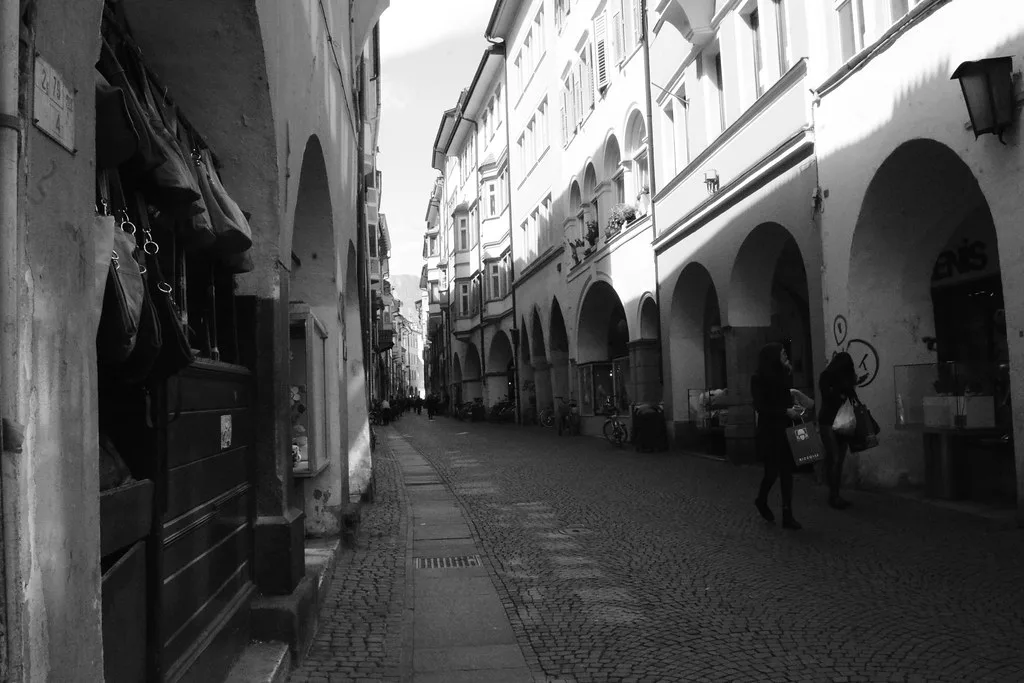
The Bolzano arcades run for about 300 metres and have hosted trade since the Middle Ages, with craft shops, boutiques and cafés tucked under the porticoes. They are a headline sight rather than a lesser-known one, and that is exactly why they belong on a first visit.
At the eastern end of the arcades, Bindergasse is one of the oldest streets in the city, lined with historic buildings and named in the Middle Ages after the coopers who made barrels for the wine trade. It is part of the pedestrian zone, so it rewards a slow stroll rather than a checklist.
For a different kind of browsing, the Saturday market brings local farmers selling seasonal vegetables, cheeses, butter, honey and soap alongside clothing stalls and food trucks. It is a weekly rhythm rather than an attraction, so check locally that the market is running on the week you visit.
Art Off the Main Circuit
Museion is Bolzano's museum for modern and contemporary art, with rotating exhibitions and public programmes focused on current and critical work. Its permanent collection dates from the 1980s, and the library holds a substantial body of catalogues, monographs and rare artists' books.
Outside the centre, the Fondazione Antonio Dalle Nogare sits beneath the ruins of Rafenstein Castle and focuses on conceptual and minimal art through exhibitions, residencies and public programmes. One source described its programmes as free at the time of writing; treat that as reported rather than guaranteed and confirm current conditions before you travel.
Both spaces suit travellers who want a slower hour indoors between walks. Check each venue's own site for current exhibitions and opening days, since programming changes seasonally and admission policies can shift.
Above Town: Salten and the Walk to Gschnoferstall Alm
Salten, described as Europe's highest larch plateau, spreads wide larch meadows and small wooden huts with a constant view of the Dolomites above the nearby village of Jenesien. It is one of the most rewarding half-day escapes from Bolzano for anyone prepared to walk.
A popular route climbs from the car park in Jenesien, or from Hotel Saltus nearby, up to the Gschnoferstall Alm, where dumplings and hot apple cider come with a wide mountain view. Plan for a proper walk with uphill sections rather than a stroll, and check the weather before setting out.
Because San Genesio and Jenesien sit above the city rather than inside it, treat Salten as a day out from Bolzano and confirm how you will reach the trailhead before you commit. Late spring through autumn is the natural window for the larch meadows.
Huts and High Places: Rifugio Passo Santner
Rifugio Passo Santner sits high in the Catinaccio group, with views down into the Bolzano valley. It was rebuilt by a young couple and pairs sleek alpine design with a creative vegetarian kitchen, with supplies brought in largely by helicopter a few times a season.
The hut offers both dormitory beds and double rooms, and evenings there are notably still, which suits couples or solo travellers who want to disconnect. Reaching it requires a mountain hike, so assess your fitness and the season honestly before booking.
Book directly with the hut and confirm availability, access conditions and whether the kitchen is running on your dates; mountain huts change their seasons and services more often than city hotels. None of this is a substitute for a proper weather check in the days before you go.
What Is Not Really a Hidden Gem
Walther Square, the Fruit Market and the cathedral are the city's civic heart, and they are busy for good reason. The square carries a monument to the troubadour Walther von der Vogelweide, the Fruit Market changes with the seasons and hides the Neptune Fountain among its stalls, and the Cathedral of the Assumption of Mary, with its 60-metre bell tower, is free to enter.
In the Christmas season, the traditional market takes over Walther Square and mulled wine is served at the Fruit Market, which makes the centre even livelier. Visit early in the morning if you want the arcades and squares closer to empty.
The South Tyrol Museum of Archaeology, home to Ötzi, is Bolzano's most-visited attraction and the opposite of a quiet find. If you want to see the Iceman, book ahead and expect queues rather than treating it as a spur-of-the-moment stop.
Day Trips Framed as Suggestions
The Ritten earth pyramids are a natural spectacle with Ice Age origins, reached by cable car to Oberbozen and then on foot or by a historic narrow-gauge railway toward Klobenstein; the formations at Lengmoos are the easiest to reach. This is a popular excursion, not a secret.
The Three Castles hike from Missian near Appiano rewards walkers with a loop of roughly two hours past Korb Castle, the ruins of Boymont Castle and Hocheppan Fortress. It suits anyone who wants a half day of walking with a lunch stop rather than a museum circuit.
For a bigger day out, the Seiser Alm is Europe's largest high-altitude alpine pasture, and the road is closed to private traffic during much of the day, so plan on the cable car or a public bus. Verify current restrictions and timetables before you set off.
Practical Planning: Seasons, Market Days and One Ticket
Bolzano works in any season, but each one changes what is possible. Summer favours the Talfer Meadows and high hikes, autumn brings the larch plateau into colour and the chestnut pastries that local bakeries make, and winter shifts attention to the Christmas market and indoor museums.
Rather than buying tickets for every museum, pick one ticketed collection that genuinely interests you and spend the rest of your budget on food and walks. Admission prices and closed days change, so check each operator's own website rather than relying on older guides.
Plan around rhythms too: the Saturday market reshapes the centre, and popular hikes fill up at weekends. If you want quieter conditions in Bolzano and beyond, an early start remains the most reliable strategy.
Where to Go Next
Bolzano rewards a two-speed visit: headline squares and the Ötzi museum on one side, slow promenades, riverside meadows and old lanes on the other. Mixing the two gives you a fuller picture of a city that is both alpine and Italian without pretending the busy sights are empty.
If you enjoy comparing quieter corners across Italian cities, our guides to the hidden gems in Venice and the Best Hidden Gems in Florence follow the same approach of separating free public spaces from ticketed sights. Use them to build a wider itinerary rather than to chase secrecy. For related planning, see Bolzano Evening Guide: Aperitivo, Wine Bars & After-Dark Walks.
Frequently Asked Questions
What are the best lesser-known places to visit in Bolzano?
Start with the Oswald Promenade above the city, then walk the Talfer Meadows and take a look at Maretsch Castle from outside before strolling Bindergasse at the eastern end of the arcades. Museion and the Fondazione Antonio Dalle Nogare suit a slower indoor hour. Each is easy to reach on foot or with a short walk from the centre, and none requires a full day.
Is the Oswald Promenade worth it for a short stay?
Yes, if you have a spare morning or late afternoon. The trail runs about two kilometres from St. Anton to St. Magdalena, beginning with an uphill stretch before becoming largely flat. The picture-frame viewpoint halfway along is the obvious pause, and the walk gives you a view over the city that the squares cannot.
What can you see in Bolzano for free?
Public spaces cost nothing: the Oswald Promenade, the Talfer Meadows, the arcade lanes, Bindergasse, Walther Square and the Fruit Market. The cathedral is free to enter, and Maretsch Castle grounds are walkable from the centre, though interiors are ticketed. Museums and castles charge admission, so confirm current prices and closed days with each operator before you go.
Should you visit Salten and Gschnoferstall Alm from Bolzano?
If you have a full day and enjoy walking, yes. Salten is a larch plateau above the nearby village of Jenesien, and the climb to Gschnoferstall Alm rewards you with mountain views and a hut lunch. It involves real uphill walking, so check the weather, confirm how to reach the trailhead and treat it as a day out rather than a quick stop.
Are Bolzano's arcades still worth visiting if you want quieter spots?
They are worth visiting, but not as a quiet find. The arcades run about 300 metres and are central and busy, yet Bindergasse at their eastern end offers a calmer walk past some of the city's oldest buildings. Visit early in the morning for fewer people, then use the arcades as a link between sights rather than a destination in themselves.
What are good half-day trips from Bolzano?
The Ritten earth pyramids work well, using the cable car to Oberbozen and then walking or taking the historic narrow-gauge railway toward Klobenstein, with Lengmoos the easiest formation to reach. The Three Castles hike near Appiano takes roughly two hours of walking past three castles. For a longer day, consider the Seiser Alm, checking current traffic restrictions first.
Sources
Continue exploring
More guides you'll find useful