
Bari Vecchia Neighbourhood Guide: Old Town vs Murat
Plan a stay in Bari Vecchia with a walking route through old town lanes, squares and orecchiette street, plus how it compares with Murat as a base.
On this page
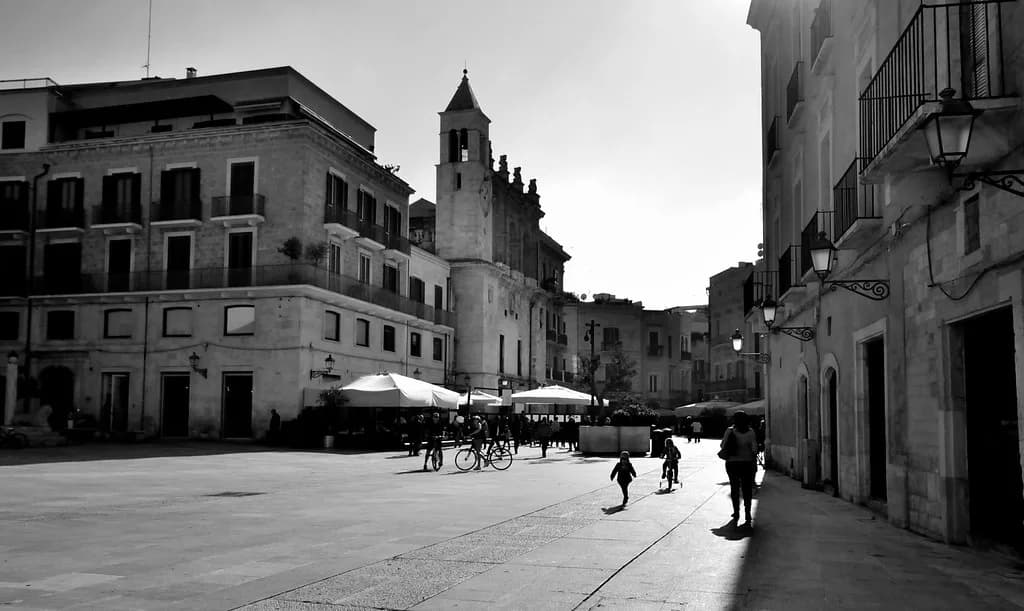
Bari Vecchia is the old town on the city's coastal promontory, a maze of lanes where basilicas and a castle sit beside ground-floor homes and street-food stalls. One useful way to read the district comes from The Puglia Podcast's walking guide, which argues that Bari Vecchia is defined less by ticking off sights than by what you notice: shrines, arches, defensive towers and the way domestic life spills into public streets. As a planning suggestion, allow at least half a day on foot for the old town alone if you want to notice those details rather than hurry between the basilica and the seafront.
Orientation: Bari Vecchia versus Murat
Bari Vecchia and Murat are neighbours in the same compact centre, but they serve different purposes. Murat is the newer grid near the main shopping street and the train station, and it is the natural place to be if you want easy morning exits. Bari Vecchia is the historic labyrinth you step into after crossing Piazza del Ferrarese, where the street pattern becomes narrow and irregular.
A practical comparison from BariRooms is straightforward: Murat suits the train station, shopping and access to Bari Vecchia, while Madonnella sits close to the waterfront. The same source says there is no single answer because the position must be compared with your actual itinerary, not just the nightly rate. Arrival time, luggage weight and departure hour often matter more than a small difference in room cost.
Because the old town and the newer centre blend into each other along the main connecting streets, you can cross between them on foot without planning a full day around the move. That makes the decision less about distance and more about which atmosphere you want outside your door. If you want the old town's lanes in the evening, sleep inside; if you want easy departures, stay on the Murat side.
Suggested walking route: squares, basilica, walls and old port
A sensible first walk starts from Piazza del Ferrarese, the square at the edge of the old town that connects to the seafront and the lanes leading inward. From there, continue to Piazza Mercantile, which one travel account describes as the city's commercial centre since the 14th century and still a good place for a pause. That account also notes its clock tower and a fountain where you can refill a water bottle. The order works because it lets you enter the old town gradually rather than diving straight into the narrowest alleys.
Continue to Basilica di San Nicola, whose Romanesque exterior looks more like a fortress than a decorated church. The basilica holds the relics of Saint Nicholas in its crypt and is shared by Catholic and Orthodox visitors, which makes it both a landmark and a working pilgrimage site.
Nearby, the Cattedrale di San Sabino is a second Romanesque landmark, and the walk between the two is short but dense with small shrines, arches and doorways worth slowing down for. Note that visiting the church itself and visiting any separate crypt or museum are different things: one travel account describes a small crypt museum with its own admission charge, but such details change and should be checked with the venue rather than copied from older trip reports.
End at the old port, Porto Vecchio, where fishermen moor their blue boats and bring in the catch; this is a working harbour, distinct from the ferry terminal used for crossings to Croatia, Greece, Montenegro and Albania. From the seafront you can see Castello Svevo, the Norman-Swabian fortress that anchors the western side of the old town. One travel account notes that the ramparts and moat around the castle can be explored without a ticket while the museum interior requires one; treat that as a traveller's description and confirm current arrangements with the castle before relying on it.
Finish along the Lungomare, Bari's long seafront promenade, where you can walk past Teatro Margherita, a building originally constructed on stilts over the water and now used as a contemporary art venue. The walk is more about rhythm than distance: stop for a coffee, watch the fishermen, and leave time for a spontaneous detour. A self-guided walking route through Bari can help you sequence these stops without overplanning.
Strada delle Orecchiette: how to watch respectfully
Via Arco Basso is the lane most visitors know as the orecchiette street, where local women set up tables outside their doorways to roll and shape pasta by hand. Travel accounts note that they work with practiced speed and that some are happy to chat or sell a bag of fresh pasta to take home. The street is a working tradition rather than a performance, so the etiquette is simple: ask before photographing close up, and buy something if you plan to linger. For wider planning, see Strada delle Orecchiette.
The pasta itself is the point, not just the photo. Orecchiette is Bari's signature shape, and local recipes pair it with cime di rapa when the greens are in season, as one travel account notes. Watching the shaping helps you understand why the dish is so tied to the city, so step aside for other visitors and avoid blocking doorways while you watch.
If you want to go deeper into pasta making, several local cooking classes and food tours exist, but operators and prices change, so compare current offers rather than relying on a guidebook. The street is usually most rewarding when you slow down and watch for a few minutes rather than queueing for a photo.
Daily-life details worth noticing
The Puglia Podcast's Bari Vecchia guide encourages visitors to look beyond the basilicas and castle at everyday architecture: ground-floor homes with doors open to the street, devotional shrines set into walls, stone arches, and defensive towers hidden in plain sight. These details are free to see and often more memorable than another church interior. Walking slowly and looking up is the best way to catch them.
You will also notice how private life spills into public space: chairs outside doorways and conversations that carry across the lanes. That is part of why the old town feels lived-in rather than staged. Keep your voice low in residential alleys, especially early in the morning or late at night, and treat doorways and stairwells as someone's home rather than a backdrop.
If you want a structured way to find these details, the hidden gems in Bari guide covers overlooked corners and smaller sights that pair well with this walk. Use it to add a second layer to the main route rather than to replace it.
The old port and street food: focaccia, sgagliozze and raw seafood
Bari's street food is tied to the old port and the lanes around it. Focaccia barese is thicker than the Ligurian version and typically topped with cherry tomatoes and olives, while sgagliozze are fried squares of polenta sold as a snack. Around the port, fishermen bring in the catch and some stalls serve raw seafood, which travellers describe as a local habit rather than a tourist gimmick; if raw fish does not appeal, look for cooked seafood instead. For more on what to eat, see the Bari street food guide.
A sensible rule for first-timers is to eat where the turnover is high and the menu is short. Several travel accounts mention specific bakeries and stalls in the old town, but names, hours and prices change frequently, so ask at your accommodation or check the current position with the venue rather than relying on a blog from an earlier year. The official Bari city website is a reasonable starting point for local information.
Teatro Margherita sits on the seafront near the old town and now operates as a contemporary art venue with temporary exhibitions; one account records it reopening on that basis in December 2018. Even if you do not go inside, the building is a useful landmark for orienting yourself between the old port and the newer waterfront, but check the current exhibition programme before planning a visit.
Where to stay: Bari Vecchia, Murat, Madonnella or near the station
The choice of neighbourhood is the biggest practical decision in Bari. According to BariRooms, Murat is convenient for the train station, shopping and access to Bari Vecchia; Madonnella is close to the waterfront; and the station area is ideal for excursions. Bari Vecchia itself puts you inside the lanes and squares, but cobblestones and narrow alleys can make luggage harder to handle, so weigh how much walking you want to do with a suitcase.
Arrival time and departure time should drive the decision more than the nightly rate. The same BariRooms guide warns that a late arrival or early flight should not be counted as a full day, and that underestimating the distance between the airport and the city centre is a common first-trip mistake. If you are leaving on an early train, staying near the station can be worth the trade-off in atmosphere.
A middle path is to stay in Murat or Madonnella and walk into Bari Vecchia for evenings, which gives you quieter nights and easier transport while keeping the old town within easy reach. If you want the old town's lanes outside your door, ask about street noise and luggage access before you confirm. For a deeper look at the newer side, read A Slow Guide to Bari's Murat Neighbourhood.
How many days to give Bari and how to add day trips
Two days are enough to cover the historic centre, the waterfront and Murat at a relaxed pace, while three days allow a more leisurely rhythm; four or five days let you add one or two excursions, according to BariRooms. Part of the city's appeal is simply wandering the old town without a checklist, so resist filling every morning with a departure.
Bari is a useful base for the rest of Puglia because the central station connects the city with several coastal and inland destinations, as BariRooms notes. Polignano a Mare, Monopoli, Alberobello and Matera are commonly suggested day trips, and each works better as a single outing than as two rushed visits in one day. Keep one day in the city between excursion days so you are not leaving early every morning.
You do not need a car for the city itself, according to BariRooms, since the centre is walkable and many trips can be arranged by public transport, though you should check schedules for your specific dates. If you plan to visit several small towns in one trip, a car gives more flexibility but adds parking and driving considerations around the old town.
Common first-trip mistakes to avoid
The most common mistake is treating Bari Vecchia as a quick photo stop on the way to the beach. The old town rewards at least a half-day of slow walking, and the lanes are the attraction as much as the basilicas. Second, do not confuse Porto Vecchio with the ferry terminal; they are different parts of the port, as one travel account points out.
Another mistake is underestimating luggage and cobblestones. If you arrive late or leave early, take the BariRooms advice and do not count those days as full sightseeing days; build in buffer time instead. Finally, check opening arrangements for any specific church or museum with the venue, because hours change and a blog from an earlier year may be out of date.
First-time visitors sometimes also assume Bari Vecchia is a UNESCO World Heritage site; one blog makes that claim, but it is not supported by the official city site. Treat the old town as a historic neighbourhood with a living community, not as a museum. That framing will make your visit more rewarding and more respectful.
Plan Your Visit
Bari Vecchia works best as a place to slow down: cross Piazza del Ferrarese, pause in Piazza Mercantile, visit the basilicas, and end at the old port or the seafront. Choose your base by arrival time, luggage and departure hour rather than by rate alone, and keep a day free for the city itself between excursions.
For more detail on the sights mentioned here, the Bari Attractions hub and the hidden gems in Bari guide can help you plan a second walk, while the Strada delle Orecchiette Bari visitor guide explains the pasta street further and A Slow Guide to Bari's Murat Neighbourhood covers the newer district if you decide to stay on that side.
Frequently Asked Questions
Which part of Bari is best to stay in?
There is no single best area. Murat is convenient for the train station, shopping and access to Bari Vecchia; Madonnella is close to the waterfront; the station area is useful for excursions; and Bari Vecchia puts you inside the old town lanes. Compare each option with your arrival and departure times, luggage and evening plans rather than nightly rate alone.
How many days are enough in Bari?
As a planning suggestion, two days cover the historic centre, the waterfront and Murat at a relaxed pace. Three days allow a slower rhythm, and four or five days let you add one or two excursions to places such as Polignano a Mare, Monopoli, Alberobello or Matera. Late arrivals and early departures should not be counted as full sightseeing days.
What should I know before walking the orecchiette street in Bari Vecchia?
Via Arco Basso, known as the orecchiette street, is a residential lane where local women shape pasta by hand outside their doorways. Ask before photographing close up, step aside for other visitors and buy a bag of pasta if you plan to linger. Treat the street as a working tradition rather than a performance.
Sources
Continue exploring
More guides you'll find useful





