
Bari Three Day Itinerary: Old Town, a Day Trip and Local Food
Plan three days in Bari: walk Bari Vecchia and the lungomare, take one train day trip, then spend the last day on pasta, focaccia and quieter corners.
On this page
Three days in Bari suits a particular kind of trip: two days on foot in a compact historic centre and one day out by train, with no hire car required. The plan below is an editorial suggestion, not official guidance, and the day splits can be reshuffled around weather and opening times. It leans on Bari's two strongest assets for a short break, a walkable old town and quick rail links along the coast.
There is a real constraint worth knowing before you book. Some Puglia businesses close for a stretch between the summer season and the Christmas market period, and a November visit can mean fewer restaurants and masserie taking guests, as one traveller's off-season account describes. That trade-off buys quieter streets, so shoulder-season travellers should shortlist more places to eat than they think they need and confirm the ones that matter.
Why Bari Works as a Three-Day Base
Bari is the capital of Puglia and a working port, with an old town that rewards wandering rather than ticking off sights. The historic core is compact and best explored on foot, so you can cover a lot of ground without transport. It also functions as a practical springboard for the rest of the region.
The airport sits outside the city but connects to the centre by rail, with the station inside the terminal area and a covered walkway to the platforms. Local buses and a dedicated airport shuttle also run into town, and fares are published by the operators rather than fixed in guides. Check the current prices with the transport operator before you travel rather than relying on old figures.
For onward trips, Bari Centrale is the hub. According to a Bari transport and day-trip overview, trains reach Polignano a Mare in roughly 40 minutes and regional routes serve Alberobello, with Ferrovie del Sud Est operating key lines in this part of Puglia. Timetables change, so confirm times on the operator's own site before you commit to a day plan.
Before You Go: Timing, Sleeping and Arriving
Late spring and early autumn tend to bring lower accommodation prices and a calmer old town without losing the weather, which matters if you plan to spend a lot of the trip outdoors. Peak summer is hot and busy, and August in particular pushes both temperatures and room rates. Book early if you are travelling between June and September.
Where you sleep changes the shape of the trip. Bari Vecchia puts the old town and evening atmosphere on your doorstep but is noisier. Murattiano, the grid of streets between the station and the old town, is the practical choice for arrivals, day trips and supermarkets. The lungomare gives you sea views and sunrise walks at a higher price.
If you plan to day trip by train, staying within a short walk of Bari Centrale saves time on early departures and late returns. Packing light also helps, since you will be walking on cobbles and stone lanes for much of the trip. Leave the car question until you have decided whether you are staying in the city or heading into the countryside.
Day 1 Morning: Bari Vecchia on Foot
Start in Bari Vecchia, the tangle of narrow lanes, courtyards and small chapels that forms the historic heart of the city. It is free to explore, and the light and the atmosphere are best early in the morning or early evening when day trippers thin out. This is one of the quietest and least stage-managed parts of the city. For wider planning, see Hidden Gems in Bari.
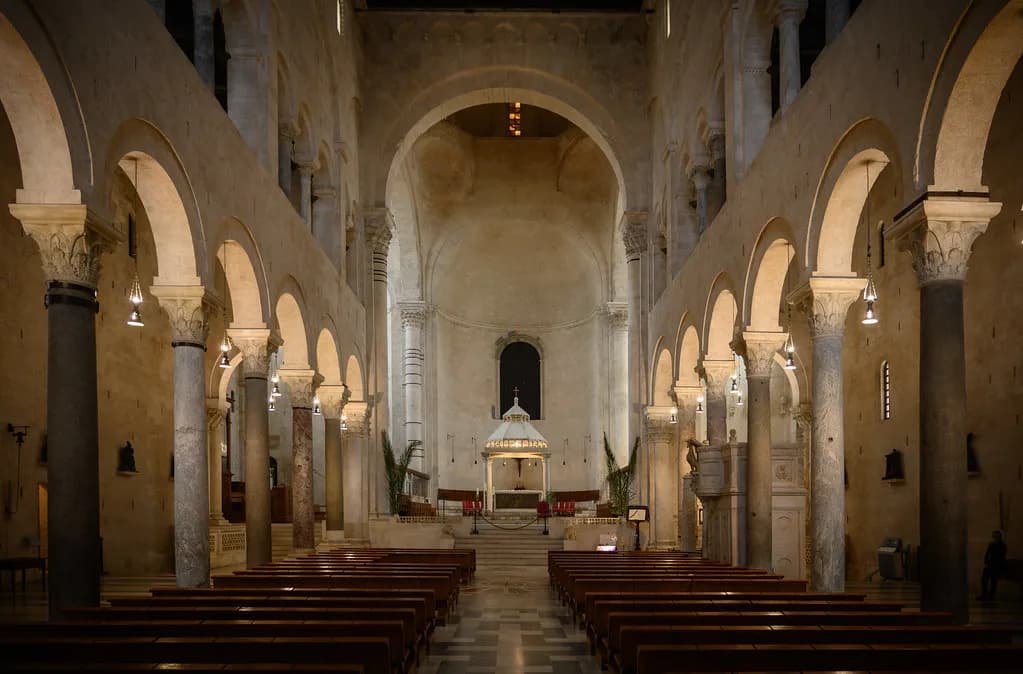
Basilica di San Nicola is the essential stop, a Romanesque church linked to Saint Nicholas whose relics sit in the crypt. Visiting is typically free, though access can vary during services, so time your arrival around worship rather than treating it purely as a sight. A local guide notes the basilica is shared by Catholic and Orthodox traditions, which explains the steady stream of pilgrims alongside tourists.
A short walk away, the cathedral of San Sabino is easy to miss because it plays second fiddle to the basilica, but its plain white exterior hides mosaics and frescoes worth a look. A small museum in the crypt holds excavated remains of an earlier church on the site, and it charges a modest entry fee. Verify current opening times and the ticket price locally, since sources conflict on hours.
Day 1 Afternoon: Castle Grounds, Old Port and the Seafront
Castello Normanno-Svevo sits at the edge of the old town, a Norman fortress refortified under later rulers and now used for exhibitions. Walking the outside ramparts, towers and moat costs nothing; going inside the museum requires a ticket. Check the castle's own published information for current hours and entry before you plan around it, because guidebook hours go stale quickly.
From the castle, drop down to Porto Vecchio, the old harbour where small blue fishing boats still land their catch. This is a working port rather than a visitor attraction, and the early morning is the liveliest time to see it. It is also the spot to eat raw seafood straight from the boats if you are inclined, though supplies run out as the day goes on.
Finish the afternoon on Lungomare Nazario Sauro, the long seafront promenade that curves around the city. It is free, flat and made for slow walking, with sea air and plenty of benches. If you want a beach fix without leaving town, Pane e Pomodoro is the city beach at the end of it, though conditions vary and it is not a substitute for a proper swimming spot on every day.
Day 1 Evening: Piazzas and a First Focaccia
Piazza Mercantile has been the commercial heart of the old town since the fourteenth century, framed by the Palazzo del Sedile and a sixteenth-century clock tower. It is a natural place to sit with a drink and watch the city go about its evening. Nearby, Piazza del Ferrarese marks the edge of the old town and fills with bars and restaurants after dark.
For a first proper taste of the city, seek out focaccia barese, a round, oily bake topped with cherry tomatoes and olives that sits somewhere between bread and pizza. Bakeries in the old town sell it by the slice and it makes a cheap, filling start to the evening. Pair it with a glass of Primitivo or a local white to set the tone for the trip.
Day 2 Decision: Polignano a Mare or Alberobello
Both day trips are doable by train from Bari Centrale, and both are popular enough that you should pick one rather than trying to combine them. A rail traveller's account notes that two side trips in a single day only really works if you have a car and can plot your own route; by rail you would have to return to Bari between them, which eats the day. Choose based on whether you want coastline or the trulli.
Alberobello's trulli are a UNESCO World Heritage Site, a dense cluster of whitewashed stone houses with conical roofs, many of them now shops, cafes and places to stay. They date back centuries and were built without mortar. The town is small and a few hours covers it, which makes it a sensible half-day rather than a full one. Check Ferrovie del Sud Est for current regional timetables.
Day 2 in Polignano a Mare: Cliffs and Cold Water
Polignano a Mare is the postcard cliff town, its old town perched above limestone cliffs on the Adriatic. Lama Monachile, the rocky cove below the centre, is the famous viewpoint, and the surrounding streets fill with people lingering over drinks and photographs. Go early or late to enjoy the views before the middle of the day gets crowded.
The water is cold outside high summer, and even in November you may see a few people swimming who clearly know what they are doing. Treat it as a walk and a view rather than a guaranteed swim unless you are visiting in the warmer months. Seafood is the thing to eat here, with fresh octopus a local speciality in season.
If Polignano is your choice, an early train out and a late afternoon return gives you a full day without rushing. Buy tickets in advance where the operator allows it, and keep an eye on the last services back. The town rewards slow wandering more than a tight checklist, so leave room for an unplanned stop.
Day 2 Alternative: Alberobello and the Trulli
If you choose Alberobello instead, aim to arrive early. It is a popular stop and tour buses arrive in force later in the morning, so the lanes are far more pleasant before they do. Wander without a plan, look for the two-storey trullo and the church built in the same style, and stop for burrata or a deli lunch when you need a break.
Off-season Alberobello behaves differently. Some of the better restaurants close for the quiet weeks, the main square can feel deserted, and a well-stocked deli may be a better bet than a sit-down meal. Rain can cut a visit short, so keep a backup plan that does not depend on the weather.
Staying overnight in a trullo is an option if you would rather not do a there-and-back trip, and many restored examples are let to visitors. Otherwise, return to Bari in the evening and eat near your accommodation. Either way, check the return service before you leave the city in the morning.
Day 3 Morning: Orecchiette Street and the Fish Market
Day three is deliberately slower. Start at Strada delle Orecchiette, also known as Via Arco Basso, where women make ear-shaped pasta by hand at tables outside their homes. Watching is free, and many sell bags of fresh pasta to take away. Go early, take a small amount of cash, and if you photograph the work, buy something.
A few minutes away, the old port is at its best in the morning, when fishermen bring in the catch and the blue boats line up along the quay. It is a genuine slice of working life rather than a performance for visitors. The fish market and the surrounding stalls are the place to see what the city actually eats.
This is the ideal morning to simply walk without a destination, following the lanes wherever they look interesting. These lanes are less crowded before lunch, and the old town rewards aimless wandering more than most cities. A self-guided walking route can help you cover the main lanes without missing anything on the way.
Day 3 Midday: Two Theatres, One Free Exterior
Teatro Petruzzelli is Bari's grand opera house, originally finished in 1903 and rebuilt after a devastating fire in 1991. It hosts opera and ballet, and short guided tours have long been one of the city's cheapest cultural outings. The tour price and schedule have been reported inconsistently, so check with the theatre for current arrangements rather than budgeting from old figures.
Teatro Margherita is the more unusual building, an Art Nouveau theatre built between 1912 and 1914 on stilts over the water to get around a restriction on new theatres on public land. Land reclamation in the 1920s left it on dry ground, and after a long spell of abandonment it reopened in 2018 as a contemporary art venue. Check what is on before you go, because access depends on the exhibition.
Be warned that opening information for the Margherita and the cathedral crypt is patchy and sometimes contradictory, with one visitor finding the gallery open on a Monday when many museums close. Do not build a tight schedule around either without confirming directly. A quick call or a look at the venue's own listing is worth more than a guidebook.
There is a quiet pleasure in the middle of the day: find shade, sit in a piazza, and do nothing for an hour. Take a slow coffee rather than a rushed one. This is exactly the kind of stop that disappears from a tightly packed itinerary.
Day 3 Afternoon: Pasta, Street Food or the Beach
The signature local experience is making orecchiette yourself, and several hosts run small classes in the old town, often paired with a market visit. Whether a class is worth it depends on what you want from it. A traveller's account describes a session where the dough was discarded and the meal fell short of the price, which is worth remembering when comparing options.
Judge a cooking class on what you actually get: how many people, how hands-on it is, whether you eat what you make, and what the same money would buy as a restaurant lunch. A food walking tour can be better value if you mainly want to taste many things in one afternoon. Book only through operators with clear cancellation terms and recent reviews, and confirm availability for your dates.
If neither appeals, take the slow option: a long seafront walk followed by a swim at the city beach. Pack water and snacks and treat it as a free afternoon rather than a paid lido day. Late afternoon is the best time for light on the water.
By now you will have a sense of what you have missed. If you have only skimmed the surface, swap an activity for a second wander through the old town. The streets reward repetition, and the second pass is rarely the same as the first.
What to Eat and What to Skip
Focaccia barese and panzerotti are the two street staples you should not miss, both cheap and easy to find. Panzerotti is the deep-fried, more chaotic cousin of a small calzone, stuffed with mozzarella and tomato. Eat one proper sit-down meal a day and fill the rest from bakeries and street food.
Orecchiette with cime di rapa is the classic first course, though the greens are seasonal and the dish may come with meat sauce outside their window. Raw seafood at the old port is for the confident eater, and it is worth going early to see the catch. Skip the tourist-facing waterfront tables and walk a few streets inland to eat better for less.
For a broader set of recommendations on where to eat and what to order, a dedicated local food guide is worth consulting before you go. Restaurants change hands and close out of season, so check that your shortlist is still open. A little planning here protects a lot of evenings.
Practical Pitfalls: Traffic, Insurance and Monday
Driving in Puglia is not for the nervous, and hiring a car brings its own costs. Rental rates can look cheap at Brindisi or Bari airport until you discover that full damage cover costs more than the rental itself, as one traveller found. Size the insurance decision before you sign, and photograph the car on collection.
Inside Bari, you will not need a car for this itinerary. Parking is restricted in the centre, and the streets of the old town are effectively pedestrian-only. If you do stay outside the centre, check with your accommodation about parking before you book.
Monday is the riskiest day for museums, and both guidebooks and online sources get the closures wrong often enough that it is worth assuming your top choice might be shut. Pair each paid sight with a free backup, and keep the old town wanders as your fallback. Confirm hours directly in the days before you travel.
Three-Day Variations: Shorter, Longer and Without a Car
If you only have two days, cut the day trip and keep both days in the city. A dedicated two day itinerary covers the old town, the waterfront and a first taste of the local food without rushing. It suits a weekend break from a European city.
With four days, the coast opens up and you can add a second side trip or move on to another town in the region. Otranto and Gallipoli are further south and worth extending for if you have more time. Matera is the wildcard, a UNESCO cave city about an hour from Bari by bus, though it sits in neighbouring Basilicata rather than Puglia.
The no-car version of this trip works well as long as you accept some limitations. You will lean on trains and buses for day trips and miss the small countryside towns that a car unlocks. In exchange you avoid parking, insurance and the narrow country lanes, and you can plan everything in advance from Bari Centrale.
Plan Your Visit
Three days in Bari is enough to see the old town properly, take one good day trip and spend a slower final day eating and walking. The trip works best when you accept that trade-off and build in slack for the inevitable closures and weather. Book your bed early, especially in summer, and confirm the opening times that really matter before you go.
Before you travel, check the city's official website for local notices, and confirm transport schedules with the operators rather than third-party apps. Build your shortlist of restaurants and sights, then leave room for the unplanned walk that turns out to be the best part of the trip.
Frequently Asked Questions
Is three days enough for Bari?
Yes, if you split the time between the city and one day trip. Two days lets you cover Bari Vecchia, the waterfront and a first taste of the local food. A third day adds a train trip to the coast or the trulli country, or a slower day of pasta-making, street food and quieter corners. Staying longer mainly buys more day trips.
Do you need a car for three days in Bari?
No. The historic centre is compact and walkable, and trains from Bari Centrale reach Polignano a Mare and Alberobello. A car helps if you want remote countryside towns, but it brings parking restrictions in the centre and rental insurance costs that can outweigh the savings. For this plan, public transport is the simpler choice.
Should you day trip to Polignano a Mare or Alberobello?
Pick one rather than trying to do both by public transport. Polignano a Mare is a cliff town with a famous cove and sea views, best visited early or late. Alberobello is the UNESCO trulli town, small enough for a few hours and liveliest before the tour buses arrive. A car is the only realistic way to combine both in one day.
Where should you stay in Bari for a three-day trip?
Bari Vecchia suits evening atmosphere, Murattiano is the practical choice near the station and supermarkets, and the lungomare gives sea views at a higher price. If you plan to day trip by train, stay within a short walk of Bari Centrale. Book early for summer, when room rates rise sharply.
What is the orecchiette street in Bari and is it free?
Strada delle Orecchiette, also called Via Arco Basso, is a lane in the old town where women make ear-shaped pasta by hand outside their homes. Watching costs nothing, and many sell fresh pasta to take away. Go in the morning, bring cash, and buy something if you photograph their work.
Is a cooking class in Bari worth it?
It depends on what the class includes. Check the group size, whether you eat what you make and how the price compares with a restaurant lunch. One traveller's account describes a session that fell short of expectations, so read recent reviews and book through operators with clear cancellation terms. Confirm availability for your dates first.
What is Bari like in the off-season?
Quieter streets and cheaper rooms, with cooler weather and more of the main sights to yourself. The cost is that some restaurants and masserie close between the summer season and the Christmas market period, and rain can interrupt the day. Shortlist backup places to eat and keep a rainy-day plan.
Can you visit Matera as a day trip from Bari?
Yes, and it is a rewarding one, though Matera is in Basilicata rather than Puglia. Buses make the journey in around an hour in the accounts available, with fares varying. Check the current timetable with the operator before you go. With three days in Bari, adding Matera means dropping another activity rather than squeezing it in.
Sources
Continue exploring
More guides you'll find useful





