
Bari One Day Itinerary: Bari Vecchia, Murat & the Lungomare
Plan one day in Bari with a walkable loop through Bari Vecchia, Murat and the Lungomare, plus pasta, focaccia and pizza stops and a midday timing caveat.
On this page
Bari rewards a short visit if you resist treating it as a checklist. Bari Vecchia's limestone lanes, the waterfront and the Murat grid sit close enough that one unhurried loop covers the essentials without a bus ticket. One travel account describes the city as busy and a little gritty in places, yet still worth more than a glance on the way to Puglia's smaller towns.
This plan is a suggested timetable, not a set of official opening times. Treat it as a sensible order of things rather than a schedule to defend, and confirm hours for anything you must see inside. Our guide to the hidden gems in Bari picks up the quieter corners once you have done the headline stops.
Quick Answer: What One Day in Bari Realistically Covers
A single day comfortably covers Bari Vecchia, the Basilica di San Nicola, the Arco Basso pasta street and a stretch of the Lungomare, with time left for a slow evening in Murat. What it does not cover is a beach day, a day trip to Alberobello or Polignano a Mare, or any museum you want to take seriously. Those belong on a longer stay.
The honest trade-off is between famous food and the promenade. Queueing a long time for dinner eats the best light on the waterfront, so decide early whether your priority is eating or wandering. A self-guided walking route through the city centre keeps you moving without constant backtracking.
Before You Go: How the City Fits Together
Bari splits into two personalities that meet near the water. Bari Vecchia is the limestone old town, a medieval tangle of lanes with the main churches at its heart, while Murat across Corso Vittorio Emanuele II is the newer grid of shopping streets between the corso and Piazza Umberto I. Both descriptions come from a day-by-day account of the city.
Because everything sits on the same compact footprint, walking beats any form of transport here. If you arrive by car, the same account suggests parking off Corso Vittorio Emanuele II near the theatre, with the warning that a ZTL sign marks a limited-traffic zone you must not enter. Check the municipal site for current traffic rules before driving in.
Morning Stop 1: Piazza del Ferrarese and a First Coffee
Start at Piazza del Ferrarese, historically the city's main entrance and the point where the old town begins. It is also where a stretch of the ancient Roman Appian-Trajan road was revealed during restoration work, so you can look at Roman paving before you look at medieval churches. Coffee first: the same account begins its own day with an espresso at Piazza Mercantile nearby.
Morning Stop 2: Basilica di San Nicola
The Basilica of Saint Nicholas is the one building in Bari you should not skip. The relics of Saint Nicholas were brought here in 1087 and the church was completed by 1197, and it has drawn Catholic and Orthodox pilgrims ever since. Entry is free, and the tomb sits in the crypt below the main floor. Further visitor details appear in How to Spend 48 Hours in Bari: Best Things to Do, See, and Eat - Into the Bloom.
Read up before you go, because the building hides surprises: the marble tomb of Queen Bona Sforza stands behind the main altar without obvious signage. A dedicated Basilica di San Nicola Bari visitor guide explains what the free visit includes and what the crypt means for pilgrims.
Morning Stop 3: Arco Basso and the Orecchiette Street
Cross from the castle side through the arch and you reach Arco Basso, the lane known as Strada delle Orecchiette. Women usually sit outside their homes shaping pasta by hand and selling it to passers-by, though the number of stalls varies with the hour and some were closing by early evening on one visit. Earlier in the day is the better bet.
Buy with a little care so your money supports genuine work. An investigation in early 2025 alleged that some vendors were passing off factory-made pasta as handmade, so watch the pasta actually being formed before you pay. Pick up taralli while you are here, ideally the traditional version with fennel seeds.
Optional Detour: Piazza Mercantile and Largo Albicocca
Piazza Mercantile is a short hop from the basilica and worth a detour for the Column of Justice, where debtors were once tied to a lion statue and publicly humiliated; the marks are still visible. Largo Albicocca, the so-called Square of the Lovers, is quieter and prettier in the evening, with padlocks on the railings carrying on the tradition.
Midday Reality Check: The Lunch-and-Closure Rhythm
One travel account describes Bari shutting down for a long lunch, with most shops dark between roughly 13:00 and 16:30 while restaurants serve until about 15:00. Do not treat that as a current law: chain stores stayed open even then, and habits shift. Ask at your hotel or check a few doors on the morning of your visit rather than planning around a rigid shutdown.
Practically, the safest plan is to eat lunch between about 12:30 and 14:00 and use the quiet early afternoon for the basilica interior or a shaded promenade walk instead of shopping. Keep the bigger church and museum stops for that window.
Lunch: Simple Pasta or a Street-Food Stop
Order the dish Bari is known for: orecchiette con cime di rapa, the little-ear pasta with turnip tops. It is a rustic, inexpensive plate by tradition, so it rarely needs a famous address. A street-food lunch of panzerotto or focaccia barese is the faster option and keeps the afternoon free; the local bakery list runs from Panificio Fiore behind the basilica to Panificio la Pupetta near the corso.
If you want a named sit-down table rather than a queue, pick by proximity to your next stop rather than by review count. Price menus are posted outside most places, so read them and walk on if nothing suits.
Our guide to the city's main sights lists the headline stops in one place, so plan your one paid interior here rather than spending the whole day deciding. For wider planning, see Bari Attractions: Visitor Guides to 13 Sights.
Afternoon Stop 4: The Lungomare and the Old Port
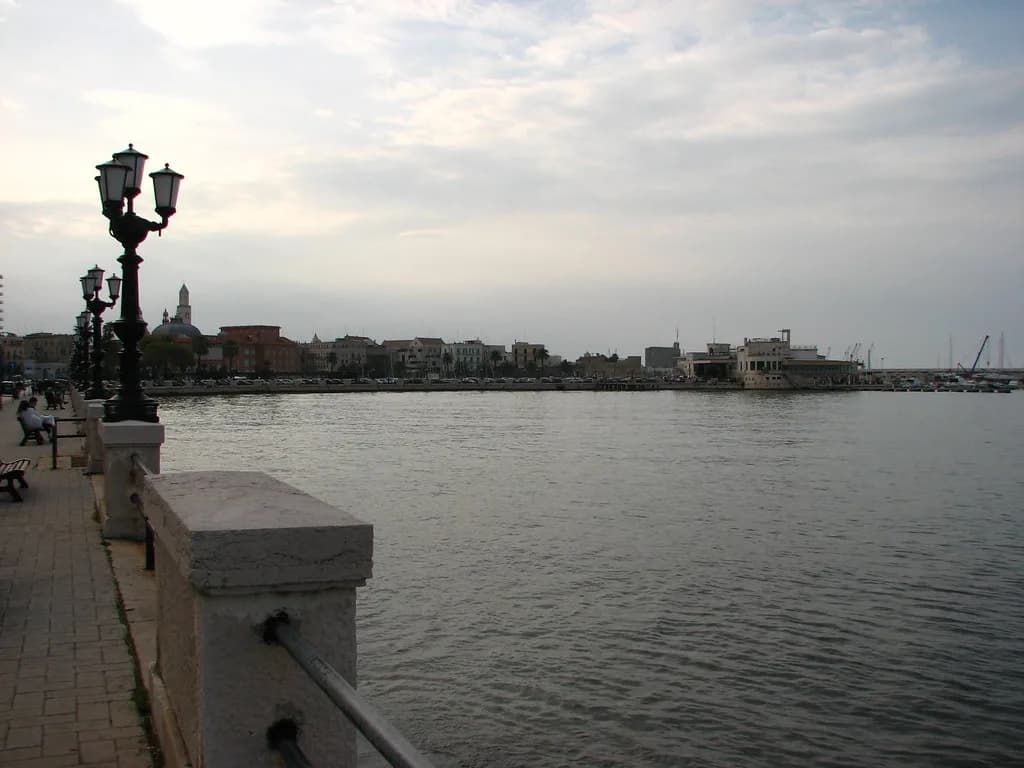
Walk the seafront from the port end towards Teatro Margherita, a stretch inaugurated in 1927 with Liberty-style buildings opposite the water. The left-hand stretch around the ferry port is less scenic and harder to reach the water, so head right from the old town and follow the locals.
Past the theatre you reach Porto Vecchio and Molo San Nicola, where the fishing boats come in with the day's catch. It is a natural lunch or late-afternoon stop, and El Chiringuito, alongside the moored blue boats, is a plain local bar known for cold Peroni and panzerotti.
Optional Afternoon: Castle Exterior, Gelato or a Workshop
If you have an hour spare, the Castello Svevo exterior and the gelateria across the street make a pleasant break; the castle itself hosts exhibitions, and the interior is a separate ticketed visit. Since entry prices change, check the municipal site or ask at the entrance on the day instead of budgeting from an old figure.
A hands-on pasta or focaccia class is the better swap if you would rather make something than see it reconstructed. Classes are sold by their operators and availability varies, so book through an operator listing and confirm the meeting point.
Late Afternoon in Murat: Shopping and Aperitivo
Cross back into Murat for the late afternoon, when the shopping streets wake up again. Via Sparano carries the familiar international names, while the streets off Corso Vittorio Emanuele II hold smaller concept stores and boutiques. Things reopen gradually, so stroll rather than rush to a particular shop.
The Petruzzelli Theatre anchors this part of town and is one of Italy's largest opera houses, so even a glance at the facade earns the detour. Aperitivo hour in the grid around Piazza Umberto I sets you up for dinner.
Evening: Pizza, Seafood or One Last Look at the Water
For dinner, choose between a Bari pizzeria in the Murat grid and a seafood table near the old port. One account on a cold Monday evening at a well-known pizza place faced a twenty-minute wait for a table and an hour for the food, which shows that famous names cost time you may want elsewhere.
End with a walk back along the seafront or through the old town, where doors stay open and people of every age are out in the evening. That lived-in evening effect is the part of Bari most visitors remember.
Suggested Clock-Based Skeleton
This is our suggested order, not a schedule from the city, and it assumes you want a slow pace with one sit-down meal and one coffee. Adjust it freely.
09:30 Piazza del Ferrarese and coffee; 10:15 Basilica di San Nicola and the crypt; 11:15 Arco Basso for pasta and taralli; 12:00 Piazza Mercantile and Largo Albicocca; 12:45 lunch; 14:30 Lungomare walk to the old port; 16:00 Castello exterior or a class; 17:00 Murat shopping and aperitivo; 19:30 dinner and a final waterside walk. Keep a further fifteen minutes of slack before any timed appointment.
What to Skip in a Single Day
Skip the beach. Pane e Pomodoro, San Francesco and Torre Quetta all sit away from the centre, and getting to one and back spends the middle of the day you would otherwise give to the old town. Save them for a longer stay.
Also skip day trips, museum collections and any second church interior. If you are here two nights, the two day itinerary spreads the old town and the coast over a fuller pair of days.
Practical Notes: Parking, Water and Shade
Bring water and comfortable shoes. The limestone lanes in Bari Vecchia are uneven and get hot, and the promenade offers little shade at midday.
Drivers should heed ZTL signs at the old-town edge as strictly as any posted speed limit, and should park outside the restricted zone. Public transport tickets are usually sold at bars, cafeterias and tabacchi shops rather than on board.
Before you travel, check official city notices for road changes, event closures or works that could affect the route.
Plan Your Visit
One day in Bari is enough to see why the city deserves more. Walk the old town in the morning, eat a simple plate of orecchiette at lunch and give the afternoon to the sea, then let Murat carry you into the evening. The looping route, not the checklist, is what makes the day work.
For everything beyond the classics, our guide to hidden gems in Bari takes you to quieter corners without inventing secrets, and the Basilica di San Nicola in Bari guide fills in the history behind the crypt.
Frequently Asked Questions
Is one day enough for Bari?
Enough for the old town, the basilica, the pasta street and a walk along the seafront, yes. It is not enough for a beach day or a day trip, so decide which you want before you book. If you have two nights, spread the coast and the old town over both days.
What should you not miss in Bari in one day?
The Basilica di San Nicola and Arco Basso are the two stops that define the visit, and the Lungomare walk gives Bari its character. Everything else, including shopping in Murat and any paid interior, is optional and can be trimmed.
Is Bari Vecchia easy to explore on foot?
Yes, the lanes are short and close together, and the main sites sit within a small radius. The paving is limestone and uneven, so wear decent shoes; people with limited mobility should plan a shorter loop around the basilica and the waterfront.
Sources
Continue exploring
More guides you'll find useful





