Day Trips from Arezzo: Hill Towns, Valleys and How to Plan Them
Plan day trips from Arezzo to Cortona, Anghiari, Poppi and the Casentino and Valdichiana valleys, with half-day and full-day plans and transport tips.
On this page
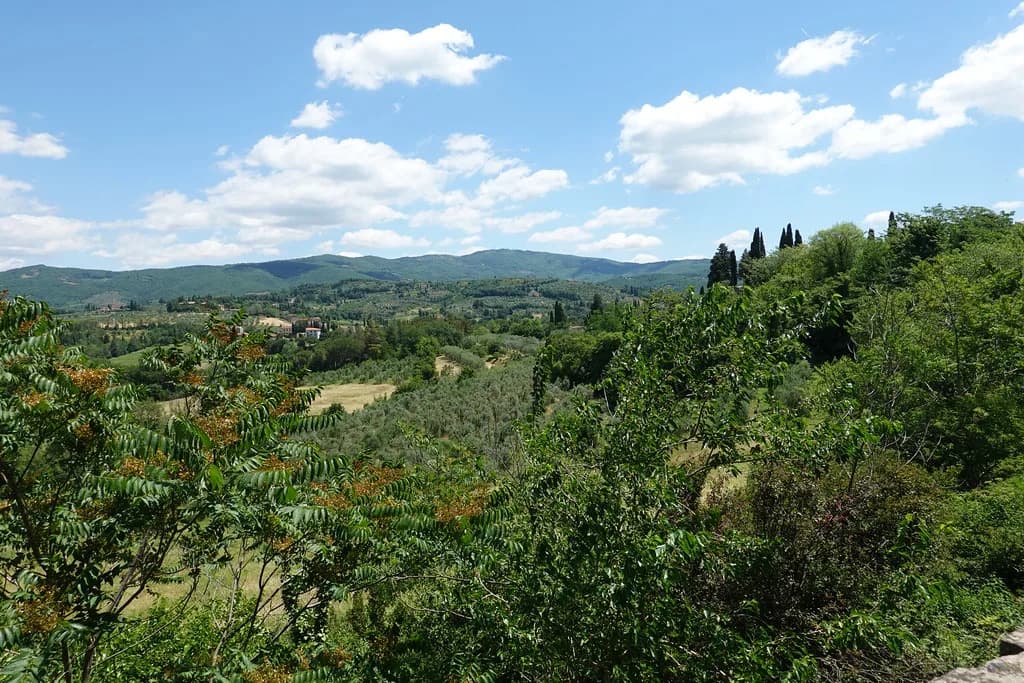
Arezzo sits in south-eastern Tuscany on a hill ringed by four valleys — the Casentino, Valdarno, Valdichiana and Valtiberina — which is exactly what makes it a workable base for excursions rather than a single-stop city. A suggested half-day shape is one compact hill town reached in a single leg, one meal there, and a late-afternoon return to the historic centre; that is an editorial plan, not an official itinerary. The honest first question is not where to go but how many hours you actually have.
This guide groups excursions by time cost and direction rather than by ranking. Expect to verify opening hours, ticket prices and any booking rules with each site or the Arezzo tourist office before you commit a day to it. Arezzo's destination management foundation publishes visitor information and event notices for the city and its surroundings, and it describes the wider Aretine territory as a hidden treasure.
Why Arezzo Works as a Base
Arezzo's position is its main practical advantage: it lies roughly midway between Florence and Perugia, and the province fans out into four distinct valleys. A short drive or train ride in almost any direction lands you in a different landscape — Apennine forest to the north, the wide Chiana basin to the south, the Tiber valley to the east. One travel guide notes that Arezzo is frequently overshadowed yet offers the advantage of fewer tourists, which also makes returning to it at the end of a day pleasantly calm.
The city itself is compact and largely walkable, with the cathedral, town hall and Medici Fortress on the upper hill and main streets running down toward the gates. Most of the headline sights cluster within a short radius, so you lose little time crossing town on the way out. For the detailed picture of the individual sights, the attraction guides are the right place to start.
One caution: leaving town every day is a choice, not a default. Piazza Grande carries recurring city life — above all the monthly antiques market — so a day trip that skips the market weekend may cost you the reason many people come. If you want the short version of the city's own highlights first, the hidden gems in Arezzo guide covers that ground.
Getting Your Bearings: Direction and Time Cost
Think of Arezzo as a hub with four spokes. Cortona and the Valdichiana lie south; Anghiari and the Valtiberina east toward Umbria; Poppi and the Casentino north into the Apennines; the Chianti hills and Castelnuovo Berardenga west toward Siena. Each spoke rewards a different amount of time: a hill town can absorb a morning, while a valley with a castle and a national park wants a full day or more.
A rough rule that works well: half a day suits a single compact town where the pleasure is climbing, wandering and sitting in a square, while a full day suits anything that pairs two stops or requires a long approach. Distances matter less than the friction of parking, climbing and finding your way on foot. If you are unsure which season suits which excursion, weigh when the city and countryside are busiest. For wider planning, see Best Time to Visit Arezzo Without the Crowds.
Half-Day Option: Cortona as a Hill-Town Detour
Cortona sits roughly 30 kilometres south of Arezzo near the Umbrian border and is one of the classic hill towns of the province, its streets climbing to views over the Valdichiana and toward Lake Trasimeno. The format asks something of you: the pleasure is walking up and down steep lanes, pausing for a coffee, and looking out. Treat it as a morning or an afternoon rather than a full day, and wear shoes that handle cobbles and gradients.
Reaching Cortona is easier by car, since one travel writer describes it as a hassle to reach by train — which matters if you are basing yourself in Arezzo without a vehicle. If you are relying on public transport, consider whether a longer city link suits you better than a hill town.
Half-Day Option: Anghiari in the Valtiberina
Anghiari lies in the Valtiberina, the upper Tiber valley, and is described as a charming and authentic medieval hamlet that has been preserved remarkably well. Its small squares and narrow alleys are lined with craft workshops, palazzi and houses with flower-decked balconies. The appeal is a slow walk rather than a checklist, which makes it a natural half-day: arrive, wander, eat, and head back before the light goes.
Because the valley stretches toward Umbria, Anghiari pairs logically with other stops in the same direction if you have a car and a full day. On a short visit, resist the temptation to add a second town — the pleasure here is in the unhurried pace of a small centre.
Full-Day Option: Poppi and the Casentino
North of Arezzo, the Casentino is the upper valley of the Arno, enclosed between the Apennines and the Pratomagno massif. The hamlet of Poppi and its Guidi castle dominate the area, and the valley's real draw is the landscape around it: the Foreste Casentinesi national park, a protected Apennine area holding some of Italy's largest and best-preserved woodlands, along with the sanctuaries of Camaldoli and La Verna. This is a full-day outing, especially if you want walking rather than a quick look at a castle.
A car makes the Casentino far more flexible, because the valley's sights are spread out and the park trails are not on a town doorstep. Without one, consider whether a single base such as Poppi is enough for the day. Either way, check park and castle visiting arrangements before setting out, since these are the kind of details that change seasonally.
Art Detour: Monterchi and the Madonna del Parto
Monterchi, a small village in the Valtiberina, holds a fresco by Piero della Francesca of a pregnant Virgin Mary, the Madonna del Parto, in a setting that seems improbably modest for such a work. That single masterpiece is the reason to come, so treat Monterchi as an art stop rather than a town break — a short detour that fits neatly alongside an Anghiari or Valtiberina day.
Because the fresco is a ticketed, enclosed sight with seasonal opening patterns, confirm current hours and admission with the site directly before building a day around it. The schedule and prices printed in older travel writing should not be treated as today's rules.
Longer Excursion: Perugia and the Umbrian Border
Perugia, the Umbrian capital, sits roughly 90 kilometres from Arezzo and rewards a full day rather than a half. One guide notes it is easily accessible by train from Arezzo, which makes it a rare longer excursion that does not require a car. Its historic centre, museum collections and food culture justify the extra travel, but only if you are willing to give it the whole day.
The trade-off is that Perugia is a city rather than a hill town, so it duplicates some of what Arezzo already offers in churches and museums. Choose it when you want a change of region and a bigger urban canvas, and keep Cortona or Anghiari for the days when you want small-scale wandering.
Westward: Chianti and Castelnuovo Berardenga
West of Arezzo, the Chianti hills and villages such as Castelnuovo Berardenga offer wine-country scenery rather than a single sight: vineyard-dotted landscapes, medieval hamlets and historic wineries. One guide describes Castelnuovo Berardenga as a peaceful place with a sense of authentic Tuscan living. This is a full-day, car-friendly direction, and it suits travellers who would rather drive through scenery than climb one more bell tower.
Any tasting or cellar visit you are considering should be confirmed directly with the producer, since availability is not something you can assume from a guidebook. Build the day around the drive itself, with one or two stops, rather than trying to cover the whole Chianti area.
Getting Around: Train Versus Car
Arezzo's station sits on the Bologna–Rome line and has daily Intercity and Frecciarossa connections from Florence, Rome and elsewhere in Italy, which makes the train the natural choice for city-to-city links such as Perugia or Florence. For hill towns and valley villages, though, a car gives you the flexibility the geography demands. Decide which kind of day you want before you decide on transport.
If you drive, much of the historic centre is pedestrianised, and the ZTL areas are marked by red no-entry signs and controlled by cameras, with fines for entering without a permit. One guide notes the Via Pietri car park is connected to the historic centre by a series of escalators, and a city information page describes that car park as free. Read the signs carefully rather than following a satellite route that cuts through the old streets.
Suggested Shapes for a Half Day and a Full Day
A half-day shape: pick one compact centre reachable in a single leg — Cortona for climbing and views, or Anghiari for a gentler wander among workshops and squares. Leave Arezzo mid-morning, plan one meal there, and return by late afternoon so the evening belongs to the city. This is a suggestion, not an official plan, and it assumes you have checked the town's opening patterns.
A full-day shape: give the Casentino to Poppi, the castle and the forested park, or take the train to Perugia and spend the day there. Both demand an early start and a willingness to let one destination carry the day. Trying to combine a valley and a city in a single day usually produces more driving than seeing.
Pairing Excursions With City Life
Arezzo's antiques fair, the Fiera Antiquaria, takes place over the weekend that includes the first Sunday of each month and is described as one of the best in Italy. If your visit coincides with it, staying in town that weekend is often the better use of your time than leaving, especially since the fair fills the upper city with dealers. Keep an eye on the calendar before fixed seasonal plans, including the Giostra del Saracino joust.
On ordinary weekdays, the calculus reverses: the city is calmer and the countryside is yours, so a car-based excursion to the Casentino or the Chianti hills feels less rushed. Match your excursion to the city's rhythm rather than treating Arezzo as a hotel.
Plan Your Visit
Arezzo rewards travellers who treat it as a hub with judgement rather than as a checklist. Choose one half-day hill town and one full-day valley or city, keep a day back for the city itself, and confirm the details that change — hours, admission, seasonal openings — with each site before you go. The result is a trip that feels slow without feeling idle.
Start with the city's own visitor information for event notices and practical guidance, then build outward along the valley that matches your available hours.
Frequently Asked Questions
Is Arezzo worth seeing as a base for day trips?
Yes, if you want a compact Tuscan city with several distinct landscapes within reach. Arezzo sits among the Casentino, Valdarno, Valdichiana and Valtiberina valleys, and it also has its own substantial sights, including the Piero della Francesca frescoes in the Basilica of San Francesco. It is often described as less crowded than Florence or Siena, which suits travellers who value calm evenings.
Do you need a car for day trips from Arezzo?
Not necessarily, but a car makes hill towns and rural valleys far more practical. Train links work well for longer city connections such as Florence and Perugia, while Cortona is described as awkward to reach by rail. If you do drive, keep clear of the camera-enforced restricted traffic zones in the pedestrianised centre and use a peripheral car park linked by escalators.
What is a good half-day hill town near Arezzo?
Cortona is a practical choice, sitting roughly 30 kilometres south near the Umbrian border. The rewarding part is climbing the lanes and taking in the views over the Valdichiana, so plan for gradients and cobbles. Anghiari in the Valtiberina is another good half-day option, offering a preserved medieval centre for a slow walk rather than a tick-list of sights.
Can you visit the Casentino without a car?
It is possible to reach parts of the Casentino by public transport, but the valley's highlights are spread out, including the Guidi castle at Poppi and the forested national park. Without a car, pick a single base and accept that you will see less of the countryside. Check current transport options and park access arrangements locally before committing to a day.
How many days do you need in Arezzo and its valleys?
Three to five days gives a sensible balance: enough time for the city's churches, museums and piazzas, plus one half-day hill town and one full-day excursion into a valley or to a city such as Perugia. With fewer days, choose between the city and the countryside rather than trying to do both. The suggested groupings here are editorial rather than official itineraries.
Sources
Continue exploring
More guides you'll find useful