San Nicolò Treviso Guide: The Gothic Church and Its Frescoes
A guide to San Nicolò in Treviso: its Gothic scale, Tommaso da Modena's frescoes, and where it sits among the Duomo and the city's civic museums.
On this page
Treviso rewards slow walking, and San Nicolò belongs on almost any route through the walled centre. It is a church rather than a museum, so the visit costs you time but not necessarily planning, and it sits close enough to the Duomo, Piazza dei Signori and the civic museums that it slots into an afternoon rather than an expedition.
Why San Nicolò Belongs on a Treviso Walk
Treviso's historic core is compact and arcaded, with the Sile river and its smaller canals running through it, which makes a church-to-church walk realistic on foot. San Nicolò has long been part of that fabric: the Diocese of Treviso describes an exchange between the church and the city that it frames as lasting 800 years. Treat that as historical framing rather than a precise founding date, but it does explain why the building feels woven into the street pattern rather than set apart.
The practical trap is assuming any church in a historic centre is open on demand and free to enter. San Nicolò's own opening days, daily hours and any admission policy are not published in the sources used for this guide, so build your day around the square and the museums first, then treat San Nicolò as a stop you confirm close to the date.
Where San Nicolò Sits in the Walled Centre
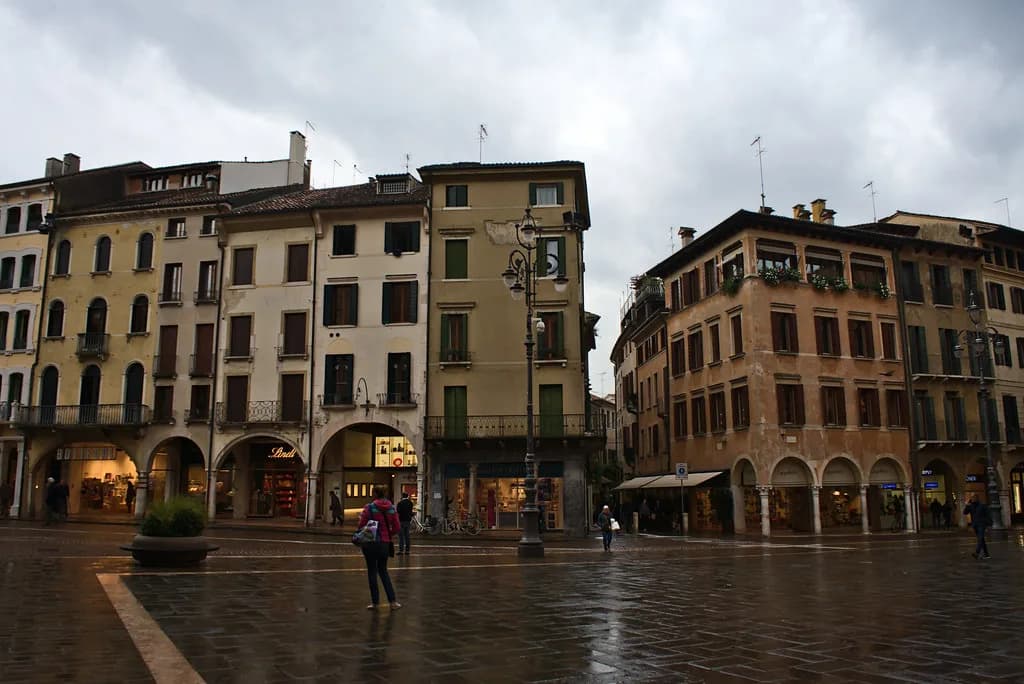
The centre's spine runs from Piazza dei Signori, with the brick bulk of the Palazzo dei Trecento and the Torre Civica on one side, along Via Calmaggiore to Piazza del Duomo. Routes lead out of the square toward the Duomo and, in the other direction, toward the canals and the fish market, so San Nicolò fits naturally on a route that loops through the eastern side of the old town rather than as a standalone destination.
Treviso's centre is still partly enclosed by walls built in the early sixteenth century, and Porta San Tomaso is the grandest of the three gates. If you approach from outside the walls, entering through a gate and then drifting toward the Duomo gives you a natural sequence in which San Nicolò becomes a stop rather than a detour.
Beyond the institutional sights, the quieter corners repay the extra ten minutes. The Canale dei Buranelli, with its wrought-iron bridges and old water wheel, is one of the city's most photogenic stretches, and it keeps a walk between the churches from feeling like a checklist.
The Gothic Building: What Is Documented and What Is Not
San Nicolò is generally described as a fourteenth-century church, and ViaggiArt notes that it is larger than the Duomo, with an important cycle of frescoes by Tomaso da Modena inside. What the sources used here do not support is the popular phrase calling it the largest Gothic church in the Veneto; treat that as a claim you may hear rather than a verified fact, and let the building speak for itself.
A specific nave layout, dome count or architectural measurement for San Nicolò is not documented in this material, so avoid repeating numbers you may see elsewhere. The Duomo, by contrast, is well described: rebuilt in the neoclassical style, with seven domes crowning the nave and chapels, which makes the two buildings easy to tell apart once you are standing in front of them.
One error worth avoiding: Venice also has a church called San Nicolò, the Mendicoli church at the western tip of Dorsoduro, with a Romanesque plan and a fifteenth-century portico. None of that belongs to Treviso. If a search result mentions gondoliers' factions or the 1966 flood, you have landed on the Venetian church, not this one.
Tommaso da Modena and the Art Inside
Tommaso da Modena is the painter to know before you walk in, because his work recurs across the city rather than sitting in a single room. The frescoes at San Nicolò are the ones most often cited alongside his cycles elsewhere in Treviso, so a visit here works best as one panel of a small Tommaso trail rather than an isolated stop.
The same artist's hand appears at San Francesco, a Romanesque-Gothic church that also holds tombs, including that of Petrarch's daughter, and at the Museo di Santa Caterina, where his Legend of Saint Ursula cycle anchors the collection. Seeing two or three of these in one trip gives you a far better sense of fourteenth-century Treviso than any single interior.
The city has been leaning into this heritage recently, with a Tomaso 700 programme of events, music and performances marking 700 years of the painter's legacy, running from 26 September to 5 December 2026 according to the civic museums. If your visit falls in that window, check the museum calendar before you travel; outside it, the permanent frescoes are still the reason to go.
Free Churches and Paid Museums: Keeping Them Separate
Italian churches and civic museums operate on different logics, and mixing them up is the most common planning mistake in Treviso. A church is normally a place of worship you enter quietly, while the civic collections charge admission and publish their own visiting arrangements; one ticket does not cover the other, and the city's museum pass does not open church doors.
For San Nicolò specifically, neither the current admission policy nor any ticketed area inside the church is confirmed by the sources here, so do not budget for a ticket and do not assume free entry either. The honest approach is to check with the parish or the diocesan offices shortly before you go, and to read any notice at the entrance rather than relying on older blog posts.
If a page quotes a combined museum ticket in euros, check the date on it: figures circulating from 2022 are historical and should not be treated as today's price. The museums' own site is the place to confirm what a ticket currently includes, and the same page will tell you whether a single pass covers both principal venues.
The Duomo and the Civic Museums Nearby
The Duomo, dedicated to Saint Peter, is the obvious companion stop: its neoclassical façade with six Ionic columns and a broad staircase replaced earlier Romanesque work, and the interior holds the Malchiostro Chapel with frescoes by Pordenone and a painting by Titian. Two marble lions flanking the stairs are remnants of the Romanesque building, a small detail easy to walk past.
The Museo di Santa Caterina and the Museo Luigi Bailo keep the same published schedule: Tuesday to Sunday, 10:00 to 18:00, closed Monday, according to the museums' official site. Those hours apply to the museums only and say nothing about San Nicolò, so do not transfer them to the church when you plan the day.
Santa Caterina occupies a restored fourteenth-century convent and spreads across archaeology, painting from the fourteenth to eighteenth centuries, and that Saint Ursula cycle in the former church. Because the collection is broad, allow more time there than at the smaller Bailo, which focuses on nineteenth- and twentieth-century Italian art.
Practical Walking Notes for the Centre
Treviso is often described as a quieter alternative to Venice, and the comparison holds mainly in scale: the centre is pedestrianised in large part, with narrow arcaded streets and canals crossed by iron bridges. What it does not have is Venice's boat traffic, because the canals here are shallow and not used for gondolas, so the walking is the point.
The fish market sits on a small island in the Cagnan river and is held every morning except Monday, which makes it a natural morning anchor before a church-and-museum afternoon. If you are in the city on a Saturday, a street market also runs in the morning; both are suggestions to check locally rather than fixed fixtures of every visit.
Water shapes the route more than any single sight. The Sile runs along the southern edge of the walled city, and Ponte Dante marks the point where it meets the Cagnan, so a loop that follows the water and returns through the arcades covers most of the historic centre without doubling back.
A Suggested Half Day, Sequence Included
Allow roughly three hours for the centre, which is a suggestion from route logic rather than an official figure. Start at Piazza dei Signori, walk Via Calmaggiore to the Duomo, continue to San Nicolò, and finish at Museo di Santa Caterina if the frescoes have hooked you; Tuesday to Sunday works best because the museums are closed on Mondays.
The order matters less than the direction: going from the square toward the Duomo keeps you moving with the arcades and leaves the museum as a natural endpoint. If San Nicolò turns out to be closed when you arrive, you have lost a few minutes rather than the afternoon, which is exactly why it belongs in the middle of the route.
Before You Go
Check the parish or diocesan channels for San Nicolò's current opening arrangements a few days before your visit, since neither hours nor admission are documented in the sources used here. Then confirm museum hours and what a ticket covers on the official civic museums site, and treat any euro figure you find on older pages as out of date.
Plan the day around what is reliably open, with San Nicolò as the flexible middle stop between the square and the museums. If you want more of the city beyond the headline sights, the canal-side corners and the quieter churches are where a Treviso afternoon earns its reputation for unhurried travel. For related planning, see Treviso Museum Guide: Roman Finds and Civic Museums.
Frequently Asked Questions
Is San Nicolò in Treviso free to visit?
The sources used for this guide do not confirm the current admission policy at San Nicolò, so it would be wrong to describe it as free or as ticketed. Churches in Italy are usually places of worship rather than paid attractions, but policies vary and can change. Check with the parish or the Diocese of Treviso before you go, and read any notice at the entrance.
What are San Nicolò's opening hours?
Its specific opening days and hours are not published in the material used here, so no schedule is given. Do not assume the church follows the civic museums' timetable, which is a separate institution entirely. Confirm directly with the parish or diocesan offices close to your visit date, and treat San Nicolò as a flexible stop rather than the anchor of your day.
Is San Nicolò really the largest Gothic church in the Veneto?
That phrase circulates, but the sources consulted for this guide do not verify it, so treat it as a popular claim rather than an established fact. What is documented is that the church is associated with the fourteenth century and is described as larger than the Duomo, with an important fresco cycle inside. Go for the building and the art rather than the superlative.
What can you see inside San Nicolò?
The main draw is the fresco work associated with Tommaso da Modena, the fourteenth-century painter whose cycles also appear at San Francesco and at the Museo di Santa Caterina. Seeing more than one of these gives context to the others. Specific chapel contents and any ticketed areas inside San Nicolò are not documented in the sources here, so check on arrival.
Should you visit San Nicolò or the Duomo first?
Walking from Piazza dei Signori along Via Calmaggiore to the Duomo and then on to San Nicolò follows the grain of the centre and keeps the arcades on your side. The Duomo is the better-documented interior, with Titian's work in the Malchiostro Chapel, so start there if time is short. San Nicolò then works as a shorter, less certain stop.
How long should you spend at San Nicolò?
Treat it as a short stop within a longer walk rather than a half-day destination. A suggested three hours for the whole centre, including the square, the Duomo and one museum, leaves a reasonable slice for the church. This is a planning suggestion, not an official duration, and it assumes the church is open when you arrive.
What else is worth seeing near San Nicolò?
The Museo di Santa Caterina and the Museo Luigi Bailo are both open Tuesday to Sunday, 10:00 to 18:00, and closed on Mondays according to the civic museums. San Francesco, with its Tommaso da Modena frescoes and Petrarch family tomb, is the other church to prioritise. The canals and the fish market island fill the gaps between them on foot.
Sources
- Home - Diocesi di Treviso
- S. Francesco (St Francis Church) - Treviso Tourism
- Treviso Travel Guide - Reasons to Visit this City Near Venice | Tuscany Now & More
- Treviso: what to see and what to do | ViaggiArt
- Piazza dei Signori site features - Goparoo
- Musei Civici Treviso - Sito Ufficiale dei Musei civici di Treviso
- Museo Civico di Santa Caterina, art and archaeology - Guide.en-vols
Continue exploring
More guides you'll find useful