Villa Comunale Sorrento: A Calm Terrace Above the Bay
Plan a slow visit to Sorrento's Villa Comunale: a public clifftop garden above Marina Piccola with bay views. What to see, how to walk there and when to go.
On this page
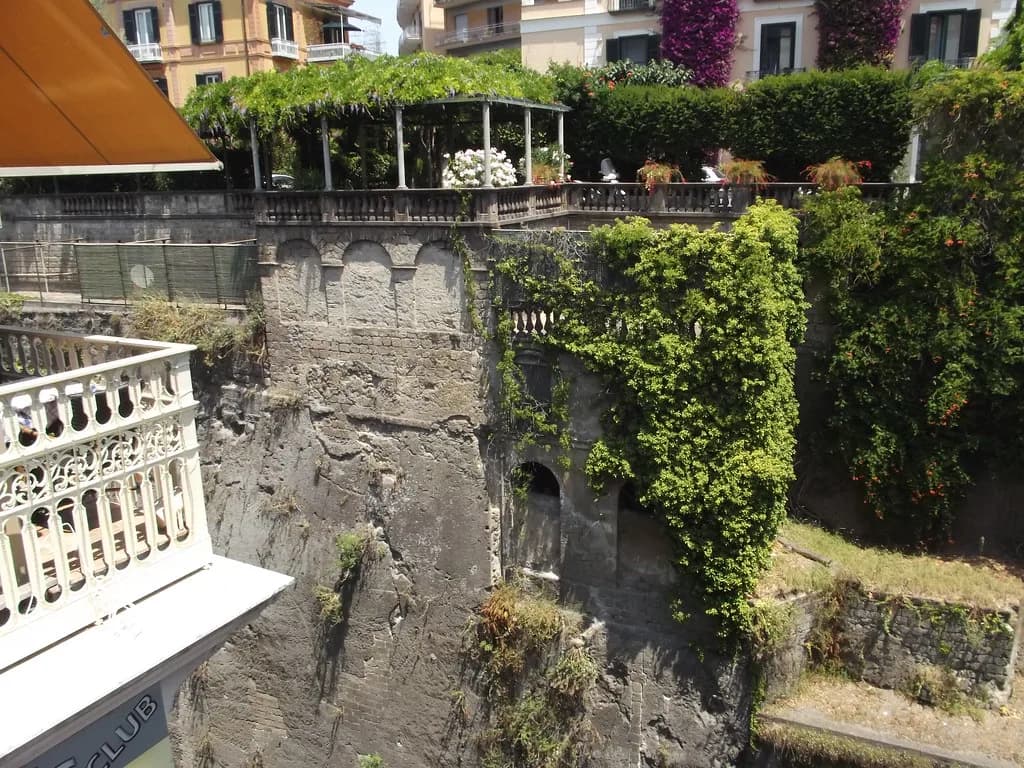
The Villa Comunale is Sorrento's clifftop public garden, and the reason to come is simple: a wide terrace directly above the Bay of Naples, with the beach clubs and port of Marina Piccola visible below. On a clear day the view runs across the water toward Vesuvius and the islands. It is a municipal park rather than a ticketed attraction, so the visit is about position, shade and a few quiet minutes rather than a collection or an interior.
This guide treats the park as what it is: an ordinary public garden shared by residents and visitors, not a secret spot and not a paid sight. It explains where the park sits in relation to the historic centre, what you can realistically see from the terrace, how to arrive on foot, and how to combine it with nearby landmarks. For the wider set of city sights, see the Sorrento Attractions hub.
Quick answer: what the Villa Comunale is and why it is worth a stop
The Villa Comunale is a public park in the heart of Sorrento, set along the cliff edge so that its terrace hangs over the water. One visitor source describes it as a tranquil park with panoramic views of the Bay of Naples, Mount Vesuvius and the Amalfi Coast, with gardens and benches. A suggested stop of fifteen to thirty minutes is enough to walk the terrace, take photos and move on; linger longer if you want shade and a bench. That duration is editorial advice, not an official timing.
Its value is positional rather than monumental. You are not visiting a villa interior or a museum collection; you are using a garden that happens to sit on the best natural balcony in town. That makes it a good early stop on a day in Sorrento, because the view orients you: you can pick out the harbour below and understand how the town drops to the sea. It also pairs naturally with the centro storico rather than requiring a separate trip.
Where it sits: above Marina Piccola, near Piazza Tasso and the historic centre
The park occupies the seaward edge of the historic centre, on the cliff line above Marina Piccola. The harbour, the port and the beach clubs sit directly below the terrace, which is why the downward view is as interesting as the view out. Because the garden is embedded in the town rather than on its fringe, it works as a natural pause in any walk through the centre.
Piazza Tasso, Sorrento's main square, is a short walk away, and the entrance is typically reached by following Corso Italia and turning onto Via San Francesco. Treat any walking time you read online as an approximation rather than a schedule, since the route depends on where you start and how much you stop along the way. The park's position means it pairs naturally with the square, the cloister and the shopping streets rather than requiring a separate trip.
What you actually see from the terrace: bay, Vesuvius, Capri and Ischia on clear days
On a clear day the terrace delivers a wide sweep of the Bay of Naples, with Vesuvius on the far shore and the islands of Capri and Ischia visible across the water. The Amalfi Coast direction is part of the same panorama, so you can trace the coastline in one turn of the head. Haze is the main variable: the view is at its sharpest after a clear night or a spell of wind, and softest in humid summer afternoons.
Look down as well as out. The terrace sits above the beach clubs and the port of Marina Piccola, so you get a clear read on how Sorrento meets the sea and where the boats leave from. Photographers should bring a phone or camera with a wide lens for the panorama and expect to step back for portraits against the railing, since the space behind the viewpoint is a walkway rather than a viewing platform.
Arriving on foot from Piazza Tasso, Corso Italia and Via San Francesco
Walking is the sensible way to arrive. From Piazza Tasso, head along Corso Italia and turn onto Via San Francesco to reach the entrance; the route is short and mostly level until the final approach. One visitor source puts the walk from the main square at around five minutes, which is a reasonable planning figure for most people but not a guarantee once crowds and heat are factored in.
Coming by car or taxi is possible, with parking available nearby, but the historic centre is better handled on foot. Traffic in the centre is slow and parking is limited, so a car adds friction to what should be a simple stroll. If you are arriving by taxi, ask to be dropped near Piazza Tasso and walk the last stretch.
Arriving from the Circumvesuviana station and the walk through town
If you arrive by train at the Circumvesuviana station, the park is reachable on foot through the town's streets. One source estimates about ten to fifteen minutes from the station, again as an approximation rather than an official figure. The walk doubles as a first look at the historic centre, so it is worth doing slowly rather than treating it as a transfer.
For a more structured route through the centre, a Sorrento walking tour self-guided approach lets you sequence the station, the shopping streets and the park without backtracking. Set the Villa Comunale as the final stop before you drop to the harbour, so the view arrives as a reward rather than an interruption.
Getting down to Marina Piccola: the pathway and elevator link
A path from the park connects to an elevator that leads down to Marina Piccola, the harbour and beach area below the terrace. This is the most convenient way to link the garden with the waterfront, and it turns the park into a practical junction rather than a dead end. The important caveat is that you should not assume the lift is running on any given day; check at the entrance or ask locally before you plan your route around it.
If the lift is out of service, the alternative is the road route down to the harbour, which is longer and involves traffic. Build slack into your day if Marina Piccola is a fixed point, such as a ferry departure, and confirm access on the day rather than relying on a guidebook description. For a different kind of coastal stop, the Bagni della Regina Giovanna Sorrento visitor guide covers a rocky swimming spot outside the centre.
Free to enter: public park space versus paid nearby attractions
The Villa Comunale is a public park, and there is no gate, ticket window or admission charge involved in walking in and using the terrace. Budget nothing for the garden itself, and treat any tour price you see advertised that mentions the park as payment for transport, guiding or a wider itinerary rather than entry. That distinction matters because it is easy to assume every viewpoint in an Italian resort town is ticketed.
Nearby sights are a different matter. Museo Correale is a museum holding fine art and local heritage, and Chiostro di San Francesco is a fourteenth-century cloister used for weddings and cultural events; both sit close enough to combine with the park, but each has its own access arrangements. Check current entry conditions and any charges directly with each site before you go, since neither is covered here with a confirmed price.
Pairing the park with Piazza Tasso, the cloister and the harbour
A sensible half-day loop starts at Piazza Tasso, drops into the Chiostro di San Francesco, continues to the Villa Comunale for the view, and finishes at Marina Piccola if the lift is working. Piazza Tasso supplies cafes and shops, the cloister supplies architecture and quiet, and the park supplies the panorama; together they cover the centre's main registers without a single ticket.
If you want to extend the day, the Basilica di Sant'Antonino in Sorrento is another central stop that fits neatly before or after the park. Plan the order around opening times you confirm on the day rather than a rigid schedule, and keep the harbour as a flexible final leg. Readers looking for more low-cost options beyond this loop can browse free things to do in Sorrento.
Timing your visit: early morning, late afternoon and sunset
The park is described as a year-round destination, with spring and autumn suggested as the most pleasant seasons and early morning or late afternoon recommended to avoid crowds. Treat that as a sensible suggestion from one visitor source rather than an official timetable, and check the forecast before committing to a sunset slot. Sunset is the most popular time, so it is also the busiest; if you want calmer conditions, go early.
For photography, the light is softest in the hour after opening daylight and again toward evening, while midday sun flattens the bay and bleaches the water. A practical compromise is a late-afternoon visit: enough light for the islands, fewer people than at sunset, and time to walk down to the harbour afterwards. Carry water in summer, as the terrace is exposed.
Practical comfort notes: shade, benches, families and photo angles
The garden has shaded benches and greenery, which makes it a reasonable pause for families with children who need space to move after a morning of walking. The paths are open and the setting is calm, but this is a public garden rather than a playground, so keep expectations modest. Bring a hat and water in high summer, since the terrace edge has little shelter.
For photos, the classic frame is the railing view toward Vesuvius, but the downward angle over Marina Piccola is often more distinctive because it shows the harbour and beach clubs in context. Step to the side of the main viewpoint if you want a portrait without strangers in the background. Specific rules on pets, bags or accessibility are not published here, so check with the Comune di Sorrento if any of these are essential to your visit.
Is it worth adding to a guided tour or building your own walking loop?
Guided tours of Sorrento frequently include the Villa Comunale as one stop among several landmarks, which can be useful if you want context on the town's layout and history. The trade-off is pace: a group moves through the terrace quickly, and you may not get the quiet ten minutes that makes the park worth visiting. Independent walkers can arrive at the light they want and stay as long as they like.
If you prefer to self-organise, build the loop yourself around the centre and use the park as the scenic hinge. Readers planning a broader stay can compare other corners of the area through hidden gems in Sorrento, which covers places that reward a slower pace than the main square.
Respecting the space: a working public garden in a residential town
This is a municipal garden used by residents as well as visitors, so the etiquette is ordinary: keep voices low near benches, take litter with you and give people space at the railing. It is not a ticketed attraction with staff managing flow, which means behaviour matters more, not less. A short, considerate visit is better than treating the terrace as a stage.
Plan Your Visit
The Villa Comunale is the simplest good decision in Sorrento: a public garden, a wide view and no admission to budget for. Arrive on foot from Piazza Tasso or the station, use the terrace to orient yourself, and confirm on the day whether the lift down to Marina Piccola is running before you build a ferry connection around it.
Time the visit for early morning or late afternoon if you want softer light and fewer people, and treat sunset as the busy, popular slot rather than the quiet one. Pair the park with the cloister, the square and the harbour for a half-day loop, and check official local sources for anything specific you need to rely on.
Frequently Asked Questions
Is the Villa Comunale in Sorrento free to visit?
Yes. The Villa Comunale is a public park, so there is no admission charge to walk in and use the terrace. Nearby sights such as Museo Correale and the cloister are separate places with their own access arrangements, so budget for those individually and confirm current conditions directly with each site.
How do you get to the Villa Comunale from Piazza Tasso?
Walk from the main square along Corso Italia and turn onto Via San Francesco to reach the entrance. One visitor source puts it at roughly five minutes, but treat that as an approximation rather than an official figure, since crowds and heat change the real experience.
What can you see from the Villa Comunale terrace?
The terrace looks across the Bay of Naples toward Mount Vesuvius, with Capri and Ischia visible on clear days. You also look down on the beach clubs and port of Marina Piccola directly below. Haze can soften the view, so a clear morning or a breezy day gives the sharpest panorama.
Can you reach Marina Piccola from the Villa Comunale?
A pathway from the park connects to an elevator leading down to Marina Piccola. Do not assume it is operating: check at the entrance or ask locally on the day, and allow extra time if you are connecting to a ferry, since the alternative road route is longer.
When is the quietest time to visit the Villa Comunale?
Early morning and late afternoon are suggested as the best times to avoid crowds, with sunset the most popular and therefore busiest slot. Spring and autumn are recommended as the most pleasant seasons. These are visitor suggestions rather than an official schedule, so check the weather before you go.
Is the Villa Comunale good for families or a quick stop?
It works well for both. Open spaces and paths suit children, and shaded benches give adults a rest. A quick stop of fifteen to thirty minutes covers the terrace and the main views; longer if you want to sit, take photos or continue down to the harbour.
Sources
Continue exploring
More guides you'll find useful