Palazzo del Bo Visitor Guide: University of Padua Tours
Plan a Palazzo Bo visit in Padua: why the University of Padua guided tour matters, the 1595 Anatomical Theatre, and how to pair it with nearby university sites.
On this page
Palazzo Bo sits on Via 8 Febbraio in the centre of Padua, a short walk from the historic core covered in our Padua Historic Center Self-Guided Walk: 2-Hour Route. It is the historic seat of a university founded in 1222, so the building is not a museum frozen in time but a working campus where ceremonies and academic life still happen. The practical consequence for visitors is simple: you see the celebrated interiors on a guided tour.
This guide concentrates on that single building and how to plan around it, rather than a general city itinerary. If you are building a wider visit, the Padua Attractions hub sorts the city's sights by how much time each deserves. Expect roughly an hour and a half to two hours once you include arrival, the tour itself and a look at the courtyards, though that is our suggestion rather than an official duration.
Quick Orientation: What Palazzo Bo Is and Why It Anchors a Padua Visit
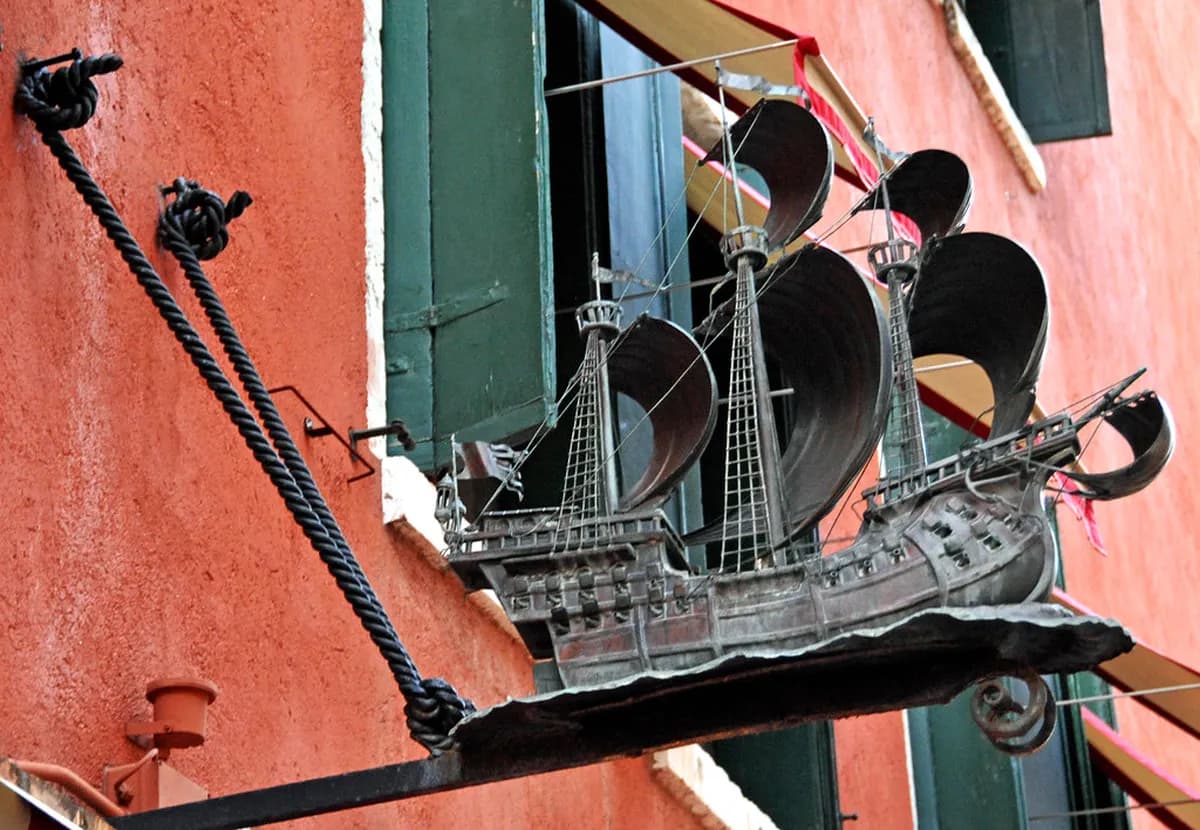
The name comes from the Hospitium Bovis, an inn at the sign of the ox that once stood on this spot beside butchers' shops. The university grew out of a student and teacher association formed in 1222 by people arriving from Bologna in search of greater intellectual freedom. Over the centuries the building expanded, and in the second half of the sixteenth century the architect Andrea Moroni gave the main body much of the form you see today, as the Padua tourism office explains on its Palazzo Bo page.
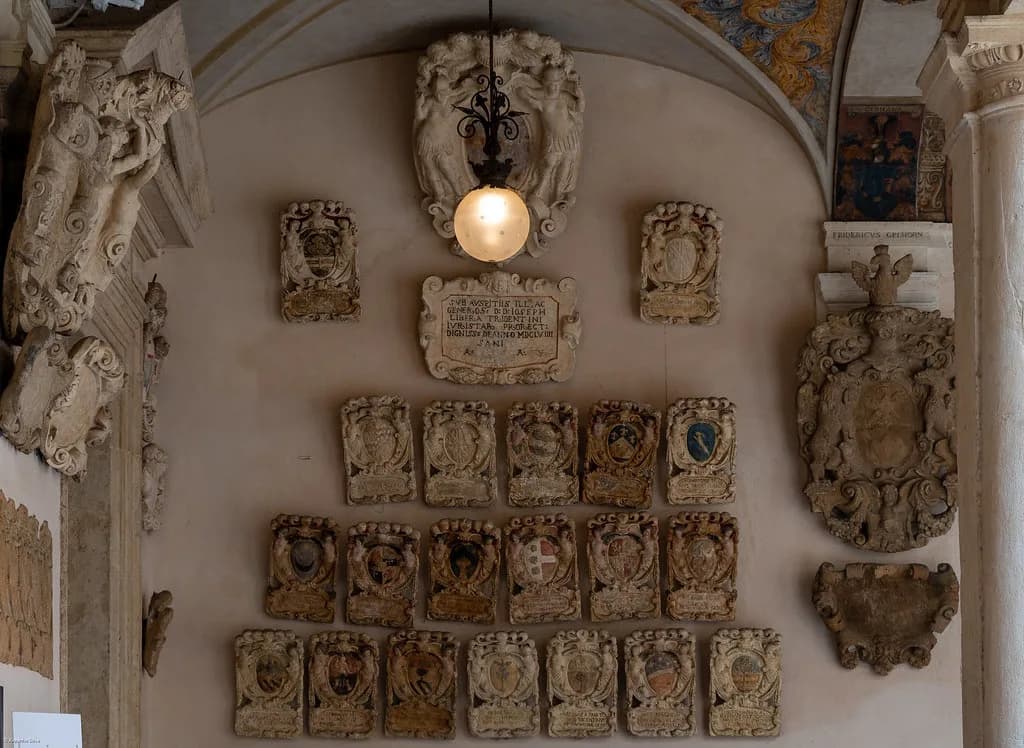
What makes the visit worthwhile is the density of stories in a compact complex. The Cortile Antico carries two levels of columns and walls covered with family crests of students and teachers, a commemorative tradition that ran to the end of the seventeenth century. The Aula Magna, once part of the original inn and later a law lecture hall, was redecorated by Giò Ponti in 1942. That mix of Renaissance fabric and twentieth-century design is unusual even among Italy's historic universities.
For the university itself, this is one piece of an eight-hundred-year heritage of places, objects and works open to the public, alongside museums and the world's oldest university botanical garden.
The One Detail to Know Before Booking: Access Is by Guided Tour
You cannot simply walk in and explore the historic rooms at your own pace. The University of Padua states that the building can be visited as part of a guided tour, and the city's tourism office describes Palazzo Bo the same way. Budget for a fixed slot and a guide rather than a free-flow visit, and treat any plan that assumes independent wandering as unworkable.
The upside of a guided format is that the historic layers are explained in order instead of blurring together. The trade-off is less freedom: you follow the group's route, and some rooms may be closed when academic events or ceremonies take priority. The university's visitor page lists the spaces you can normally see, including the Cortile Antico, the Aula Magna and the Anatomical Theatre, and notes that on some days the rectorate, restored to a Gio Ponti design, is also open.
Inside the Tour Route: Cortile Antico, Aula Magna and the Anatomical Theatre
A typical route moves from the courtyards into the ceremonial heart of the building. The Cortile Antico is the most photogenic pause, with its arcades and crest-covered walls; look up as well as around, because the commemorative plaques extend above eye level. The Aula Magna follows, a room used for ceremonies since the mid-nineteenth century and reshaped by Ponti's ceiling and layout.
The Anatomical Theatre is the room most visitors come for, and it is worth knowing what it is before you step in. The University of Padua describes it as the first permanent anatomical theatre in the world, built in 1595, and it sits inside a building where Galileo Galilei taught and where Elena Cornaro Piscopia became the first woman to graduate. Seeing those names attached to specific rooms makes the abstract history of a medieval university suddenly concrete.
Because the route passes through active university space, it helps to arrive with a little patience and a clear question or two for the guide. Ask which rooms are open that day rather than assuming the full list, and keep photography expectations in check by asking at the start.
The 1595 Anatomical Theatre: Why It Is the Highlight and What to Look For
You may see the theatre dated 1594 elsewhere, including on hotel and blog pages. The University of Padua's own visitor material gives 1595 for the first permanent Anatomical Theatre in the world, so follow the institution's dating when you read or repeat the figure. That consistency matters because the theatre is the anchor of the whole visit.
What you are looking at is a steep, tiered wooden shell built for observation, not decoration. Anatomy demonstrations in this period were public, attended events, and the shape of the room encodes that: standing space, tiers and a central viewing floor rather than a conventional auditorium. Rather than scanning for one famous object, notice how compact and enclosed it feels, and how that shape would have concentrated attention on the table at its centre. Further visitor details appear in Palazzo Bo and Anatomical Theatre.
Context helps here too. Padua's anatomy tradition links directly to the nearby Museum of the History of Medicine and to the university's museum collections, and the city's science sites are marketed together.
Ticket Tiers Published by the Padua Tourism Office and the Combined Science Ticket
The Padua tourism office publishes a tiered price structure for the Palazzo Bo guided tour: a full ticket of sixteen euros fifty, a reduced ticket of fourteen euros fifty for visitors aged 65 and over and for teachers, and a further reduced ticket of twelve euros fifty for young people aged 13 to 25, civil service volunteers, and children aged 6 to 12 accompanied by an adult eligible for the reduced or free fare. Treat these as published figures rather than a guarantee of what you will pay, and confirm the current amount when you book.
There is also a separate combined product called Padua City of Science, a discounted ticket that the University of Padua says lets you visit two or three university cultural sites among Palazzo Bo, the Botanical Garden and the Museum of Nature and Humankind. It comes with individual or family options. It is not a universal pass for every university site, so check exactly which two or three properties you are buying before you assume the Sala dei Giganti or a museum outside that trio is included.
If you want to know which city sight pairs best with a science afternoon, our hidden gems in Padua guide covers quieter corners worth adding on foot.
How to Book and Who to Contact About Tour Availability
The university publishes a contact for tour enquiries at tour@unipd.it and a telephone number of 049 8273939, and points visitors to its Palazzo Bo page for arrangements. The university's visitor page does not publish fixed departure times or guarantee that tours run on a given date in 2026, so the sensible move is to email or call before you build a day around it, especially for a short stay.
Ask directly about three things: whether the date you want has a tour, whether any rooms are restricted by academic events that day, and what the current ticket price and entry conditions are. Third-party pages repeat older schedules and hours, so use them for orientation only and rely on the university's own confirmation for the details that affect your plans.
If your date is fixed and the diary looks tight, note that the university runs open days and orientation visits at certain times of year, which can affect capacity around the building.
Combining Palazzo Bo With Other University of Padua Sites
The Botanical Garden is the obvious second stop. Founded in 1545 and a UNESCO World Heritage Site since 1997, it lies between Prato della Valle and the Basilica of Sant'Antonio, and can be visited independently with an audio guide included in the ticket or on a guided tour, with a children's audio guide also available. Because it is outdoor space, it pairs well with a morning at the Bo and works as an antidote to a crowded interior.
The Museum of Nature and Humankind at Palazzo Cavalli holds around 200,000 natural-history and anthropological objects, from saber-toothed cats and meteorites to Japanese armour and African masks. Half a day is enough for a focused loop of the Bo plus one of these sites; a full day lets you add the Sala dei Giganti in Palazzo Liviano, whose Renaissance frescoes can be visited independently or with guided tours that combine the Liviano atrium and the Museum of Archaeological Sciences and Art.
Further out, the Asiago Astrophysical Observatory offers a different kind of university visit at night, which is a realistic addition only if you are staying in the region rather than day-tripping.
What Nearby Padua Sights Pair Naturally With a Bo Visit
Palazzo Bo's address on Via 8 Febbraio puts you within an easy walk of the medieval street grid, the market squares and the cafes around the centre. A logical shape for the day is a morning tour at the Bo, a circuit of the squares and the Cathedral area, then a longer pause at Prato della Valle or the Basilica of Sant'Antonio before an evening aperitivo along the Piovego embankment, which the university itself flags as a summer gathering spot.
The university describes Padua as a city of more than 70,000 students in a population of about 210,000, which explains the rhythm of the centre: busy during term, calmer in some weeks, with cultural and sporting events filling the calendar.
If your day turns wet, the museum-heavy options in our Padua on a Rainy Day: Indoor Activities and Tips fit neatly around a Bo tour.
Practical Tips: Timing, Groups and Checking Before You Travel
Book the Palazzo Bo slot around your other fixed commitments rather than the reverse, since the tour time is the least flexible part of a Padua day. If you plan to use the combined science ticket, work out whether two or three sites in one or two days is realistic before buying: the Botanical Garden alone rewards a slow hour or more, and rushing it to fit a third stop defeats the purpose.
Check the university's news and events listing a few days ahead, because ceremonies and conferences can close rooms at short notice. It is also worth reading the visitor page in the original Italian if anything in the translated English seems ambiguous.
Finally, keep expectations calibrated to a working university rather than a heritage attraction. You are a guest in lecture halls and courtyards, so quiet voices, small bags and a willingness to follow the guide's route will make the visit smoother for everyone in the group.
Plan Your Visit
Palazzo Bo rewards preparation: a guided slot, a clear picture of which rooms you are seeing, and the 1595 Anatomical Theatre as the centrepiece rather than an afterthought. Confirm availability and current ticket conditions with the university's tour office before you commit a day to it.
Build the rest of the day around walking distance, and if you want to end with food and a slower pace, our Padua Local Food Guide: What to Eat and Where is a useful companion for choosing where to stop.
Frequently Asked Questions
Do you need a guided tour to visit Palazzo Bo?
Yes. The historic seat is visited as part of a guided tour rather than by independent wandering, according to the University of Padua and the city tourism office. Because room access can shift with academic events, confirm the arrangements with the tour office before travelling.
When was the Anatomical Theatre at Palazzo Bo built?
The University of Padua gives 1595 for the first permanent Anatomical Theatre in the world. Some third-party pages say 1594, but the institution's own visitor material is the safer dating to use.
Where can I check the current Palazzo Bo ticket price?
Ticket tiers are published by the Padua tourism office and the university's visitor pages, but amounts can change. Confirm the current price, reduced categories and entry conditions directly with the university tour office when you book, rather than relying on older third-party listings.
What does the Padua City of Science ticket include?
It is a discounted combined ticket for two or three university cultural sites chosen from Palazzo Bo, the Botanical Garden and the Museum of Nature and Humankind. It is not a blanket pass for every university property, so check which sites you are buying before you assume others are covered.
How much time should I allow for a Palazzo Bo visit?
Allow roughly an hour and a half to two hours including arrival, the guided route and a pause in the courtyards. That is a planning suggestion, not an official duration. Add the Botanical Garden or a museum collection if you want to make a half day of it.
How do I ask about tour availability?
Contact the university's tour office by email at tour@unipd.it or by telephone on 049 8273939. Ask about your specific date, whether rooms are restricted by academic events, and the current ticket terms, since fixed schedules cannot be assumed.
Can I visit the Botanical Garden and Palazzo Bo on the same ticket?
They can be combined through the Padua City of Science ticket, which covers two or three sites among Palazzo Bo, the Botanical Garden and the Museum of Nature and Humankind. The Botanical Garden can also be visited on its own ticket with an included audio guide.
Is Palazzo Bo worth visiting on a day trip to Padua?
It is if you want one interior that explains the city's intellectual history, since the courtyards, Great Hall and 1595 Anatomical Theatre tell the university's story in a compact visit. On a tight day trip, pair it with one nearby site and skip the third stop rather than rushing.
Sources
Continue exploring
More guides you'll find useful