
Museo Archeologico Nazionale Cagliari: A Visitor Guide
Plan a visit to Cagliari's National Archaeological Museum in the Cittadella dei Musei: Nuragic bronzetti, Punic rooms, Mont'e Prama checks and a two-hour route.
On this page
The National Archaeological Museum of Cagliari packs more than 4,000 objects covering almost seven millennia of island history into one building on the Castello hill, which makes it the single most efficient place to understand why Sardinia feels so distinct from the mainland. The payoff is visual as well as chronological: the small Nuragic bronze figures and the Punic material give context to every nuraghe, sacred well or Punic site you see later. Allow roughly two hours for a focused first visit, and read that as a suggested pace rather than a museum rule.
Why This Museum Matters: Seven Millennia on One Hill
Italian archaeology is often reduced to Rome, yet this collection begins thousands of years before the Romans arrived. It moves through the Neolithic, the Bronze and Iron Ages, the Phoenician and Punic centuries, Roman Sardinia and the Byzantine period, so the island's story reads as a continuous sequence rather than a set of isolated highlights. That breadth is what makes it a sensible first stop on a Sardinia trip rather than an optional rainy-day museum.
The museum presents itself as Sardinia's most important archaeological museum, and the collection's scope supports that framing even if you only skim the display cases. Read the room order before you start walking: knowing where the prehistoric galleries end and the Phoenician and Roman sections begin helps you decide what to skip when time is short. If you plan to visit nuraghi or Punic sites later in the trip, come here first so the objects give those landscapes context.
Where It Sits: Piazza Arsenale 1 in the Cittadella dei Musei
The museum occupies Piazza Arsenale 1, in the Cittadella dei Musei on Cagliari's Castello hill. Because it sits in the upper historic quarter, reaching it means climbing through Castello's lanes, stairs and lifts from the lower city; comfortable shoes and water are worth the small effort, especially in summer heat. Treat the walk up as part of the visit rather than a commute.
Inside the Cittadella, remember that the complex holds several separate collections rather than one all-inclusive sight. The National Picture Gallery sits alongside the archaeology museum, and the complex also houses the Siamese art museum, the anatomical wax collection and the Luigi Cocco ethnographic collection, each with its own admission logic. Check what is included in whichever ticket you buy instead of assuming a single pass opens every door in the courtyard.
What to See First: Reading the Nuragic Bronzetti
For most visitors the Nuragic material is the reason to come, and the bronzetti are its stars: small bronze figures showing warriors, chiefs, animals, boats and ritual life from ancient Sardinia. Look at them as evidence of a living society rather than decorative curios, and give yourself time to circle the cases slowly, because the details are tiny and reward close looking. Going earlier in the day makes this easier, since the smaller bronzes are harder to study in a crowded room.
Among the pieces often singled out are the Nuragic Boat, a bronze figurine from the Bronze Age, and a Warrior Giant with a shield. Focus on a handful of figures you can actually see well rather than trying to catalogue every case.
Phoenician, Punic and Roman Rooms, and the Tharros Tophet
Past the Nuragic galleries the museum follows Sardinia into its Mediterranean connections. Phoenician and Punic jewellery and everyday objects show the island inside wider trade and cultural networks, and a large space reconstructs the tophet of Tharros, the Phoenician-Punic sanctuary excavated at Tharros in the Oristano area. Punic coins, pottery and grave goods fill in what daily life looked like under Carthaginian influence.
Roman sculpture and later Byzantine material continue the story into subsequent centuries, and the upper floors hold reconstructions of important archaeological sites from the Cagliari and Oristano regions. If your time is limited, choose between depth in the Nuragic rooms and breadth across all periods; trying to do both thoroughly turns two hours into four. Save the Roman rooms for a return visit if the prehistoric material absorbs you.
The Mont'e Prama Question: What Is Actually Displayed
The stone sculptures from Mont'e Prama are among Sardinia's most famous archaeological discoveries, but do not assume every major figure is permanently in Cagliari. Exhibitions and loans change, and the museum has been involved in activity concerning the sculptural complex and the museum at Cabras on the Sinis Peninsula, itself an essential stop for anyone focused on western Sardinian archaeology. If a particular statue is your main reason for visiting, check current exhibition notices rather than an old photograph or guidebook.
An older profile places the Mont'e Prama statues on the fourth floor among the museum's notable holdings, which shows how quickly display information ages. Use it as a prompt to verify, not as a promise: the reliable check is the museum's own exhibition notices close to your travel date. Plan Cabras as a separate destination if the giants are central to your trip.
How Long to Allow: Two Hours or a Half Day
Allow around two hours for a focused first visit, enough to cover the Nuragic bronzetti, the Punic highlights and a brisk pass through the Roman rooms. Archaeology enthusiasts can easily stay longer, especially if they read the displays carefully, so decide your budget before entering rather than drifting. A practical half-day plan pairs the museum with the National Picture Gallery and then descends through Castello toward the Marina district for lunch.
The museum also works as a late-afternoon cultural stop after a morning at the beach, given the long daily schedule reported by third-party listings. The constraint is the ticket office, which reportedly closes before the galleries do, so arriving at the end of the day leaves very little time for a collection of this size. Go earlier if you want to see the bronzes without rushing.
Practical Planning: Hours and Tickets to Verify Officially
Opening hours and prices are the parts of this visit most likely to trip you up, because published figures disagree. One travel listing gives 8:30 to 19:30 and a suggested visit of one to three hours, while a 2026 guide reports the same daily hours with the ticket office closing at 18:45 and a combined museum-plus-Pinacoteca ticket; another older profile lists a Tuesday closure, which contradicts the daily schedule. Let the museum's own site settle it, and check again in the week you travel.
Adult admission is quoted at several different levels across these sources, so confirm the present tariff before setting your budget. Check the official museum website and the national cultural heritage site for reduced categories, any free-admission days and whether your ticket includes the Pinacoteca. Confirm too whether any short-term closure for installation or maintenance coincides with your dates.
Buying Tickets and Booking Guided Visits
A 2026 guide reports that tickets are sold through the Ministry of Culture's Musei Italiani platform and that guided visits are available by reservation, with groups required to book ahead. Confirm both on the official site and reservation service before counting on them. Individual visitors generally do not need to treat this like a blockbuster attraction where tickets vanish months ahead, but organized groups are a different matter.
If you want a guided visit or a group booking, enquire well ahead. One listing publishes +39-070-655911 as the museum's ticket information line; confirm current contact details and any tour time or language without assuming them.
Pairing the Museum with Castello and the Roman Amphitheatre
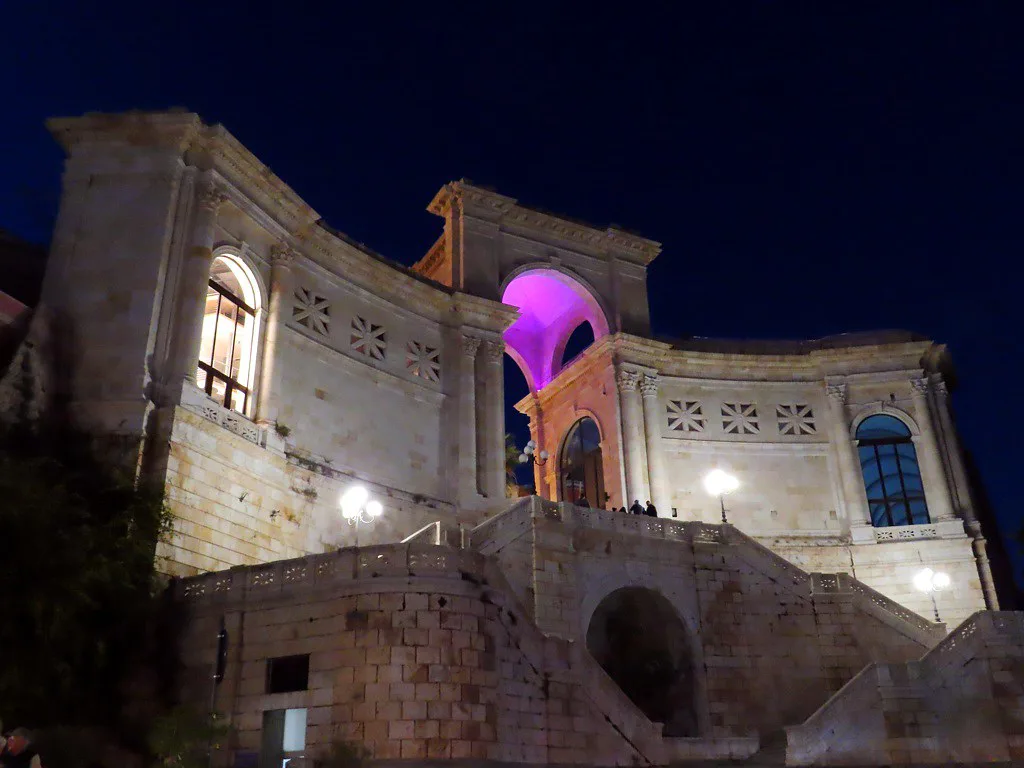
Because the museum sits inside Castello, combine it with the district rather than treating it as an isolated stop. The medieval streets and the Bastione di Saint Remy are within walking distance of the Cittadella, as are the Civic Market of San Benedetto and Monte Claro Park in nearby listings. A morning in the museum followed by a slow walk down through the bastions is a natural half day. Related guide: Bastione di Saint Remy Cagliari: Visitor Guide to the Terrace.
For a Roman-era complement, the city's amphitheatre on the Buon Cammino hill is small but atmospheric, mostly carved into the rock in the first and second centuries AD. The city tourism office reports that the full-price ticket is €3, that restoration work has limited the visitable area to an 80-metre walkway, and that the arena and underground areas are closed until the work ends; check current conditions before planning around it. Budget separately, because this is a distinct ticketed monument.
Adding the Underground and the City's Lesser-Known Sites
The archaeology museum makes a good prelude to Cagliari's underground sights, including the archaeological area beneath the church of Sant'Eulalia in the Marina quarter, run by the MUTSEU museum system. That route takes you under street level into Roman and later remains, so pair it with the museum if you want objects and places in the same day. Check hours and ticket arrangements on the MUTSEU site directly.
If you enjoy quieter sites after the museum, the Punic necropolis of Tuvixeddu is striking, with well tombs cut into the limestone and free access across the day according to a local guide; it features in our guide to the hidden gems in Cagliari alongside the Fortino di Sant'Ignazio. Combine these only if you have a second day, because each deserves unhurried time.
Plan Your Visit
The National Archaeological Museum of Cagliari rewards a little planning: check the official museum site for current hours, prices and exhibition changes in the week you travel, since third-party figures do not agree. Build the visit around the Nuragic bronzetti and the Punic rooms for about two focused hours, and add the National Picture Gallery only if you have a half day. Then let Castello, the amphitheatre and the city's underground do the rest of the storytelling.
Frequently Asked Questions
How much time should you allow for the National Archaeological Museum of Cagliari?
About two hours is enough for a focused first visit covering the Nuragic bronzetti, the Punic rooms and a brisk pass through the Roman galleries. Add the National Picture Gallery if you have a half day. These are suggestions, not official visit times.
What are the highlights of the museum's collection?
The Nuragic bronze figurines, often called bronzetti, are the signature objects, along with Punic jewellery and the reconstruction of the Tharros tophet. The collection runs from the Neolithic through the Phoenician, Punic, Roman and Byzantine periods, so it introduces the whole island.
Are the Giants of Mont'e Prama on display in Cagliari?
Do not assume so. Display and loan arrangements change, and the museum at Cabras on the Sinis Peninsula is another essential place for the sculptural complex. Check the museum's current exhibition notices before travelling specifically for a particular statue.
Where is the museum, and how do you reach it from central Cagliari?
It is at Piazza Arsenale 1 in the Cittadella dei Musei, in the upper Castello district, reached on foot through the historic lanes and stairs from the lower city. Lifts serve parts of Castello, and comfortable shoes help on the climb, especially in summer heat.
Can you buy tickets online or book a guided visit?
A 2026 guide reports that tickets are sold through the Ministry of Culture's Musei Italiani platform and that guided visits are available by reservation, with groups booking ahead. Confirm both on the official museum site or reservation service, and check current prices there too.
Sources
- National Archaeological Museum of Cagliari: скидки на билеты, цены и сборы, бронирование | Часы работы, отели и рестораны — Trip.com
- Cagliari Archaeological Museum: 2026 Tickets and Opening Hours
- Official event website
- Official event website
- Roman Amphitheatre | Cagliari Turismo
- MUTSEU | Mutseu
- The most beautiful museums to visit in Sardinia
- The story of the Tuvixeddu Necropolis | Trentaremi
Continue exploring
More guides you'll find useful





