
Arsenale della Repubblica Amalfi: Visitor Guide to the Old Shipyard
Plan a short visit to Amalfi's medieval Arsenale della Repubblica, now home to the Museo della Bussola, and pair it with the cathedral and old town.
On this page
The Arsenale della Repubblica is the stone shell of a medieval shipyard, standing at the entrance to Amalfi's old centre and facing the sea whose trade it once served. The Comune of Amalfi treats it as the emblem of the former maritime republic, and it is one of the few such buildings to reach the present day with its original structure. A visit is short, architectural and historical rather than exhibition-heavy, which makes it easy to slot between the cathedral and the waterfront.
What surprises some first-time visitors is that the building is not a conventional museum you walk through for an hour. It is a restored hall used for cultural events and civil weddings, and it houses the Museo della Bussola e del Ducato Marinaro di Amalfi. Plan it as a compact stop inside a broader walk through the old town rather than a headline sight in its own right.
Why the Arsenale Matters in Amalfi
Amalfi's wealth in the Middle Ages rested on the sea, and the Arsenale was where the vessels were built and maintained. The Comune's official site documents the building as early as 1042 under the Arabic-derived word arsena, evidence that shipbuilding here predates most surviving maritime architecture in Italy. That documentary anchor is what gives the site its weight: you are standing in a working yard that predates the great shipyards of Venice.
The official site describes the Arsenale as the only medieval shipyard still showing its original structure, a claim it frames as unique in the West. Treat that as the Comune's framing rather than a neutral survey of every Mediterranean yard, but it explains why the building matters to anyone interested in how a small port became a regional power.
Reading the Building: One Vaulted Span in Local Stone
Today the Arsenale consists of a single span covered by vaulted ceilings, built from different types of stone that were all quarried locally. The Visit Amalfi page for the monument stresses the variety of stone materials, a detail worth noticing as you look up: the walls carry visible changes in texture and colour from the different quarries. It is not a decorative flourish but a record of how the yard was assembled over time.
The same page notes that the structure was originally about twice its present size, with the shipyard extending as far as the harbour so that boats under construction could reach the water easily. That lost half explains why the building feels narrower than a shipyard should. You are reading a fragment, and the surrounding streets occupy ground the yard once covered.
How the Shipyard Worked
The yard's position on the seaward edge of the old centre was functional, not picturesque. Vessels were built close to the water so they could be launched without hauling them through town, and the vaulted hall gave shelter for work that needed to continue whatever the weather. The single surviving span gives a sense of the covered workspace rather than of the open slipways that would have surrounded it.
When you stand inside, look at the relationship between the building and the slope behind it. The Arsenale sat where the town meets the harbour, which is why the medieval defences and the port infrastructure clustered here. A detour past the nearby Porta della Marina on a tour of the hidden gems in Amalfi helps complete that picture of the maritime edge of the old town.
What You See Inside Today
The restored hall now holds the Museo della Bussola e del Ducato Marinaro di Amalfi, and the Comune also uses it for cultural events and civil weddings. The Visit Amalfi listing divides the interior into an area prepared for events and ceremonies and an area set up for museum exhibitions. That division matters practically: parts of the building can be occupied by an event, so what you can see on a given day is not guaranteed.
A traveller's account on Trip.com describes a small but well-organised collection of naval artefacts with English descriptions, and recommends pairing it with the cathedral. Treat that as one visitor's impression rather than a catalogue, but it sets expectations sensibly: this is a compact display about Amalfi's maritime duchy and the compass, not a large museum. Reading a little about the maritime republic beforehand makes the objects legible.
Location and Practical Orientation
The official address is Largo Cesario Console 3, 84011 Amalfi, and the Comune's site lists a telephone contact for the monument. The entrance sits at the mouth of the old centre, opposite the sea and within a couple of minutes' walk of the cathedral square, so you will pass it on almost any walk through town. Coming from the harbour, look for the stone building at the point where the seafront meets the lanes.
Because the Arsenale is on the edge of the historic core rather than in a separate district, it works best as the first or last item in a loop. The Amalfi self-guided walk route through the old town passes the cathedral and the seafront, and you can fold the Arsenale in without adding meaningful distance. Save the address in advance, since lane names in Amalfi are short and easily missed.
Admission and Visiting Conditions
The evidence on admission is mixed and worth handling carefully. A traveller's post mentions an admission fee that it calls quite affordable, while the Comune's official site describes the building as restored and used for museum, events and weddings without publishing a ticket tariff. The honest position is that you should expect some form of charge for the museum area and confirm the current arrangement at the entrance or through the Comune before building your day around it.
Opening days, seasonal schedules and whether the hall is closed for a private ceremony are not published in the material available here. Rather than trust an old blog post, check the Comune's official Arsenale site or ask at the tourist information point in town on the day. If the museum area happens to be shut for an event, the exterior and its setting by the harbour still justify the two-minute detour.
How Long to Allow
Treat any duration as a suggestion, not an official figure. For most visitors the museum area is a twenty-to-thirty-minute stop: a short film of context, a look at the naval objects, and time to read the vaulted hall itself. Add ten minutes if you want to photograph the stonework or read the panels in full. Anyone hoping for a substantial museum will finish sooner than expected.
The building rewards a slower look more than a fast one, but only if you arrive with some background. If you have not read up on the maritime republic, budget a little longer for the information panels, or read a short history in your guidebook beforehand. A walking-tour page on the Antico Arsenale sketches the shipyard's role well enough to prime a visit without pretending to be an official source.
Pairing the Arsenale with Nearby Sights
The obvious companion is the cathedral complex a few steps away, where the basilica, cloister and diocesan museum sit together. A detailed Amalfi Cathedral visitor guide covers how the church, crypt and Chiostro del Paradiso relate, and which parts are separately ticketed, so you do not assume one ticket opens everything. Allow the cathedral at least as much time as the Arsenale, probably more.
If your interests run to craft and industry rather than religion, the Museo della Carta, Amalfi's paper museum, makes a logical second stop on the same theme of handmade production. Families and travellers on a tight budget can also consult free things to do in Amalfi to balance a paid stop with the seafront and lanes, which cost nothing to walk. Sequence the cathedral first, then the Arsenale, then the paper museum if time permits.
A Half-Day Route Around the Arsenale
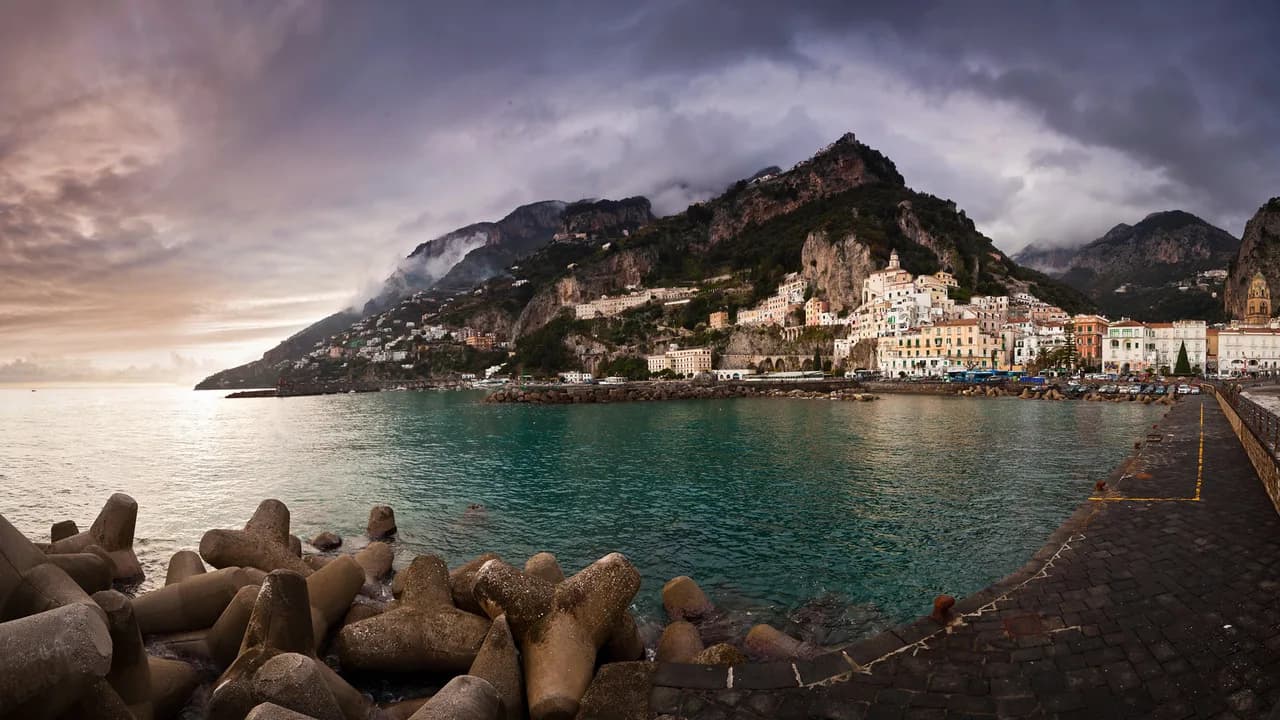
Start at the cathedral square early, when the morning light reaches the facade, and work through the church and cloister before the crowds thicken. Walk down to the seafront, look back at the old town from the harbour wall, and then step into the Arsenale at Largo Cesario Console. That order puts the shipyard at the point where you can see the sea it depended on, which is exactly the connection the building is trying to make.
Finish with a slow loop through the lanes behind the seafront for a coffee or a slice of the local lemon cake, and add the paper museum if you still have energy. This is a suggested shape for half a day, not a fixed itinerary, and it bends easily around a closure or a longer lunch. The point is that the Arsenale carries the maritime story and the cathedral carries the religious one, and Amalfi is best understood with both.
Who Will Enjoy It Most
Maritime history enthusiasts and travellers who like architecture as evidence will get the most from the Arsenale. Short-stay visitors benefit too, because it delivers a concentrated slice of Amalfi's identity in less time than a full museum demands. Families with small children may find it brief to the point of anticlimax, and anyone expecting interactive exhibits should adjust expectations.
It also works as a wet-weather stop, since the vaulted hall is covered, though the evidence here does not confirm any particular rain policy or sheltered access. If it is raining hard, check at the entrance whether the museum area is open before committing. On a bright day, the walk along the seafront outside is as much the attraction as the interior.
Mistakes to Avoid
The commonest error is assuming every part of the building is part of the museum. The Comune uses the hall for events and civil weddings, so an area may be roped off or the whole space unavailable; check before paying or planning a specific slot. A second error is treating the Arsenale as a standalone destination rather than a piece of the cathedral-area cluster, which wastes the walk between them.
A third mistake is guessing at hours or prices from an old travel post. Neither the Comune's official page in this material nor the Visit Amalfi listing publishes opening times, so confirm on site or by telephone using the contact number on the official site. Finally, do not assume the full medieval footprint survives: the yard was once about twice as large, and much of it now lies under the modern town.
Bookend the Visit with the Seafront
The Arsenale della Repubblica is best understood as a survivor rather than a spectacle. Its single vaulted span, built from locally quarried stone, preserves the shape of a working shipyard that helped make Amalfi a maritime power, and its reuse as a museum and event hall keeps the space alive rather than frozen. Give it half an hour, arrive knowing a little history, and confirm the current access arrangements before you go.
Build the day around the harbour and cathedral square so the building sits in its proper setting, and use the Amalfi Attractions section to plan the sights on either side. The result is a realistic, unhurried slice of the old maritime republic rather than a rushed checklist stop.
Frequently Asked Questions
What is the Arsenale della Repubblica in Amalfi?
It is a medieval shipyard, documented as early as 1042, that survives as a single vaulted hall built from locally quarried stone. It is now restored and used for the Museo della Bussola e del Ducato Marinaro di Amalfi, cultural events and civil weddings.
Where is the Arsenale located?
The official address is Largo Cesario Console 3, Amalfi, at the entrance to the old centre and facing the sea, a short walk from the cathedral square and the harbour.
Is there an admission fee to the Arsenale?
Expect some form of admission charge for the museum area, but the amount is not published on the official site. Confirm the current fare at the entrance or through the Comune before your visit.
How long does a visit take?
Allow roughly half an hour for the museum area, as a suggestion rather than an official figure. Add time if you want to read the panels in detail or photograph the stonework.
Can I visit when an event is taking place?
Parts of the hall are used for events and civil weddings, so access is not guaranteed. Check on the day whether the museum area is open before paying or planning a specific visit.
What should I pair with the Arsenale?
The cathedral complex, including the basilica and cloister, is the natural companion, followed by the Museo della Carta if you have time. A waterfront walk before or after completes the picture of the medieval port.
Sources
Continue exploring
More guides you'll find useful





