
Basilica di San Pietro Perugia: Frescoes, Choir and Cloisters
Plan a visit to Perugia's Basilica di San Pietro at Borgo XX Giugno: the carved choir, portal frescoes, cloisters and garden, and how to verify hours.
On this page
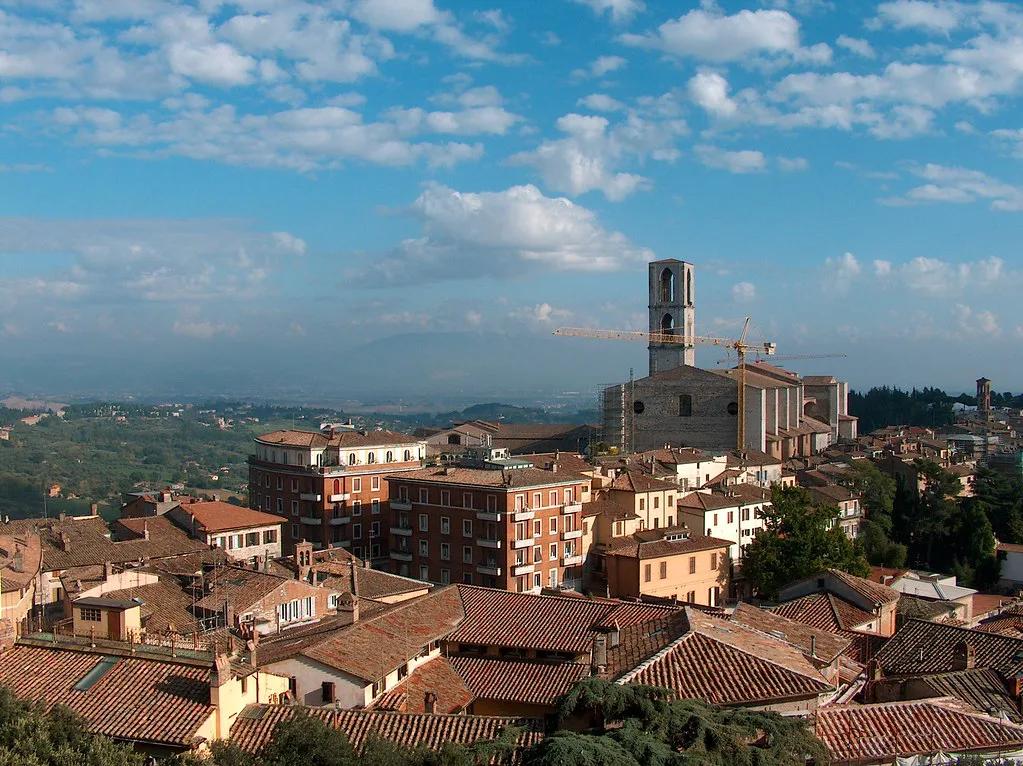
The Basilica di San Pietro sits at Borgo XX Giugno 74, in the southern part of Perugia's historic centre: close enough to town for a walk, far enough that many short itineraries skip it. Founded around 996 as an abbey church, it was rebuilt and reworked repeatedly, which is why the facade, cloisters and interior read as layers rather than a single design. This guide sticks to what the sources actually state and flags what still needs confirming.
Why Visit San Pietro in Perugia
One visit covers several different experiences: a church, a monumental entrance portal decorated with frescoes, two cloisters and a garden with an amphitheatre. That compression makes the abbey useful for travellers who want architecture and courtyards. The complex is described as blending medieval weight with Renaissance elegance, and that shift shows as you move from the street through the gate and into the courts.
History explains the layered feel. The abbey was founded near the end of the tenth century, burned by Perugia's inhabitants in 1398 over a dispute involving its abbot, and substantially rebuilt in a long campaign from 1591 that gave the complex much of its present style. Later suppressions, including a temporary closure under the French in 1799 and definitive abolition in 1890, reshaped how the buildings were used. Knowing those dates before arrival helps you notice which parts look medieval and which look late sixteenth century. Further visitor details appear in Basilica of San Pietro, Perugia | Religiana.
Be careful with expectations built on superlatives. The available texts describe notable art and a garden setting, but none supports calling the abbey quiet, uncrowded or undiscovered, so treat such claims you read elsewhere with caution. Go for the specific things described below rather than for an atmosphere nobody has verified.
The Carved Wooden Choir and the Art Inside
The standout interior work named in visitor descriptions is the wooden choir, carved in the first half of the sixteenth century and rated among the finest examples of Italian wood carving. Look for it in the church interior and give it real time: this kind of object rewards close attention to the joinery, figures and decorative borders rather than a passing glance. If you only have a short window, make it your priority inside the church. Further visitor details appear in Abbazia di San Pietro: History, Architecture & Travel Guide.
Beyond the choir, sources speak of frescoes and art treasures in general terms rather than listing individual altarpieces, and no source here names a Perugino altarpiece at the abbey, so arrive open to what is on view. Check locally for conservation notices that may affect particular chapels. Photography rules, barriers and lighting are also best confirmed on site, since the sources do not describe them.
Frescoes, Facade and Bell Tower
The approach is part of the visit: a monumental fifteenth-century gate leads to a facade that mixes elements from different centuries, and the portal itself is decorated with frescoes dated to the fourteenth and fifteenth centuries. Look up and around before entering, because this exterior decoration is easy to walk past when you are focused on finding the door. The frescoes are exposed to the elements, so what you see may reflect past restoration rather than original surfaces. Further visitor details appear in Abbazia di San Pietro: History, Architecture & Travel Guide.
Sculptor attributions circulate for the portal and the slender polygonal bell tower, but they come from a third-party travel guide rather than a conservation source. Enjoy them as attributed traditions rather than settled facts, and avoid repeating names as certainties. If attribution matters to you, ask at the site or check diocesan and tourism publications for the current description.
Cloisters and the Garden with Its Amphitheatre
Two cloisters anchor the complex. The Chiostro Maggiore is described as Renaissance in line, while the Chiostro delle Stelle, created in 1571, is noted for its distinctive geometry. Walking both in sequence shows how the same institution handled courtyard space differently within a few generations, and they offer a different register from the church interior. Further visitor details appear in Abbazia di San Pietro: History, Architecture & Travel Guide.
Beyond the cloisters lies the garden known as the Giardino del Frontone, where mature trees surround an amphitheatre dated to the eighteenth century. In warmer months this is the natural place to slow down against the monastery walls. Note that Religiana lists abbey and garden opening times separately, which suggests the outdoor areas may not follow the same schedule as the church, so confirm both rather than assuming one covers the other.
Opening Hours and What Still Needs Checking
Opening hours are the weak point of every published account. One source gives daily abbey hours of 10:00 to 13:00 and 14:00 to 19:00, with separate weekday garden hours of 08:00 to 17:00, while another lists midweek morning and afternoon sessions, Friday mornings only, and closure on Monday, Saturday and Sunday. These cannot both be right, and neither page is an operator statement, so check directly with the Diocese of Perugia before travelling rather than trusting any schedule printed online. Further visitor details appear in Basilica of San Pietro, Perugia | Religiana. Further visitor details appear in Abbazia di San Pietro: History, Architecture & Travel Guide.
Admission is equally unresolved. No available source states whether there is a fee for the church, cloisters or garden, or whether any part is ticketed separately. Do not budget on the assumption that it is free, and do not assume one ticket covers everything either. If cost affects your plans, ask the diocese or check Umbria Tourism's listings in advance. Further visitor details appear in Official event website.
Current use is unsettled too: one source describes a spiritual centre and tourist site, while another ties the site to the University of Perugia's agricultural department. Both may be partly true of different buildings, but the sources do not resolve it. The practical consequence is simple: expect a working complex, keep to areas that are open, and respect signage about closed sections.
How Long to Allow
A reasonable suggestion, offered by a third-party guide rather than the site, is one to two hours for the church, cloisters and garden, extended to about two and a half hours if you want to study the carving and frescoes closely. Treat that as a planning estimate and adjust for your pace and for any areas closed on the day. Arriving early in a visiting window leaves room to see both interiors and grounds without rushing. Further visitor details appear in Abbazia di San Pietro: History, Architecture & Travel Guide.
Getting There on Foot and Nearby Stops
From Piazza IV Novembre, a third-party guide estimates the walk south to Borgo XX Giugno at roughly twenty to thirty minutes, and also mentions local buses and taxis; treat those times and any line names as guide claims to verify locally rather than operator information. On foot the route is straightforward if you follow signs for the Borgo XX Giugno district, and the stroll itself passes through ordinary streets. Further visitor details appear in Abbazia di San Pietro: History, Architecture & Travel Guide.
If you drive, note that central Perugia has limited-traffic zones, and the same guide mentions paid parking around Borgo XX Giugno. The abbey's setting also puts it within walking distance of the Frontone Gardens and roughly under a kilometre from the National Archaeological Museum of Umbria, so a southern loop makes sense. See the Perugia Attractions hub to line up the other sights in that part of town.
Pairing San Pietro With the Rest of Perugia
Because the abbey sits south of the main squares, it works best as one stop on a wider walk. Combine it with the cathedral and the National Gallery in the centre, or head toward San Domenico and the archaeological museum; that church holds a Gothic choir window and adjoins cloisters now used by the State Archives and the museum. For lower-traffic corners than the main piazza, browse these hidden gems in Perugia and build the rest of the day around them. Further visitor details appear in Basilica of San Pietro, Perugia | Religiana.
Plan Your Visit
San Pietro rewards a specific kind of traveller: someone willing to walk south of the centre for a carved sixteenth-century choir, a frescoed portal, two cloisters and a garden rather than a checklist of masterpieces. Allow an hour or two, more if the woodwork absorbs you, and go knowing the highlights are architectural rather than blockbuster.
Before setting out, confirm opening times and admission arrangements with the Diocese of Perugia or Umbria Tourism, because published schedules conflict and no source settles the cost. Wear shoes for cobbles, carry water for the walk, and leave room for the Frontone Gardens on the way back.
Frequently Asked Questions
Are there frescoes at the Basilica di San Pietro in Perugia?
Yes, according to published descriptions. The monumental fifteenth-century entrance portal is decorated with frescoes dated to the fourteenth and fifteenth centuries, best examined before you step inside. Interior art is described more generally, so look for on-site notices about specific works and any conservation restrictions.
What is the carved wooden choir of San Pietro Perugia?
It is a set of wooden choir stalls carved in the first half of the sixteenth century and described as one of the finest examples of Italian wood carving. It sits inside the church and deserves close attention to its figures and decorative borders. If your time is short, make it the priority of your interior visit.
How long does a visit to the Abbey of San Pietro take?
A third-party guide suggests one to two hours for the church, cloisters and garden, or about two and a half hours if you study the carving and frescoes in detail. That is a planning estimate, not an official figure, so adjust it to your pace and to which areas are open on the day.
How far is the Basilica di San Pietro from Perugia's centre?
Travel guides estimate a walk of roughly twenty to thirty minutes south from Piazza IV Novembre to Borgo XX Giugno, with buses and taxis as alternatives. Those times and transport details come from a third-party guide, so confirm locally. The route is straightforward and follows signs for the Borgo XX Giugno district.
Is there an entry fee for San Pietro in Perugia?
No source consulted here states an entry fee, and none confirms admission is free either. Check with the Diocese of Perugia or Umbria Tourism before you go, and do not assume one ticket covers the church, cloisters and garden together.
When is the Basilica di San Pietro open?
Published sources disagree. One lists daily abbey hours with separate weekday garden hours; another gives midweek sessions, Friday mornings only, and weekend closure. Because neither is an operator page, confirm current hours directly with the Diocese of Perugia before travelling.
Can I combine San Pietro with other Perugia sights?
Yes. The abbey is close to the Frontone Gardens and within about a kilometre of the National Archaeological Museum of Umbria, so a southern loop works well. Pair it with the cathedral or San Domenico on another part of the day rather than trying to see everything at once.
Is the abbey a good choice if I want somewhere uncrowded?
Published sources describe a garden setting but do not support claims that the site is quiet, secret or undiscovered, so treat such descriptions cautiously. Its position south of the main squares means it is often left out of short itineraries, which is a practical reason to include it. Explore Perugia's hidden gems for other lower-traffic corners.
Sources
Continue exploring
More guides you'll find useful





