
Rocca Paolina Perugia: Guide to the Underground Fortress
Walk the buried quarter under Perugia's Rocca Paolina: what the Salt War built, how the escalators enter it, and the Porta Marzia gate rebuilt in the wall.
On this page
The Rocca Paolina is not a museum with a ticket desk and a numbered route. It is a public passage cut through the foundations of a sixteenth-century papal fortress, and residents use it as a shortcut between the lower town and the historic centre. You can walk in from Piazza Partigiani on the escalators or from Porta Marzia on viale Indipendenza, and once inside you follow brick-vaulted streets where the city's own houses still line the way.
This guide covers that single site and stays deliberately narrow. The Etruscan Well takes a separate combined ticket with the Casa Museo di Palazzo Sorbello and has its own entry arrangements, so treat the two as different visits rather than one continuous trail of underground rooms.
What the Rocca Paolina Actually Is
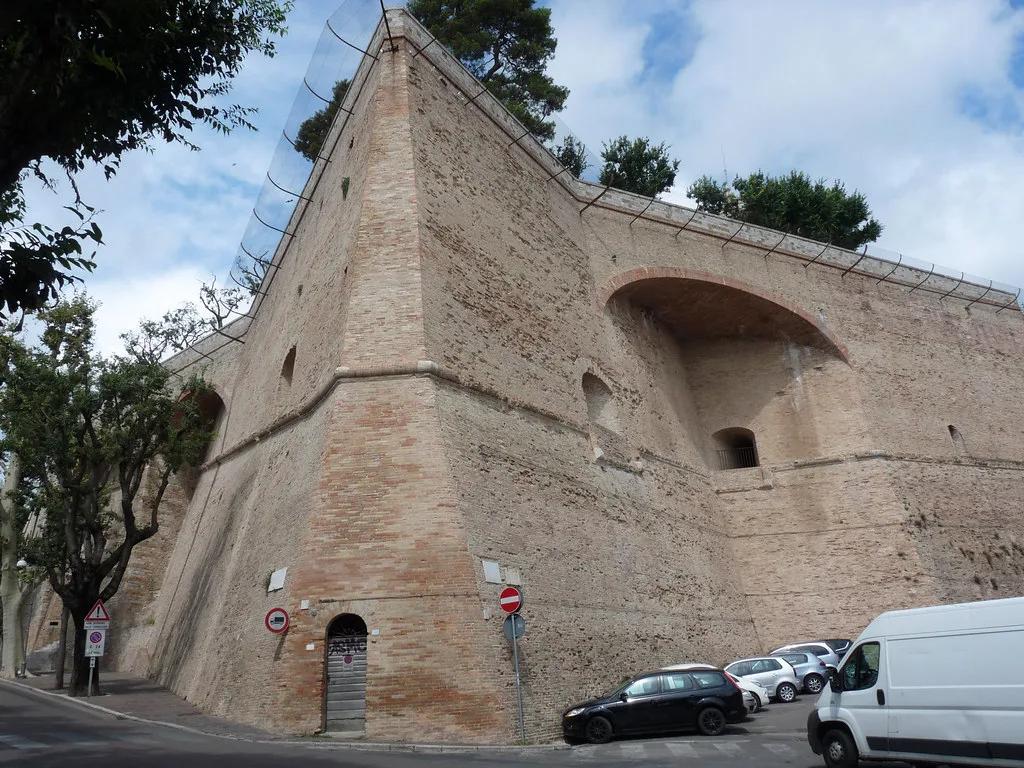
Most surviving fortresses show you walls, towers and a courtyard. The Rocca Paolina shows you the underside of one: Sangallo's vaults carried the fortress above, and beneath them a slice of medieval Perugia was left standing, filled with earth and bricked over rather than knocked down. That decision is why you can now walk down a lane lined with original doorways and workshop openings with Renaissance vaulting overhead, instead of reading about a district that no longer exists. For wider planning, see Perugia Attractions: Visitor Guides to 9 Sights.
The Rocca sits directly below the level of Piazza Italia, in the middle of the historic centre, so it is easy to pass without realising what you are standing on. The Articity entry for the fortress dates construction to 1540-1543 under Paul III, with Antonio da Sangallo the Younger as architect, and describes the change of function it later had as the papal grip on the city loosened.
Why Perugia Built a Fortress Against Itself
In 1540 Pope Paul III Farnese extended a salt tax across the Papal State, and Perugia refused to pay it, citing older privileges. The revolt was crushed within weeks and the city surrendered that June. The punishment took a form that was also a message: a fortress raised inside the walls, at the highest ground, on the quarter where the Baglioni family who had led the resistance lived.
What makes the site unusual today is the engineering choice behind it. Rather than clear the district, the builders packed it with earth and laid their foundations on top, leaving houses, workshops and a small chapel intact inside the embankment. Walk down via Bagliona and those structures are still there, which is why the space feels like a street rather than a cellar.
How to Enter: Two Routes, One Public Passage
The most common approach is the escalator run from Piazza Partigiani, which lifts you from the station-side car park up through the fortress to the centre. The WellStay guide describes the escalators as a daily route into the absorbed medieval streets, and notes that they also connect to Corso Vannucci near the Carducci Gardens at the upper end. There is no ticket office along the way because the passage itself is free and open as a public space.
The second approach is on foot, from viale Indipendenza, where you duck through the Porta Marzia arch to begin the descent. This entrance suits anyone already in the upper town near Piazza Italia. If you arrive this way you get the best sequence: an Etruscan gate first, then Sangallo's vaults, then the buried lane beneath.
What You Walk Through Underground
Inside, the route is simple to follow but genuinely dark in places, with stone walls, arches and old doorways lit only enough to see your way. A traveller's account of the escalator passage notes the hall of the papal guards and the Baglioni house still standing among the vaulted chambers, with cannon mounted in one room as a reminder of what the fortress was for.
The Articity entry adds fragments worth a pause: the remains of the Giuoco del Pallone court, sections of Etruscan wall, and Renaissance-era architectural pieces set into the internal walls. These are small details rather than headline sights, so give yourself permission to stop rather than treating the passage as a corridor to hurry through.
The same space doubles as a venue. The WellStay guide records that exhibitions and events are held there, and several accounts mention a Christmas market inside the vaults. That means the character of the walk changes with the season, and a visit in a market week will feel busier and more furnished than one on a quiet weekday.
The Porta Marzia: A Gate That Moved
The Porta Marzia is the detail most people photograph without realising what they are looking at. Built in the third century BC as an Etruscan city gate, it stood in the path of Sangallo's new bastion, so he had it taken apart and reassembled a few metres along in the fortress wall rather than destroy it. The frieze of figures between small columns and the statues above the arch are the pieces to look up for.
Articity describes what survives above the opening: five sandstone figures, likely Jupiter between the Dioscuri Castor and Pollux with their horses, plus Roman inscriptions reading Colonia Vibia and Augusta Perusia. The gate originally had no defensive role, sitting on the road toward Rome as a symbol of the city's relationship with the capital, with the guardian figures turned in that direction.
How Long to Allow
As a suggestion rather than an official figure, budget about an hour to walk the passage slowly, stop at the Porta Marzia and read the fragments along the way. Twenty minutes covers it if you are simply cutting through to the other side. The walk is short in distance and mostly downhill or gently sloping, so the time goes into looking rather than covering ground.
The visit slots neatly into a morning that starts on Corso Vannucci and Piazza IV Novembre, both a few minutes uphill of Piazza Italia. Do the Rocca first while the light and your legs are fresh, then come back up for the Fontana Maggiore and the galleries. Save the Etruscan Well for a separate slot, since it runs on its own ticket and timetable.
After 1860: Why Only the Foundations Remain
Perugians hated the fortress for three centuries. Articity records a partial demolition in 1848 and a partial rebuilding under Pius IX in 1860, followed by the city razing it completely once Perugia joined the Kingdom of Italy. Only the vaults survived, and clearance and restoration work in the twentieth century turned the buried levels into the route residents now use.
Practical Points Before You Go
Access is free and the passage is open as public infrastructure, which is why there is no ticket to buy and no fixed visitor circuit to follow. Opening times for the entrances and the escalators are set by the city and do change, so check the Comune di Perugia website before a late or early visit rather than relying on a guidebook. The Umbria tourism board is a useful second place to confirm that the site is open and reachable on your dates.
The space is sheltered, which makes it a sensible choice on a wet or very hot day. It is also a working through-route, so expect people walking with shopping or heading to work alongside visitors. Hold on to the practical assumption that some sections may be closed or repurposed for an event, and have the piazza-level sights ready as a fallback.
Nearby and Where to Go Next
Once you surface, the Fontana Maggiore and Perugia Cathedral on Piazza IV Novembre are a short walk uphill, and the National Gallery of Umbria sits inside the Palazzo dei Priori on Corso Vannucci. The Tour Guide Umbria listing for the city places the Rocca, Porta Marzia, the fountain and the Carducci Gardens together in a half-day route, which is a reasonable shape for a first visit.
If the Etruscan layer interests you, the Arco Etrusco at the end of via Ulisse Rocchi is the other surviving gateway and is free to see from the street. For smaller squares, terraces and viewpoints beyond the main circuit, see our guide to hidden gems in Perugia.
Plan Your Visit
Treat the Rocca Paolina as a walk rather than a sight: enter from Piazza Partigiani or through the Porta Marzia, allow about an hour at an easy pace, and look for the reassembled gate and the surviving house fronts along via Bagliona. Check entrance times with the city before you go, and keep the Etruscan Well on a separate ticket and timetable. For related planning, see Free Things to Do in Perugia: What Actually Costs Nothing.
Frequently Asked Questions
Is the Rocca Paolina free to visit?
Yes. The buried passage is a free public space rather than a ticketed museum, and it is used as a through-route by people crossing between the lower town and the centre. There is no ticket office at the entrances. If you also want the Etruscan Well, note that it is a separate site with its own combined ticket and timetable.
How long does it take to walk through the Rocca Paolina?
As a suggestion, allow about an hour if you want to stop at the Porta Marzia, read the surviving fragments and look down via Bagliona. If you are only crossing from one side of the centre to the other, twenty minutes is enough. No official duration is published, so set your own pace rather than following a posted route.
What is the Porta Marzia and why is it in the fortress wall?
It is a third-century BC Etruscan city gate that stood in the way of the new fortress. Rather than destroy it, the architect had it dismantled and rebuilt a few metres along, set into the bastion. Look for the frieze between small columns and the statues above the arch, along with the Roman inscriptions on the gate.
Can you walk through the Rocca Paolina to reach the city centre?
Yes. The escalators from Piazza Partigiani carry you up through the buried levels toward the centre, and you can also walk in from Porta Marzia on viale Indipendenza. Because it functions as a public passage, the way through is straightforward, but entrance and escalator times are set by the city and should be checked before an early or late visit.
Why did Perugia build a fortress against itself?
It did not choose to. Pope Paul III imposed a salt tax in 1540, Perugia refused to pay and rose in revolt, and the city surrendered within weeks. The fortress was the papal punishment, built on the quarter of the Baglioni family who had led the resistance, and the district beneath it was filled with earth rather than demolished.
What is left of the neighbourhood buried under the Rocca Paolina?
Street fronts, doorways, workshop openings and fragments of floors still stand along via Bagliona under Sangallo's vaults, with a small chapel and sections of Etruscan wall among the remains. Perugia razed the fortress above in the nineteenth century but left the foundations alone, which is why the buried street survived largely intact.
Sources
Continue exploring
More guides you'll find useful





