
Museo Archeologico Nazionale Orvieto: A Guide to the Etruscan Collection
Plan a visit to Orvieto's national archaeological museum in Palazzo Papale: the Golini tomb frescoes, bucchero, bronze armour and Cannicella finds.
On this page
Most visitors reach the Piazza del Duomo, look up at the cathedral facade and move on. A few steps across the square, inside the Palazzo Papale, the Museo Archeologico Nazionale di Orvieto holds the objects that explain the ground the city stands on. Its standout draw is the pair of rebuilt Golini chamber tombs, whose detached original frescoes show funeral banqueting and a descent into the underworld.
This guide works as an attraction-level companion rather than a city overview: it follows the collection room by room, then separates the museum from the Faina collection and the open-air necropolis so you can choose with limited time. Practical details such as current admission and hours are not fixed here, and the closing sections explain exactly where to confirm them.
Where the Museum Sits on Piazza del Duomo
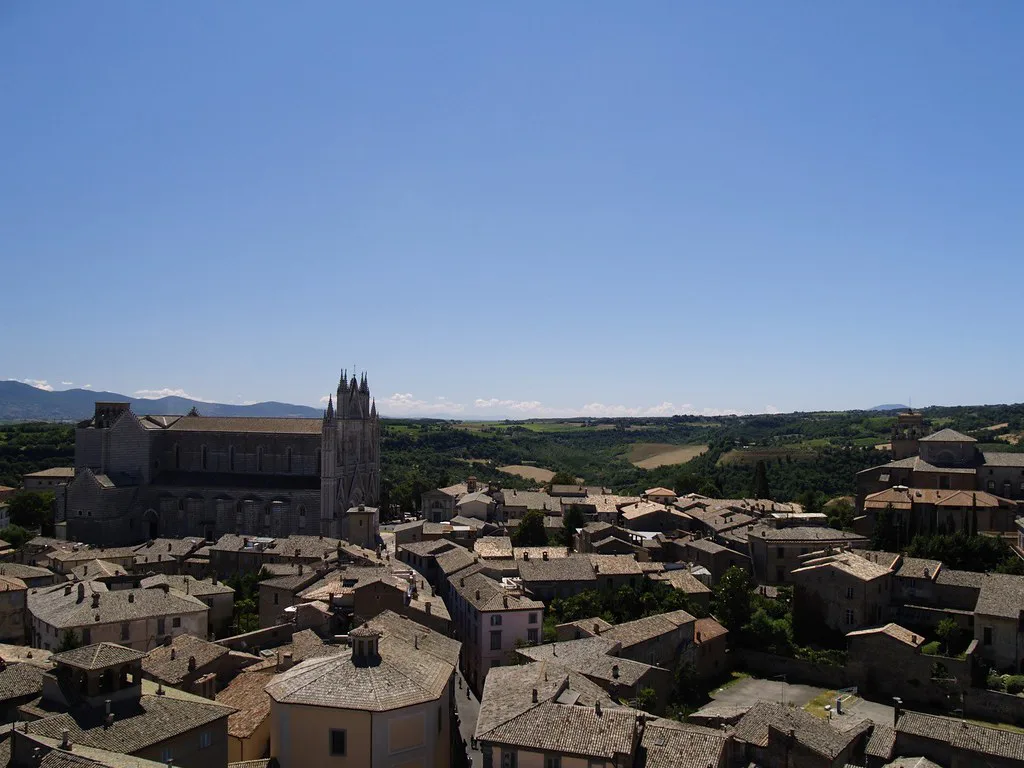
The national museum occupies the ground floor of the Palazzo Papale, the papal palace on Piazza del Duomo, and the building itself dates to the end of the thirteenth century. That address matters more than it sounds: the cathedral, the Museo Claudio Faina and the museum all share one small square, so you can move between them on foot in minutes rather than planning separate trips across town.
Because the palace and the cathedral face each other, the museum works well as a first stop before or after the Duomo rather than as a detour. If you are building a broader list of sights around the piazza and the cliff edge, our collection of hidden gems in Orvieto covers the quieter corners within easy walking distance.
How the Collection Is Organised
Rather than following a single chronological line, the halls group finds according to topography, tying each case to the necropolis or sanctuary that produced it. Material comes from Crocifisso del Tufo, Cannicella, Fontana del Leone, Settecamini and Porano, alongside pieces that surfaced by accident during building works inside the city.
Read that arrangement as a map of the territory around the tuff cliff, not as a random assortment of cases. Once you know which site a room represents, the museum stops being a cabinet of curiosities and becomes a way of reading the landscape you will walk through later the same day.
The Golini Tombs and Their Original Frescoes
The two rebuilt chamber tombs, known as Golini 1 and Golini 2, were discovered in 1863 by Domenico Golini in the Porano area. The frescoes on display are the originals, detached from the tombs for conservation reasons and remounted in the museum; they depict funeral banqueting and the descent to the underworld, giving a detailed picture of Etruscan ritual.
These paintings are the reason many people come, so give them unhurried time and check beforehand that the relevant rooms are open. A separate Umbrian tourism write-up confirms that two rooms were set up to reassemble frescoes from two Etruscan tombs, probably from the Settecamini area, which is a useful cross-check if you are reading up before you arrive.
Pottery: Bucchero, Red Figures and Grave Sets
Ceramics carry much of the story here. Look for Etruscan red-figure pottery, distinctive black bucchero ware, and grave groups that mix imported pieces with locally produced vessels, a combination that shows how far Orvieto's trade networks reached.
The wider necropolis evidence sharpens this point. Finds excavated at Crocifisso del Tufo in the nineteenth and twentieth centuries ended up split between the national museum, the Museo Claudio Faina and the civic collections, and a detailed site history notes that Greek vases of high quality were among the grave goods, a sign of prosperity and sophistication in the sixth century BC.
The Bronze Armour and Warrior Burials
One of the most striking assemblages is a complete bronze armour made up of a helmet, a cuirass, a pair of greaves and a shield. A full panoply like this points to the honoured status of a warrior in death and to the wealth of the family that equipped the burial.
Set it beside the other metalwork and you get a sense of how much of the collection is about display and status rather than daily utility. Treat the armour as a highlight to seek out deliberately, since it is easy to walk past a single case in a room full of pottery.
Cannicella and the Sanctuary on the Southern Slope
The room devoted to the Cannicella necropolis pulls together material from the southern slopes of Orvieto's cliff. From the second half of the sixth century that area held an important sacred place, with a temple decorated in terracotta and a series of related buildings, beside a necropolis laid out on an ordered street grid.
Ceramics and bronzes from nineteenth-century excavations there are displayed in the museum, and the Cannicella site itself, where the so-called Venus of Cannicella came to light, is described as visitable by guided tour on request. If you want to see the actual sanctuary ground, ask locally about current arrangements rather than assuming access.
Crocifisso del Tufo: The Open-Air Context
Below the cliff, the Crocifisso del Tufo necropolis is the largest of the burial grounds that served Etruscan Orvieto, with more than a hundred rectangular tufa tombs set along an orthogonal grid of burial streets. The names of the families buried there are still legible on the lintels, and some of those names are non-Etruscan, evidence that Orvieto was an important trading centre.
Its excavation history runs from chance discovery during road building in 1830-1 through campaigns by Golini, Mancini and Gamurrini, then systematic work in the 1960s and again in the early 1980s. The finds went to the city's museums, which is exactly why the national museum is the right indoor complement to a walk among the tombs.
Before you go, check current visiting days for the archaeological area, since published schedules vary and some slots close. One local guide listing gives Thursday to Sunday opening with Monday to Wednesday closed and certain Sundays also shut, but treat that as a prompt to verify on the day rather than a fixed rule.
National Museum, Faina Collection or Necropolis?
Three experiences on and below the same plateau are often confused. The national museum in Palazzo Papale is the topographic, site-by-site collection described above; the Museo Claudio Faina, also on Piazza del Duomo, is a separately founded family collection with its own ticket; the Crocifisso del Tufo necropolis is open air and outdoors.
With one free slot, choose the national museum if you want the Golini frescoes and the Cannicella material, and choose the necropolis if you prefer ruins in the landscape over cases. With two slots, pair the museum with the open-air site for the fullest picture, since the objects and the tombs illuminate each other.
Do not assume a single ticket covers both museums. The Opera del Duomo site has advertised the Faina museum as an add-on to a cathedral visit, but whether any combined offer is currently running is something to confirm at the ticket desk rather than plan around.
Checking Hours, Tickets and Booking
Current admission prices, opening hours and closure days for the national museum are not confirmed by the sources behind this guide, so this article deliberately gives none. The Italian culture ministry's museums portal is the place to start, followed by the museum's own pages, before you fix a day around it.
If the ministry listing is thin on detail, a phone call to the museum or a stop at the tourist information point on Piazza del Duomo will settle the current situation. Build in a fallback: if the museum is shut, the cathedral and the Faina collection next door keep the day from being wasted.
A Suggested Pace, Clearly an Editorial Estimate
Allow roughly one to one and a half hours inside, which is our suggestion rather than any official figure. That is enough to read the Golini rooms properly, circle the pottery cases and spend time with the armour without rushing.
If you are short of time, head first for the Golini tombs and the Cannicella room, then let the ceramics fill whatever remains. Pairing the museum with the cathedral means you can split a half day between the two without crossing town.
Getting There and Pairing It With the City
Trains arrive at Orvieto Scalo at the foot of the hill, where a funicular runs up towards the historic centre and drops you near Piazza Cahen. From there the walk up Corso Cavour brings you into the old streets and on towards the cathedral square.
Once you are in the centre, everything on this itinerary is walkable. If you want to extend the day, the Pozzo di San Patrizio, a sixteenth-century well with a double spiral staircase commissioned under Pope Clement VII, sits close to the funicular terminus and makes a natural second stop.
The Duomo di Orvieto itself deserves its own slot, since the San Brizio chapel fresco cycle began under Fra Angelico in 1447 and was completed by Luca Signorelli. The cathedral's official site lists upcoming closures and access changes, so check it before setting your date.
Plan Your Visit
The Museo Archeologico Nazionale di Orvieto rewards anyone who wants to understand the plateau before walking it. Start with the Golini frescoes, work through the pottery and armour, then take the context outside to the Crocifisso del Tufo tombs.
Confirm current hours and admission through the culture ministry portal or the museum directly, and check cathedral closures on the Opera del Duomo site. Build the day around verified information rather than a guidebook's schedule, and the museum will fit neatly between the funicular and the Duomo. For related planning, see Orvieto Rainy Day: Indoor Plans From the Duomo to Underground Caves.
Frequently Asked Questions
What is the Museo Archeologico Nazionale di Orvieto known for?
It is best known for two rebuilt Etruscan chamber tombs, Golini 1 and Golini 2, whose original detached frescoes depict funeral banqueting and the underworld. The collection also includes Etruscan red-figure pottery, bucchero ware, a complete bronze armour of helmet, cuirass, greaves and shield, and material from the Cannicella necropolis, all arranged by the site that produced each group of finds.
Are the Golini tomb frescoes in the museum originals?
Yes. The frescoes were removed from the tombs discovered by Domenico Golini near Porano in 1863 and transferred to the museum for conservation, where the two chambers were rebuilt to display them. They are not replicas, which is why lighting and access inside those rooms can be more controlled than elsewhere in the collection.
How is this museum different from the Museo Claudio Faina?
Both sit on Piazza del Duomo, but they are separate institutions with separate collections. The national museum in Palazzo Papale groups finds by necropolis and sanctuary across the territory, while the Faina is a family-founded collection with its own ticket. Do not assume one ticket covers both, and confirm any combined offer at the desk.
How long should I allow for the museum?
As an editorial suggestion rather than an official figure, allow about one to one and a half hours. That covers the Golini rooms, the Cannicella display and the pottery cases at a comfortable pace. If time is tight, prioritise the frescoes and the bronze armour and treat the ceramics as optional.
How do I check current opening hours and tickets?
Start with the Italian culture ministry's museums portal and then look for the museum's own official pages, since hours and admission rules change by season. This guide does not state prices or times because they were not confirmed when it was written. A call to the museum or a stop at the tourist information point on Piazza del Duomo will settle the current details.
Is the museum worth visiting alongside the Crocifisso del Tufo necropolis?
Yes, the two complement each other. The necropolis shows the tombs in the landscape, laid out along an orthogonal grid with family names still legible on the lintels, while the museum holds the grave goods and frescoes removed from such sites. Seeing both gives you the objects and their original setting in a single day.
Sources
- Orvieto Archaeological Museum – Classical Antiquity
- Museo archeologico nazionale di Orvieto, un viaggio tra le necropoli etrusche
- Official event website
- The Well of Saint Patrick - Orvieto - Secret Umbria
- Visiting Medieval Orvieto: 14 Best Things To Do In Orvieto
- An Insider’s Guide to Orvieto | BrowsingItaly
- Duomo di Orvieto
- Necropoli etrusca di Orvieto | Orvieto
- Key to Umbria: Orvieto
Continue exploring
More guides you'll find useful





