
Museo dell'Opera del Duomo Orvieto: Visit Guide & Tickets
The cathedral museum in Orvieto's Papal Palace is closed for renovation. Find where its key works are now and how Duomo and Faina tickets fit together.
On this page
The Museo dell'Opera del Duomo, often shortened to MODO, is the cathedral workshop's own collection, housed in Palazzo Soliano and the Papal Palaces beside the Duomo. Its displays trace how the cathedral was built over centuries, and they include the Emilio Greco bronzes connected to the cathedral's modern doors. The essential planning fact for 2026 is that the museum itself has been shut for renovation, so the collection has to be seen elsewhere or postponed.
This guide explains what the closed museum normally holds, where selected works went, and exactly what the cathedral ticket does and does not cover. It also covers the practical rules inside the Chapel of San Brizio, since a short time limit applies there for guided groups. Read it before buying anything, because the ticket structure is less obvious than it looks.
Where the Museo dell'Opera del Duomo sits
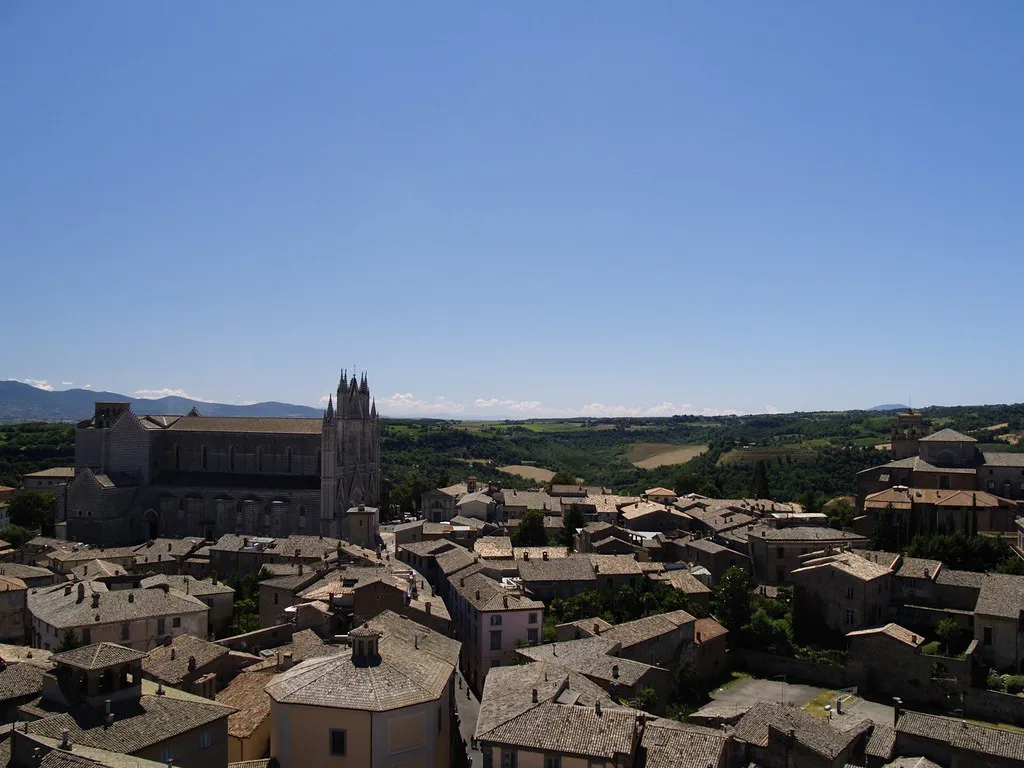
The museum occupies Palazzo Soliano and the adjoining Papal Palaces on Piazza del Duomo, the square dominated by the cathedral facade. The Palazzo was begun in the 1260s as a papal residence, which is why the museum's setting feels civic and papal rather than gallery-like. Because the entrance is a few steps from the cathedral doors, the museum was long treated as an extension of a Duomo visit rather than a separate outing.
Inside, the old layout followed the building's own story: documents and papers on the construction phases, sinopie lifted from the Chapel of the Corporale during restoration, and the Emilio Greco collection of bronze sculptures and graphics on the ground floor. Greco also designed the three bronze doors of the Duomo, which is the link worth remembering when you look at the facade.
The closure: plan around it, not through it
The Opera del Duomo states plainly on its ticket page that the Museo dell'Opera del Duomo is currently closed to the public because of renovation work. No reopening date is published there, so treat any date you see elsewhere with caution. Before you build a day around the museum, check the notices section of the official site on the day you travel rather than relying on an older guidebook.
This changes the shape of a visit: the Duomo, the chapels and the underground chambers remain the core, while the museum becomes a future-trip item. The practical trade-off is that you will see fewer objects than expected in one place, but part of the collection is still accessible nearby. Plan the morning around the cathedral and leave the museum question open until you have confirmed its status.
Where the works moved: Great Masters at the Museo Claudio Faina
During the closure, important pieces from the museum's collection are displayed at the Museo Claudio Faina in the exhibition Great Masters from the Museo dell'Opera del Duomo of Orvieto, subtitled from Simone Martini to Luca Signorelli. The Faina museum stands on the same square, so the substitution costs you almost no extra walking. This is the practical answer for anyone who came specifically to see the workshop's art.
The exhibition also gives the Faina museum's own Etruscan holdings a new neighbour, which makes for an unusual pairing of Etruscan archaeology and medieval panel painting under one roof. The Faina windows look back across to the cathedral facade, a detail worth seeking out. Do not assume the exhibition is included in every ticket type; check the scope of what you buy at the desk.
What the collection normally covers
The old museum was strongest on process: drawings, documents and photographs of the Fabbrica, the workshop that has kept the cathedral standing for more than seven centuries. The sinopie, the underdrawings detached from frescoes in the Chapel of the Corporale during restoration between 1975 and 1980, were among its most revealing displays. Seeing them explained how a fresco cycle was drafted before pigment went on plaster.
The collection also held the Libreria Albèri, a decorated library space built in 1499 for the archdeacon Antonio Albèri and his manuscript collection, and the reliquary of the Corporale by Ugolino di Vieri. These are not decorative extras; they explain why the cathedral became a pilgrimage destination after the 1263 miracle at Bolsena. When the museum reopens, expect these themes rather than a simple picture gallery.
Why the building campaign matters for reading the facade
The first stone was laid in 1290, and construction stretched across centuries with interruptions, changes of architect and shifts in papal patronage. Lorenzo Maitani reshaped the design into the Gothic form you see and worked on the lower facade, while later hands added the rose window, mosaics and bronze figures. Knowing this stops the facade from looking like a single moment of inspiration.
The interior rewards the same reading: the black and white banding is partly painted reproduction above the main arcade, and many stained-glass panels are nineteenth-century replacements. That is not a trick to spoil the visit but a clue to how nineteenth-century restoration framed the cathedral as medieval. Carry this mindset into the chapels, where the chronology is genuinely complex.
What the Cathedral ticket covers, and what it does not
As published on the official ticket page, the Cathedral ticket costs eight euros and includes the Duomo, the Emilio Greco Museum and the cathedral's underground chambers, with audio guides included. Free admission is listed for children under ten, accredited guides, residents of the Orvieto-Todi diocese, ordained priests and religious, and disabled visitors with one caregiver. Prices are as published and can change, so confirm at the desk or online before paying.
What it does not cover is the closed Opera del Duomo museum, which has no visitable rooms at present, or the Faina museum unless you choose the combined option. No tickets are required on New Year's Day or for the Solemnity of Corpus Christi, according to the same page. Note also that tickets are non-refundable once purchased.
Access can be suspended at short notice for liturgical or operational reasons, so check the alerts and closures notice on the homepage before setting out. That is the single most useful habit for a cathedral day in Orvieto. If you are travelling for a specific chapel, build a fallback into the plan.
The combined Cathedral and Faina ticket
The combined ticket adds three euros per full-price ticket to include the Museo Claudio Faina, including the Great Masters exhibition during the closure period. Free tickets always include admission to the Faina museum as well, so families and eligible visitors should ask what applies to them. The add-on is the cheapest way to see part of the displaced cathedral collection while the museum is shut.
It suits anyone with a half-day or more in town, and it suits travellers who want Etruscan material culture and medieval painting in one stop. It is less compelling if you are sprinting between a train and the cathedral, because the Faina deserves unhurried time. Decide based on how long you are staying, not on the small size of the supplement.
Chapel of San Brizio: the rules that shape your timing
The Chapel of San Brizio holds Luca Signorelli's Last Judgment cycle, begun after Beato Angelico started the decorative scheme in 1447 and left it unfinished. To keep the space calm, guided tours inside the chapel must not exceed fifteen minutes, and pre-booked groups with an authorised guide have priority over walk-in visitors. Individual visitors are alternated with groups by staff managing the flow.
In practice, that means you should decide before arriving whether you want a guided slot or a self-paced look, because the two experiences differ. If you join a group, spend the fifteen minutes on the wall you most want to understand rather than trying to absorb every panel. If you visit independently, expect to be moved along when a booked group arrives.
Practical timing and a suggested route
A sensible editorial suggestion, not an official one, is to allow a relaxed half day: the cathedral interior and chapels, the underground chambers covered by the same ticket, then the Faina museum if you took the add-on. Add a walk along the cliff edge for the view back over the tuff plateau. Keep the museum's closure in mind so you do not reserve time for rooms you cannot enter.
Download the Opera del Duomo di Orvieto app before you go if you want the audioguides on your own phone; the App Store listing records fixes to audioguide playback and notes that some users reported guides not playing. Have a backup plan, such as reading the chapel panels, in case the app misbehaves. The app is a convenience, not a substitute for the ticket.
Who should still plan for the museum
Build the Museo dell'Opera del Duomo into a future trip if you care about construction history, sinopie or the Emilio Greco bronzes and their relationship to the cathedral doors. Skip it this time if your priority is simply the cathedral and the Signorelli frescoes, since the Duomo and chapels deliver those without it. Either way, verify the museum's status on the official site before booking transport.
For now, the Great Masters exhibition at the Faina is the closest substitute, and the combined ticket makes it easy to fold into a cathedral visit. Treat any account of the museum's rooms, including room-by-room descriptions, as a preview of a future visit rather than a current itinerary.
Plan Around the Closure
The Museo dell'Opera del Duomo is a closed chapter for now, but the cathedral complex around it is not: the Duomo, the underground chambers, the Emilio Greco Museum and the Signorelli chapel all remain part of a paid visit under the published ticket. Use the Faina combination if you want to see displaced masterworks, and confirm conditions on the day.
Check the official notices for closures, particularly around liturgical feast days, and keep your plans flexible enough to absorb a short-notice suspension. That habit, more than any single ticket choice, is what makes an Orvieto cathedral day work.
Frequently Asked Questions
Is the Museo dell'Opera del Duomo in Orvieto currently open?
The Opera del Duomo's ticket page states that the museum is closed to the public for renovation work. No reopening date is published there, so check the notices section of the official site before planning a visit around it.
Do you need tickets for the Orvieto Duomo?
Yes, entry to the cathedral interior is ticketed, and the ticket also covers the Emilio Greco Museum and the underground chambers. Entry is free on New Year's Day and for the Solemnity of Corpus Christi, and some visitor categories receive free admission.
Where can I see the museum's artworks while it is closed?
Selected works are displayed at the Museo Claudio Faina on Piazza del Duomo in the exhibition Great Masters from the Museo dell'Opera del Duomo of Orvieto. The combined cathedral ticket adds access to the Faina museum for a supplement per full-price ticket.
What does the Orvieto Cathedral ticket include?
The cathedral ticket covers the Duomo, the Emilio Greco Museum and the cathedral's underground chambers, with audio guides included. It does not include the closed Opera del Duomo museum, and the Faina museum requires the combined ticket option.
Is the Opera del Duomo Museum worth visiting?
It is worth planning for a future trip if you are interested in how the cathedral was built, in the sinopie from the Chapel of the Corporale, or in Emilio Greco's bronzes and their link to the cathedral doors. On this trip, the Duomo and the Signorelli chapel carry the artistic weight.
How long can a guided group stay in the Chapel of San Brizio?
Guided tours inside the chapel must not exceed fifteen minutes, and pre-booked groups with an authorised guide have priority access. Staff alternate group and individual visits to manage the flow, so independent visitors may be asked to wait.
Does one ticket cover every site in the Duomo complex?
No. The cathedral ticket has a defined scope, and separate sites such as the Faina museum need the combined option. Treat each ticket type on its own terms and check the scope before you buy.
Sources
Continue exploring
More guides you'll find useful





