Palazzo Ducale Mantua: A Practical Visitor Guide to the Ducal Palace
Plan a half day at Mantua's Palazzo Ducale: how ticket tiers are listed, where the Camera degli Sposi fits, and what to prioritise with limited time.
On this page
The Palazzo Ducale is the reason many travellers put Mantua on an itinerary at all, and it is also the sight most likely to overwhelm a short visit. The complex fills a large slice of the city around Piazza Sordello, so it slots into a walkable day rather than demanding a separate excursion. The first practical decision is not which room to see first but how you will handle access to Mantegna's Camera degli Sposi, the painted room that most visitors come for.
Allow roughly half a day if you want the castle, the Camera degli Sposi and a reasonable pass through the older courts, and accept in advance that hundreds of rooms will remain unseen. Treat that duration as a sensible planning estimate rather than an official figure. Ticket scope, booking policy and any time-slot system should be checked against the palace's own pages before you travel, because those details change.
Where the Palace Sits in Mantua
The palace address is Piazza Sordello 40, on the city's oldest square, which it shares with the cathedral and the bishop's palace. Because the entrance sits in the historic core, you can arrive on foot from Piazza delle Erbe, the Rotonda di San Lorenzo and the Basilica di Sant'Andrea without any transport leg. Build the palace into a morning and let the squares fill the rest of the day.
Mantua is ringed by the lakes of the Mincio, which keep the centre compact and easy to cross on foot. That geography matters for planning: a palace visit, a lakefront walk and an evening meal can sit in one unhurried day. If you want to slow the pace further, the quieter corners of the city reward an extra night rather than a longer checklist; our guide to the hidden gems in Mantua covers squares and riverside corners worth folding in.
The Gonzaga Story Behind the Rooms
The Gonzaga family ruled Mantua for roughly four centuries, from the early fourteenth century until the dynasty faded at the start of the eighteenth. They moved from lords to marquises in 1433 and to dukes in 1530, and used art and architecture to advertise each promotion. Knowing that sequence helps you read the palace as a layered building rather than a single design.
The family drew major artists to a provincial city and turned it into a Renaissance court of real standing. Andrea Mantegna arrived in 1460 as court painter to Ludovico II Gonzaga and stayed until his death in 1506, which is why his work is so tightly bound to the palace. Giulio Romano came later and left his mark on Palazzo Te, the pleasure villa on the other side of town. Related guide: Casa del Mantegna, Mantua: Visitor Guide to Mantegna's House.
How the Complex Is Organised
The Palazzo Ducale is best understood as a palace-city: a collection of buildings, courtyards, gardens, a church and a castle stitched together over centuries. Its main areas are the Corte Vecchia, the Corte Nuova, the Castello di San Giorgio and the gardens, alongside the National Archaeological Museum and a gallery of contemporary art. Because it grew by accretion, architectural styles shift as you walk, from late medieval to Renaissance and later.
The Italia.it listing puts the complex at around 35,000 square metres with about 1,000 rooms, which is the number to keep in mind when you are tempted to plan an exhaustive visit. Other descriptions count more than 500 rooms, and the discrepancy is less important than the conclusion: you will be choosing, not covering. Decide before entering what you are willing to skip.
The Corte Vecchia and the Older Apartments
The Corte Vecchia is the oldest part of the complex, and it is where you find the medieval buildings fronting Piazza Sordello. It also holds the Pisanello frescoes of an Arthurian tournament, rediscovered in the twentieth century after centuries of damage, and the apartment and studiolo associated with Isabella d'Este. Her treasures were dispersed long ago, but the rooms still convey how a Renaissance collector arranged a private study.
Further highlights in this part of the palace include the Hall of Mirrors, the Zodiac Room and the hanging garden near the Hall of Rivers, and a guided tour description lists them among the rooms shown on a visit. These are the interiors to prioritise if the Camera degli Sposi turns out to be unavailable on your day.
The Corte Nuova and the Tapestries
The Corte Nuova reflects the later, more formal phase of Gonzaga patronage, with apartments that show the family's taste for Flemish weaving. Cardinal Ercole Gonzaga bought a cycle of tapestries in Brussels based on Raphael's designs for the Acts of the Apostles, and they hang today in the Apartment of the Tapestries. Look for them if you want a break from fresco cycles and a sense of how textiles functioned as display.
Castello di San Giorgio and the Camera degli Sposi
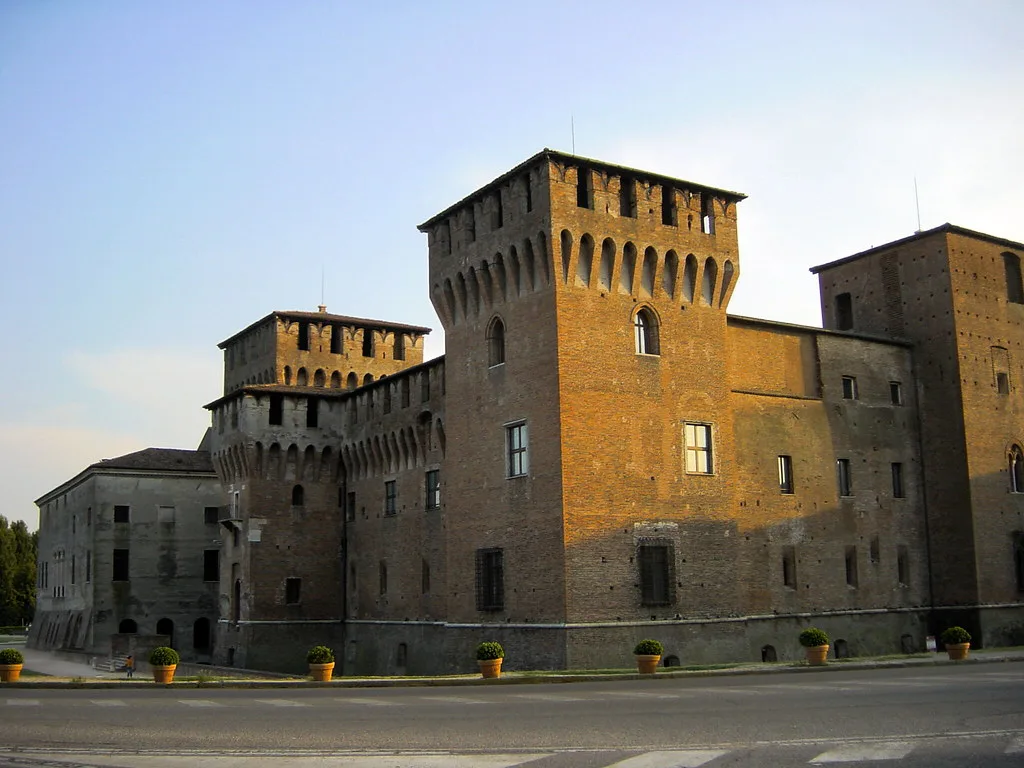
The Castello di San Giorgio began as a fortress, built between 1390 and 1406, and was later converted into a residence inside the wider palace. Its northern tower holds the Camera degli Sposi, also called the Camera Picta, painted by Mantegna between 1465 and 1474 with portraits of the Gonzaga family and a famous painted oculus in the ceiling. This single room is the reason many people book a Mantua trip.
Access to the Camera degli Sposi has been described in travel sources as slot-based, with admission limited and a time reserved when you buy your palace ticket. Treat that as reported rather than confirmed current policy, and check the official site for how entry is handled on your dates. If you can only manage one fixed appointment during your stay, make it this one.
Ticket Tiers and What They Cover
The ticketing is not a single all-inclusive pass, and the tier names matter. Italia.it lists one option covering the Castello di San Giorgio with the Camera degli Sposi, the Corte Nuova, the Corte Vecchia and the National Archaeological Museum at a full price of 15 euro, and a cheaper option for the Corte Nuova, Corte Vecchia and museum at 7 euro full with a 2 euro reduced rate. Those figures are as published by Italia.it and should be treated as subject to change rather than confirmed for your visit.
Read the tier description carefully before paying, because choosing the cheaper option means skipping the castle and the painted room entirely. Reduced-price eligibility rules are not something to guess at the ticket desk, and the palace's own site is the place to confirm both tiers and any conditions attached to them.
A Half-Day Priority Order
Start with the Castello di San Giorgio and the Camera degli Sposi while you are fresh and while your slot, if you have one, is fixed. Then move through the Corte Nuova for the tapestries, and finish in the Corte Vecchia with the Pisanello frescoes and Isabella d'Este's rooms. This order puts the irreplaceable first and leaves the more dispersed interiors for however much energy remains.
If time collapses, drop the archaeological museum and the contemporary gallery rather than rushing the castle, and give the gardens a passing glance from a window. The stated scale of the complex makes this a realistic triage rather than a failure of planning. Keep a note of what you skipped so an afternoon return, if your ticket allows one, has a purpose.
Pairing the Palace With the Rest of Mantua
Palazzo Te sits a little over a kilometre from the Palazzo Ducale, and each palace deserves a couple of hours, so the two together make a full day rather than a half day. If you only have one block of time, choose the Ducale for Gonzaga power and Mantegna, or Palazzo Te for Giulio Romano's theatrical frescoes and the Hall of the Giants. Splitting them across two days is the calmer option.
For a lighter counterweight, the Basilica di Sant'Andrea, begun in 1472 to designs by Leon Battista Alberti, stands a short walk away and holds the relic associated with the Blood of Christ. Entry to the church is a different proposition from the palace's ticketed interiors, so check locally rather than assuming one covers the other. The surrounding squares are free to wander at any hour. The Mantua Attractions hub has separate guides for the other sights if you want to spread the palace and the city over two days.
Practical Realism for the Day
Expect a lot of walking on historic floors, with staircases between levels and long corridors connecting the wings. Wear shoes you trust and carry water, since a half day here is more physical than a single museum gallery. Accessibility arrangements, lift access and step-free routes are not something to assume, so ask the palace directly if these matter for your party.
Opening hours, closing days and last entry are the details most likely to derail a plan, and they are not fixed in any reliable way across sources. Check the palace website and the city's own events listings in the days before you go, especially around public holidays. Build your other Mantua plans around the palace rather than the reverse.
Plan Your Visit
The Palazzo Ducale rewards a plan shaped around one room. Secure your access to the Camera degli Sposi first, then let the Corte Nuova and Corte Vecchia fill the remaining hours at whatever pace suits you. Confirm the current ticket tiers and any time-slot arrangements on the official site before you commit, and leave room for the squares outside.
Frequently Asked Questions
How long does it take to visit the Palazzo Ducale in Mantua?
Plan for roughly half a day if you want the Castello di San Giorgio, the Camera degli Sposi and a reasonable pass through the older courts. That is a practical estimate rather than an official duration. The complex is described as covering around 35,000 square metres with hundreds of rooms, so a shorter visit means deliberately skipping sections such as the archaeological museum. Add more time if you also want the gardens and the contemporary gallery.
Do I need a separate ticket to see the Camera degli Sposi?
The Camera degli Sposi is inside the Castello di San Giorgio, and the ticket tiers published by Italia.it treat the castle as its own option rather than including it with the cheaper Corte Nuova and Corte Vecchia ticket. Choose the castle tier if the painted room is your priority. Confirm the current tiers and any booking conditions on the palace's official site before you travel, since prices and inclusions can change.
What should I prioritise at the Ducal Palace if I only have half a day?
Go to the Castello di San Giorgio and the Camera degli Sposi first, then the Corte Nuova for the tapestries, and finish in the Corte Vecchia with the Pisanello frescoes and Isabella d'Este's rooms. If time runs short, drop the archaeological museum and the contemporary gallery rather than rushing the castle. This order puts the least replaceable interiors at the start of your visit, when your attention is strongest.
Is the Palazzo Ducale worth visiting if I have already seen Palazzo Te?
Yes, because the two palaces show different sides of Gonzaga patronage. Palazzo Te is Giulio Romano's pleasure villa with the Hall of the Giants, while the Ducale is the seat of power with Mantegna's Camera degli Sposi, the Pisanello frescoes and the tapestry cycle. Each needs a couple of hours, so treat them as a full day or split them across two days rather than compressing both into one short block.
Should I book a guided tour of the Palazzo Ducale?
A guide helps most if you want the Gonzaga context and the fresco cycles explained, and it can also simplify navigation through a complex that is really a palace-city. Independent operators run tours of varying length, and their inclusions and prices vary, so check what is covered before booking. If you prefer to move at your own pace, the palace works well with a map and a clear priority order.
What if the ticket I want is unavailable on my dates?
Check the palace's official site for how entry is currently managed, including any time-slot arrangements for the Camera degli Sposi. If the castle tier is not available, the Corte Nuova, Corte Vecchia and archaeological museum tier still covers substantial interiors, including the Pisanello frescoes, Isabella d'Este's rooms and the tapestries. Save the painted room for a return visit rather than rushing the rest of the complex.
Sources
- Comune di Mantova
- Marvelling at Mantua’s Palazzo Ducale : European Waterways
- Palazzo Ducale and Palazzo Te in Mantua: why visit them | ItaloBlog
- The Ducal Palace of Mantua in Italy - Italia.it
- Palazzo Ducale Mantova - by Local Guide Tiziana Portioli
- Official event website
- Top Attractions In Mantua, A Renaissance Marvel In Northern Italy - The Geographical Cure
- Basilica of Sant'Andrea (Mantua)
- Casa del Mantegna — Google Arts & Culture
- Museo di Palazzo Ducale - CODART
Continue exploring
More guides you'll find useful