
Piazza del Duomo Lecce: Visitor Guide to the Cathedral Square
Plan a visit to Piazza del Duomo in Lecce: what the cathedral, bell tower and bishop's palace enclose, what is free to see, and how to time your walk.
On this page
Lecce is often described as the Florence of the South, a nickname earned by its dense Baroque facades in warm pietra leccese stone. At the centre of that reputation sits Piazza del Duomo, a square that works as a single ensemble rather than a checklist of separate monuments. Treat it as one visit and the cathedral, the bell tower beside it and the surrounding palaces start to make sense together. A suggested 60–90 minutes is enough to see the square and the cathedral interior at an unhurried pace, though that is a planning suggestion, not an official duration.
This guide covers what the square actually contains, which parts are open worship space and which are paid collections, and how to pace a short walk through it. It deliberately avoids printing fixed hours or ticket numbers, because those change with Masses, seasons and religious celebrations. The practical answer is always to read the notices at the entrance or check the diocese's own website before you go.
Why Piazza del Duomo Anchors a Lecce Visit
Most first-time visitors reach Piazza del Duomo on foot from Piazza Sant'Oronzo, following narrow lanes into a square that opens up suddenly around the cathedral. The approach matters: the square is enclosed by its own buildings, so the facade arrives as a reveal rather than a roadside view. That is why it rewards a few unhurried minutes before you start looking for doors. The official municipal website lists events that can affect access, but the useful rule here is simply to walk the perimeter once before choosing an entrance.
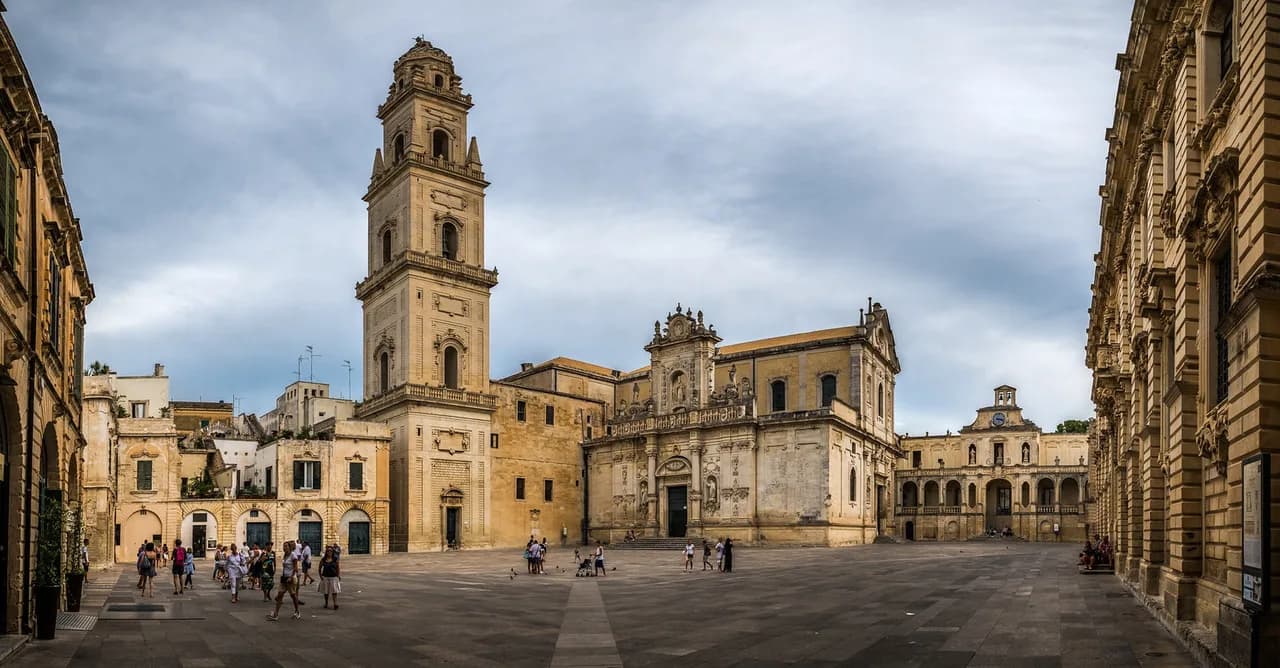
The square is dominated by Lecce Cathedral, with the Bishop's Palace and the Seminary also fronting it, and all of the surrounding buildings share the carved detail associated with the local Baroque style. Because the historic centre is compact, the square fits naturally into any walk between the basilica and the Roman theatre area. If you only have an hour in Lecce, this is the one place to slow down in rather than pass through.
What Surrounds the Square: Cathedral, Campanile, Bishop's Palace and Seminary
The cathedral's full name is Cattedrale di Maria Santissima Assunta, and it stands at the heart of the ensemble on Piazza del Duomo. Its bell tower, or campanile, rises beside it and is one of the tallest things in the old town, which is why it reads as a landmark from several streets away. Around the edges sit the bishop's palace, which houses the diocesan museum, and the seminary, both contributing to the square's ceremonial character. Visitor descriptions of the square identify the cathedral, the Bishop's Palace and the Seminary as its principal frontages.
The useful mental model is a church inside a set of church buildings. The cathedral is the worship space, the palace holds a museum collection, and the tower is a separate piece of infrastructure that may or may not be open on your day. Recognising that from the start stops the common disappointment of arriving expecting one combined experience with one entry point.
Inside the Cathedral: A Restrained Facade and a Rich Interior
Compared with the carved overload of the Basilica di Santa Croce, the cathedral's exterior reads as relatively sober. Step inside and the balance flips: three naves open up, lined with altars, paintings and stucco work, and the choir area holds carved wood, marble and relics. Allow time to sit rather than walk a circuit, because the interest is in chapels and side details rather than one grand view.
Access to the worship area is generally free, and this is the part of the square most visitors actually enter. That free access can be interrupted by Mass and by religious services, so the realistic constraint on your visit is the liturgical calendar rather than a queue. Check the notice board at the door for the day's service times before you plan anything else around the square.
The Bell Tower: An Optional Climb With Uncertain Availability
The campanile is the element visitors ask about most, and it is the one to treat with the least certainty. Published visitor information describes the tower as offering panoramic views of the historic centre for those who climb it, subject to availability, which is the honest way to read it. Some days it opens, some days access is restricted, and during Sunday services the ascent may simply not be possible.
If a view over the rooftops matters to you, ask at the cathedral or the diocesan museum counter on arrival rather than building your day around it. Plan the square visit so that it works whether or not the tower opens, and you avoid the frustration of a wasted trip. A tower climb is a bonus, not the reason to come.
The Diocesan Museum and Bishop's Palace: A Separate Ticketed Collection
The Museo Diocesano occupies the former bishop's palace on the square and preserves liturgical vestments, silverware, paintings and liturgical objects. It is a collection visit, not a church visit, and it should be understood as a separate paying stop rather than an extension of the cathedral interior. If your interest is ecclesiastical art and local church history, this is where the curated material sits.
Published figures for museum entry, reductions and possible combined tickets with the tower circulate in visitor guides, but they are indicative and should never be treated as current. Nor should you assume the cathedral, the museum and the tower share one ticket, since the arrangements can change by season or agreement. Confirm the scope and price at the ticket desk before you hand over anything.
Free Versus Paid: Separating the Square From the Collections
The simplest split is this: walking into the square costs nothing, and entering the cathedral's worship space is generally free, while the museum collection and any tower access are paid. Guided walking tours are a third, separate cost and are optional entirely. Keeping these three categories apart prevents the muddle of expecting a single ticket to cover everything on the square.
If budget is tight, the free layer is still substantial: the square itself, the cathedral interior and the surrounding streets. Paid stops are best chosen by interest rather than by completion instinct. Someone drawn to silverware and vestments will get more from the museum than from a tower view, and vice versa.
Timing Your Visit Around Light and Services
Light matters on this square because the stone is pale and reflective. Early morning gives a cleaner facade and fewer people, while late afternoon brings warmer colour across the carved surfaces. The trade-off is heat: midday in summer is best avoided, and water plus shade breaks are sensible rather than fussy.
The real scheduling constraint, though, is religious life. Masses, local festivals and high-season crowds shift when you can enter and how long you can linger, and the same applies across Lecce's churches. Check municipal and diocesan notices for events before choosing your day, and if a service is underway, wait or return later instead of touring around it. The city's own event calendar and the diocese's site are the places to look.
A Suggested 60–90 Minute Route Through the Square
This is a suggested pace, not an official one. Start by walking the perimeter of the square once to see how the cathedral, palace and seminary relate, then enter the cathedral and spend the bulk of your time inside on the chapels and choir. Finish with a slow look back at the facade from the far side of the square.
If the museum is open and appeals, add a block of time for it; if the tower is open, decide whether the view is worth the detour on the day. Anything beyond ninety minutes usually means you have added the museum, a climb, or a long sit. If you would rather spread your time across town, fold the square into a wider walking route through the Baroque centre.
Etiquette and Practicalities on the Square
This remains a working place of worship, so shoulders and knees covered is courteous advice for entering the cathedral, and quiet voices are expected during services. Photography rules vary by chapel, and signage at the entrance is the thing to read rather than any general assumption. Flash during ceremonies is the clearest thing to avoid.
The old town's streets are narrow, cobbled and uneven, so comfortable shoes make more difference here than on a flat modern boulevard. In summer the pale stone throws glare and holds heat, which makes a hat and a water bottle practical equipment. If you carry a bag, keep it closed in busy periods, as you would in any crowded Italian centre.
Getting there is straightforward on foot: regional trains from Brindisi and Bari serve Lecce station, and the Baroque heart is roughly a twenty to thirty minute walk from the platforms depending on pace. Local buses and taxis cover the gap if you have luggage, and drivers usually park on the outskirts and walk in.
Nearby Extensions: Sant'Oronzo, Sant'Irene and the Roman Theatre
Step out of the square towards Piazza Sant'Oronzo and you meet the column, the church of Sant'Irene and the sunken Roman theatre area within a few minutes. Sant'Irene is generally open around service times and free to enter, so it works as a short addition rather than a destination. The Roman amphitheatre area is a natural next stop if you are continuing a walking loop.
For a longer wander beyond the obvious monuments, the city has a layer of smaller sites and underground spaces that reward curiosity, including the well-known Museo Faggiano. Those stops suit travellers who have already seen the main square and want a second, different hour in Lecce. They are best treated as additions to the cathedral visit, not replacements for it.
Plan Your Visit
Piazza del Duomo is best understood as one enclosed Baroque set piece: a generally free cathedral interior, an enclosed square you can walk for nothing, and a museum collection in the bishop's palace that is separately ticketed. The bell tower is the variable, and it should never be the fixed point of your plan.
Check the diocese and city notices for services and events on your dates, read the entrance signs for current access arrangements, and ask at the desk about the museum and tower before assuming anything about combined entry. Build your day so the square can be enjoyed at an easy pace, in the cooler hours, with the rest of Lecce around it.
Frequently Asked Questions
Is Piazza del Duomo in Lecce free to visit?
Walking into the square and entering the cathedral's worship space are generally free. The diocesan museum in the bishop's palace is a separate paid collection, and any bell tower access is a further separate question. Confirm what is open and what is charged at the ticket desk on the day, since arrangements change with services and season.
How long should I spend at Piazza del Duomo?
A suggested sixty to ninety minutes covers the square, the cathedral interior and a slow look at the facade. Add time if you visit the diocesan museum or climb the bell tower when it is open. This is a suggested pace for planning, not an official duration, and a service in progress will affect it.
Can you climb the bell tower of Lecce Cathedral?
Visitor information describes panoramic views from the campanile for those who climb it, subject to availability. Access can be restricted, including around Sunday services, so treat a climb as a bonus rather than a guaranteed part of the visit. Ask at the cathedral or museum counter on arrival before planning around it.
Do I need a ticket for the cathedral or the diocesan museum?
The cathedral's worship area is generally free, while the Museo Diocesano in the bishop's palace is a separate ticketed collection. Do not assume the cathedral, the museum and the tower share one combined ticket; arrangements vary and figures quoted in older guides may be out of date. Check the scope and price at the desk.
When is Piazza del Duomo least crowded?
Early morning and late afternoon are the more comfortable windows, for both light and foot traffic. Midday in summer combines heat, glare off the pale stone and heavier visitor numbers. Religious services and festivals, including Holy Week and the Sant'Oronzo patron feast, also change access and crowd levels, so check local notices for your dates.
What should I wear when visiting the cathedral?
Covered shoulders and knees are sensible courtesy for entering a working place of worship, and quiet voices are expected during services. Photography rules vary by chapel, so read the signage rather than assuming a general rule. Flash during ceremonies is best avoided entirely.
What else is within walking distance of Piazza del Duomo?
Piazza Sant'Oronzo, the church of Sant'Irene and the Roman theatre area are all a few minutes away on foot in the historic centre. The Basilica di Santa Croce is also walkable, and the compact layout makes a combined walk practical. The station is roughly twenty to thirty minutes away on foot, longer with luggage.
Sources
Continue exploring
More guides you'll find useful





