
Villa Olmo Como Visitor Guide: Interiors, Gardens and Access
Plan a visit to Villa Olmo in Como: what the neoclassical villa holds, how the historic park and lakefront fit together, and what to check before you go.
On this page
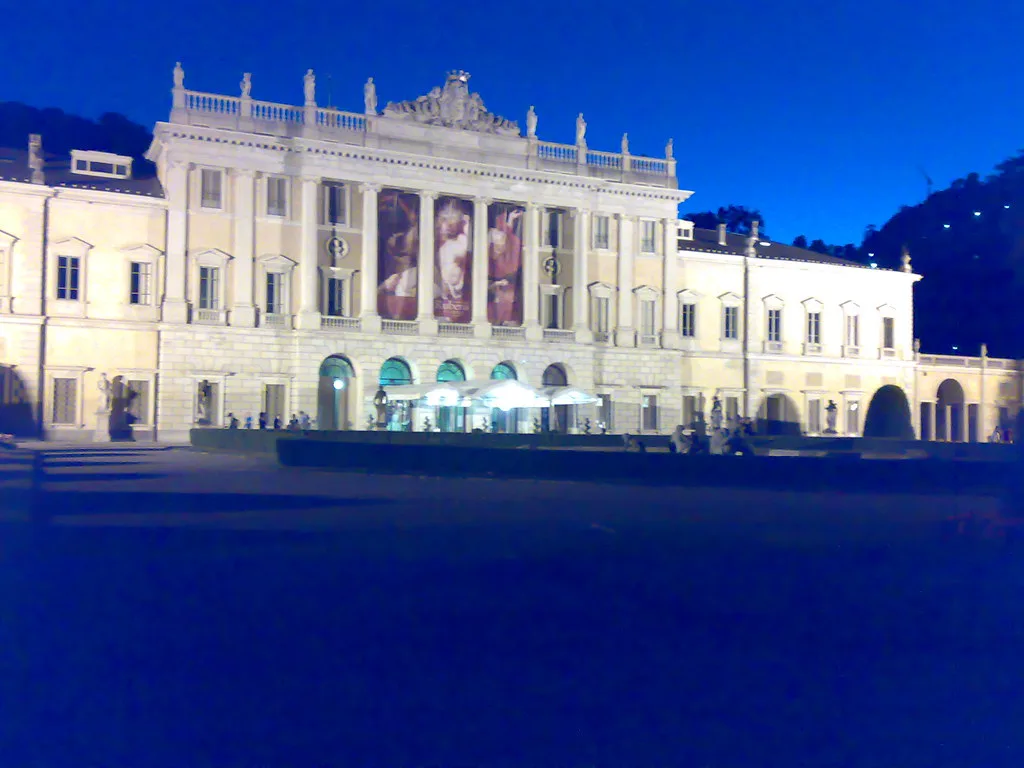
Villa Olmo is Como's grandest lakeside address: a neoclassical villa commissioned by the Odescalchi family and completed in 1812, now owned by the city and used for exhibitions and cultural events. It sits at the western edge of town, where the lakefront promenade meets the road toward Cernobbio, and it rewards a slower visit than a quick photo stop.
The visit splits cleanly in two. The villa building and its temporary exhibitions are one thing; the public historic park behind it, with its monumental trees and lake views, is another. Treating them as a single ticketed attraction is the most common planning mistake, so budget your time for each separately.
Quick Orientation: Where Villa Olmo Sits and What a Visit Rewards
Villa Olmo stands at the far western end of Como's waterfront, roughly a half-hour walk from the city centre along the Lino Gelpi promenade, a route that keeps the lake on your right almost the whole way. Coming from the Cernobbio side, the approach runs along the lake road in the opposite direction. The villa's main facade faces the water, so arriving on foot is more rewarding than arriving by car.
This is a place for travellers who like architecture, old gardens and a calm hour outdoors rather than a tightly packaged sight. The villa's interiors are monumental in scale, while the park behind is one of the most significant historic gardens in the province. Those two qualities make Villa Olmo a good half-day companion to the rest of the lakefront rather than a standalone destination.
Why the Villa Matters: Odescalchi, Cantoni and Municipal Ownership
The original neoclassical design is credited to Simone Cantoni of Muggio in the Ticino, drawn up in the late 18th century for Innocenzo Odescalchi. Later owners added the side wings without destroying the building's stylistic face, which is why the villa reads as one composition despite its stages. A legend ties the name to an enormous elm said to have been planted by Pliny the Younger in the grounds.
Over the 19th century the property changed hands repeatedly before the municipality of Como acquired it in 1925 and turned it into a venue for cultural events and art exhibitions. That municipal role is the key to planning: programming, access and any restrictions are decisions of the city rather than a private operator. For current details on the city's cultural services, start with the Comune di Como's own pages.
Free Versus Paid: Grounds, Interiors and Temporary Exhibitions
The park is public and open to citizens and tourists, according to the Larius Way visitor guide, which is the clearest statement in available sources. That page also reports villa visiting hours and free entrance, but it is a third-party description rather than an official notice. Treat those values as a starting point and confirm the current regime with the city before you rely on them.
Interior access cannot be assumed during temporary exhibitions and events, because the same visitor account notes that access may be denied at those times. The practical rule is simple: if a show is running, expect conditions to differ from a quiet day. Check what is on at the villa, and what it means for entering the building, before you travel.
Note, too, that Como's museum system sells tickets online for the Pinacoteca civica, the Tempio Voltiano and the Cathedral, as the city website explains. Those are separate civic collections, and no source suggests a combined ticket that includes Villa Olmo. If you want a guaranteed indoor art fix, book one of those instead of assuming villa interiors will be open.
Inside the Villa: Atrium, Staircase and the Sala del Duca
The interiors are described in visitor accounts as monumental: a raised central body, columns decorated with tondi of Greek philosophers carved by the Ticino sculptor Francesco Carabelli, and a square atrium that rises through three floors on the footprint of the earlier Villa Odescalchi. From there a large arch opens onto the grand staircase, with marble and stucco balustrades and a fresco by Appiani above.
Beyond the ballroom, a sequence of rooms served conversation, receptions, billiards and dressing, reflecting the social life of a Lombard villa. The Sala del Duca on the first floor is the room most often singled out, and the Larius Way account says it can be visited at stated times with cultural operators accompanying visitors. That arrangement is exactly the kind of detail that changes with programming, so verify it rather than counting on it.
Smaller features reward a closer look: a theatre with 92 seats added in 1853 and decorated with frescoes by Fontana, and an attic display devoted to the futuristic architect Antonio Sant'Elia. Neither is guaranteed to be accessible on any given day, so ask at the entrance what is currently open rather than assuming the whole building is walkable.
The Historic Park: English Layout, Trees and Greenhouses
Behind the villa, reached through two side porticoes, the park extends over roughly five hectares and retains the English-style layout popular in the 19th century. Around 800 trees are counted there, among them horse chestnuts, Lebanese cedars, sweet gums and planes. The greenhouses from the late 19th century survive as iron structures typical of the turn of that century, and a botanical garden focused on historic Lake Como garden species and crops is planned.
The terrain is laid out as clearings and lawns with long views back over the water and the mountains, which makes the park a pleasant counterpoint to the busier promenade. Practical closures matter more than the design on a short trip: during the 2017 restoration works the park behind the villa and the bridge of the Kilometro della Conoscenza were closed, while pedestrian access via the villa and the Cernobbio road was maintained. That notice is historical, so check the restoration project site for how access stands now.
Kilometro della Conoscenza: Linking Villa Olmo to Grumello and Sucota
Villa Olmo is one point on the Kilometro della Conoscenza, a cultural route and green corridor that links twelve sites across three historic villas: Villa Olmo, Villa del Grumello and Villa Sucota. It is a walk rather than a single attraction, and it is best treated as a way to spend a couple of hours moving between gardens and lake views. Villa Gallia and Villa Saporiti sit close by as well, so a loose circuit is easy to assemble.
One caution: the route's bridge has been affected by restoration works in the past, so a connecting segment may be interrupted rather than continuous. Plan the walk but check locally before assuming a full through-route. For other lower-key corners of the city to fold into the same afternoon, see this guide to hidden gems in Como.
Timing and Hours: What to Verify Before You Go
Published third-party hours should be read as a snapshot, not a rule. Larius Way gives villa visiting times from Tuesday to Sunday, 10.00 to 18.00, with the park open daily from 7.00 to 19.00 in winter and 7.00 to 23.00 in summer on a split that runs October 1 to April 4 and April 5 to September 30. The same page notes that access may be denied during temporary exhibitions and events, which is precisely why these times need confirming.
The reliable approach is to check the villa's own restoration and information site and the Comune di Como's events pages in the days before you go, then re-check on arrival at the entrance. If interiors are closed for a show change, the park remains the fallback; if the park is partly fenced for works, the lakefront promenade still delivers the view. Neither official source in this packet publishes a current exhibition calendar for the villa, so treat any schedule you see elsewhere with care.
Getting There on Foot and Finding the Entrance
Walking is the sensible way in. From central Como, follow the lakefront promenade westward toward Cernobbio; the Larius Way account puts the walk at about 30 minutes from the centre, which is realistic at an easy pace with photo stops. Arriving from Cernobbio instead reverses the route along the lake road. The villa's address is given as Via Bellinzona 2 in some listings and Via Simone Cantoni 1 on the restoration site, a reminder that entrances and addresses are not always phrased consistently.
If you come by car, the same account mentions paid parking on Via Cantoni and Via Bellinzona, without giving rates. Do not budget from memory or from an old blog: rates and availability change, and the city's mobility pages are the place to check. Buses are mentioned by third parties, but no source here verifies current lines, so confirm locally rather than relying on a list.
Practical Trade-offs: Exhibition Days Versus Quiet Garden Days
Choose an exhibition day if you want the interiors and accept a busier building, tighter room access and the chance that the Sala del Duca or upper floors are not open. Choose a garden day if you mainly want trees, light and lake views, since the grounds are public and the visit is unstructured. The two plans need different shoes, different timing and different expectations.
Whichever you pick, cross-check the details that carry risk: interior access during a show, park opening hours, and whether restoration work has interrupted the connecting walk. Historical pages, including the 2017 access notice, describe the past rather than today. A five-minute check on official channels before leaving your hotel is worth more than any printed schedule.
Plan Your Visit
Villa Olmo works best as a two-part outing: the public park and lakefront first, then the interiors only if programming allows. Build in roughly half a day if you want both plus the walk along the Kilometro della Conoscenza toward Villa del Grumello and Villa Sucota. That duration is a suggestion, not an official figure.
Before you go, confirm current access and hours with the city and the villa's restoration site, and check what is showing. Wander the rest of the city's quieter corners with the hidden gems guide, and browse the wider Como Attractions hub to slot Villa Olmo into a fuller lakefront itinerary.
Frequently Asked Questions
Is the park at Villa Olmo free to visit?
Visitor accounts describe the park as public and open to tourists and residents, and the grounds are separate from the villa building. Because access rules can change during events and restoration work, confirm the current situation with the city before you rely on it.
Can you visit the interiors of Villa Olmo during exhibitions?
Interior access may be restricted while temporary exhibitions and events are running, according to visitor reporting. Check what is on at the villa and what it means for entering the building before you travel, and ask at the entrance which rooms are open that day.
How long should I allow for Villa Olmo and its park?
A comfortable half-day covers the park, the lakefront approach and, if programming allows, the villa interiors. That is a suggested duration rather than an official one, and it leaves room for the walk along the Kilometro della Conoscenza.
How do you walk from Como's centre to Villa Olmo?
Follow the lakefront promenade westward from the centre; the walk is reported at around 30 minutes at an easy pace. From Cernobbio, approach along the lake road in the opposite direction. Check the exact entrance on arrival, since addresses are listed inconsistently.
What is the Kilometro della Conoscenza?
It is a cultural route and green corridor linking twelve sites across three historic villas: Villa Olmo, Villa del Grumello and Villa Sucota. Treat it as a walk between gardens rather than one ticketed attraction, and check that connecting segments are open.
Sources
Continue exploring
More guides you'll find useful





