Tempio Voltiano Como Guide: Volta's Lakeside Museum
Visit Como's Tempio Voltiano: the lakeside memorial to Volta, what's inside, ticket-scope caveats, and how it fits a walk between the Duomo and Villa Olmo.
On this page
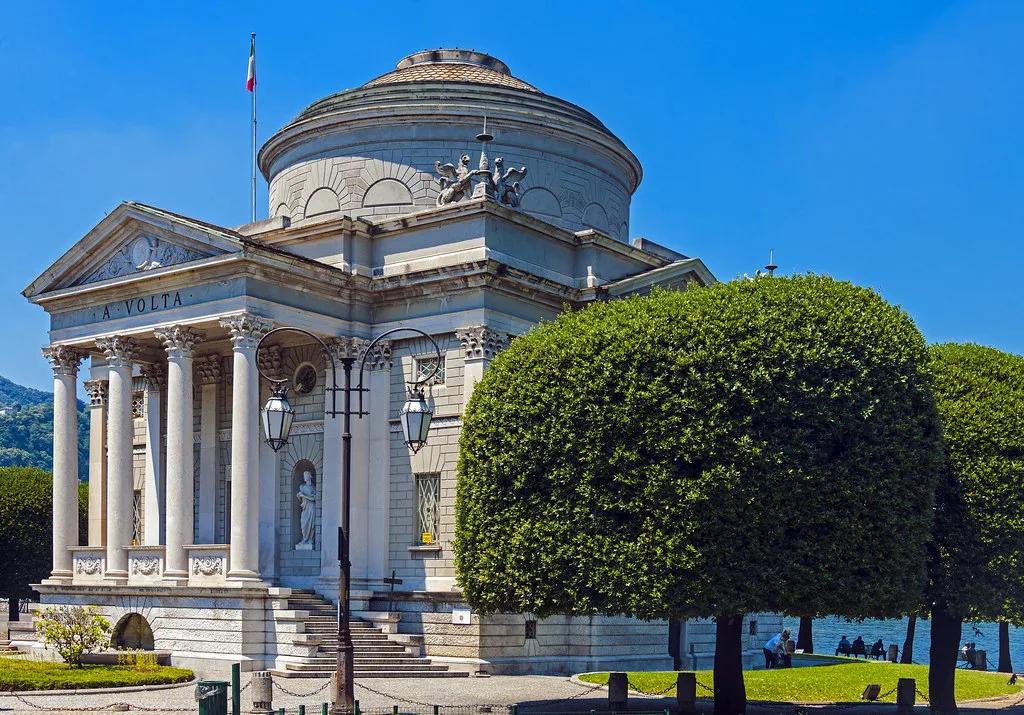
The Tempio Voltiano is a small neoclassical memorial on Como's waterfront, built in the 1920s to honour Alessandro Volta, the Como-born scientist whose work led to the voltaic pile, an early battery. The museum is compact: expect a focused display of Volta's scientific instruments and personal items rather than hours of galleries.
Along with its interior collection, the Tempio Voltiano is part of Como's broader civic museum offering. A suggested visit of about 40 to 60 minutes is a practical estimate for a careful look, not an official duration. This guide covers what's inside, how to check the current ticket and opening arrangements, and how the museum fits a lakeside walk.
Where the Tempio Voltiano Sits on Como's Lakeside
The museum is listed at Viale Guglielmo Marconi, on the lakefront, and named in connection with Lungolago Mafalda di Savoia, another waterfront descriptor. Treat the address as your anchor and follow the promenade signage. Near the temple are the modern sculpture Life Electric and the Faro Voltiano, both dedicated to Volta, which helps make the lakeside setting part of the Volta story. In practice, the building is an easy landmark to spot while walking the shore.
Because of its lakeside position, the temple works best as a stop during a walk rather than as a destination in itself. The path from the Duomo to the waterside and onward toward Villa Olmo passes the waterfront, and the temple's placement makes it a natural pause. The surrounding promenade is part of the visit, so allow time to enjoy the setting before or after going inside.
The Building and Its Volta Connection
The neoclassical temple was designed by Federico Frigerio and completed in 1927 to mark the centenary of Volta's death; it was inaugurated in 1928. That sequence is a useful detail for visitors who care about 20th-century memorial architecture. Volta's own biography is closely tied to Como: he was born there in 1745, taught in the city until 1779, and retired there in 1819.
This is not simply a scientific repository. The building is a memorial, quite literally a temple to Volta, and its architecture is part of the experience. The displays combine scientific instruments with personal belongings and awards, so you can read the man and his work together. Visitors with an interest in the history of electricity will find the connection between the memorial and the inventor's city especially clear here.
If you want a broader context for the city's sights, Yondli's Como Attractions hub gives comparative guides to more than a dozen local sights, while the guide to hidden gems in Como is useful if you prefer a slower, less obvious path through the city.
Inside the Collection: Instruments, Awards and Mementos
The main draw is the collection of scientific instruments, including early voltaic piles used by Volta. These are the devices that established the principle of the electrical battery. On the first floor, the museum displays personal belongings and awards, which creates a biographical counterpoint to the apparatus. The building is small, so you can work through both strands without rushing.
The building's appearance on the back of the old 10,000-lire banknote, with Volta's portrait on the front, is a reminder that this is a designed memorial as much as a working museum. Keep an eye on the architecture and the display narrative together. For travelers interested in science history, the compact collection may be more satisfying than a large science centre precisely because it is so focused.
Tickets, Hours and What to Confirm Before You Go
The Comune di Como's website says that online entry tickets are available for the city's museum system, naming the Pinacoteca civica, the Tempio Voltiano and the Cattedrale. That supports the existence of a ticketed offer, but it does not state that a single ticket covers all three sites, nor does it give prices or reductions. Verify the exact scope at the point of purchase or on the municipal site.
Current opening hours and closing days for the Tempio Voltiano are not confirmed in the sources consulted for this guide. Do not rely on a remembered schedule. Check the Comune di Como site and its museum links, or ask at a local tourist office on arrival, because small civic museums sometimes adjust their hours seasonally. Treat any online purchase as provisional until the site confirms the date and the site covered.
The city also notes that access to municipal counters for some services requires an appointment, and provides a general switchboard number, but that does not mean the museum operates strictly on booking. If timed entry or advance booking applies to your dates, the museum's own page or the city's ticket service should say so. Confirm before you build your day around a visit.
How Long to Allow and How to Fit It Into a Lakeside Walk
A suggested 40 to 60 minutes is realistic for a visitor who wants to read the labels and study the instruments; families with children may prefer a shorter stop. This is planning guidance, not an official duration. If your main priority is the lake scenery, you can treat the temple as a 30-minute architectural detour and still come away with a sense of the collection.
The museum pairs naturally with a route from the Duomo to the waterfront and on toward Villa Olmo. Italo's travel guide describes Como as easy to tour on foot and highlights the cathedral and lakeside among the city's attractions, which supports this walking approach. For Villa Olmo's own visiting arrangements, check its current arrangements rather than assuming entry or opening times. If you want to branch out, Yondli's guide to hidden gems in Como suggests quieter corners of the city that can extend a slow day.
A Suggested Half-Day Lakefront Sequence
Start with the Duomo in the old town, then walk down to the shore and follow the promenade to the Tempio Voltiano, keeping the lake on one side for orientation. After the museum, continue toward Villa Olmo's gardens if they are open, and finish with a waterside drink. This is one sensible sequence, not a fixed itinerary, and the order can be reversed depending on where you begin.
If you prefer a different shape to the day, swap the villa gardens for the funicular up to Brunate and return to the shore for the temple and an evening stroll. Italo's guide notes the city's piazzas and food markets, which make an easy close to the day. Either way, keep the museum as the small, focused stop in the middle of a waterfront walk, and confirm the funicular's current schedule before relying on it.
Who Should Prioritize the Tempio Voltiano
Travelers interested in the history of science, in Volta's biography, or in early 20th-century memorial architecture will find the compact collection well suited to an hour. The combination of instruments, awards and personal belongings gives an intimate view. Anyone with a short layover and a preference for lake views may reasonably enjoy the promenade alone and leave the interior for another trip.
Families with children studying electricity could find the voltaic piles a concrete starting point, while travelers who have seen major science museums may find the scale modest. The honest judgment depends on your interests. For broader alternatives, Yondli's Como Attractions hub covers other sights in comparable detail.
Practical Checks for Access and Etiquette
The sources consulted do not describe step-free access, lift provision, photography rules or bag restrictions for the Tempio Voltiano. If mobility or camera use matters to your visit, ask at the entrance or contact the Comune di Como before you go. Treat these as questions to resolve on site rather than settled facts. Yondli's guide to hidden gems in Como covers quieter corners of the city where similar practical checks may apply. You can also confirm that the museum is a paid interior rather than free church or grounds, so plan the ticket accordingly based on the city's site.
Plan Your Visit
The Tempio Voltiano is a small, purposeful museum that fits neatly into a lakeside walk in Como, especially if you care about the history of electricity or the city's most famous scientist. Before you travel, confirm opening hours, closing days and ticket scope on the Comune di Como site, since those details were not fixed in the sources consulted. Then let the promenade set the pace.
Frequently Asked Questions
Is the Tempio Voltiano free or ticketed?
The Comune di Como says online entry tickets are available for the museum system that includes the Tempio Voltiano, which points to a ticketed experience rather than a free one. The sources consulted do not give prices or reductions, so verify the current arrangement on the municipal site or at the entrance before you plan around it.
Does one ticket cover the Pinacoteca, the Tempio Voltiano and the Cathedral?
The city lists the Pinacoteca civica, Tempio Voltiano and Cattedrale together in its online ticket service, but does not state whether a single ticket admits you to all three. Ask at purchase whether you are buying a combined ticket or separate entries, and check what each covers before paying.
How long does a visit take, and where does it fit on the lakefront?
A suggested 40 to 60 minutes is realistic for a careful look at the instruments and mementos, though the compact building can be seen faster. It sits on the promenade near Life Electric and the Volta lighthouse, so it fits naturally between the Duomo and a walk toward Villa Olmo. These are suggestions, not official timings.
Is the Tempio Voltiano worth visiting?
It is worth prioritizing if you are interested in Alessandro Volta, the history of the battery or early 20th-century memorial architecture. The collection of instruments, voltaic piles and personal awards is compact and specific. If your time in Como is very short and lake scenery is the priority, the promenade outside may be enough.
Sources
Continue exploring
More guides you'll find useful