Bellagio Waterfront Promenade Guide: Harbour to Punta Spartivento
Walk Bellagio's lakeside promenade from the harbour to Punta Spartivento, with old-town detours, Pescallo, and the separately ticketed Villa Melzi gardens.
On this page
The Bellagio waterfront is not a single signed trail but a shoreline you can walk in two directions from the same starting point. Everything radiates from the harbour area around Piazza Giuseppe Mazzini, where ferries land and the lakeside promenade begins. Treat the piazza as your hinge: go south for views back at the town, north for the peninsula tip, and return here when you want the old town.
One concrete anchor for planning: Punta Spartivento sits roughly a ten-minute walk from the town centre, according to a travel-blog account of the park. That is an estimate rather than official guidance, but it is a useful signal that the northern tip is an easy add-on to a harbour stroll rather than a separate excursion. Further visitor details appear in Bellagio, Lake Como: 12 Things to Do & Is It Worth It? (2026).
The Route at a Glance: Two Walks, One Harbour
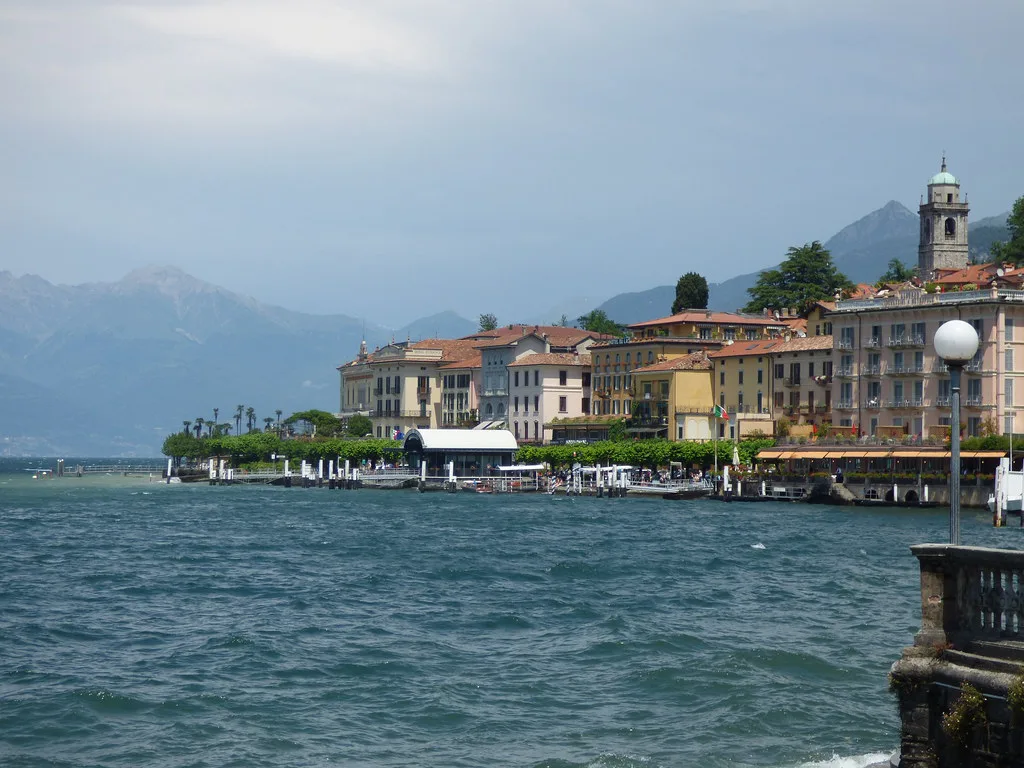
Think of the waterfront as two separate outings joined at the harbour. The southern stretch follows the lakeside away from the ferry landing and runs toward the gates of Villa Melzi's gardens. The northern stretch leaves the harbour in the opposite direction and ends at Punta Spartivento, the green tip of the promontory. Sources describe the sequence clearly but do not publish a distance or walking time for the full promenade, so plan by landmarks rather than minutes.
This split matters because the two ends are not the same kind of place. The south walk is about the view back at Bellagio's pastel facades against the mountains. The north walk ends in a small public park with benches and open water. If you only have an evening, pick one direction; if you have half a day, walk south first, return through the old town, then head north for sunset.
Getting Oriented at the Harbour
Piazza Giuseppe Mazzini is the lively square at the heart of the borgo, and it is where you find the ferry dock, waterfront restaurants and porticoed shops. Bellagio actually has two piers in this area: one for passenger boats serving most lake destinations, and one used mainly by the car ferry connecting Bellagio with Varenna, Menaggio and Cadenabbia. Knowing which pier you arrive at or leave from prevents a last-minute dash along the shore.
Arriving by ferry from Varenna is a short crossing often described as about fifteen minutes, which makes the harbour a realistic day-trip base even if you sleep elsewhere. If you come by car ferry, you will land at the other pier and start your walk with a slightly different first view. Either way, face the water first, then choose your direction.
The South Promenade Toward Villa Melzi
Heading south from the harbour, the lakeside path is known in sources as Lungolago Europa and, further along, Via Lungo Lario Manzoni. The reward is the reverse view: Bellagio's colourful, regal buildings looking more vivid against the dark mountain backdrop. Walk a little, then look back often, because the town itself is the attraction on this stretch rather than any single monument. Further visitor details appear in Bellagio, Lake Como: 12 Things to Do & Is It Worth It? (2026).
The walk effectively ends at the gates of Villa Melzi, the neoclassical estate on the lakeside. This is a decision point rather than a continuation: the villa interior is closed to visitors, and the gardens are a separately ticketed attraction with seasonal opening. Your free shoreline stroll stops at the boundary; entering the gardens is a deliberate, paid choice. Further visitor details appear in Bellagio, Italy: Things to Do & What to See | Lake Como Travel.
Villa Melzi Gardens: A Separate Ticketed Stop
The gardens are worth treating as their own visit, not a corridor on the promenade. Sources describe botanical grounds with camellias, rhododendrons, fountains, a Japanese-style garden and an orangery now used as a museum, plus a private chapel. You can walk the gardens self-guided, and guided visits are arranged by email reservation according to one account. Further visitor details appear in Bellagio, Italy: Things to Do & What to See | Lake Como Travel.
Admission and seasons are the point where sources disagree, so verify before you budget. One guide lists an entry fee with daily hours from March to October, while another gives a different fee and a season running to the end of October. Prices and dates like these change, so check the villa's own published information or ask at the tourist office in Piazza della Chiesa before relying on any figure. Further visitor details appear in Bellagio, Lake Como: 12 Things to Do & Is It Worth It? (2026). Further visitor details appear in Bellagio, Italy: Things to Do & What to See | Lake Como Travel.
Turning North to Punta Spartivento
From the harbour, the northern walk is short and ends at Punta Spartivento, a small green park at the tip of the Bellagio peninsula. Sources mention picnic benches, a jetty where people jump into the water, and a tiny restaurant that looks appealing for a sunset dinner. There is also a viewing deck with unobstructed views across the lake, including the towns on the far shore. Further visitor details appear in Bellagio, Lake Como: 12 Things to Do & Is It Worth It? (2026).
This is the natural turning point of the whole promenade because the land runs out. From here you can read the lake's three branches and pick out Varenna across the water. The park is public and free to enter, though any restaurant meal or boat trip is a separate cost. It is also where the crowd thins in the evening once day-trippers have caught their ferries. Further visitor details appear in Bellagio, Italy: Things to Do & What to See | Lake Como Travel.
Where the Lake Splits
Bellagio's location is the reason the walk feels significant: the promontory sits where the lake divides into branches running toward Como and Lecco. Punta Spartivento is the best place on the waterfront to see that geography for yourself. Views take in the surrounding towns and dramatic mountain cliffs, which is why the spot appears in nearly every account of the town. Further visitor details appear in Bellagio, Italy: Things to Do & What to See | Lake Como Travel.
Use the tip as a planning tool as well as a viewpoint. If the weather is clear, it is the obvious place to decide whether a ferry hop to Varenna or Menaggio is worth adding to your day. If cloud is low, the old town's alleys make a better use of the same hours.
The Old Town Connector
Piazza Mazzini is the hinge between promenade and borgo. Step inland and you enter a maze of cobbled lanes lined with trattorias, artisan shops and silk goods, and two to three hours is a reasonable allowance for the historic centre according to one guide. Salita Serbelloni is the iconic steep lane with the postcard view of the lake peeking above the rooftops. Further visitor details appear in Bellagio, Italy: Things to Do & What to See | Lake Como Travel.
Salita Serbelloni is also the busiest. A travel-blog suggestion worth taking as advice rather than fact is Salita Antonio Mella, a parallel cobbled street with similar charm and noticeably fewer people. At the bottom of the old town, the Basilica di San Giacomo, built between the eleventh and twelfth centuries, gives the borgo a Romanesque anchor if you want a break from walking. For more quiet corners in town, see our guide to hidden gems in Bellagio. Further visitor details appear in Bellagio, Lake Como: 12 Things to Do & Is It Worth It? (2026).
Down to Pescallo
If you want one extension beyond the main waterfront, take the short descent to Pescallo. The former fishing village lies just down the shore from Bellagio, reached in roughly ten to fifteen minutes on foot down narrow streets and steep steps per one account. Its harbour square, stone houses and small boats give you a quieter scene than the main promenade. Further visitor details appear in Bellagio, Lake Como: 12 Things to Do & Is It Worth It? (2026).
Pescallo also has a practical pull for active travellers: local sailing and kayaking clubs operate from the hamlet, so it is a natural place to add a water activity. The trade-off is the return climb, which involves steps. Anyone with limited mobility should weigh that before setting off. Further visitor details appear in Bellagio, Italy: Things to Do & What to See | Lake Como Travel.
Nearby San Giovanni, another old fishing hamlet, has a pebble beach that works well as a summer add-on to the walk. If you are collecting quieter corners beyond the promenade, our guide to hidden gems in Bellagio covers the hamlets and lesser-known viewpoints in more depth. Further visitor details appear in Bellagio, Italy: Things to Do & What to See | Lake Como Travel.
Eating Along and Near the Route
Food choices along the promenade are a trade-off between view and pace. Waterfront tables around Piazza Mazzini put the lake in front of you and are convenient before or after a ferry, but they are also the tables everyone else wants. Spots tucked into the old town's alleys offer more atmosphere and often quicker turnover, at the cost of a short climb.
For a quick lunch, panini shops and piadina counters let you carry food down to the water and eat on a bench instead of holding a table. One guide notes panini shops may be takeaway only, which suits a promenade day well. For a sit-down dinner, an alley restaurant near the borgo lets you finish in the old town and walk back to the harbour in minutes. Further visitor details appear in The Perfect Bellagio, Italy Travel Guide | Simply Wander.
Extending the Day by Ferry
Bellagio is a hub for the lake's ferry system, connecting the town with Como, Varenna, Menaggio and other villages all year round. One-way fares and day passes vary by route, service type and ticket format, so check current prices on the operator's official site rather than trusting figures in older guides. Online booking is recommended in peak season, especially between June and September. Further visitor details appear in Bellagio, Italy: Things to Do & What to See | Lake Como Travel.
If you want to close a loop, cross to Varenna and walk its lakeside promenade before returning. Ferries run frequently, but boarding queues can be long in summer, and one account notes the early morning crossing is the way to avoid them. A day pass makes sense only if you plan several hops; for a single crossing, a one-way ticket is simpler. Further visitor details appear in The Perfect Bellagio, Italy Travel Guide | Simply Wander.
Practical Notes: Steps, Crowds and Seasons
Do not assume a flat lakeside path. Bellagio's centre is characterized by stepped alleys, which limits access for people who have difficulty walking, and some connecting roads between hamlets lack sidewalks. Plan the promenade as the easier-feeling spine and treat the old town and Pescallo as optional detours with steps. Further visitor details appear in Bellagio, Italy: Things to Do & What to See | Lake Como Travel.
Crowds follow the ferries. Bellagio is one of the busiest towns on the lake, and streets can be packed in summer, while early September is noticeably calmer according to one visitor account. Shoulder months such as late April to June and late September to mid-October balance pleasant weather with lighter foot traffic. Winter brings closures of hotels, restaurants and some attractions. Further visitor details appear in Bellagio, Lake Como: 12 Things to Do & Is It Worth It? (2026). Further visitor details appear in Bellagio, Italy: Things to Do & What to See | Lake Como Travel.
For official local information, the comune's website is the place to check notices and civic updates, and the tourist office in Piazza della Chiesa can confirm garden seasons and ferry details in person. Neither replaces the ferry operator's own timetable for departures, so cross-check before you commit to a late crossing.
Plan Your Visit
Build your day around the harbour rather than a fixed route. Walk south to Villa Melzi's gates, decide there whether the ticketed gardens earn your time, then return through Piazza Mazzini and finish north at Punta Spartivento for the view and the evening light. That sequence keeps the paid stop optional and puts the best light at the end.
Leave room for one detour, whether that is Salita Antonio Mella instead of the busy Salita Serbelloni or the stepped descent to Pescallo. Check ferry times and garden seasons close to your visit, because published prices and opening periods shift between seasons and sources, and confirm anything time-sensitive with the operator or the tourist office before you go.
Frequently Asked Questions
How long does it take to walk Bellagio's waterfront promenade?
Sources do not publish an official distance or walking time for the full promenade. A useful landmark is that Punta Spartivento is roughly a ten-minute walk from the town centre according to one travel blog. Plan by landmarks: harbour to Villa Melzi gates in one direction, harbour to the peninsula tip in the other, plus time for the old town.
Is Punta Spartivento free to visit?
Punta Spartivento is described as a small public park at the tip of the peninsula, with benches, a jetty and lake views. Nothing in the sources suggests an entry charge for the park itself. Any restaurant meal nearby or boat trip from the area is a separate cost you should confirm locally.
Can you swim from the promenade or Punta Spartivento?
Swimming is described at the jetty near Punta Spartivento, where people jump into the water, and at beaches such as the pebble shore at San Giovanni. There is no lifeguard guarantee in the sources, and conditions vary, so judge the water yourself and follow any local signage before entering.
Is the Villa Melzi garden included in the promenade walk?
No. The free shoreline walk ends at the garden gates, and the gardens are a separately ticketed, seasonal attraction. The villa interior is closed to visitors. Admission prices and seasons differ between sources, so check the villa's own published information or ask at the tourist office before planning around it.
Is Bellagio's waterfront accessible for people with limited mobility?
Sources do not describe the promenade as step-free or fully accessible, and they note stepped alleys throughout the town centre plus some roads without sidewalks between hamlets. Treat the lakeside as the easier stretch and the old town and Pescallo as optional stepped detours. Ask locally about specific access needs.
How do you get from the Bellagio ferry terminal to the old town?
The ferry docks sit in the Piazza Mazzini area, and the old town rises directly behind the square. Walk inland from the waterfront into the cobbled lanes, with Salita Serbelloni as the iconic steep route and Salita Antonio Mella as a quieter parallel suggestion from one travel blog.
What is the best time of day or season for the waterfront?
Evenings are calmer once day-trippers leave on the last ferries, and sunrise gives near-empty streets according to one account. For seasons, late April to June and late September to mid-October are recommended for pleasant weather and fewer crowds. Peak summer is liveliest but busiest, and winter brings closures.
Can you walk from Bellagio to Pescallo?
Yes. Pescallo is described as a short walk down the shore from Bellagio, taking roughly ten to fifteen minutes down narrow streets and steep steps. Expect a climb back up. The hamlet has a small harbour, stone houses and water-sports clubs, making it a good optional extension of the waterfront walk.
Sources
Continue exploring
More guides you'll find useful