
Trieste Viewpoints Guide: San Giusto, Miramare and the Carso
Plan Trieste's best viewpoints by hill, castle terrace, lighthouse base and Karst plateau, with which ones are free and how wind and timing reshape the view.
On this page
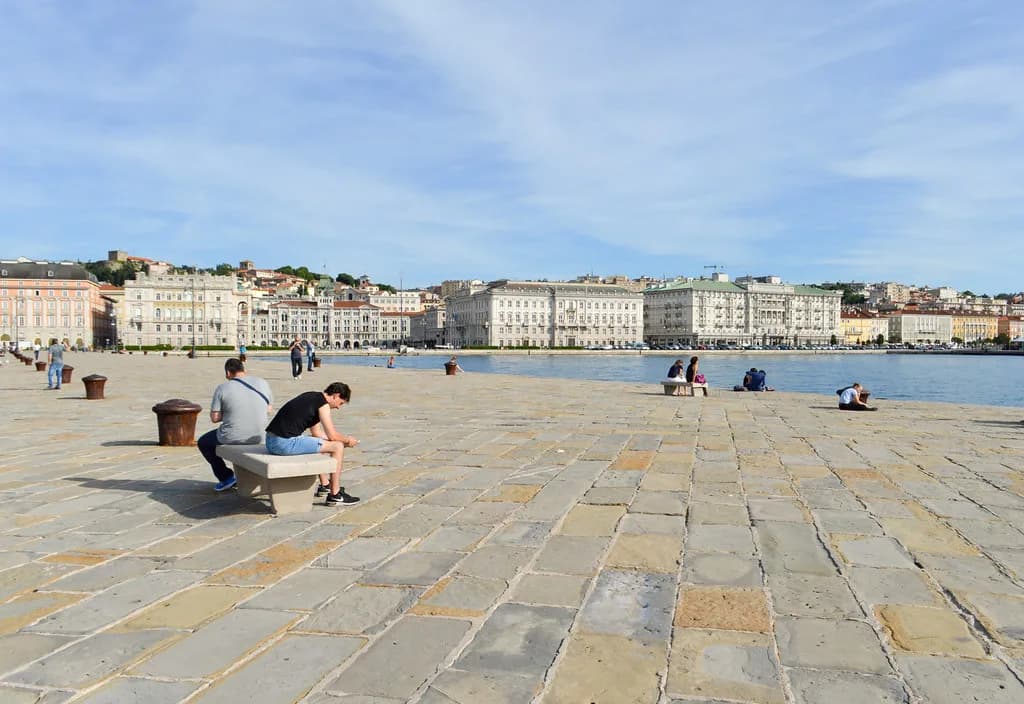
Trieste is easier to read vertically than on a map. At sea level, Piazza Unità d'Italia opens onto the gulf; above it, the hill of San Giusto lifts the old town into view; further back, the Karst plateau forms a green and limestone ridge over the bay; and to the north-west, the Miramare promontory pushes a castle terrace out into the water.
That sequence is the key planning tool. Rather than trying to tick off every panorama in a day, choose one level per outing and let the light and wind decide which level suits the hour. Morning tends to favour the Miramare park and the cathedral esplanade, while late afternoon pulls people towards the seafront and the ridge.
This guide separates viewpoints that are free to enter from the ticketed interiors behind them, and it defers every volatile detail, such as current hours and admission, to the operator. It also treats the bora, Trieste's strong north-easterly wind, as a real constraint rather than a piece of local colour.
Why Trieste's viewpoints read as layers
The city's geography explains the variety. Trieste sits between the Adriatic and a limestone plateau, so viewpoints range from aristocratic terraces to mineral landscapes, with lighthouses and hills framing the bay in between. Rough Guides notes that San Giusto hill provides the best views for kilometres around, which is why it functions as the city's default orientation point.
Seen from above, the layers become legible: the quays and Piazza Unità at sea level, the slopes of San Giusto, the wooded Karst hills and finally the Miramare promontory linking city to coast. That structure is useful for pacing, because each layer offers a different kind of view and a different walking effort.
Trieste also has a strong wind culture, and the bora can turn a calm day by the sea into a bracing one. A seafront stop that feels perfect at noon may be unpleasant by late afternoon, so build in a sheltered alternative on the same day rather than committing to one exposed terrace.
Castello di San Giusto and the cathedral esplanade
The climb from the old town to San Giusto is part of the experience: cobbled lanes and steps deliver you to the cathedral esplanade and the castle ramparts, which act as natural balconies over the harbour and the gulf. Walking up is generally recommended over taking transport, because the transition from street to panorama is the point.
Once at the top, the view takes in slate roofs, bell towers, the wide opening of Piazza Unità and the silhouettes of port cranes. The cathedral itself is free to enter in its main nave, while the castle museum is a separate ticketed collection, so do not assume one ticket covers the whole hill.
Timing matters here. Morning light brightens the cathedral's eastern façade, while sunset washes the city in warm tones, making the esplanade a good late stop. The climb is exposed in summer, so carry water and wear shoes with grip for the cobbles and steps.
If you want to fold this hill into a broader walk, the Roman heritage route below passes the theatre and continues up towards San Giusto, which lets you combine archaeology with the panorama. Our self-guided Roman heritage walk through Trieste shows how the ancient city sits beneath the modern one.
Miramare: paid interiors, free park and terraces
Miramare is the viewpoint most likely to confuse a budget. The castle interior is a national museum with its own admission fee and hours, while the extensive historical park and its terraces are a separate proposition; Discover Trieste directs visitors to the museum website for opening times and admission prices rather than publishing them on the city page.
The park covers almost 22 hectares and was planted with species chosen by Archduke Ferdinand Maximilian during his travels as an admiral. That makes the grounds a destination in their own right, with benches, paths and coastal terraces that do not require a museum ticket.
Morning is the calmer window. Arriving early gives softer light and fewer people on the terraces, while late afternoon brings golden colour but also stronger wind off the water. The park is relatively accessible, though some castle terraces and steps are less suitable for visitors with reduced mobility.
The site sits on the Grignano promontory about six kilometres from the city centre, which makes it a half-day rather than a quick detour. Combine it with a stop on the Barcola seafront on the way back, where the waterfront and beaches guide explains the promenade and swimming options.
Monte Grisa sanctuary esplanade
Monte Grisa is a modern hilltop sanctuary whose flat esplanade gives an almost 360-degree sweep over the Gulf of Trieste and the city. The building itself is striking, but the practical reason to come is the terrace, which catches soft morning light and dramatic sunsets.
Reaching the ridge without a car takes planning. Regional buses and taxis are the usual options for the climb, and the road rises quickly with viewpoints along the way. The sanctuary is generally freely accessible, especially for services and quiet contemplation, but occasional guided tours depend on the parish calendar.
Pair Monte Grisa with the Faro della Vittoria and Barcola for a scenic loop that combines sea, cliffs and modern architecture. Allow three to four hours for the stops, and bring a windproof layer because the bora can be strong even in summer.
Faro della Vittoria and the Barcola seafront
The Faro della Vittoria is best treated as a landmark to view from the base, not a tower to climb. The lighthouse is often not open to the public for climbing, but its base and surrounding terraces are accessible and give direct views over the bay and the long stretch of Barcola.
Barcola itself is a public promenade open around the clock and busiest in summer, when locals come to sunbathe and swim. The seafront walk from Piazza Unità towards the lighthouse takes ten to twenty minutes depending on your starting point, which makes it an easy low-commitment viewpoint stop.
This is where the bora matters most. Offshore wind can be fierce along the exposed promenade, so windproof glasses and a light windbreaker are worth carrying even on a warm day. Water shoes help if you want to scramble down to the shoreline rocks at low tide.
For a quieter, more local view of the same coastline, walk the Barcola waterfront and beaches guide in the late afternoon, when the promenade fills with people rather than tour groups. If you are counting costs, the city's free things to do include several of these seafront viewpoints.
The Carso: Grotta Gigante and plateau trails
Grotta Gigante is a viewpoint turned inside out. Discover Trieste notes that Guinness World Records lists it as the tourist cave with the world's largest hall, with the Grande Caverna measuring 98.5 metres high, 167.6 metres long and 76.3 metres wide, and the visitor path reaching a maximum depth of 101.1 metres.
The cave operator recommends comfortable shoes and clothing suited to a constant temperature of 11 degrees Celsius, and confirms that the route involves stairs and is not accessible to people with motor disabilities, though a 3D virtual visit is offered. Parking at the visitor centre is free and large, and the site is visitable in almost any weather except heavy snow.
Above ground, the surrounding Karst offers marked trails and natural viewpoints over dry-stone walls, grassy valleys and the blue strip of the sea. Pair the cave with a short walk on the plateau for a contrast between the cool underground and the open ridge, and check the cave's official ticketing page for current tour times.
Planning order: pairing viewpoints into a half-day
A sensible half-day starts at Miramare in the morning, when the park is calm, then returns along the Barcola seafront for a late-morning coffee and a look at the lighthouse base. That combination uses free outdoor space for most of the time and saves the paid castle interior for a separate visit if you want it.
For a city-centre day, climb San Giusto on foot in the morning, explore the cathedral esplanade, and keep the castle museum optional. In the afternoon, drop to the Roman theatre and the Canal Grande area, which the hidden gems in Trieste guide covers as a way to link the hill back to street level.
A third day suits the ridge and the cave: Monte Grisa in the morning for the gulf sweep, then Grotta Gigante in the afternoon for the underground experience. This is a more transport-dependent day, so confirm bus and taxi options locally rather than relying on a fixed timetable.
If you are building a longer stay, a practical three-day Trieste itinerary can hold all three of these days without rushing, and it leaves room for the waterfront and the castles at a slower pace.
What to wear and when to go
Spring and autumn are the most comfortable seasons for viewpoint hopping, with milder temperatures and fewer crowds than July and August. Summer is popular for the waterfront and beaches, but it is hot and crowded, and hotel prices can be higher, so start early and save the exposed climbs for the cooler hours.
Footwear is the most underrated piece of kit. Cobbled lanes, steps up San Giusto and rocky Karst trails all punish smooth soles, and the Grotta Gigante route adds 500 steps down and back up. A light windproof layer covers the bora, and a warmer layer handles the cave's constant chill.
Build flexibility into the day rather than a fixed schedule. If the wind picks up, swap the exposed seafront for the sheltered old town or the cave; if the light is flat, save the photography for the next morning and use the afternoon for interiors.
Practical access notes and what to verify
Do not rely on a guidebook for current hours, closing days or ticket prices. Miramare directs visitors to its museum website for admission details, and Grotta Gigante sells timed tickets online, which is worth doing in high season when group sizes are limited.
Accessibility varies sharply between sites. The Miramare park is relatively accessible but some castle terraces are not, while Grotta Gigante is explicitly unsuitable for visitors with motor disabilities because of its stairs. Anyone with mobility concerns should check each operator's page before committing.
For orientation, maps and current event listings, the city's official tourism portal is the best starting point. It publishes practical information on getting around, tourist information points and seasonal openings, which is more reliable than a static itinerary.
Plan Your Visit
Trieste rewards a vertical approach: pick one layer per outing, check the wind, and leave the paid interiors for when the weather or the light makes the terraces less appealing. The free viewpoints, from the San Giusto esplanade to the Miramare park and the Barcola seafront, carry most of the city's drama without a ticket.
Before you go, confirm current hours and admission on the operator sites for Miramare, Castello di San Giusto and Grotta Gigante, and treat any figure you see elsewhere as indicative rather than binding. That small step keeps the budget honest and the day flexible.
Frequently Asked Questions
Which Trieste viewpoints are free to visit?
The cathedral esplanade on San Giusto hill, the Miramare park and terraces, the Barcola promenade and the area around the base of the Faro della Vittoria can be enjoyed without an admission ticket. The castle interiors at Miramare and San Giusto are separate ticketed museums, so check each operator's site for current terms.
Is the Castello di San Giusto view better in the morning or at sunset?
Morning light brightens the cathedral's eastern façade, while sunset warms the city and the harbour, so both work depending on what you want to photograph. The walk up is exposed in summer, so carry water and wear shoes with grip for the cobbles and steps.
Can you climb the Faro della Vittoria?
The lighthouse is often not open to the public for climbing, but its base and the surrounding terraces are accessible and give clear views over the bay and Barcola. Treat it as a seafront landmark rather than a tower visit, and check locally for any occasional openings.
Do you need a car to reach Monte Grisa or Grotta Gigante?
A car is convenient but not essential. Regional buses and taxis serve the climb to Monte Grisa, and the Grotta Gigante visitor centre has a large free car park. Confirm current local transport options on arrival, since schedules and routes can change.
How does the bora wind affect viewpoint visits?
The bora can be strong enough to make exposed seafront stops uncomfortable even on sunny days, especially along Barcola and at the lighthouse. Carry a windproof layer, and keep a sheltered alternative such as the old town or the cave in reserve if the wind picks up.
How many days do you need to cover Trieste's main viewpoints?
Two to three days is a comfortable base for the main viewpoints. Use one day for San Giusto and the old town, one for Miramare and the Barcola seafront, and a third for the Karst ridge and Grotta Gigante if you want the underground experience as well.
Sources
Continue exploring
More guides you'll find useful





