
Trieste Neighbourhoods Guide: Where to Stay in Each Quarter
Compare Trieste's neighbourhoods, from the Borgo Teresiano grid to Città Vecchia lanes and Barcola's coast, to pick the right base for your stay.
On this page
Trieste rewards a deliberate choice of base. The city sits between the Adriatic and the Slovenian border, so the centre splits into two different pieces: Borgo Teresiano, the ordered grid built under Habsburg rule, and Città Vecchia, the older quarter of winding alleys and Roman remains. Picking between them shapes how your days feel, and a slow orientation walk of roughly two to three hours through both is a sensible first move on arrival.
Everything is close together, but the streets climbing toward San Giusto hill will test your stamina, and anyone carrying luggage should weigh that carefully. A flat base near the station buys convenience; a waterfront address buys views and noise. This guide compares the trade-offs quarter by quarter rather than ranking them.
Treat accommodation figures circulating online as rough blog estimates, not quotes. Rates move with season and demand, so check live availability for your dates before you commit to a district. Once your room is set, the wider sightseeing shortlist is covered in our guide to the hidden gems in Trieste.
How to Read the Map Before You Book
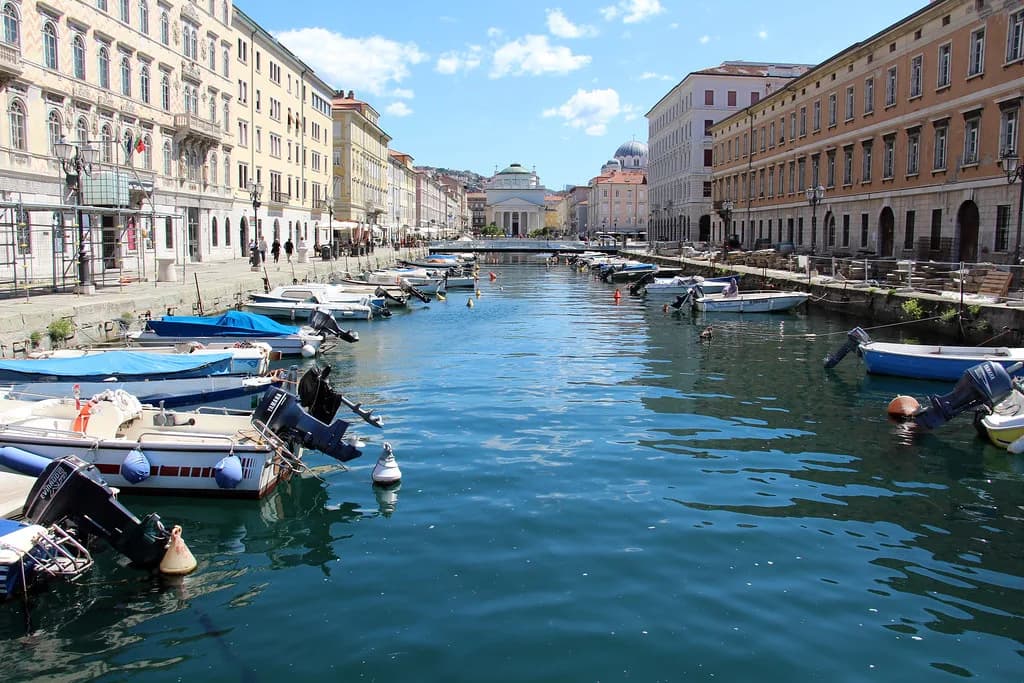
Think of Trieste in layers. The waterfront Rive runs past Piazza Unità d'Italia, described as one of the largest sea-facing squares in Europe. Behind it sits the Habsburg-era grid of Borgo Teresiano, cut by the Canal Grande. To the southeast, the streets narrow into Città Vecchia and its Cavana district, where the old city dissolves into lanes.
Outside the centre, the city changes character quickly. San Giusto hill rises above the old town, Barcola runs north along the coast toward Miramare and its castle, and Grignano clusters near the castle itself. The station area and the streets around Largo della Barriera Vecchia sit to the east, handy for trains and buses.
The city is walkable, but not flat. The centre is compact and the waterfront is level, while the climbs toward the castle and cathedral demand comfortable shoes. If you plan to move between quarters on foot all day, choose a base that keeps the steepest climb optional rather than obligatory.
Città Vecchia and Cavana: The Historic Core
This is the area to choose if you want atmosphere over order. Città Vecchia is a largely pedestrianised zone of narrow alleys, small squares and steep side streets, with the Roman theatre tucked into the fabric of the city and Cavana at its bohemian edge. Mornings are quiet; evenings bring the bars and trattorias to life.
The trade-offs are practical. Parking is limited and the area gets busy at peak times, so a car here is more burden than asset. Some older buildings in the quarter lack lifts, a detail worth confirming with your host if you are hauling suitcases to an upper floor.
For travellers who want to walk out of the door and into the city's history, few bases beat it. Piazza Unità d'Italia, the historic cafés and the waterfront are minutes away, and the lanes themselves repay slow wandering. The Canal Grande di Trieste sits just across the grid, so a stay here puts both the old and new quarters within an easy loop.
Borgo Teresiano: The Habsburg Grid
Borgo Teresiano was laid out in the 18th century as a commercial district, and it still reads as one: straight streets, neoclassical facades and the Canal Grande at its heart. This is the calm, elegant choice, close to boutiques and Teatro Verdi, with the James Joyce statue on the Ponte Rosso as a local landmark.
It also suits travellers who want a central base without the old town's late-night hum. The grid is easy to navigate, the pavements are wide, and the waterfront is a short walk downhill. The counterpoint is noise: the district is described as having a lively night side, so ask for a room set back from the busiest streets.
Joyce lived in this part of the city during his Trieste years, and the literary thread runs through the cafés and bookshops nearby. If you want to follow that history on foot, our Habsburg walk through the centre fits neatly around a Borgo Teresiano base.
Borgo Giuseppino and San Giusto Hill
South of the centre, Borgo Giuseppino is a quieter, more residential quarter whose main historical landmarks are San Giusto Castle and the cathedral. The hill gives you panoramic views over the gulf, and the walks up are rewarded with some of the city's best outlooks. Expect fewer dining options and little nightlife.
The hilly area around Guardiella is greener and calmer still, with fewer places to stay but a genuine sense of neighbourhood. Views from up here are excellent, and the centre remains reachable on foot or by public transport. The cost is the climb at the end of every day.
History buffs should note that San Giusto's cathedral and castle are separate visits with their own arrangements, not one combined ticket. Check each site's current information before you go, since opening arrangements change. Details for individual sights sit in our Trieste Attractions hub. For wider planning, see San Giusto Cathedral guide.
The Rive and Piazza Unità d'Italia
The waterfront Rive is the ceremonial address. Long palazzos face the sea, and Piazza Unità d'Italia opens directly onto the gulf, making the walk from your door to the water's edge a matter of steps. Hotels here lean toward the grand and traditional, and the district is generally priced among the higher brackets in the city.
This is the base for travellers who want the view more than the nightlife. You wake to the sea light, walk to the cafés along the square, and reach the old town in minutes. Expect to pay a premium for the location, and expect some street noise in high season.
Piazza Unità d'Italia itself is free to wander day or night. The paid interiors, castles and museums are separate and should be checked individually rather than assumed to share a ticket.
Barcola and Grignano: The Coastal Stays
Barcola runs north along the coast between the centre and Miramare. This is where locals swim in summer, but there is no sandy beach: the shoreline is rocks, pebbles and gravel, so bring shoes that can handle wet stone. The promenade is the draw, with sea-view bars and a relaxed rhythm.
Grignano, clustered near Miramare Castle, is the quieter, more romantic option. Hotels and B&Bs here often look over the gulf, and the castle grounds are a short walk away. It suits couples and families who prefer sea air to city bustle, at the cost of distance from the centre.
If you stay on the coast, plan your days around the trip into town rather than the reverse. Check current public transport options when you arrive, since timetables change. A coastal base pairs naturally with a Trieste 2 day itinerary that splits city time from sea time.
The Station Area and Largo della Barriera Vecchia
If you are arriving by train or planning day trips, the area around Trieste Centrale is the logical choice. It is flat, practical and close to the centre, which matters when you are carrying luggage. Hotels here tend to be simpler and better value than the waterfront.
Largo della Barriera Vecchia adds a little character to the convenience. The Mercato Coperto covered market sits nearby, along with historic cafés and the literary hotel Victoria. It is a functional base rather than a scenic one, but it puts the whole city within reach.
This is also the area to weigh if you want to combine city sightseeing with a short climb up to the karst. Buses and trains connect the centre to the plateau above, and a day out at the Grotta Gigante fits easily into a longer stay. The cave operator advises that the route involves stairs and is not accessible to people with motor disabilities.
Residential Trieste: Roiano and Servola
Roiano and Servola are residential districts rather than tourist quarters. Roiano was once home to the STOCK brandy distillery, whose building has been repurposed for other uses, and it has a lived-in, everyday feel. Servola sits close to the centre and is described as appealing to visitors seeking more affordable options.
Staying here means trading convenience for calm and price. You will rely more on public transport or a longer walk to reach the main sights, and you will see a side of the city that many visitors miss. For a slower trip, that can be the point.
These districts suit repeat visitors or anyone staying longer than a weekend. First-timers will usually be happier closer to the centre. Our A Practical 3-Day Trieste Itinerary shows how much ground you can cover when based centrally.
Practical Tips for Each Quarter
Driving brings a specific trap. Much of the centre is a ZTL, a limited traffic zone where only residents with permits may drive. If you are renting a car, confirm with your hotel whether they offer parking or can register your plate to avoid fines.
Weather and footwear shape the experience more than you might expect. The bora, a fierce cold wind, sweeps down from the mountains, especially in January. Bring a warm layer in winter and comfortable shoes for the hills at any time of year.
Tap water in Trieste comes from the surrounding karst and is reported as safe to drink. Mosquitoes appear in summer near the coast, so pack repellent if you plan evenings outdoors. Those small preparations make a coastal or hillside base far more pleasant.
If you are looking for the city's quieter lanes and viewpoints once your base is settled, our hidden gems guide covers them. It pairs well with a Trieste in One Day plan if your time is short, while the attraction pages handle individual sights.
The Rome Trieste-Salario Confusion
Searches for "Trieste neighbourhood" sometimes lead somewhere unexpected: Trieste-Salario is a residential district of Rome, not the Adriatic city. It has its own character, with parks such as Villa Ada and Villa Torlonia, and a cluster of historic shops and bakeries.
If you are planning a Rome trip, that district is worth a morning. If you are planning Trieste, ignore the directions to Villa Ada and head for the gulf. The two share a name and little else.
How to Choose in One Minute
First-timers who want everything on foot should pick Città Vecchia or Borgo Teresiano. Both put the squares, cafés and waterfront within easy reach, with the old town livelier in the evening and the grid calmer at night. Travellers who want views and quiet will prefer San Giusto hill.
Sea lovers should look at Barcola or Grignano, remembering the rocky shoreline and the distance from the centre. Train travellers and day-trippers will be happiest near Trieste Centrale. Longer stays can consider Roiano or Servola for a more residential rhythm. For wider planning, see Hidden Gems in Trieste.
Whichever quarter you pick, check live rates and confirm details with the property directly. Treat online price ranges as indicative only, and ask about parking, lifts and access before you book.
Plan Your Visit
Trieste is small enough that any base works for a short trip, but the right quarter makes the difference between a stay that feels effortless and one that fights you. Decide what you want from your mornings first, then let the neighbourhood follow.
Book with current availability rather than remembered prices, confirm parking if you drive, and pack for wind and hills. Once those are settled, the city is easy to enjoy on foot.
Frequently Asked Questions
What is the best area to stay in Trieste for first-timers?
Città Vecchia and Borgo Teresiano are the most practical choices. Both put the main squares, cafés and waterfront within walking distance, with the old town livelier in the evening and the Habsburg grid calmer at night. If you want a quieter setting with views, San Giusto hill is a good alternative, though you will climb to reach it.
Is Trieste a walkable city?
The centre is compact and the waterfront is level, but the streets rising toward San Giusto hill are steep. Comfortable shoes make a real difference, and choosing a central base keeps the hardest climbs optional. Public transport covers the longer trips to Barcola or Grignano.
Can you drink tap water in Trieste?
Tap water in Trieste comes from the surrounding karst and is reported as safe to drink. Bring a refillable bottle if you plan long walks, since fountains and taps are an easy way to refill.
Why do searches for 'Trieste neighbourhood Rome' appear?
Trieste-Salario is a residential district of Rome, and its name often collides with searches about the Adriatic city of Trieste. If you are planning a Rome trip, that district offers parks, historic shops and bakeries. If you are planning Trieste, look for the gulf, the squares and the old town instead.
Is Barcola a sandy beach?
No. Barcola's shoreline is made of rocks, pebbles and gravel rather than sand, so bring shoes that can handle wet stone. The promenade and sea-view bars make it a pleasant place to spend a summer afternoon, and locals swim there in season.
Do you need a car in Trieste?
A car is not necessary for the centre, and it can be a burden. Much of the central area is a limited traffic zone where only residents with permits may drive, and parking is scarce in the old town. If you do rent a car, confirm with your hotel whether they offer parking or can register your plate.
Sources
Continue exploring
More guides you'll find useful





