Treviso One Day Itinerary: A Practical Walking Plan
A practical one-day Treviso plan: morning squares and cathedral, canals and fish-market lunch, then the walls and River Sile. Timings and trade-offs.
On this page
Treviso rewards a single unhurried day because almost everything worth seeing sits inside a walkable historic centre. The route below is a suggested order rather than an official schedule, so shift the blocks to suit your pace and the weather. It mixes free public space — squares, canals, walls, streets — with indoor stops that may follow their own entry rules. As a rough guide, one full day is enough for the main highlights; museums, long meals or trips into the surrounding province ask for an overnight stay.
The plan assumes you arrive in the morning and leave after an aperitivo. Use the walk through our guide to [Treviso](/attractions/treviso) as a backbone and improvise around it. Distances are short enough that the order matters more than speed, and comfortable shoes matter more than both.
At a Glance: A Morning-to-Evening Walking Order
Morning: Piazza dei Signori and Palazzo dei Trecento, Via Calmaggiore, the Duomo and the frescoed lanes around it. Late morning: the Buranelli canal and the canals woven into the old town. Lunch: the Isola della Pescheria area. Afternoon: the Renaissance walls and gates, then the River Sile. Evening: aperitivo back near the canals or the main square.
The sequence keeps you mostly inside the centre in the morning and moves outward toward the walls and river later, which avoids doubling back. This self-guided route by About Treviso covers the same landmarks if you want a second reference for the walking order.
Morning: Piazza dei Signori to the Cathedral
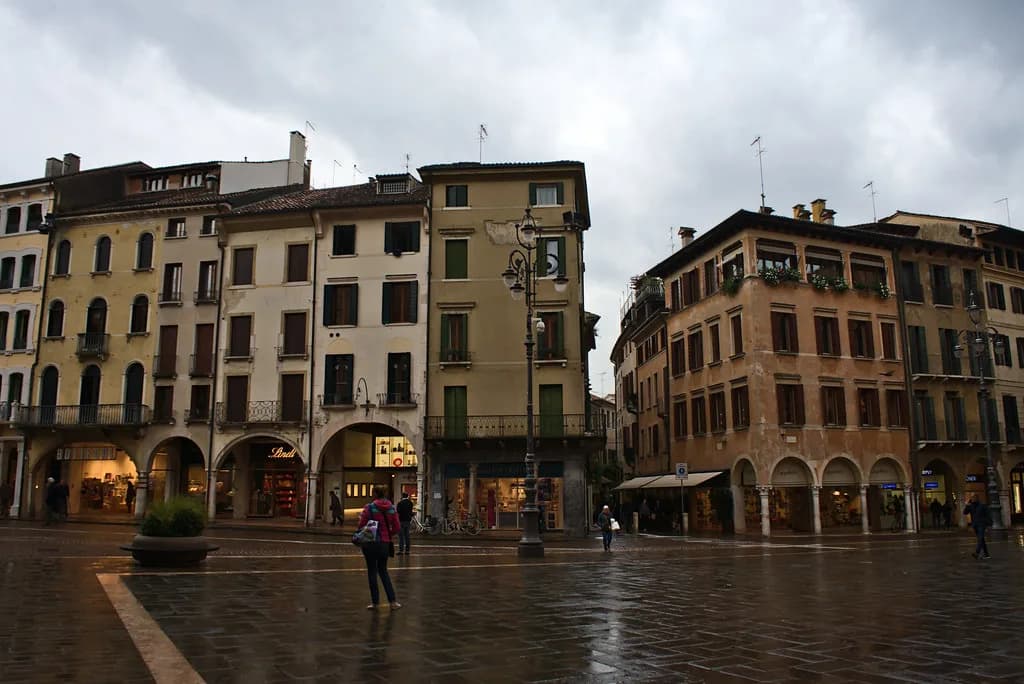
Begin in Piazza dei Signori, the civic heart of the city, where arcades frame the square and cafés spill onto the pavement. Look at Palazzo dei Trecento, the medieval brick building that once housed the city council, and the civic tower with its clock before moving on. A coffee here lets you watch the morning rhythm before the streets fill.
From the square, walk Via Calmaggiore, the elegant arcaded street linking the civic centre to the cathedral area. Keep looking above eye level: the city's beauty often sits on upper floors, in faded frescoes and window frames that are easy to miss at street level.
The Duomo Decision: Interior or Exterior
At the end of Via Calmaggiore stands the Duomo di Treviso, dedicated to Saint Peter and set in one of the oldest parts of the city. Step inside if it is open, since the interior gives a quieter contrast to the streets, but do not build the day around opening hours you have not checked. A quick look at the cathedral's own notice or the city's tourism information before you travel settles the question; if the doors are shut, the surrounding lanes are a worthwhile stop in themselves.
The official Treviso tourism portal, Trevisoinfo, publishes current city events and visitor information and is a sensible place to confirm what is open during your dates. It will not tell you everything about every church door, so treat it as a starting point rather than a guarantee.
Frescoed Streets: Wandering Between Cathedral and Water
Treviso is known for its painted façades, and the best views come from walking without rushing toward the next landmark. Between the cathedral and the water, follow the arcades and turn into narrow lanes; the painted buildings are aged, soft and sometimes half-hidden. For a deeper look at this side of the city, our guide to the [hidden gems in Treviso](/italy/treviso/hidden-gems-in-treviso) picks out the quieter corners worth a detour.
Canal Section: Buranelli and Isola della Pescheria
Make your way to the Canale dei Buranelli, one of the most photographed corners of the city, where old houses and small bridges lean over the water. The name comes from merchants of the island of Burano who settled in the area centuries ago. Pause here rather than treating it as a quick photo stop, and cross a bridge or two for the angles where the buildings meet the water.
From the canal, continue to the Isola della Pescheria, the small island traditionally linked with the city's fish market. The market atmosphere is strongest earlier in the day, so plan the canal and island for late morning and use the same area for lunch. Even outside market hours the island is worth seeing: water surrounds it, bridges connect it to the surrounding streets, and nearby bars make it a natural stopping point.
Lunch Near the Pescheria
For a simple lunch, look for local dishes, cicchetti, seasonal vegetables, or radicchio when it is available. Radicchio Rosso di Treviso is one of the area's best-known products and appears in risotto and grilled preparations, so lunch is the moment to try it rather than treating food as an afterthought between sights.
Tiramisù belongs to Treviso's food identity, and the city's most famous dessert connection is well known locally. Treat it as a separate stop after the main meal rather than the meal itself, and ask at your table where they recommend. Menus and prices change, so check the board or ask before ordering rather than relying on a guide written months earlier.
Museum Trade-off: One or None
If you want an indoor stop, choose one civic museum rather than trying to fit two into a single day. The Museo Santa Caterina occupies a former convent complex with medieval and Renaissance art and frescoed churches, while the Museo Luigi Bailo covers modern and contemporary work; both are worth a visit on their own but demand time. Pick the one that matches your interests, and check current opening days and any ticket information directly with the museum or the city before you go, since published schedules change by season.
Afternoon: Walls, Gates and the River Sile
After lunch, leave the tight lanes and head for the fortifications. Substantial sections of Treviso's Renaissance walls still ring the historic centre, and a walk along them gives shade, space and a clearer sense of the old city's shape. The gates make strong photo stops; choose one section if you are short of time, or extend the walk along the quieter residential edges.
Finish by the River Sile, where paths, greenery and calm views feel different from the stone streets of the centre. The water is not just a backdrop: it shapes the rhythm of the city. This is a peaceful last stop before dinner or the train, and it shows why Treviso works so well on foot.
Evening: Aperitivo and the Train
Return to the canals or Piazza dei Signori for an aperitivo, when the day slows and the squares begin to fill again. If you need to catch a train, leave enough margin to walk back through the centre at an easy pace rather than sprinting. Check your departure time and the station's layout in advance, since timetables and platforms are better confirmed with the operator than assumed from any guide.
Variations: Half-Day, Rainy Afternoon and a Self-Guided Trail
For a half day, keep the morning block and the canal, then stop near the Pescheria for lunch. If rain arrives, swap the walls and river for the museum you skipped and a longer lunch; the route is flexible by design. For something more interactive, the ClueGo self-guided puzzle trail through central Treviso uses a web app on your phone, with no download and no fixed starting time, and you can pause and continue later. Confirm the current route details with the operator before booking.
Practical Tips for a Smooth Day
Wear comfortable shoes, since many of the most rewarding streets are small, uneven or covered by arcades. Start in the morning to enjoy the fish market area and quieter streets before the afternoon, and do not overplan lunch — the lanes around the Pescheria have plenty of places to stop. Leave room to wander, because Treviso's charm comes from details between the landmarks, and irregular hours are best handled by checking ahead where possible.
What One Day in Treviso Does Not Cover
One day gives you the historic centre, not the province. The surrounding area holds festivals, wine country and the Prosecco hills, and those belong in a separate trip or an extra night. If you are considering Treviso as a day trip from Venice, the city works well as a calmer contrast to the lagoon, but plan your return travel yourself rather than relying on unverified times.
Plan Your Visit
Treviso suits a slow, compact day: squares and cathedral in the morning, the Buranelli canal and Pescheria lunch around midday, the walls and River Sile in the afternoon, and an aperitivo before you leave. Treat the order as a suggestion and confirm any indoor visits, market activity and travel times with the venue or operator before you go.
If you want more detail on specific sights, our [Treviso Attractions](/attractions/treviso) hub links guides to individual landmarks so you can build a version of this plan around the places that interest you most. For related planning, see Treviso Two-Day Itinerary: What to Add Beyond the Centre.
Frequently Asked Questions
Is one day in Treviso enough?
Yes, a full day covers the historic centre, the canals, the main squares, the fish-market area and the city walls at an easy pace. Museums, long meals or trips into the surrounding province ask for an overnight stay.
What should I see in Treviso in one day?
Prioritise Piazza dei Signori and Palazzo dei Trecento, Via Calmaggiore, the Duomo, the frescoed lanes, the Buranelli canal, the Isola della Pescheria, the Renaissance walls and the River Sile. Add one museum if time allows.
Can you walk around Treviso without public transport?
Yes. The historic centre is compact and walkable, and the main sights connect on foot. Wear comfortable shoes, since many streets are small or uneven.
Is the Treviso fish market area worth visiting outside market hours?
Yes. The Isola della Pescheria is surrounded by water and connected by bridges, and nearby bars make it a natural lunch stop even when the market is quiet. The atmosphere is strongest earlier in the day.
Is Treviso worth a day trip from Venice?
Yes, if you want a calmer day with canals, historic streets and local food than the lagoon offers. Plan your own return travel and check timetables with the operator.
Should I visit one museum or two on a one-day Treviso trip?
Choose one. Museo Santa Caterina and Museo Luigi Bailo each reward time, so fitting both into a single day rarely works. Check current opening days and ticket information directly before you go.
Sources
Continue exploring
More guides you'll find useful