Treviso Neighbourhoods Guide: Where to Stay by Area
Compare Treviso's old town, station area and Via Terraglio by atmosphere, walk to Piazza dei Signori and car access, then pick the base that fits your trip.
On this page
Treviso is small enough that where you sleep shapes the whole trip. Stay inside the medieval walls and Piazza dei Signori, the Buranelli canals and the Isola della Pescheria are on foot; sleep south of the walls or along the Terraglio road and you gain easier car access and often more space. The trade-off is not about which quarter wins, but about what you plan to do each day.
A useful orientation point is the station, which sits just south of the walls; the Treviso Residence guide estimates roughly ten minutes on foot from there to the centre via Via Roma across the Sile. That single figure explains why the station area works for short stays and train-based day trips. Use it as planning shorthand rather than as a timetable.
Quick Orientation: Centre, Station and Terraglio
Picture Treviso as three concentric choices. The old town, wrapped in its walls, holds the sights and the evening life. Immediately south, around the station, sits the transport hub. Further out, the Strada Terraglio runs toward Mestre and connects quickly to the motorway network. Each has a different relationship with Piazza dei Signori, the city's main square and the natural measuring stick for a central stay.
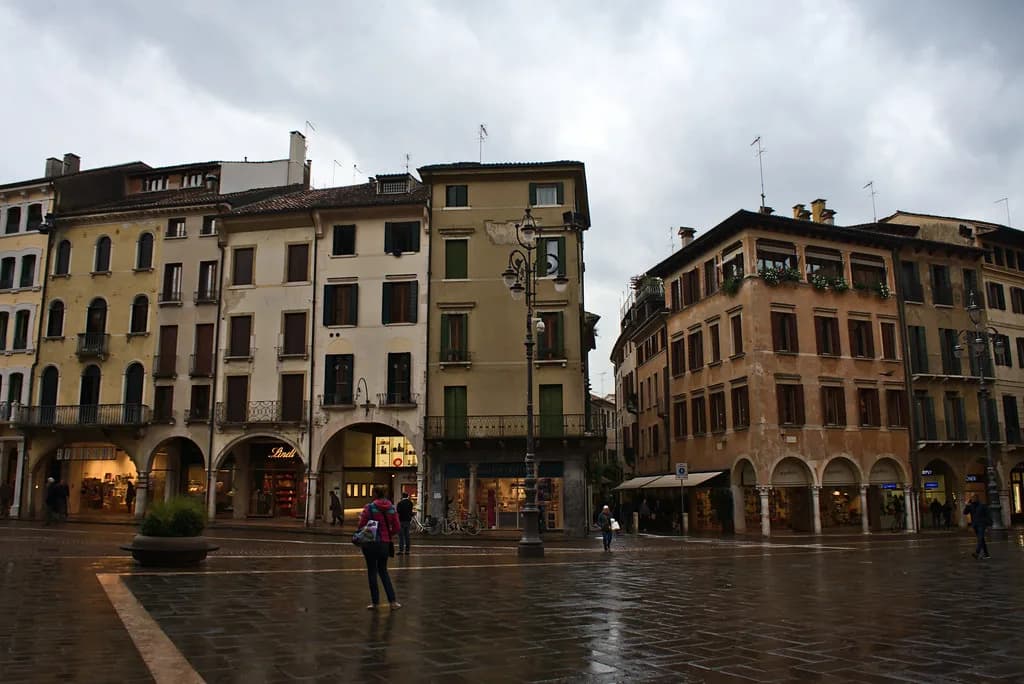
The Treviso Residence guide describes the centre between Piazza dei Signori, the Buranelli and the Isola della Pescheria as the heart of the city, with frescoed buildings and canals that recall a miniature Venice. It also flags that central prices are higher and that a limited traffic zone restricts car access. Those two facts, more than any ranking, should drive the decision for drivers.
Beyond the walls, the same guide positions the station area for train arrivals and day trips, and Via Terraglio for car travellers who want quick access to the A27 and A4 motorways. It sums up the choice neatly: for short weekends the centre is ideal, while longer stays outside the walls offer more space and better prices.
The Old Town: Squares, Canals and the Pescheria
Inside the walls, Treviso's appeal is density: a compact web of lanes, water and painted facades where the next interesting corner is a few steps away. The area around Piazza dei Signori, the Buranelli and the Isola della Pescheria is where most of that atmosphere concentrates, and it is the natural base for a first visit with no car.
The Treviso Residence guide calls the old town ideal for tourists, romantic weekends and travellers without a car, since everything is walkable and restaurants and bars are around the corner. It also notes the downside honestly: higher prices and restricted car access. If your priority is stepping out of your door into the city rather than commuting into it, this is the area to weigh first.
For slow travel, the centre rewards staying put rather than sightseeing by checklist. The Canale dei Buranelli and the fish market island are short strolls apart, and the pleasure comes from looping between them without a plan. Allow an unhurried half-day for this pocket alone; that duration is a suggestion, not an official figure.
Trade-Offs of Staying Inside the Walls
Two constraints define a central stay. The first is cost: the Treviso Residence guide reports that prices are higher in the old town than outside it, without giving figures, so compare current rates yourself when booking. The second is the limited traffic zone, which restricts car access to the centre. Neither rules out a central stay, but together they push drivers toward a clear decision.
If you arrive by car, the practical advice in the same guide is to choose accommodation with parking or to stay just outside the walls, rather than assume you can park at the door. Drivers should also confirm the current ZTL boundaries and any access rules before booking, since those rules can change and should be checked with the city rather than assumed.
Inside the walls, the compensation is time: no commute, no parking hunt, and the evening square on your doorstep. That is worth a premium to some travellers and irrelevant to others who will be out in the Veneto all day. Decide which traveller you are before comparing rates.
The Station Area: Trains, Short Stays and Day Trips
The station quarter is a base, not a sightseeing district. It suits anyone arriving by train, staying briefly, or using Treviso as a launch pad for daily excursions. The centre is reachable on foot in roughly ten minutes via Via Roma across the Sile, according to the Treviso Residence guide, which makes the area more central in practice than its position outside the walls suggests.
The guide positions this area for guests who want to pair a Treviso visit with day trips to Venice and other Veneto cities, noting that buses and trains make connections convenient. It does not publish exact schedules, so treat any journey time you read elsewhere as needing verification against current operators before you commit to a tight itinerary.
Practical checks before booking near the station: confirm the walk to your specific address rather than to the station in general, ask whether luggage storage is available if you arrive early, and look at a map to see which side of the tracks you will be on. These small details matter more in a transport quarter than the view from the window.
Via Terraglio: A Car-Friendly Base for Longer Stays
The Strada Terraglio links Mestre to Treviso, and the Treviso Residence guide frames it as the choice for travellers with a car, longer stays and business trips. Its advantages are functional: fast access to both Treviso and Venice, plus the A27 and A4 for Milan and Trieste. If your itinerary is a loop through the Veneto rather than a single city break, this corridor reduces friction.
The trade-off is that you will not be walking to Piazza dei Signori for dinner. The guide presents the Terraglio as a strategic base rather than a neighbourhood to wander, and that is the right way to read it. Travellers who need a car for work or for exploring the Prosecco Hills should value that access over doorstep atmosphere.
The guide also places Canova Airport about five kilometres from the centre and estimates the Prosecco Hills at roughly forty minutes by car, both as its own approximations. Those figures help you judge whether an outer base makes sense for an early flight or a wine-focused trip, but verify current transfer times when you book.
Budget Trade-Offs by Area
The clearest budget pattern is spatial: the centre costs more, while the outer areas offer more space and better prices, according to the Treviso Residence guide. It gives no figures, so the honest approach is to compare live rates for your dates rather than rely on general assumptions about what a night should cost.
Factor parking and transport into any comparison. A cheaper room outside the walls may come with parking costs or a daily commute, while a central room may save you both but cost more upfront. For stays longer than one or two nights, the guide suggests the apartment-style option of a managed residence with a kitchen and workspace, which can offset eating out every meal.
Choosing by Trip Type
For a first visit or a romantic weekend, the old town around Piazza dei Signori and the Buranelli concentrates the experience and removes the need for transport. For a train arrival or a short break combined with Venice, the station area wins on convenience. For a car-based tour of the Veneto, business travel or a longer stay, the Terraglio corridor and the areas just outside the walls make more sense.
Families and longer-stay visitors should weigh space and cooking facilities over a central postcode, since the guide notes that stays beyond a night or two favour apartments and residences. Business travellers on assignment should prioritise motorway access and parking. None of these is a verdict on a quarter's quality; each is a match between a base and a plan.
Hotels, Apartments and Managed Residences
Treviso's accommodation mix includes traditional hotels, short-let platforms and managed residences that combine an apartment's independence with hotel-style services. The Treviso Residence guide cautions that listings on booking platforms are not always easy to verify for quality and reliability, which is a fair reason to read recent reviews closely and check who manages the property.
Whatever the type, verify the practical details that shape a stay: whether parking is included, how the ZTL affects arrival by car, whether a kitchen is provided, and how far the address really is from the centre. The guide's own tip is to book early for the old town on weekends and around city events.
Practical Tips: Events, ZTL and Stay Length
Timing matters in a small city. The Treviso Residence guide advises booking early for central stays on weekends and during events such as the Mercato San Parisio or the Treviso Marathon. Trevisoinfo.it maintains a running events diary for the province, covering theatre seasons, food festivals and exhibitions, so check it against your dates before you fix accommodation.
For current civic information, including traffic rules and local notices, the Comune di Treviso website is the reference to consult rather than a hotel page. Match stay length to area as well: short breaks suit the centre, while longer stays benefit from outer areas with more space and parking.
Where to Go Next in Treviso
Once the base is settled, the city itself is the reward: canals, frescoed squares and a compact centre that rewards walking without a fixed route. Our guide to the hidden gems in Treviso covers the quieter corners beyond the obvious circuit, while the Treviso Attractions hub gathers visitor guides to individual sights so you can plan around what you actually want to see.
Plan Your Visit
Choose the old town if you want to walk out into the city each morning and accept higher prices and car restrictions. Choose the station area for train arrivals and day trips, or the Terraglio corridor if a car, motorway access and longer stays define your trip.
Whichever you pick, confirm current rates, parking arrangements and ZTL rules directly before booking, and check the city's event calendar so your dates do not collide with a busy weekend.
Frequently Asked Questions
Which area of Treviso is best for a first visit?
There is no single best area, but the old town around Piazza dei Signori, the Buranelli and the Isola della Pescheria suits first visits well because the main sights and evening life are walkable. Expect higher prices and limited car access inside the walls, and compare current rates for your dates.
Can you walk from Treviso station to the old town?
Yes. The Treviso Residence guide estimates roughly ten minutes on foot from the station to the centre via Via Roma across the Sile. That figure is the guide's approximation rather than an official measurement, so check the distance to your specific address.
Do you need a car to stay in Treviso?
No, and a car is a hindrance inside the walls because a limited traffic zone restricts access. A car helps if you plan to tour the Veneto, reach the Prosecco Hills or stay along the Terraglio corridor. Train arrivals can base themselves near the station.
What is the ZTL and how does it affect where you stay?
The ZTL is Treviso's limited traffic zone, which restricts car access to the historic centre. If you drive, choose accommodation with parking or stay just outside the walls, and confirm current access rules with the Comune di Treviso before booking.
Is Treviso a good base for day trips to Venice and the Prosecco Hills?
The Treviso Residence guide presents the city as a base for the Veneto, estimating Venice at about thirty minutes by train and the Prosecco Hills at about forty minutes by car. Those are the guide's approximations, so verify current connections before relying on them.
Should you stay inside or outside the walls?
Inside the walls means walkable sightseeing but higher prices and ZTL restrictions. Outside, especially around the station or along the Terraglio, you gain space, parking and transport access. The guide suggests the centre for short weekends and outer areas for longer stays.
Sources
Continue exploring
More guides you'll find useful