Best Time to Visit Treviso: A Season and Crowd Guide
Time a Treviso visit by season: spring and autumn walking, radicchio from November, the 2026 Tomaso 700 season and how to handle August heat and crowds.
On this page
Treviso sits about 26 kilometres from Venice, close enough to share the region's busy seasons yet far enough that its arcaded streets and shallow canals feel like a different kind of trip. The most reliable crowd advice available is Italy-wide rather than city-specific: visitor numbers thin out considerably outside June, July and August, and spring and autumn bring milder walking weather.
The civic museums set a fixed weekly rhythm. Museo Santa Caterina and Museo Luigi Bailo open Tuesday to Sunday from 10:00 to 18:00 and close on Mondays, so a Monday arrival means rethinking the indoor plan. The Tomaso 700 cultural season, marking 700 years of Tomaso da Modena, runs from 26 September to 5 December 2026, which makes late autumn a defensible window.
Quick Answer: Which Months Work Best
For mild weather and lighter pressure, consider April, May, late September and October. That is when Italy as a whole sees far fewer travellers than in summer, and daytime temperatures commonly sit around 15 to 20 degrees Celsius. Treviso's flat, walkable centre suits those conditions well.
Summer is workable but demands discipline: expect real heat, little shade in the paved squares, and the highest share of Venice-bound visitors passing through the region. Winter is the opposite trade-off, generally quieter with rain possible and shorter daylight for canal walks. Neither season makes Treviso unwelcoming, but both change how you spend your hours.
A reasonable default for a first visit is a two- to three-day stay in spring or autumn, with a food-focused trip pushed to November or later for radicchio. If your dates are already fixed, the sections below show how to adapt rather than regret them.
How Crowds Actually Behave in Treviso
Treat any claim that Treviso is always quiet with caution. The sources describe it as a calmer alternative to Venice, not as an empty city, and no reliable visitation figures for Treviso appear in the material consulted here. What you can count on is scale: this is a mid-sized city with pedestrian-friendly streets rather than a single congested sight.
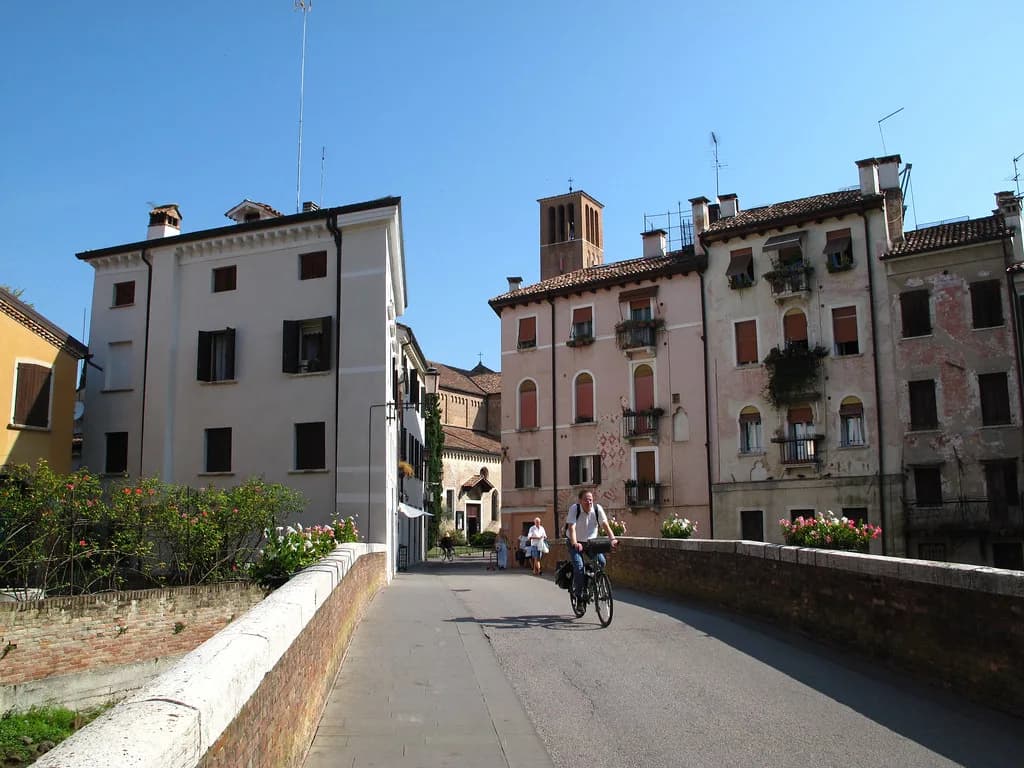
Pressure inside the centre clusters around Piazza dei Signori, the arcaded main square framed by the Palazzo dei Trecento and the civic tower, where cafés set out tables under the porticoes. Canal-side lanes such as the Buranelli quarter draw strollers and photographers. Those are also the prettiest corners, so plan to see them early rather than skip them.
Day-trippers heading for Venice shape the regional pattern more than Treviso's own hotel guests do. Arriving at headline sights when they open is standard advice for busy Italian cities, and it translates well here: an early walk beats an afternoon one for both light and elbow room.
Spring and Autumn: The Strongest Windows
Spring and autumn are the seasons the sources consistently favour for Italy as a whole, and Treviso fits the logic neatly. Walking the 16th-century walls and bastions, crossing the canal bridges and lingering in the arcades are all outdoor pleasures that punishing heat or rain undermines. Pack layers, because mornings and evenings in April and October can feel brisk even when midday is mild.
This is also a good period for the slow visit Treviso rewards: side alleys, market streets and unhurried lunches rather than a checklist of monuments. If you are collecting overlooked corners, our guide to the hidden gems in Treviso pairs naturally with a mild-weather itinerary.
Weekdays give you one more advantage in shoulder months: museum-going is less compressed, and you can split a day between a ticketed collection in the morning and free public space in the afternoon. Santa Caterina and Luigi Bailo both stay shut on Mondays regardless of season.
Summer: Heat, Shade and Early Starts
Summer heat is the honest drawback, and it bites hardest where the architecture offers least shade. Venice in August, described in one 2020 account as a mass of built structures with almost no trees and little breeze, gives a fair sense of what paved historic centres feel like in peak season. Treviso's porticoes help, but the open squares do not.
The workable strategy is to invert the day. Walk the canals and walls before the heat builds, take a long indoor break at a museum or under the arcades at midday, and return to the streets in the evening when the squares come alive. Avoid scheduling anything that requires standing in full sun for an hour.
If summer is your only option, treat Treviso as a base and keep Venice visits short rather than the reverse. Staying locally puts you in the quiet morning streets before the day-trippers arrive, which is a better use of the season than fighting midday crowds elsewhere.
Autumn Events: Fiere di San Luca and Tomaso 700
Autumn is when Treviso's calendar gets interesting. The Fiere di San Luca, a fair with deep roots in the city, ran in 2026 up to 25 October, and the diocese marked the occasion with a Mass presided over by the bishop; the fair's long history has been explicitly tied to eight centuries of exchange with the city. Treat the published dates as this year's edition and check the organiser's site before planning around them.
The Tomaso 700 season adds a cultural anchor from 26 September to 5 December 2026, centred on the painter's legacy and the medieval Treviso he worked in. If frescoes are your reason for coming, this is the window to target, and the civic museums' exhibition pages are where to confirm what is showing when you book.
One caution: a past edition's page proves nothing about future dates. Before committing to a travel window on the strength of a festival, check whether next year's edition has actually been announced and whether any programme has been published.
Radicchio Season Changes the Table
From November well into spring, Radicchio Rosso di Treviso appears on market stalls and menus around the city. It is a geographically limited crop tied to the soils and spring waters of the Sile river area, which is part of why it tastes different here than a generic version elsewhere. Plan a food-led visit after the first frosts, not in high summer.
Pair the markets with the local wine story. Prosecco comes from the hills around Conegliano and Valdobbiadene, within roughly 30 kilometres of Treviso, and a proseccheria on the main square is an easy way to taste before deciding whether to head into the hills. Bigoli, a thick local pasta, and the city's disputed tiramisu claim round out an eating itinerary.
Verify seasonal market days locally rather than trusting older trip reports, since the detailed fish-market pattern circulating online dates from years ago. The city's own tourism pages and organiser sites are safer sources close to your travel date.
Winter: Quiet Streets, Wet Days
Winter thins the streets but does not empty the city, and the trade-off is weather rather than crowds. Humidity and rain can make canal-side walking unpleasant, and daylight is short, so a winter trip suits museum-goers, food travellers and anyone using Treviso as a calm base for elsewhere in Veneto.
Structure winter days around indoor anchors. A morning in one of the civic museums, a long lunch and an afternoon in the arcades is a realistic rhythm; the museums' Tuesday-to-Sunday schedule means Monday is your rest day by default. Keep a flexible backup plan for any day the weather turns.
Weekday and Time-of-Day Tactics
The single most useful scheduling rule is the Monday museum closure. Because both main civic museums close that day, avoid making Monday your culture day; use it for a walk along the walls, a market street stroll, or a day trip out of the city, and save the galleries for Tuesday onward.
Within a day, front-load the outdoors. Walk the canals and squares before mid-morning, take the ticketed interiors during the busy middle hours, and keep the evening free for the porticoes and piazzas. This ordering works in every season and protects you if a museum visit runs long.
Remember that public space and ticketed collections are separate things. Piazza dei Signori and the canal lanes cost nothing to wander, while Santa Caterina and the Bailo museum are paid visits with their own opening pattern; do not assume one ticket covers both complexes.
Treviso or Venice as a Base?
Treviso's case as a base is straightforward: it is smaller, calmer and generally less expensive than Venice, with a compact centre you can cross on foot in a morning. Its canals are shallow, plant-filled and not navigable, which is part of why they stay peaceful rather than becoming a boat route.
The trade-off is that you travel to Venice rather than wake up in it. Trains connect the two cities and run through the day, but check current timetables and journey options yourself rather than relying on any schedule quoted in an old trip report. If Venice's early mornings matter more to you than quiet evenings, base yourself there instead.
For a mixed trip, our Treviso Attractions hub is a sensible place to shortlist the specific sights worth your half-days before you commit to a base.
A Suggested Two-Day Timing Plan
This is one reasonable structure, not an official itinerary. On day one, start early along the canals and the Buranelli quarter while the light is soft, drift into Piazza dei Signori for coffee under the arcades, then spend the afternoon in a single ticketed museum; finish with an evening meal built around local pasta and a glass of prosecco.
On day two, walk the city walls and bastions in the morning, cross into the quieter side streets before lunch, and leave the afternoon flexible for whatever exhibition is actually running when you visit. If your trip includes a Monday, swap these days so the museum lands on Tuesday.
Build in one buffer half-day if you came for a specific cultural season such as Tomaso 700. Exhibitions and fairs can shift, and a loose afternoon lets you absorb a change without losing the whole trip.
Checks to Make Before You Book
Confirm current museum hours, closure days and what is actually on show on the official civic museums site rather than a blog written years earlier. The published Tuesday-to-Sunday, 10:00-to-18:00 pattern is the one to check against your dates, and note that Casa Robegan opens only for temporary shows.
For the weather itself, treat seasonal descriptions as guidance and read the regional forecast close to departure; the Veneto environmental agency publishes the official picture. Do not plan an outdoor-heavy schedule on the assumption that any month guarantees dry, mild days.
Finally, verify event dates at source. The Fiere di San Luca and Tomaso 700 windows quoted here belong to 2026, and future editions, ticket arrangements and opening patterns should be confirmed on organiser pages before you build a trip around them.
Plan Your Visit
Treviso's timing decision comes down to three levers: weather, crowds and the calendar. Spring and autumn give you the best walking conditions and thinner regional traffic, late autumn adds radicchio and the Tomaso 700 season, and summer asks for early starts and long shaded lunches. None of this is obscure knowledge, but matching it to your priorities is what makes a short trip work.
Whatever window you choose, the operational details decide the day: the civic museums shut on Mondays, public squares and canal lanes stay free, and events need verifying against the organiser's own pages. Sort those out and Treviso becomes an easy, calm counterweight to a busy Venice itinerary.
Frequently Asked Questions
What is the best month to visit Treviso?
April, May, late September and October are the strongest all-round choices for mild walking weather and lighter regional travel pressure. If radicchio and autumn culture matter more to you than warmth, aim for November, when the food season is under way and the Tomaso 700 season runs into early December. Always check the current year's programme before booking.
Is Treviso crowded in summer?
Treviso is a mid-sized city rather than a single congested sight, so it absorbs visitors better than Venice, but summer is still the busiest and hottest period. Expect little shade in the paved squares and plan canal and wall walks for the morning, keeping midday for museums or arcaded cafés.
When is radicchio season in Treviso?
Radicchio Rosso di Treviso appears from November well into spring, when markets and menus shift toward the local crop. A food-focused trip is better placed later in the year than in high summer, and market days should be checked locally close to your visit.
Are Treviso's museums closed on Mondays?
Yes. The Museo Santa Caterina and Museo Luigi Bailo are open Tuesday to Sunday from 10:00 to 18:00 and closed on Mondays, so plan outdoor walks or a day trip on Monday and keep galleries for the rest of the week. Re-check before you go.
Is it better to stay in Treviso or Venice?
Choose Treviso for quieter evenings, lower pressure and a compact walkable centre, accepting that you travel to Venice rather than waking up there. Choose Venice if its early-morning atmosphere is the main reason for your trip. Trains link the two cities through the day, but verify times yourself.
How many days do you need in Treviso?
As a suggestion, two to three days covers the centre comfortably: canals, walls, a main square and at least one museum, with room for a slow lunch and a side trip. Add a buffer half-day if you are visiting for a specific exhibition or fair.
Sources
- Hotel Treviso Alberghi bed and breakfast B&B ristoranti treviso agriturismi
- Best time to visit Italy to avoid crowds | Italiarail
- Official event website
- Treviso Travel Guide - Reasons to Visit this City Near Venice | Tuscany Now & More
- Treviso, Italy: A Visitor's Guide For Mindful Travelers - Caffeinated Excursions
- Home - Diocesi di Treviso
- Piazza dei Signori site features - Goparoo
- Musei Civici Treviso - Sito Ufficiale dei Musei civici di Treviso
Continue exploring
More guides you'll find useful