
Ravenna Getting Around: Arriving by Train, Car and Bike
Plan Ravenna on foot: train gateways, parking outside the limited traffic zone, the bus or bike path to Classe, and slow days in the mosaic centre.
On this page
Ravenna rewards travellers who plan arrival and local movement as one decision. The mosaic monuments sit within a walkable historic centre, so most of your day needs no vehicle at all, but the way you arrive shapes where you start and what you can fit in.
The city sits in Emilia-Romagna with rail links toward Bologna, Rimini and Ferrara, and a limited traffic zone that makes perimeter parking the practical approach for drivers. A handful of trips genuinely need wheels or a bus, above all the outlying basilica at Classe.
Start With the Walkable Centre
Get the geography straight before booking anything: five diocesan monuments stand within a few minutes of each other in the old town, and the operator describes the whole circuit as a walk through the old town. The same page suggests roughly three hours to cover the full tour, which is a planning figure from the monument operator rather than a fixed rule.
Those three hours are tight if you linger, and several spaces are small enough that crowd management matters. Booking a timed entry in advance is the operator's own advice, and the diocesan ticket stays valid for seven days with one admission per monument, so a single day is not your only option.
If mosaics are the reason you came, treat the centre as a half-day minimum and leave the rest of the day for Dante's quarter, the covered market or a slow lunch. Travellers who want quieter corners beyond the headline sites will find more ideas in this guide to the hidden gems in Ravenna, which pairs well with a transport plan built around walking.
Arriving by Train
Ravenna is not on a main trunk line, so most rail journeys route through a larger hub. One traveller's account describes arriving from Rimini on local trains and leaving via Ferrara, with Bologna the largest railway hub for connections. Use that as context and check current services with the rail operator.
The station sits on the edge of the old town, and the nearest diocesan monument is Sant'Apollinare Nuovo, about five minutes away on foot. That makes a sensible first stop while you orient yourself, with the cathedral area and its baptistery a further short walk.
Before you commit to a departure time, check live schedules and any engineering works directly with the operator rather than relying on a printed plan, since timetables change by season. Ticket conditions also vary by fare type.
Arriving by Car and Handling the Limited Traffic Zone
Driving into the historic centre is the mistake to avoid: much of it falls inside a limited traffic zone, so the practical routine is to park on the perimeter and continue on foot. Cameras enforce these zones, and penalties are not the souvenir anyone wants from a mosaic weekend.
Approach signs announcing the restricted area are worth reading twice, because the boundary does not follow one neat ring road. If your hotel is inside the zone, ask it in advance whether it can register your plate or direct you to a permitted garage, and confirm any charge directly with the property.
Outside the zone, driving is genuinely useful for the wider area, including the coast, the pine forests and countryside towns. For city parking, one travel account recommends an app such as EasyPark for finding and paying, though coverage and fees should be checked against local signage on the day.
Parking That Reorders Your Monument Route
Where you leave the car should change the order of your visit, and the diocesan operator publishes route advice for exactly this. If you park near San Vitale, start with the basilica and the Mausoleum of Galla Placidia, then walk about fifteen minutes to Sant'Apollinare Nuovo before reaching the cathedral area.
Travellers arriving by camper at Piazza della Resistenza get the reverse suggestion: begin at the cathedral complex with the Neonian Baptistery and Archiepiscopal Museum, then head to Sant'Apollinare Nuovo and finish at Galla Placidia and San Vitale. Each leg is around fifteen minutes on foot, with short interior visits in between.
Either way, allow time to find a space at busy weekends, since the operator only advises routes and does not guarantee availability. The city also publishes its own parking and traffic notices, which is the place to check before a holiday weekend. Further visitor details appear in Home - Comune di Ravenna.
A Stop-by-Stop Walking Route With Realistic Timings
The diocesan operator gives suggested visit times that make route planning much easier: around twenty-five minutes each at Sant'Apollinare Nuovo, San Vitale and the Archiepiscopal Museum, and about five minutes at the Neonian Baptistery and Galla Placidia. Treat these as planning suggestions, not fixed limits, and expect short timed slots at the smallest spaces.
A workable order starts at Sant'Apollinare Nuovo near the station, moves to the baptistery and museum by the cathedral, and ends at San Vitale and Galla Placidia. The operator's own description of the mausoleum explains why the smallest space can command the longest pause, since the interior decoration rewards slow looking rather than a quick circuit.
Between the cathedral quarter and the station you pass Dante's zone, where the poet's tomb and the basilica that hosted his funeral sit beside the flooded crypt. That makes the Basilica of San Francesco and its neighbouring memorial a natural break in the mosaic circuit rather than a separate outing.
Reaching Classe Without a Car
Sant'Apollinare in Classe is the one UNESCO monument that genuinely needs transport, sitting about five kilometres from the historic centre. The tourism office lists three sensible options: a dedicated bike path, Bus 4 from Ravenna station, or a taxi, with the Classis Museum a short walk from the basilica itself.
The tourism office describes the museum as the natural first stop, presenting the history of the ancient port before you reach the basilica, with about five minutes' walk between the two. Pair them as a single outing and check the museum's current closing day and the basilica's service times before travelling out.
City bus timetables, frequency and fares are published by the operator rather than fixed in advance, so check the day before and allow a buffer for the return. Taxis are the flexible fallback when timing matters, particularly if you have a train to catch.
Cycling Town and Country
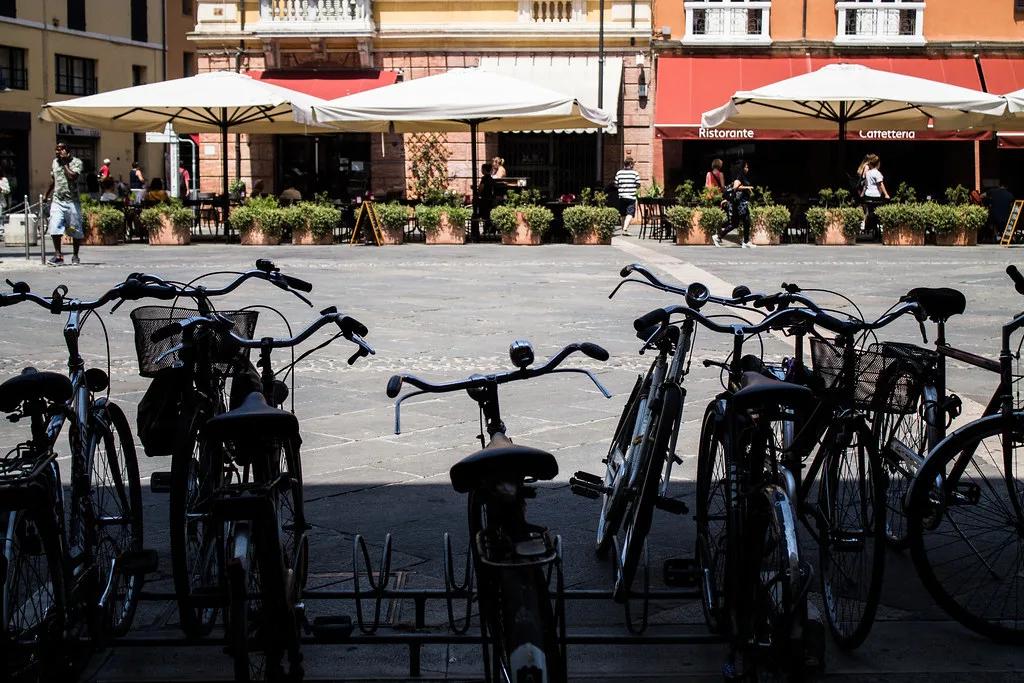
Ravenna is flat and largely pedestrianised, with cycle paths that continue out toward Classe, which makes a bike the most pleasant way to cover the outlying site without a car. The tourism office recommends the dedicated cycle path from the centre to Classe as one of the three ways to get there.
Rental shops are scattered around the centre according to one city guide, but rates, opening times and e-bike availability change by season, so confirm before you set out. Carry water and a lock, and plan the Classe ride for the cooler part of the day.
Buses to the Coast and Marina di Ravenna
The Adriatic is a short hop from the centre, and one travel account notes that local buses run to Marina di Ravenna, Lido Adriano and other beach towns, with tickets bought by app or on board. Routes, seasonal timetables and fares should be checked with the operator before you rely on a particular departure.
If you only have one clear day, choose between the coast and Classe rather than attempting both, since each consumes a half day once transport and waiting are counted. Two nights lets you do the mosaic circuit slowly and still reach the sea.
Cruise Passengers and Organised Transfers
Cruise passengers berth at Porto Corsini, outside the centre, and the tourism office sells a round-trip shuttle package combined with a guided tour of three UNESCO monuments. That bundle suits anyone with a fixed all-aboard time, since the transfer and the visit are coordinated for you.
Independent travellers can use the same shuttle logic without the tour, but should confirm the terminal's pick-up point and the return schedule on arrival, since the operator describes the service rather than promising it on every date.
Deciding Between One Day and Two
One full day covers the diocesan monuments, Dante's tomb and a proper lunch if you start early, because the centre is compact and walkable. Two days adds Classe and either the coast or a slower look at the lesser-known sites.
Anyone treating Ravenna as a day trip from Bologna should book timed entries first and plan the return train second, since the mosaics tolerate no rushing. Use the Ravenna Attractions hub to match each monument to the time you have, rather than trying to fit every interior into one afternoon.
Heat, Dress Codes and Bags
Several mosaics are best seen by looking up, and some interiors are small with limited shade outside, so summer visits are easier early or late. Churches ask for respectful dress, meaning covered shoulders and knees, and a light layer helps inside cool interiors.
A tour operator's published conditions warn that large bags and backpacks may be refused at monument entrances, and that timed tickets can expire shortly after your slot, so arrive early and travel light. Confirm these points against each site's own rules before the day.
Plan Your Visit
Build the day around walking, choose one transport solution for Classe, and park outside the limited traffic zone if you drive. Confirm train times, bus routes, current prices and any service closures with the operators and official monument pages before travelling, since these details change through the year.
Book timed monument entries ahead, keep one flexible slot for weather or a missed bus, and treat Ravenna as a place to move through slowly. The city rewards that pace more than any packed itinerary.
Frequently Asked Questions
Do you need a car to get around Ravenna?
Usually not. The historic centre is compact and walkable, and the railway station is a short walk from Sant'Apollinare Nuovo. Classe can be reached by the dedicated bike path, Bus 4 from the station or a taxi. A car helps for the wider region but brings limited traffic zone and parking complications in town.
How do you reach Sant'Apollinare in Classe without a car?
The tourism office lists three options: the dedicated cycle path, Bus 4 from Ravenna railway station, or a taxi. The Classis Museum is around a five-minute walk from the basilica. Check current bus times and fares with the operator, since these are not fixed from season to season.
Can you walk between all the UNESCO monuments in Ravenna?
The five diocesan monuments stand within a short walk of each other, and the operator suggests roughly three hours for the full tour. Sant'Apollinare in Classe is the exception, about five kilometres outside the centre, so it needs transport.
Where should you park if you drive into Ravenna?
Park on the perimeter of the historic centre, which is largely inside a limited traffic zone, and continue on foot. The diocesan operator suggests different starting monuments depending on whether you park near San Vitale or at Piazza della Resistenza, with roughly fifteen minutes between the main stops.
Sources
- Home - Comune di Ravenna
- Things to Do in Ravenna, Italy: Attractions, Itinerary, Map
- Ravenna Italy Travel Guide: Is It Worth Visiting?
- Day Trips with Transfer - Visit Ravenna
- Visiting Ravenna, Italy (2026): 17 Top Things to See and Do
- Plan your visit – Ravenna Mosaici
- Discover Classe - Private Guided Tour of the Basilica of Sant’Apollinare in Classe and the Classis M - Visit Ravenna
- Mausoleum of Galla Placidia – Ravenna Mosaici
- Ravenna: Highlights and Mosaics Guided Tour with Tickets
Continue exploring
More guides you'll find useful





