
Best Day Trips from Ravello: Amalfi Coast Escapes
Plan day trips from Ravello with realistic time budgets, bus and ferry basics via Amalfi, and honest advice on in-town villas versus coastal villages.
On this page
Ravello rewards travellers who treat the town itself as a destination rather than a viewpoint on the way to the beach. The two villa gardens are compact enough to cover in a few hours, which means a morning among the terraces still leaves room for an afternoon descent to the coast. Planning around that split is the single most useful decision you will make here.
The second decision is how far to push the day. Coastal villages are reached by combining bus and boat legs through Amalfi, and the return leg is the part most itineraries underestimate. The sections below pair each destination with the traveller it suits, so you can match a village to your energy rather than trying to collect all of them.
Why Ravello Works as a Day-Trip Base
Ravello is a hilltop town overlooking the Tyrrhenian Sea, known for terraced gardens, historic villas and long coastal views rather than beach access. That elevation is the trade-off: you gain cooler air and quieter streets, but every coastal excursion starts with a descent. Travellers who accept that rhythm tend to enjoy Ravello far more than those treating it as a beach base.
One practical consequence is that Ravello suits a two-night stay better than a single rushed night. With a base in town you can spend one slow morning on the villas and give a full day to the coast, without dragging luggage up and down the hill in between. Our Ravello Attractions hub collects the individual sight guides if you want to plan the in-town half first.
Start Close: Villa Rufolo and Villa Cimbrone
Before leaving town, give the gardens proper time. Villa Rufolo, built by the Rufolo family around the 13th century, has a terraced garden sloping toward the sea with flowers, trees and fountains, and its Moorish architecture is the reason many visitors come. Villa Cimbrone, whose origins reach back to the 11th century, is now a hotel but opens its gardens to visitors.
The highlight at Cimbrone is the Terrazza dell'Infinito, a belvedere lined with marble busts that sits roughly 300 metres above sea level according to Ta Ta, Cheers. That height explains both the view and the wind; bring a layer even in warm months. Check current garden admission and hours with the villas themselves before you go, since these change by season.
The same account notes that the Rufolo terrace can be closed off while the town prepares for the Ravello Festival, an annual summer classical and jazz event. If the terrace matters to you, ask at the ticket desk on arrival rather than assuming access. Budget two to three hours across both villas, more if you photograph slowly.
Free Versus Paid in Ravello
Not everything in town carries a ticket. Piazza Duomo, also called Piazza Vescovado, is the main square and communal hub, framed by the cathedral and lined with shops and cafes; sitting there with a gelato costs nothing beyond the gelato. Wander Via dei Rufolo and Via Roma afterwards for limoncello and local goods.
Treat the cathedral exterior and square as free public space, and the villa gardens as separate paid visits with their own tickets. Do not assume one ticket covers both villas; they are distinct properties with distinct admission. Keep some cash and a card handy, and confirm current fees at each entrance.
If ceramics, textiles and lemon products interest you, browse before committing on the coast, where identical goods appear at higher tourist traffic. Our guide to Ravello ceramics and local crafts covers what is actually made in the area versus imported for visitors.
Getting Down the Hill: Bus and Ferry Combinations
Ravello has no beach at its feet, so reaching the water means descending to Amalfi and continuing from there. Most car-free travellers combine a bus up or down the hill with a ferry along the coast, and the coastal town of Amalfi functions as the hinge for nearly every route. Our guide to how to get to Ravello explains the approach from Naples and Sorrento in more detail.
The Republic of Rose describes the SITA bus as a cost-effective option that takes a few hours from Naples via Sorrento and Amalfi, with crowded vehicles at peak times. Ferries run between coastal towns, but they are weather-dependent and thinner in shoulder season. Always confirm the day's sailings and bus times locally rather than relying on a printed plan.
For official local notices, the Comune di Ravello website is the reference point for town information. Check it alongside ferry operator pages before committing to a tight connection, and build a buffer into any plan that depends on two vehicles meeting.
Amalfi as the Natural First Excursion
Amalfi is the obvious first trip because you will likely pass through it anyway. Its main square, Piazza Dante, holds fountains and the Amalfi Duomo, and the surrounding streets are dense with shops selling ceramics, leather and lemon products. It is a browsing town rather than a lying-on-the-beach town, which suits a half-day.
The catch is volume. Amalfi funnels cruise passengers, ferry arrivals and bus groups into a few narrow streets, so mid-morning and mid-afternoon are the busiest windows. Arrive early or late, and treat the cathedral and square as your anchors rather than trying to see everything. Our Amalfi Coast food notes help if you want to eat deliberately rather than grab the first menu.
Ravello Plus Amalfi in One Day
Combining the villas with Amalfi is feasible but requires sequencing discipline. Do Villa Rufolo and Villa Cimbrone first thing, descend around midday, and give Amalfi the afternoon before returning uphill. This works because the villas are close together and quick to reach, while Amalfi needs no more than a few hours.
The trade-off is depth. You will see a lot and linger nowhere, and any transport delay eats the buffer you built. If you have only one clear day, pick the villas plus Amalfi; if you have two, split them and add a quieter village. The Ravello one day itinerary covers the in-town version if you decide to stay put.
Quieter Coastal Alternatives: Atrani and Minori
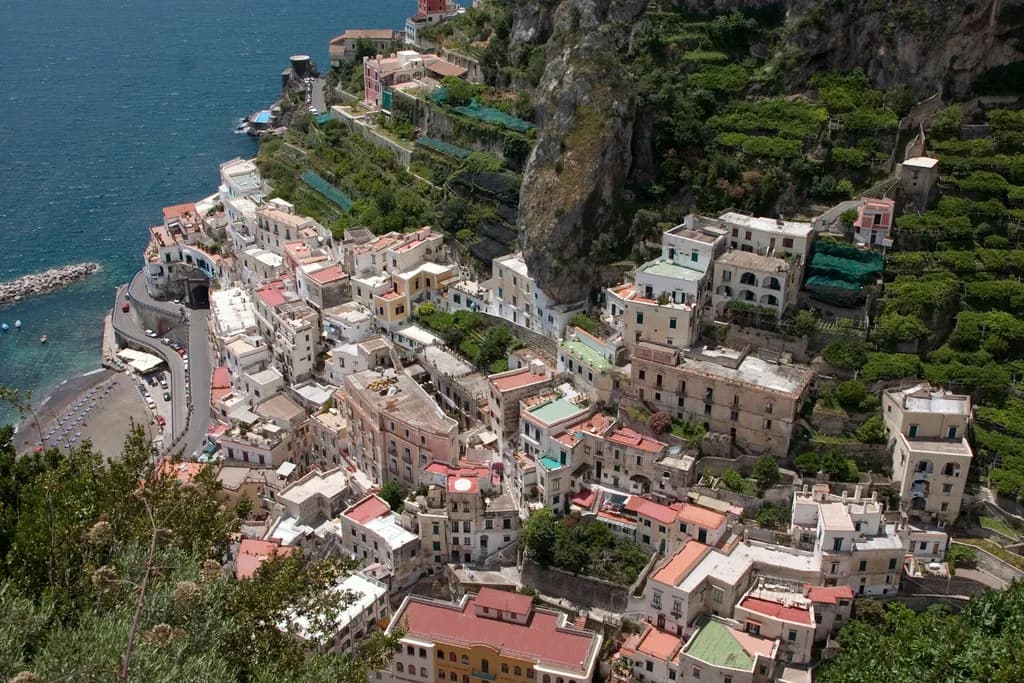
Atrani sits just along the coast from Amalfi and covers only 0.12 square kilometres, making it Italy's smallest municipality by area according to Ta Ta, Cheers. Its old houses cluster along the water and the central square opens directly onto the beach. Go early and you may find it close to empty, which is rare on this coastline.
Minori, further along, has a long culinary reputation and is nicknamed the City of Taste. It also holds a Roman maritime villa dating to the 1st century BCE, so a half-day here mixes archaeology with food. Pastry is the other draw; the lemon Delizia al Limone is the local benchmark.
Both villages suit travellers who want a slower pace than Amalfi and are comfortable reading a ferry timetable. Neither rewards a checklist approach, so plan one main activity and leave the rest open. Confirm return sailings on arrival, since afternoon options thin out.
Cetara for Fishing Heritage
Cetara began as a Saracen settlement in 880 and remains one of the few Amalfi Coast towns that has kept a working fishing identity, with tuna, sardines and anchovies central to its tables. That makes it the best excursion for anyone more interested in food provenance than scenery alone.
Fish appears in multiple forms here, from salt-cured anchovies on toast to fried anchovies and anchovy sauces with pasta. Because the town is small and its appeal is culinary, it pairs badly with a rushed schedule and well with a long lunch. Check ferry times before you commit to a late table.
Positano: The Bigger, Busier Excursion
Positano is the most demanding day trip on this list in terms of crowds and logistics. Its beachfront is run by private beach clubs, so sitting on the sand usually means paying a fee, though the trade-off is a reserved chair and service rather than a scrum. The town's lanes fill quickly with shoppers and diners.
The return leg is the real risk. The same account describes waiting an hour for a taxi out of Positano at night and paying heavily for it, with few unbooked cars appearing. If you go for dinner, arrange transport in advance or plan to leave before the evening crunch.
Positano also works as a daytime stop rather than a night out: arrive by ferry, swim or lunch, and leave on an afternoon sailing. That version costs you less stress and still gives you the town's famous stacked streets. Decide which version you want before you book anything else.
Best Season and Time of Day
Summer, meaning June through August, is the busiest stretch, though Ravello itself stays calmer than Positano or Capri because it sits off the coastline. Hotel and restaurant rates typically peak then. Shoulder months in spring and autumn bring milder weather and thinner crowds, and spring delivers the best garden blooms.
Winter empties Ravello almost entirely and many hotels and restaurants shut for the season, but the villa gardens remain open, which makes cold-weather visits viable for garden-focused travellers. For coastal excursions, mornings are consistently better: fewer ferry queues, cooler climbs and more slack if a connection fails.
Suggested Time Budgets
A half day in town covers both villa gardens and the piazza comfortably, with time for a coffee between. A full coastal day should commit to one village beyond Amalfi rather than two, because each hop adds a wait. Trying to fit Amalfi, Atrani and Minori together leaves no room to actually sit down.
If you are based in Amalfi instead, Ravello makes an easy half-day excursion upward, and the reverse holds for coastal trips from Ravello. Treat the hill descent as a fixed cost rather than dead time, and plan the rest around it.
Practical Mistakes to Avoid
Overpacking the day is the classic error: three villages plus two villas is a transport marathon, not a holiday. The second is trusting a taxi to appear when you need one, especially after dark in Positano. The third is assuming ferries run late into the evening in shoulder season.
Check the day's sailings and bus times in the morning, keep small change for tickets, and note the last reasonable return before you start drinking wine at lunch. The Comune di Ravello site is a sensible starting point for town-level information and notices.
Where to Sleep if Ravello Is Your Base
Ravello offers everything from bed and breakfasts to five-star properties, so the base decision is about pace rather than availability. Staying in town buys you early mornings in the gardens before the day-trippers arrive and quiet evenings after they leave. Staying in Amalfi buys easier ferry access but a busier atmosphere.
Two nights is the sweet spot: one slow day on the villas and one coastal excursion. Anyone planning several village hops should consider splitting the stay between Ravello and a coastal town rather than commuting downhill twice.
Plan Your Ravello Day Trips
The most satisfying day trips from Ravello are fewer than you think. Pair the two villa gardens with Amalfi for a first visit, then use a second day for Atrani, Minori or Cetara depending on whether you want quiet streets or a long fish lunch. Leave Positano for a day when you can control the return.
Check current garden admission, ferry sailings and bus times before each excursion, since these shift with season and weather. Build slack into every connection, and the coast will feel generous rather than rushed.
Frequently Asked Questions
What are the best day trips from Ravello?
Amalfi is the natural first excursion because most routes pass through it anyway. Beyond that, Atrani and Minori suit slower travellers, Cetara appeals to anyone interested in fishing heritage and anchovy cooking, and Positano offers the biggest but busiest day out. The two villa gardens in Ravello itself are an in-town half day rather than a trip.
Can you visit Amalfi as a day trip from Ravello?
Yes. You descend from Ravello and continue to Amalfi, typically by a combination of bus and ferry. Give Amalfi a few hours for the square, the cathedral and browsing the shops, and confirm the day's return times before setting out so you are not stranded uphill.
How do you get from Ravello to the coast without a car?
Most car-free travellers combine a bus down the hill with a ferry along the coast, using Amalfi as the hinge point. SITA buses serve the area and ferries connect coastal towns, but sailings vary by season and weather, so check the day's times locally rather than relying on a fixed plan.
Is Ravello worth a full day or just a few hours?
Ravello is small, and the town plus both villa gardens fits comfortably into a half day. A full day lets you add the piazza, a long lunch and unhurried garden time. If you only have one day in the area, pair Ravello's villas with Amalfi rather than trying to add a third stop.
Which Amalfi Coast villages are quietest for a day trip?
Atrani and Minori are the calmer options in this guide. Atrani is Italy's smallest municipality by area and its square opens onto the beach, while Minori pairs a Roman maritime villa with a strong pastry tradition. Both reward a slow schedule and an early start.
Do you need a car to explore from Ravello?
No, but a car adds flexibility at the cost of narrow roads and limited parking. Without one, you rely on buses and ferries routed through Amalfi, which works well in daylight and less well late at night. Arrange any evening return transport in advance.
When is the best time to visit Ravello for day trips?
Spring and autumn offer milder weather and thinner crowds, and spring brings the best garden blooms. Summer is busiest but Ravello still feels calmer than the coastal towns. Winter is quiet, with many hotels and restaurants closed, though the villa gardens remain open.
Sources
Continue exploring
More guides you'll find useful





