
Where to Stay in Positano: Areas, Stairs and Views
Compare Positano areas for a stay: Spiaggia Grande, Fornillo, the central lanes and the upper hills, weighed by stairs, views, noise and bus access.
On this page
In Positano, the address you choose shapes the holiday more than the thread count does. The village is stacked between the coast road and the water, so a short distance on the map can mean a long climb with a suitcase. Choosing between beach-level convenience, the atmospheric central lanes and the hillside is the real booking decision.
One figure frames every choice: The Italy Guides estimates that a mid-range double room in July or August costs roughly €250–400 a night, and notes that genuine budget accommodation does not exist in high season. That is a 2026 estimate rather than a quote, so check live availability before you commit.
This guide compares the main areas on the criteria that actually affect a stay: how many stairs you face, what you see from the window, how loud the nights are and how easily you reach buses and ferries. It does not rank hotels, because two similar rooms in different zones can produce completely different trips.
How Positano's Shape Works
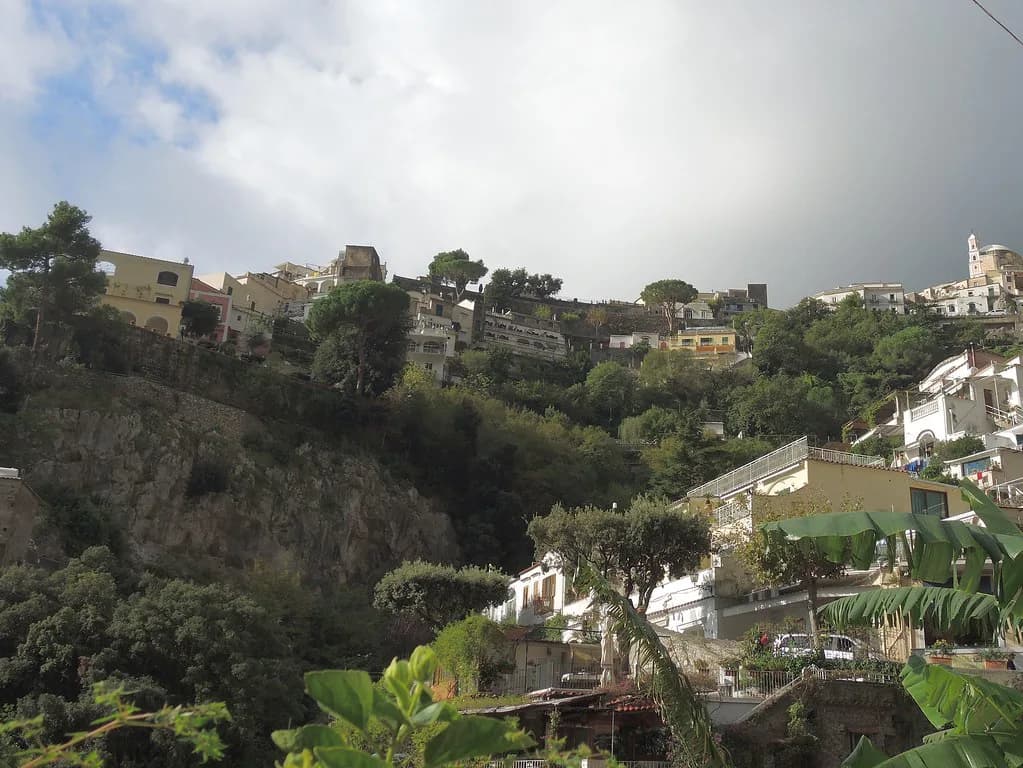
Positano clings to a cliff at roughly a 45-degree angle between the SS163 coast road at the top and the sea below, as The Italy Guides describes it. That geometry is why almost every route involves steps, and why the same hotel category can feel easy in one spot and exhausting in another. Before comparing rooms, work out where your building sits on that slope.
One source of confusion is that the village has more than one beach. Spiaggia Grande is the main, busiest strand beside the ferry pier, while Fornillo lies to the west and appears in accommodation listings as the calmer alternative. The upper town, running along Via Pasitea, sits close to the coast road and the SITA bus stops.
The practical consequence is that you trade panorama against legwork. Higher properties generally give the widest views and the easiest road access, while lower ones shorten the walk to the water and lengthen everything else. Neither choice is wrong; they simply suit different kinds of trips.
Central Lanes and Via dei Mulini: Atmosphere at a Price
The staircased streets dropping from the main road through Via dei Mulini to the beach form the heart of the Positano experience. Staying here puts you among the shops, restaurants and ceramic workshops, with the beach and ferry pier within a short downhill walk. Coming back up takes noticeably longer than going down.
The trade-offs are cost and noise. The Italy Guides calls this the most expensive zone and warns that bar and restaurant noise can persist until midnight in high season. Luggage is another issue: arriving at a central address usually means carrying bags down steps unless you arrange help in advance.
This zone suits travellers who want the village on their doorstep and plan to eat and wander close to the hotel. It suits less well anyone with limited mobility, heavy bags or a need for early nights. If you want the lanes without the nightly bustle, look at the edges of the centre rather than its core.
Spiaggia Grande Beachfront: Sand at Your Feet
The small cluster of hotels at beach level removes the stair problem for swimming and sunbathing entirely. The Italy Guides notes that this makes the area the most convenient choice for families with small children or guests with limited mobility, and puts the ferry pier steps away. For a short beach-focused break, that convenience is hard to beat.
The same source flags the other side of the bargain: these are the highest prices in the village and the loudest rooms, with beach bars and umbrellas busy through the day in season. Light sleepers should weigh that carefully, especially in July and August. The strand itself is covered in the Spiaggia Grande beach guide.
A beachfront base also shapes how you spend money. You are paying for proximity, so make it count by planning beach mornings and ferry trips rather than long inland excursions. If your days will mostly be spent on coastal walks and hill towns, the premium buys you less.
Fornillo: The Calmer Western Beach
Fornillo is Positano's second beach, west of the main strand, and The Italy Guides presents hotel listings there as having a more relaxed atmosphere than the main beachfront. Treat "calmer" as relative: it is still Positano, still on a slope and still busy in high season.
Fornillo suits travellers who want to swim near the hotel without paying the Spiaggia Grande premium, and who accept a walk to the centre for dinner and ferries. The centre is a short but vertical stroll away. Ask the property exactly how many steps separate the door from the beach path before booking.
It is also a reasonable compromise for couples who want atmosphere without midnight noise. The walk back from central restaurants is uphill, so shoes matter more than you would expect on a beach holiday. For a closer look at the strand itself, see the Fornillo Beach visitor guide.
Upper Town and Via Pasitea: Views and Bus Access
The upper town along Via Pasitea and the lanes above it offers the best panoramic views from above, easier access to the SITA bus stops on the coast road and quieter nights, according to The Italy Guides. It is also generally better value than the beachfront: as of 2026 the source describes small guesthouses and B&Bs here from roughly €120 to €180 a night, against €400 to €900 for luxury options nearer the centre. Treat those as the guide's estimates and confirm live rates when you book.
The cost is the descent. The same source estimates 15 to 20 minutes of stairs each way down to the beach, which is fine once a day and punishing if you plan two or three beach trips. Guests who split their time between the sand and day trips to Ravello or Sorrento feel this most.
Choose the upper town if your priority is waking to a wide view, sleeping quietly and catching buses without hauling bags through the centre. Choose it less if the beach is the whole point of the trip.
Chiesa Nuova and the Upper Hills: What to Verify
Chiesa Nuova sits up on the hillside above the centre and works as a reference point for the higher residential lanes rather than a beach neighbourhood. Public visitor material does not describe it as a distinct hotel zone, so treat it as a direction on the map rather than a promise of a particular experience, and ask the property what its own street is actually like.
If a listing gives a Chiesa Nuova address, ask the host three things before paying: how many steps or flights separate the door from the nearest road, whether a bus stop is within easy walking distance, and how long the walk down to Spiaggia Grande takes in practice. These answers matter more than photos of the terrace.
The hillside rewards travellers who value space, views and a sense of distance from the crowds. It penalises anyone who underestimates the climb home after dinner. A quick look at the elevation contours on a map will tell you more than most descriptions.
Steps, Luggage and Porters: Questions to Ask Before Booking
Almost no property in Positano can be reached without carrying bags up or down at least some stairs, and most hotels involve at least one flight from the road to the entrance. Some require dozens more steps to rooms or pools, per The Italy Guides. Do not assume a lift exists, and do not assume every hotel provides luggage help.
Ask directly whether the property offers a porter or bag-handling service from the bus stop or ferry pier, whether it must be booked ahead and whether there is a charge. Confirm the answer in writing before you travel. Packing lighter is the simplest insurance against a miserable arrival.
Travellers with limited mobility should ask for the specific route from the drop-off point to the room, including any unavoidable staircases on the surrounding streets. Accessibility is not uniform here, and a property's own description is the only reliable guide.
Budget Reality and Alternative Bases
Genuinely cheap accommodation does not exist in Positano during the main season. The Italy Guides puts the cheapest B&Bs and guesthouses at roughly €120–150 a night in June, rising above €200 in July and August, and suggests basing in Sorrento or Praiano instead. Those are that source's 2026 estimates; check current availability yourself.
Praiano, a short bus ride west, is described as quieter and significantly cheaper, making it a practical base for day-tripping into Positano. The trade-off is commuting time and dependence on the bus. Sorrento offers more mid-range choice and better connections for wider excursions such as Pompeii and Capri. If you are weighing a short stay here, our Positano two-day itinerary shows how the zones connect.
A third approach is to stay in one of the less famous Amalfi Coast villages and visit Positano for a day. If you take that route, a ferry across in summer is often more pleasant than the road. Ferry services are seasonal, so check the current timetable with the operator before planning around them.
When to Book and How the Seasons Change
The Italy Guides advises booking six to nine months ahead for July and August, three to four months for June and September, and four to six weeks for May or October, though the better mid-range places still reward early action. It also estimates that June and September run 15 to 25 percent below August peak, and May and October 30 to 40 percent below summer rates; treat these as the guide's 2026 estimates.
A second accommodation guide recommends travelling outside peak season and suggests March to April or September to October for a better balance of quality and price, adding that booking several months ahead helps for summer. Both sources point the same way: shoulder months are the sweet spot, and late planning costs money. Further visitor details appear in Where to stay in Positano - the ultimate guide - MediterraneanZenMoments.
Winter changes the village itself. The Italy Guides states that most Positano hotels close from November to March, that some years only a handful stay open, and that you should confirm current opening status directly with the property. Restaurants scale back too, so a winter booking needs direct confirmation rather than trust in a listing.
Quick Decision Guide by Trip Type
For a honeymoon or anniversary where the view is the point, the central lanes or the upper town give the postcard panorama, and the luxury addresses cluster around the centre. For a beach-focused family week, Spiaggia Grande or Fornillo removes the daily stair climb. For a walking and day-trip holiday, the upper town's bus access wins.
For a tight budget, base in Praiano or Sorrento and visit Positano by bus or seasonal ferry. For a first visit of two or three nights, the central lanes put everything within reach and make the most of limited time. Wherever you choose, read the access notes before you pay.
Beyond the Hotel: A Slow First Morning
Once you have dropped your bags, a gentle way to learn the village is on foot before the day heats up. Our planned route through lanes, stairways and belvederes traces the shortcuts between levels and helps you understand how your neighbourhood connects to the rest of town. It is a suggestion, not a fixed schedule, so adapt it to your energy and the weather. For wider planning, see A Positano Self-Guided Walk Through Lanes, Stairways and Belvederes.
If you want to look beyond the obvious waterfront, our hidden gems in Positano guide points to quieter corners and small pleasures that reward a slower pace. These are not secrets, just places that ask for a little more time and attention than a day-tripper usually gives them.
Getting Around Without Overdoing the Stairs
The SITA bus runs along the coast road at the top of the village, connecting to Amalfi and Sorrento, according to The Italy Guides. It notes a fare of approximately €1.40 per journey as of 2026 and warns that buses are packed in summer with no reserved seats. Treat that fare as a dated estimate and have small change ready.
In summer, ferries are often the better option for reaching other coastal towns. The Italy Guides describes high-speed services connecting Positano with Amalfi, Sorrento, Capri and Naples, running roughly from late March through October. Schedules and seasonal dates change, so confirm with the ferry operator rather than relying on a guidebook.
Within the village, your feet do most of the work. Group errands so you climb once rather than three times, and use the bus for longer hops along the coast rather than for short vertical trips. A little planning here saves a lot of calf muscle.
Plan Your Stay Around the Stairs
Positano rewards a decision made in the right order: first the zone, then the room. Match the area to how you will actually spend your days, whether that is swimming, hiking, eating or simply sitting on a terrace. Then confirm stairs, porter arrangements and opening status in writing with the property.
Use a self-guided walk early in the trip to learn the shortcuts between levels, and keep one plan flexible for weather or ferry changes. A little pre-trip honesty about steps and noise turns a beautiful but exhausting village into an easy one.
Frequently Asked Questions
Is Positano a walkable city?
Within zones, yes, but the village is built on a steep slope and nearly every route involves stairs. Walks between levels take longer than the map suggests, and the climb back up from the beach is the part most visitors underestimate. Ask your property about the specific route to its door before booking.
Which Positano area is quietest at night?
The upper town along Via Pasitea and the hillside are generally quieter than the central lanes and the beachfront. The Italy Guides notes that bar and restaurant noise in the central zone can persist until midnight in high season, and that the upper town is quieter at night. The same source presents Fornillo as calmer than the main beach. Ask for a room away from the street if noise matters to you.
Do Positano hotels have stairs?
Most do. The Italy Guides states that very few properties can be reached without at least some steps, and many involve a flight from the road to the entrance plus more to rooms or pools. A small number have lift access, but this is not the norm, so confirm the exact access before booking.
Where should I stay in Positano on a budget?
Positano itself has no genuinely cheap rooms in season. The practical approach, advised by The Italy Guides, is to base in Praiano or Sorrento and visit by bus or seasonal ferry. The trade-off is commuting time, especially in the evening. Check current prices and ferry schedules directly.
Is it better to stay in Positano or Sorrento?
Positano gives the dramatic setting and the village atmosphere, but it is expensive and awkward for day trips further afield. Sorrento is a better base for Pompeii, Capri and Naples, with more mid-range choice. Choose Positano to concentrate on the Amalfi Coast, Sorrento to range wider.
When is the best time to visit Positano?
The Italy Guides names May, June and September as the balance of good weather, workable crowds and functioning ferries, while July and August are the busiest and most expensive; October is quieter and still mild. Many hotels close between November and March, so confirm opening status directly if you travel in winter. These are general patterns; check current conditions for your dates.
How far in advance should I book a Positano hotel?
The Italy Guides suggests booking six to nine months ahead for July and August, three to four months for June and September, and four to six weeks for May or October, though the best mid-range places still reward early booking. Treat this as advice rather than a rule, and always check live availability.
Sources
Continue exploring
More guides you'll find useful





