
Olbia With Kids: A Slow Family Guide to Parks and Beaches
A family guide to Olbia with kids: green space at Parco Fausto Noce, gentler beaches near Pittulongu, short museum stops and realistic pacing for one to two days.
On this page
Olbia is often treated as a ferry port and airport on the way to somewhere glossier, yet it holds its own as a family base for northeast Sardinia. It is a working town with a historic centre, year-round restaurants and everyday shops, which matters when you are travelling with children who need a proper meal at ordinary hours. Start with a compact centre you can cross on foot and a waterfront that is easy to reach from the port. Related guide: Olbia Attractions: Visitor Guides to 10 Sights.
This guide keeps the day small. As a suggested rhythm rather than an official itinerary, pair one active outing, such as a beach morning or a boat trip, with one low-energy stop, such as the park or a short museum visit. That suits young children better than stacking sights, and it leaves room for the unplanned nap, the second ice cream or the sudden refusal to walk any further.
Why Olbia Works as a Family Base in Northeast Sardinia
Olbia sits in the Gallura region of northern Sardinia and functions as one of the island's main gateways, with an airport and a harbour linking it to mainland Italy by ferry. That convenience is the practical argument for families: you land, collect the car or walk into town, and you are already based.
The comparison that shapes most family decisions here is Olbia versus the Emerald Coast. The Emerald Coast is built around luxury tourism, villas, beach clubs and marinas, with significantly higher accommodation costs in summer and few local services away from the resorts. Olbia is the opposite proposition: a real town with guesthouses and hotels, lived-in streets and a centre you can cross on foot.
Many families now sleep in Olbia and drive out to the famous coast for the day, because the beaches and resorts around Porto Cervo are reachable on a day trip. Spending the night in town keeps costs down and gives children a normal street to come back to.
The city also has quieter corners beyond the family staples. If you want to weave in a couple of stops that are not on every list, our guide to the hidden gems in Olbia is a sensible place to start before you finalise the plan.
Suggested Pacing: One or Two Days With Children
For a single day, pick a beach morning and a town afternoon, following our Olbia one day itinerary if you want a ready-made shape. For two days, put the beach and the boat outing on separate days, with the park and a museum filling the quieter hours. This is a suggested rhythm rather than an official itinerary, and it bends easily around weather and tired legs.
A workable two-day shape looks like this. Day one: a slow start in the centre, San Simplicio or San Paolo as a short stop, lunch, then the Parco Fausto Noce or the waterfront in the late afternoon. Day two: an early beach visit before the strongest sun, home for a rest, then the Archaeological Museum or the harbour.
If you have longer, our Olbia three day itinerary stretches the same pieces without adding pressure, and it is worth reading before you commit to a hotel location.
Keep the driving realistic. Olbia's airport is described as only a few minutes' drive from the centre, and the nearest beaches are a short drive away, which means you can return to base mid-day instead of packing for a full day out.
Parco Fausto Noce: The Green Decompression Stop
Parco Fausto Noce is the city's main green space and the most useful tool in a family day here. It works as a decompression stop between errands, meals and museum visits, letting children move freely while adults sit down. Treat it as a park to slow down in rather than a destination to tick off.
Do not build expectations around specific play equipment or facilities, because those details are not covered in our research. Check practical information on arrival or through the city's own channels, since the Comune di Olbia publishes notices and service information that are more reliable than second-hand descriptions.
Timing matters more than the park itself. Late afternoon, after the strongest heat and before dinner, is usually the gentlest slot for young children, and it puts you within easy reach of the centre for a meal afterwards.
A Town-Centre Wander With Children
Olbia's historic centre sits a short walk from the port and is compact enough to cross on foot. Corso Umberto is the main street, with shops, cafés and wine bars, and most of the surrounding lanes are pedestrian, which removes the constant hand-holding next to traffic that makes some Italian towns tiring with small children.
Piazza Regina Margherita is the natural pause. Locals stop there for coffee or an aperitivo, and in the evening the centre fills with people walking and meeting friends, so a short early dinner fits the rhythm of the town rather than fighting it. Many buildings are modern reconstructions after World War II bombing, but the Liberty-style facades are the ones most often photographed. Further visitor details appear in Olbia, Sardinia: 11 Best Things To Do And 7 Best Beaches.
Near the city hall you can point out the remains of the Roman court, and a little further out lie the older Punic defensive walls, both free to look at from outside. These are five-minute stops that give a walk a shape without turning it into a history lesson. Our centro storico walking tour suggests a route through these lanes if you want a ready-made loop.
A Short Church Stop: San Simplicio and Its Roman Necropolis
San Simplicio is described as the best-preserved Romanesque church in Sardinia and the most important church in Olbia, built between the late eleventh and early twelfth centuries from local granite. It is also the oldest church in northeastern Sardinia, with a simple facade, a small bell tower and three naves on granite columns.
Around the basilica lies a Roman necropolis uncovered during twentieth-century excavations, with dozens of tombs from the imperial period and some objects left in place to show the original setting. It is the kind of compact archaeological stop that works well with children, as long as you keep the visit short. Further visitor details appear in Olbia, Sardinia: 11 Best Things To Do And 7 Best Beaches.
Visits to the necropolis are possible with guided tours, but booking in advance is required. Confirm tour times and availability directly with the organisers before you build a day around it, since capacity and schedules are not something to assume. Further visitor details appear in Olbia, Sardinia: 11 Best Things To Do And 7 Best Beaches.
Keep the visit to the church itself brief too. It is an active place of worship with masses and local celebrations, so quiet voices and a short stay are the practical approach with young children. The basilica is free to enter as a working church; any guided necropolis tour is a separate arrangement, so do not assume the two are covered by one ticket. Further visitor details appear in Olbia, Sardinia: 11 Best Things To Do And 7 Best Beaches.
The Archaeological Museum on Peddone Island
The Archaeological Museum stands on the small island of Peddone in the harbour, connected to the waterfront by a short bridge. The modern building opened in 2004 and traces Olbia's long history as a Mediterranean port, from the Nuragic period through Phoenician, Punic, Greek and Roman phases, with ceramics, tools, coins and everyday objects from excavations around the gulf.
Its best feature for families is scale. The exhibition spreads across two floors and uses short films and explanations alongside the objects, so it can be covered in a manageable stretch rather than a half-day. The highlight is the remains of Roman ships found in the harbour, likely destroyed during a Vandal attack in 450 AD, displayed with parts of their hulls and cargo. Further visitor details appear in Olbia, Sardinia: 11 Best Things To Do And 7 Best Beaches.
The museum opens Tuesday to Sunday, and the precise daily hours should be confirmed before you go rather than assumed. Check current opening times and any ticket arrangements directly with the museum or the city. A single museum ticket covers the displays described here, not the necropolis or other sites in town. Further visitor details appear in Olbia, Sardinia: 11 Best Things To Do And 7 Best Beaches.
For a wider choice of sights with children in mind, browse the Olbia attractions hub and shortlist two rather than five.
San Paolo Church: A Five-Minute Landmark Stop
San Paolo Church sits a few steps from Corso Umberto in the historic centre, and its majolica dome is visible from a distance, including from the harbour. That makes it an easy landmark to point out to children before you arrive, which tends to make a short stop go more smoothly. Further visitor details appear in Olbia, Sardinia: 11 Best Things To Do And 7 Best Beaches.
The church dates mainly to the eighteenth century, though parts of the structure incorporate earlier medieval elements, and inside there is a single nave with side chapels, frescoes and painted details across the vault and dome. It remains an active religious building, with masses and local celebrations still held there. Further visitor details appear in Olbia, Sardinia: 11 Best Things To Do And 7 Best Beaches.
Treat this as a free, five-minute stop rather than an outing, and pair it with the nearby pedestrian lanes and a café. Small, frequent pauses beat one long cultural block when children are involved.
Beaches Near Olbia: Pittulongu, Porto Istana and Le Saline
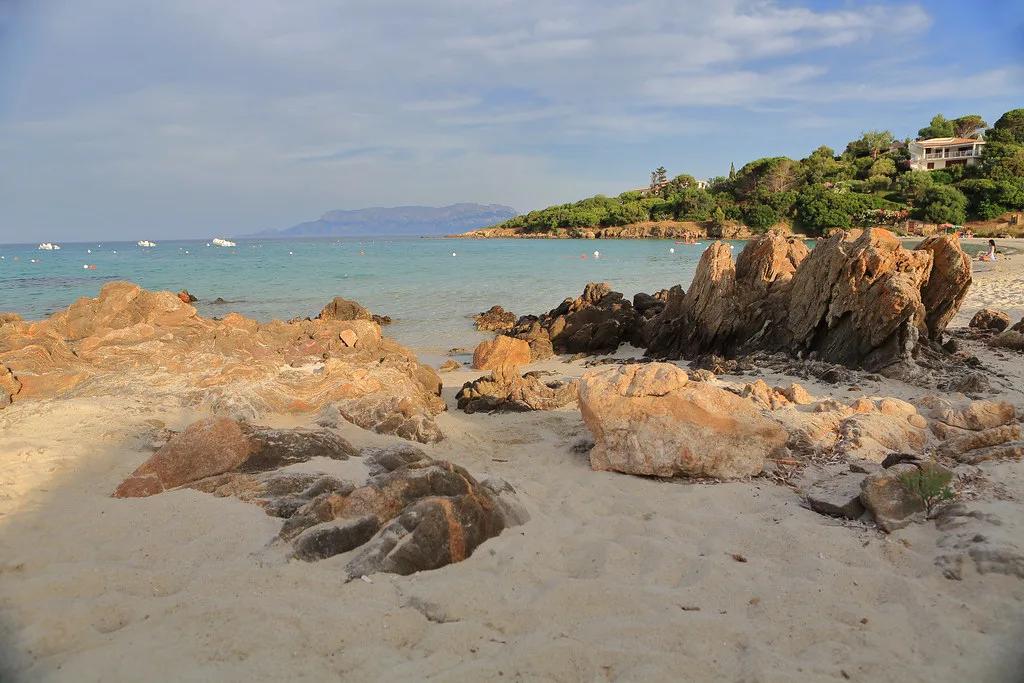
Several beaches lie within a short drive of the centre, which is what makes Olbia work as a base rather than just a stopover. Pittulongu, Porto Istana and Le Saline are the closest options, and all three are reachable without committing to a long transfer.
Pittulongu is the most convenient of the three for a family morning, and our Spiaggia di Pittulongu Olbia guide covers what to expect from the bay. Check the day's wind and sea conditions before you set out, since exposure changes the experience considerably on this coast.
Choose between them by conditions rather than reputation. A breezy day favours a more enclosed bay, while calm mornings make the longer, wider stretches comfortable for young swimmers; local advice on the day is more useful than any fixed ranking.
The Regional tourism portal publishes information on beaches and how to get around the island, which is a sensible cross-check before committing to a longer drive. Use it for general planning rather than for beach-level safety advice, which comes from local sources on the day.
Boat Trips to Tavolara and Molara
Boat trips to the islands of Tavolara and Molara depart from Olbia's harbour and from nearby Porto San Paolo, making a day on the water genuinely feasible from a town base. For children, the appeal is simple: a short crossing, clear water and a change of scene without a long car journey.
Before booking, confirm departure points, sailing times and what the trip includes, since operators vary and schedules shift with the season and weather. Also ask about life jackets and shade on board if you are travelling with very young children, because these are the details that decide whether the day works. Further visitor details appear in Olbia, Sardinia: 11 Best Things To Do And 7 Best Beaches.
Our Tavolara and Molara archipelago guide sets out the shape of a day out there, and it is worth reading alongside operator information so you can judge which trip suits your family.
The regional tourism portal lists events and activities across Sardinia throughout the year, useful if you want to know what else is running during your stay before you lock in dates. Further visitor details appear in SardegnaTurismo - Sito ufficiale del turismo della Regione Sardegna.
Optional Extras: The Ferris Wheel and Nearby Nuragic Sites
The Maestosa Ferris Wheel stands on the waterfront near Molo Brin, a short walk from the centre and in front of the archaeological museum. It was first inaugurated in 2019 and rises about 36 metres, with 26 cabins and a rotation of several minutes, offering views over the port and the gulf. Further visitor details appear in Olbia, Sardinia: 11 Best Things To Do And 7 Best Beaches.
It is a seasonal attraction, so do not assume it is running outside its operating period; check on the ground or through local information before promising a ride. Tickets and opening times are best confirmed at the wheel rather than planned around in advance.
Outside town, three archaeological sites reward a short excursion: the Giants' Tomb of Su Monte 'e s'Abe near the road towards Loiri Porto San Paolo, the Sa Testa sacred well north of the city towards Pittulongu, and Pedres Castle on a granite hill south of Olbia. Each is a Bronze Age or medieval fragment rather than a full day out, which suits children better than a long museum-style visit.
If you want more green space after the park, beaches along the nearby coast are covered in our guide to Olbia's nearby beaches.
Practical Decisions: Car, Meals, Sun and Wind
A car makes the biggest difference. It turns the nearest beaches and the Nuragic sites into easy half-day outings and lets you retreat to the hotel when a morning goes wrong, which is worth more with children than any single attraction. Staying in the centre without a car is workable, but it narrows your options to the town and the harbour.
Eat at local hours rather than tourist ones. Olbia's centre fills in the evening, and a slightly early dinner suits children while still putting you in a lively piazza, which is often the most memorable part of a day for them.
Plan around sun and wind rather than a fixed schedule. A beach morning, an indoor or shaded stop at the hottest point and an outdoor hour late in the day is a simple structure that holds up on most summer days, and the park slots neatly into the shaded part of that pattern.
For official local notices and service information during your stay, the city website is the most reliable check. Further visitor details appear in Comune di Olbia.
Where to Slot Olbia Into a Wider North-Sardinia Trip
Olbia works best as the opening or closing chapter of a northern Sardinia trip. Arrive, spend a day or two in town and on the nearby beaches, then move on towards the Emerald Coast, San Teodoro or the interior, rather than treating the city as a pure transit point. Our day trips from Olbia guide helps you weigh the options.
If time is short, two nights gives you one beach morning, one town afternoon and a boat trip, which is a realistic amount for young children. Longer stays are better spent exploring Gallura than adding more town sights.
Whichever shape you choose, leave the last morning light. Packing, a final walk along the waterfront and an unhurried departure suit families better than one more scheduled stop before the airport.
Plan Your Family Visit
Olbia rewards families who slow down. Use the park and the pedestrian centre as low-cost anchors, pick one beach by the day's conditions, and keep museum and church visits short enough to leave everyone willing to go out again in the evening.
Confirm the volatile details before you go: museum hours, necropolis tour booking, boat departures and whether the Ferris wheel is running. A few checks in advance make the difference between a relaxed base and a day spent chasing schedules.
Frequently Asked Questions
Is Olbia a good place to visit with kids?
Yes, largely because it is a real town rather than a resort. The historic centre is compact and mostly pedestrian, there is green space at Parco Fausto Noce, and several beaches lie within a short drive. The Archaeological Museum is small enough to cover without losing a child's attention, and the harbour gives you an easy evening walk.
How many days do you need in Olbia with children?
One day covers a beach morning and a short town wander. Two days let you add a boat trip or the museum without rushing. Beyond that, most families are better off using Olbia as a base and spending the extra time exploring Gallura and the coast rather than adding more town sights.
Which beaches near Olbia are easiest for families?
Pittulongu, Porto Istana and Le Saline are the closest to the city and all are reachable in a short drive. Pittulongu is the most convenient for a morning outing. Choose between them by the day's wind and sea conditions rather than by a fixed ranking, and check local advice on the day.
Is the Olbia Archaeological Museum suitable for young children?
It suits short visits well. The exhibition occupies two floors and uses films and clear displays alongside the objects, so it does not demand a long attention span. The Roman ship remains found in the harbour are the part most likely to hold a child's interest. The museum opens Tuesday to Sunday; confirm current hours before you go.
Can you visit Tavolara and Molara on a day trip from Olbia?
Yes. Boats leave from Olbia's harbour and from nearby Porto San Paolo, so a day on the water fits a stay in town. Confirm departure points, times and what each trip includes directly with the operator, and ask about life jackets and shade if you are bringing very young children.
Should you stay in Olbia or on the Emerald Coast with kids?
Olbia is generally the easier base for families. It has year-round life, a walkable centre and lower accommodation costs than the resort area, and the Emerald Coast is reachable for a day out. The Emerald Coast offers polish and beach clubs but is quiet outside the season and hard to navigate without a car.
Sources
Continue exploring
More guides you'll find useful





