
Olbia Beaches Nearby: Which Beach to Pick and Why
Compare Olbia's nearby beaches by scenery, shallows and crowding, and learn the difference between city beaches and those in San Teodoro or Golfo Aranci.
On this page
Olbia sits at the top of a gulf on Sardinia's north-east coast, and its airport and ferry port make it the most practical base for a beach holiday in Gallura. The catch is that the beaches travellers call "Olbia beaches" are spread across a long stretch of coastline, and not all of them are inside the city's municipal boundary. Deciding where to swim starts with one honest question: will you have a car?
The map splits roughly into three zones. The Pittulongu coast runs north-east of the city and forms one continuous strip of sand and coves, which local guides describe as the city's own beach area. South of town, the coast toward Capo Ceraso and Tavolara holds the scenic shallow-water beaches, and further south again the shoreline belongs to San Teodoro. Golfo Aranci, north of Olbia, has its own coves.
Quick Picks: Which Beach Suits Which Traveller
If you want one recommendation before reading further, choose Porto Istana for scenery and easy swimming. It faces Tavolara island across shallow, clear water, which makes it the most photogenic of the close-in beaches, and one local guide rates it the best overall near the city. The trade-off is popularity: it fills up from mid-morning in July and August.
Without a car, stay on the Pittulongu coast. The beaches there are the ones most consistently described as reachable by public transport in summer, and Pittulongu itself has the widest range of bars, beach clubs and parking. Travellers with young children should favour the shallow, sheltered sands of Lo Squalo, Pellicano or Bados over the more exposed southern beaches.
For a quieter day, Marina Maria and Cala Moresca are the usual answers. Marina Maria is a long, windy beach south of town that attracts windsurfers and stays calmer than Porto Istana; Cala Moresca is a pine-backed cove near Golfo Aranci reached on foot. Cala Girgolu and Spiaggia del Dottore suit travellers who prefer granite coves and snorkelling to lidos.
Beaches in Olbia Versus Beaches Near Olbia
Pittulongu, Bados, Porto Istana and Le Saline sit within or immediately around the city's beach area and are generally treated as Olbia's own. Cala Brandinchi, Lu Impostu and La Cinta, by contrast, belong to San Teodoro further south, while Marinella and Cala Moresca sit closer to Golfo Aranci and Porto Rotondo. None of this changes the sand, but it does change the drive and the rules.
The distinction matters most in summer, when San Teodoro's most famous beaches regulate access and may require advance booking. A capped beach is not an empty beach, so treat a reservation as a permit to enter rather than a promise of calm. Confirm the current rules on the official San Teodoro beaches channel before you build a day around one of them.
Practical consequences follow. If your base is Olbia and you have limited time, the city's own beaches cost you less driving and leave more of the day for swimming. If you have a car and a full day, the San Teodoro shoreline is worth the extra distance, but plan it as an excursion rather than a casual stop.
The Pittulongu Cluster Explained
Pittulongu is not one beach but a coastal strip. It begins with the long main beach that locals call La Playa, continues through Lo Squalo, Pellicano and Mare e Rocce, and ends at the small bay of Bados. Treat them as one destination and pick your spot on arrival rather than planning separate trips to each.
Pittulongu proper is the busiest and best equipped, with beach bars, seasonal clubs, kayak and paddleboard rental, and a large car park. Its seabed stays shallow well out from the shore, which is why families gravitate there. In July and August it can feel crowded by late morning, so arrive early if parking near the sand matters to you.
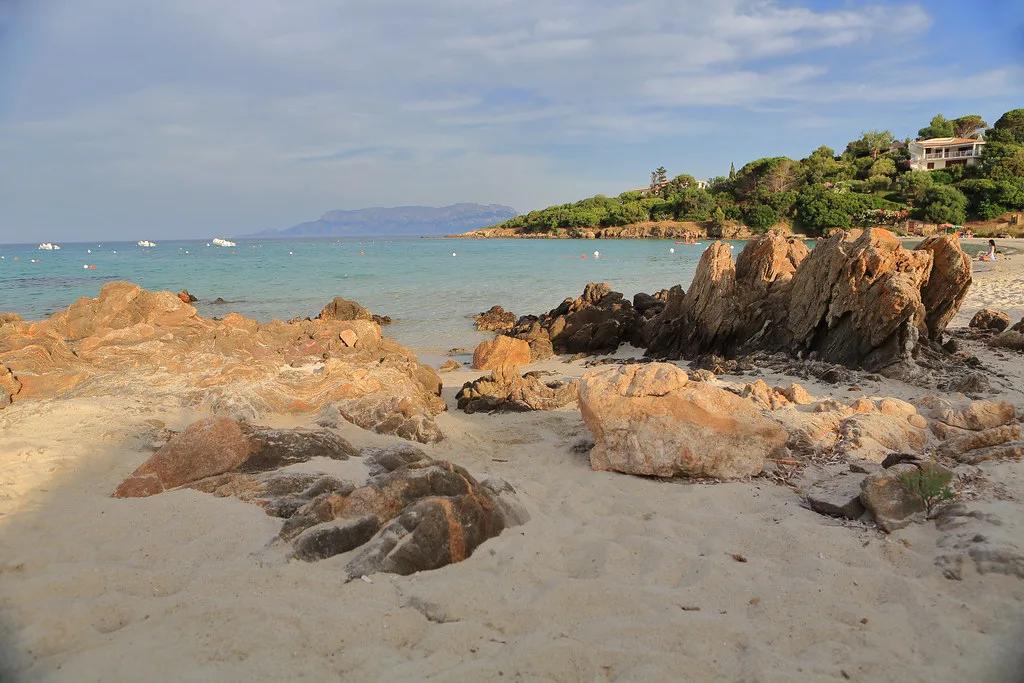
Pellicano is the smallest and most sheltered of the group, with granite formations framing a compact cove, and it fills quickly for exactly that reason. Bados is similarly small and easy to reach, with calm water even when neighbouring beaches are rougher, but it becomes cramped in peak season. Lo Squalo is the sensible middle ground when Pittulongu feels too hectic but you still want facilities nearby.
This strip is roughly five kilometres from the city outskirts, and the whole coast is served by the beach road, so a car makes hopping between the sub-beaches easy. Because everything sits so close to Olbia, bars, restaurants and shops here tend to stay open a little later than on more remote stretches of the island.
No-Car Beach Days: What Actually Works
Olbia is one of the few places in Sardinia where a beach holiday without a car is realistic. The Pittulongu coast, including Bados and Lo Squalo, is connected to the city by seasonal bus services in summer, and the southern side toward Porto Istana, Marina Maria and Le Saline is also served, though travel times are longer.
Do not rely on a line number you read in a guidebook. Bus schedules change with the season, services are more frequent in summer, and the last useful departure of the day is the detail that ruins an otherwise good plan. Check the current ASPO timetables before you commit, especially if you intend to stay on the sand until late afternoon.
A second no-car option runs north: the regional train from Olbia toward Golfo Aranci, followed by a short walk, reaches Marinella. For anything beyond these, a car is simply more efficient, and rental offices at the airport are the obvious place to sort it out a few weeks ahead in high season.
South Toward Capo Ceraso and Tavolara
Porto Istana sits at the foot of the Capo Ceraso promontory and is really four small beaches separated by granite and Mediterranean scrub. The view of Tavolara rising from the sea is the reason it appears in so many photographs, and the water stays shallow for a long way out. Morning light is best here because the beach faces east.
Porto Taverna has the same Tavolara backdrop but adds a coastal pond where flamingos are often visible, plus a good spread of beach clubs, restaurants and equipment rental. It is one of the busiest beaches in the area in July and August, with the central section crowded by mid-morning, so arrive early or come late. The beach is also served by paid car parks within walking distance.
Marina Maria and Le Saline round out the southern options. Marina Maria is long, open and exposed to wind, which is why kite and windsurfers like it, and it is usually quieter than Porto Istana even in peak season. Le Saline is the practical choice near the airport, handy on arrival or departure day and typically less busy than the famous beaches.
Famous Shallows That Are Not in Olbia
Cala Brandinchi is the beach everyone means when they say Sardinia has Caribbean water. It lies near San Teodoro, roughly half an hour's drive south of Olbia, and its knee-deep turquoise shallows have earned it the nickname Little Tahiti. The dunes and lagoon behind it are fragile, which is why visitor numbers are limited in summer.
Lu Impostu, separated from Brandinchi by a small vegetated promontory, shares the same pale sand and clear water but is longer and wider, so it absorbs crowds better. It also falls under the same summer access arrangements, with advance booking through the San Teodoro system. Both share a parking area, which makes a two-beach day feasible.
La Cinta, closer to San Teodoro town, is the exception for anyone who dislikes tight beaches: it is huge, with room even in August, and a lagoon with flamingos at its back. A car is the realistic way to reach all three, and you should verify current access rules rather than assuming a booking you made earlier still applies.
Wilder and Quieter Options With Access Caveats
Cala Moresca, tucked into the protected Capo Figari area beyond Golfo Aranci, is reached on foot rather than by car, which filters out much of the traffic. The walk is a few kilometres through a nature reserve, ending at a pine-backed bay with two small coves and golden sand. There are no beach clubs or kiosks, so carry water and everything else you need.
Cala Girgolu and Spiaggia del Dottore, north of the city, reward travellers who want granite scenery and good snorkelling over serviced sand. Both require a car and a short walk, and neither offers the facilities of Pittulongu. Spiaggia di Shirley Bassey, a small cove near Porto Rotondo, has no facilities at all and fills quickly because of its size.
Use caution with any claim about dog access, lifeguards or step-free access at these smaller coves. Those rules are set locally and change, so ask your accommodation or check the municipality's pages before you set out with specific needs. The same applies to paths: a route that looks short on a map can be rough underfoot.
Parking, Timing and Crowding
The single most useful habit on this coast is arriving early. Parking near the popular beaches fills from mid-morning in July and August, and the same hours bring the densest crowds at Pittulongu, Porto Taverna and Porto Istana. Late afternoon is the other sensible window, when day-trippers leave and the light improves.
Shoulder months change the equation entirely. June and September keep the sea warm enough for comfortable swimming while easing the pressure on parking and sand space, and several local guides name July as their own favourite month for long days and fully open facilities. May and October suit walking and old-town sightseeing better than sunbathing.
Never assume a parking space is free or that a car park exists at all. Fees, capacity and availability vary by beach and season, and the smaller coves often have nothing formal. Build in a plan B, whether that is a second beach nearby or a bus route you have already checked.
Pairing a Beach Morning With an Olbia Afternoon
The old town is compact enough to cover in a few hours on foot. Corso Umberto I runs from the main square down toward the old harbour, with café tables spilling onto the pavement in summer, and Piazza Regina Margherita is where the city's evening life gathers. Both are a short walk from the waterfront.
The Basilica of San Simplicio is the city's most important church, a granite Romanesque building from the twelfth century that regional heritage pages describe as one of Olbia's two identity poles alongside San Paolo. The Civitatense Museum connected to it explains the building's history, and the listing notes that access is paid, with guided tours available, so check current times with the site before relying on them.
For green space, Parco Fausto Noce covers about eighteen hectares in the city, with paths, play areas, a pond and an outdoor amphitheatre. The park is free to enter and open all year, and early morning or golden hour are the most pleasant times to walk it. It is a good low-cost counterweight to a morning of beach parking and lidos.
If you want to go deeper into the city's overlooked corners, our guide to the hidden gems in Olbia, Sardinia pairs well with a beach itinerary, and the regional tourism board publishes current event listings worth scanning before you fix your dates.
Plan Your Visit
Choose your beach by constraint, not by beauty ranking. Without a car, base yourself near Pittulongu and treat the southern beaches as a booked day out. With a car, use Pittulongu for convenience, Porto Istana and Porto Taverna for scenery, and save San Teodoro for a full day with confirmed access.
Then verify the volatile details in the week before you travel: current bus timetables, any summer booking requirement on the San Teodoro beaches, and the access arrangements for the smaller coves. Those three checks prevent most of the wasted mornings on this coast.
Frequently Asked Questions
What is the best beach near Olbia, Sardinia?
Porto Istana is the strongest all-round choice for scenery and swimming, thanks to shallow water and the view of Tavolara island. Pittulongu is the most practical if you want facilities and the shortest trip from the city. Neither is quiet in August, so arrive early.
Which beaches near Olbia can I reach without a car?
The Pittulongu coast, including Bados and Lo Squalo, is the easiest option, with seasonal summer bus service from the city. Buses also serve the southern side toward Porto Istana, Marina Maria and Le Saline, but journeys take longer. Always check the current ASPO timetables, because schedules change with the season.
Is Cala Brandinchi actually in Olbia?
No. Cala Brandinchi lies in the municipality of San Teodoro, roughly half an hour's drive south of Olbia, along with Lu Impostu and La Cinta. It is often listed among Olbia beaches because it is an easy day trip, but the access rules and booking system are San Teodoro's.
Do I need to book Cala Brandinchi or Lu Impostu in advance?
Access to these beaches may be regulated in summer, with advance booking through the official San Teodoro beaches channel. Rules and availability change, so confirm directly before planning a day around either beach. A cap on visitor numbers does not make the beach quiet in peak season.
Which Olbia beach is best for families with young children?
On the Pittulongu coast, Lo Squalo, Pellicano and Bados all offer shallow, usually calm water and easy access. Porto Istana and Porto Taverna also have gently sloping sand and stay shallow for a long way out, though they are busier. Cala Brandinchi is famously shallow but requires planning.
What is the quietest beach near Olbia?
Marina Maria is usually calmer than Porto Istana even in peak season, and Cala Moresca, reached on foot through a nature reserve near Golfo Aranci, filters out much of the car-borne traffic. Neither has the facilities of Pittulongu, so bring what you need. Quieter does not mean undiscovered, especially in August.
How do I avoid the worst crowds near Olbia's beaches?
Arrive early or come after mid-afternoon, when day-trippers leave. June and September ease pressure on parking and sand space compared with July and August. For the most popular southern beaches, check whether summer access is regulated before you set out, and have a second beach in mind.
Sources
- Comune di Olbia
- SardegnaTurismo - Sito ufficiale del turismo della Regione Sardegna
- Best Beaches In Olbia: Local Guide To The Area's Top Beaches
- Olbia - idyllic beaches near the city | discover-sardinia.com
- Olbia what to see: best beaches and old town
- SardegnaCultura - Olbia, Museum Civitatense - Basilica of San Simplicio
- Scopri il Parco Fausto Noce - Il Grande Parco di Olbia | Sardinia Blog
Continue exploring
More guides you'll find useful





