
Matera in One Day: A Realistic Sassi Walking Itinerary
One day in Matera: walk the Sassi, pick one paid cave sight, catch the viewpoints and eat well, with practical trade-offs for a short visit.
On this page
A single day in Matera can cover the Sassi on foot, one ticketed cave or museum interior, a pause for local food and an evening viewpoint over the ravine. It cannot cover the rupestrian churches scattered through the Murgia Materana park, several museums and a relaxed lunch without turning the day into a stair climb against the clock. The plan below is a suggestion, not an official route, and every ticketed site needs checking before you go.
One concrete starting option comes from a first-person guide: Casa Noha, described there as a roughly 25-minute multimedia introduction that tells Matera's story from the Paleolithic era to the present. Treat the runtime as that writer's approximation rather than a published schedule, but the idea is sound: a short orientation film gives the cave streets context before you start walking.
What One Day in Matera Realistically Covers
Matera is compact on a map but vertical in practice. Distances inside the Sassi are short, yet they are measured in stairways, uneven lanes and climbs back up to the upper town, so two or three anchors make a better day than a checklist of ten stops. Plan on one ticketed interior, a generous walking block and one deliberate viewpoint.
Travelers comparing notes on a travel forum recommend at least one full day and two nights for Matera, which is a useful signal for day-trippers from Bari. Arriving late and leaving early in the same daylight window leaves little margin, so build a buffer before any onward departure rather than squeezing in a second paid sight.
Suggested Shape of the Day: Morning to Evening
Start in the morning with the orientation stop, then walk the Sassi while the lanes are still quiet and the light is flat. Keep midday flexible so a long lunch does not collide with a timed museum slot. In the afternoon, choose your one paid cave or museum interior, and save the upper town and the viewpoints for the golden hour, when the cave facades catch the light.
This order matters because ticketed interiors are the only part of the day that can genuinely break your schedule. Walking and viewpoints are free and can stretch or shrink; a booked entry cannot. If you arrive from Bari in the late morning, cut the orientation stop and keep the single paid sight instead.
The Sassi Walk: Wander Without a Fixed Route
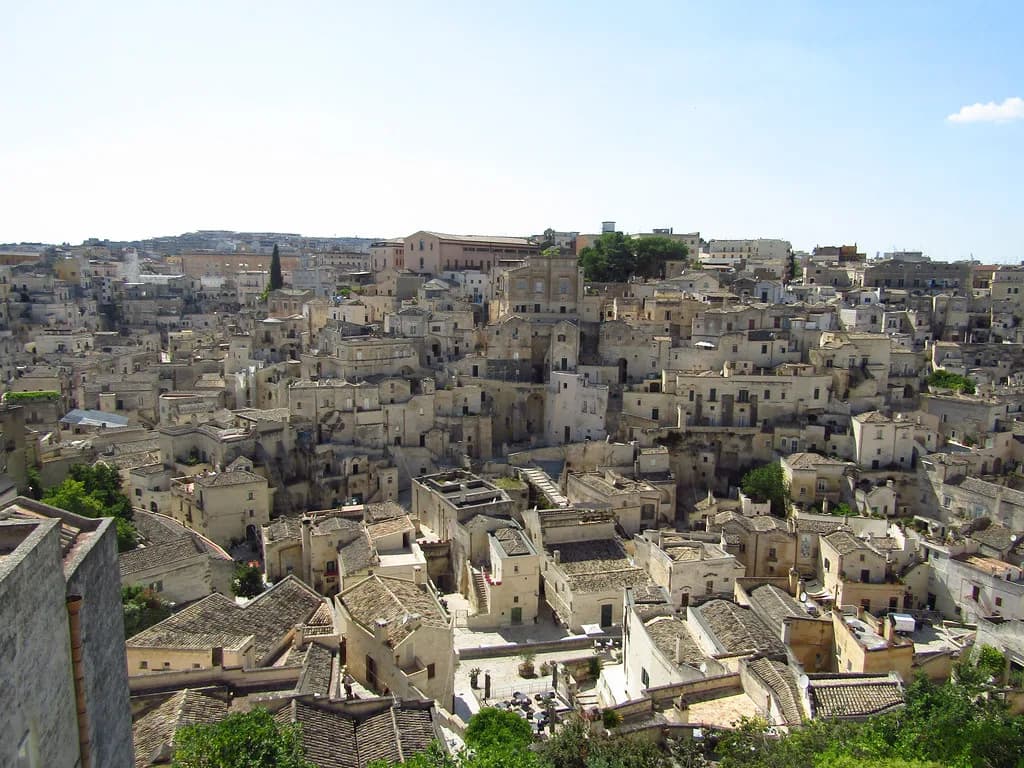
The old town consists of dwellings carved into the stone, with house facades set into the rock, and the pleasure of a walk through the Sassi comes from following stairs and alleys rather than a mapped line. You pass cave facades, courtyards and potted gardens, and you will most likely climb more steps than expected while looking for a way out. The town is small enough that getting mildly lost is a safe indulgence, as one traveler's account puts it.
If you prefer structure, a defined route still helps on a short visit, particularly when you want to end at a specific viewpoint at a specific hour. Our self-guided walk through the Sassi covers the main lanes and stairways in order, so you get the atmosphere without wasting daylight on dead ends. Pair it with the area-by-area ideas in our guide to hidden gems in Matera for corners the standard loop skips.
Choosing Your One Paid Cave or Museum Sight
The main choice is between Casa Noha, Casa Grotta di Vico Solitario, MUSMA and Palombaro Lungo, and each earns its place for a different reason. Casa Noha explains the city's history; Casa Grotta di Vico Solitario reconstructs everyday cave life with period furniture and household objects, showing how people lived there until the 1950s; MUSMA places contemporary sculpture inside the old stone setting; and Palombaro Lungo is the vast underground cistern that once supplied the city's water, visited in a tour of roughly half an hour according to the same guide.
Pick according to your priority rather than prestige. If context is what you lack, choose the history stop; if you want to see how a cave house actually functioned, choose the reconstructed dwelling; if you have already seen many Italian cave interiors, the cistern offers something structurally different. These are separate sites with their own entry arrangements, not one shared Sassi ticket, so check each site's own published information for current entry conditions and visiting times.
Time Above Ground: Cathedral, Views and the Ravine
Matera's cathedral sits at the highest point of the old town and marks the divide between the two Sassi, so it works as a natural hinge for the afternoon. Even from outside, the climb rewards you with a view back over the cave districts. Treat the church interior as a separate question from the streets and viewpoints, which cost nothing, and do not assume one entry covers anything else.
For a view facing the other way, the Monastero di Santa Lucia lookout points across the ravine toward the Palaeolithic caves in the opposite rock face, a landscape that reads very differently from the Sassi themselves. In the evening, the small lights across the cave facades make the sunset stop worth holding time for. Our guide to the best time to visit Matera covers how seasons may change that light and how to avoid peak crowds.
Food and Coffee Without Over-Scheduling
Have your coffee at one of the small open-air cafes on the upper level, where resting your feet after a stair climb is part of the point. For lunch, look for the traditional peasant cooking of Basilicata, which local kitchens now serve in updated form. Names and addresses in older guides date quickly, so choose by menu and location rather than by a list, and check current opening days directly with the place.
A single long lunch is the sane choice on a one-day visit; two sit-down meals will eat the afternoon. If your paid sight is booked for early afternoon, eat lightly before it and save the fuller meal for the evening after the viewpoints.
Guided Tours Versus Self-Guided
Guided walking tours and themed itineraries are the commercial product of private operators, not an official requirement for entering the Sassi. One long-established local operator, Materaturismo, is a project of Ferula Viaggi run by Slow Italy Srl, which has offered guided itineraries, food experiences and other formats since 2002, including tours of the Sassi, the Murgia park and the rupestrian churches.
A tour earns its place on a one-day trip when you want interpretation you cannot get from plaques, or when you would rather not spend the day navigating stairs with a map. What it costs, when it runs and whether spaces exist are all things the operator publishes and updates, so confirm directly before building your day around one. Self-guided walkers lose nothing structurally; they simply do more reading.
Getting In and Out Without Losing the Day
Most short visits start from Bari, either via its airport or its main station, and older accounts describe the regional train from Bari with a ride of roughly two hours. Details of lines, platforms and timetables change, so check the current operator timetable rather than relying on a blog written years ago. Build the return leg around a fixed departure, not around the hope of catching one after a last museum.
If you are based in Bari for several days, a day trip is workable but tight. Staying a night in Matera turns the evening viewpoint and the quiet morning lanes into part of the visit rather than a rush, which is exactly what the two-night advice from experienced travelers is protecting.
Common One-Day Mistakes to Avoid
The most frequent error is booking too many interiors. Each one takes time to find, enter and absorb, and the Sassi's stairs slow every transition. A second mistake is heavy luggage: cave accommodations often have small rooms and narrow stairs, and parking in front of them is frequently unavailable, as one traveler notes, so pack light and plan where bags will sit during the day.
Underestimating the climbing is the third trap, followed by leaving no buffer before a train or flight. Decide in advance which single sight matters most, then let the rest of the day bend around it.
If You Have a Second Day
A second day adds the rupestrian churches of the Murgia Materana park and the landscape across the ravine, which a one-day plan can only admire from a distance. Our two-day itinerary lays out that split, and a three-day itinerary adds the slower corners and a nearby excursion.
Day trips from Matera also make sense on a longer stay; travelers on a forum thread mention Ostuni, Alberobello, Otranto and Bari as options in the region. Each is a separate trip with its own transport logistics, so confirm connections before committing a day to one. Further visitor details appear in Day Trips from Matera - Rick Steves Travel Forum.
Plan Your Visit
A realistic day in Matera comes down to three decisions: walk the Sassi rather than map them, pick one paid interior that matches what you want to understand, and hold the evening for a viewpoint. Check current entry arrangements with each site and the operator, and confirm transport times on the day of travel.
If you can stretch the visit, add a night so the quiet morning and lit evening become part of the trip. Read our guide to Matera Attractions for individual site details, and treat everything here as a suggested shape rather than a fixed schedule.
Frequently Asked Questions
Can you see Matera in one day?
Yes, in the sense that you can walk the Sassi, visit one ticketed cave or museum interior and reach a viewpoint before evening. What you cannot do is add several interiors, the rupestrian churches in the park and a long lunch. Choose two or three anchors and accept that the rest belongs to a return visit.
How many days do you need in Matera?
Experienced travelers on a travel forum suggest at least one full day and two nights, which suits a visit that includes a paid sight and an evening viewpoint without rushing. A single day works for a day trip from Bari if you keep the plan lean and protect your departure time.
Which paid cave sight is worth it in Matera?
It depends on what you want. Casa Noha suits travelers who want the city's history explained, Casa Grotta di Vico Solitario shows reconstructed cave-house life, MUSMA pairs contemporary sculpture with old stone, and Palombaro Lungo is the underground cistern. These are separate sites with their own entry arrangements, so check each one's published information.
Do you need a guided tour in Matera?
No. Tours are a commercial offer from private operators, not an official requirement. A guide helps if you want interpretation or prefer not to navigate the stairways alone, but self-guided walking is entirely viable. Confirm current offerings, timings and any cost directly with the operator you choose.
How do you get to Matera from Bari?
Most short visits connect via Bari's airport or main station, and older travel accounts describe a regional train taking roughly two hours. Lines and timetables change, so check the current operator timetable before you travel and plan your return around a fixed departure rather than a hoped-for one.
What should you not miss on a first visit to Matera?
The walk through the Sassi, a view back over the cave districts from the cathedral area, the lookout toward the ravine and its Palaeolithic caves, and one interior that explains how people lived in the caves. If you only do one, make it the walk, since everything else depends on understanding the geography.
Sources
Continue exploring
More guides you'll find useful





