Lecce in One Day: A Walkable Baroque Itinerary
Plan one day in Lecce with a walkable route through Piazza del Duomo, Santa Croce, San Matteo and Roman remains, plus how the church ticket circuit works.
On this page
Lecce rewards a single day of walking better than most Italian cities of its size. The historic centre is compact, paved in soft cream limestone, and dense with facades carved from the same local stone, so the distance between sights stays small while the detail on each one keeps you standing still. The plan below is a suggested order, not an official schedule; allow a rough half-day to full day on foot and treat every duration here as an estimate rather than a promise. For wider planning, see Lecce Attractions: Visitor Guides to 12 Sights.
The trade-off is what makes the day work. You can see the Duomo square, Santa Croce and the Sant'Oronzo area and still add one or two smaller churches, but a castle interior tour or a long sit-down lunch will push something else off the list. Start early, keep the middle of the day light, and leave the wandering for late afternoon when the light turns the limestone gold.
Before You Go: How the Church Ticket Circuit Works
Several of Lecce's main religious buildings sit within a single visitor circuit, LeccEcclesiae, run in collaboration with the Archdiocese of Lecce. According to the circuit's own site, it covers the Duomo, the bell tower, the MuDAS sacred art museum, Santa Croce, San Matteo and Santa Chiara, and the central ticket office and infopoint sit inside the Antico Seminario on Piazza del Duomo. That does not make every church free: the worship area and the ticketed parts, such as the museum or a bell-tower climb, are not the same thing.
The Saint Niccolò and Cataldo church, with its Norman core and later decoration, and the smaller parish churches are outside or separate from that circuit, so plan for them on their own terms rather than assuming one ticket opens every door. Prices and opening windows shift with season and Mass times, so confirm current rates at the ticket office or the official City of Lecce site before you lock a route. Further visitor details appear in Official event website.
Stop One: Piazza del Duomo and the Cathedral
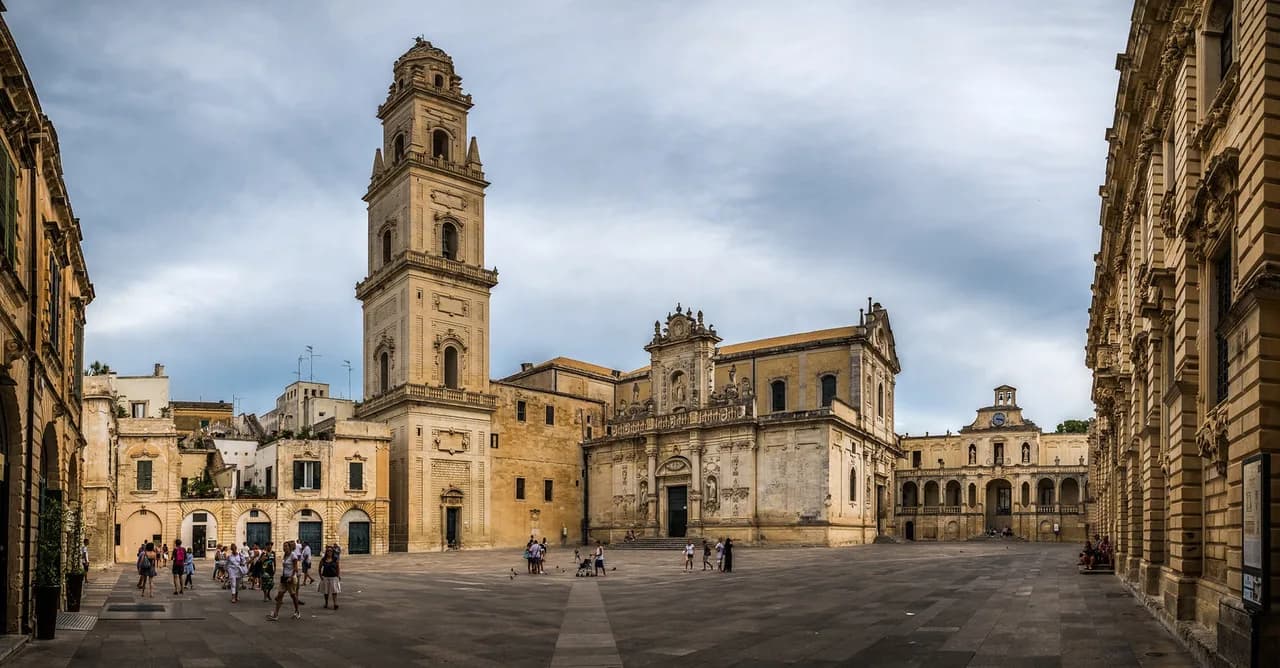
Begin at Piazza del Duomo, an enclosed square reached through narrow entrances so that the cathedral, bell tower, bishop's palace and seminary reveal themselves all at once. The cathedral was originally built in 1144 and was reworked in the mid-seventeenth century, while the bell tower rises more than seventy metres above the piazza. Save the climb for later if the morning queue looks long; the campanile and the cathedral do not need to be done in the same hour.
If your time is short, prioritise the square itself and the cathedral interior over the museum collections. The Museo Diocesano, housed in the former bishop's palace, holds vestments, silverware and liturgical objects, and it rewards a slower visit than a one-day itinerary allows. Enter the church respectfully, with shoulders and knees covered, and step out quietly if a service is beginning.
Stop Two: Basilica di Santa Croce in Morning Light
Walk from the Duomo to the Basilica di Santa Croce and give the facade real time. It took more than two centuries to complete before it opened for worship in 1695, and the delay shows in the layered carving: angels, grotesques, animals and scrolls packed across the local stone. Morning side light is the planning tool here, because raking sun throws the reliefs into shadow and makes the detail legible in a way flat midday light does not.
Bring a camera that can handle close detail, or simply stand near the portal and look up. The basilica is an active place of worship as well as a monument, so keep voices low inside, avoid flash during ceremonies and check any signage restricting photography in particular chapels. A self-guided walk through Lecce's Baroque centre can order the stops for you, though you still need to confirm each church's hours on the day.
Mid-Morning: Piazza Sant'Oronzo and the Roman Remains
From Santa Croce head to Piazza Sant'Oronzo, the city's main square, where the statue of the patron saint stands above the sunken Roman amphitheatre. That amphitheatre lay buried and largely forgotten until excavations after the Second World War, and only part of the arena has been uncovered, which is why the visible remains read as a fragment rather than a complete monument. You do not need a ticket to see it from street level, and it is best treated as a short look rather than a long stop.
The same walk passes remnants of the Roman street grid and later aristocratic palaces, reminders that the Baroque city sits on top of a much older one. If you want the underground story behind these layers, the hidden gems in Lecce guide points to sights that sit off the main Baroque circuit, including the Museo Faggiano and the Palazzo Loffredo Adorno.
Where the Day Flexes: San Matteo and Santa Chiara
Two churches are worth building in if you have already bought the circuit ticket. San Matteo, finished between 1667 and 1700, breaks with the flat-fronted local style through a facade that curves convexly at one level and concavely at the next, an approach borrowed from Roman Baroque. Inside, the altars carry the polychrome marble and carved detail typical of Salento craftsmanship, and the twelve apostle statues sit alongside a late Gothic fresco brought in from a demolished church.
Santa Chiara offers a different payoff: a convent church whose cloister gives you a shaded, quiet pause in the middle of the day. If you must choose between the two, pick San Matteo for carving and Santa Chiara for stillness, and remember that parts of the convent complex may only open for guided visits. Neither church needs a long stop to be worthwhile.
Food Stop Strategy: A Short Market Break, Not a Long Lunch
Protect your walking time by keeping lunch short. Just outside Porta Rudiae, a gate that once led toward the ancient city of Rudiae, the Mercatino Porta Rudiae combines a small produce market with a pastry shop and cafe selling local specialties such as pasticciotti and savoury rustici. The market is modest in size, so it works as a short refuel rather than an afternoon.
Go early for the fullest stalls and fewer people, and carry some cash, because the source notes that not every vendor accepts cards. Reported trading windows run from the early morning through the early afternoon, with some later reopening on weekdays; treat those windows as a guide only, since a market's rhythm shifts on holidays and in bad weather. For a fuller picture of what to eat and where, the Lecce market food guide goes deeper than a single pastry stop.
Afternoon Choice: Castle Interiors or Smaller Churches
The Castello Carlo V is the biggest single time commitment left on the table. It grew from a twelfth-century structure and took its present form under a sixteenth-century Spanish refurbishment; today it hosts exhibitions and cultural events rather than functioning as a furnished palace. A guided tour has been offered in the past and reported at around an hour, but the price and schedule of that offer change, so confirm details at the castle or with the city before you plan around it.
If your energy is fading, skip the castle and use the remaining hours on smaller churches instead. Sant'Irene, near Piazza Sant'Oronzo, and San Matteo, if you have not yet been, are short visits that keep you moving through the centre. The Lecce in two days itinerary sets out a fuller schedule for anyone who decides the castle deserves its own afternoon.
Late Afternoon: Golden-Hour Stone and a Slow Wander
As the sun drops, the pietra leccese turns warm and the carved facades read differently than they did at ten in the morning. Use the last hour for an unhurried loop through the old-town lanes rather than another interior, letting the streets between the Duomo, Santa Croce and Porta Rudiae do the work. This is also the easiest time to enjoy a square without rushing to the next stop.
If you still have appetite for sacred architecture, the same circuit ticket opens doors you might otherwise walk past, and several churches hold evening services you can attend quietly rather than tour. Free things to do in Lecce covers the outdoor options that cost nothing at all. For wider planning, see Free Things to Do in Lecce.
Practical Notes: Dress, Cobblestones, Heat and Driving
Wear shoes with grip. The centre is paved in smooth limestone and cobbles that turn slick after rain, and you will cover a lot of ground on foot. Dress for church visits with shoulders and knees covered, carry water in summer because the streets are sunny, and aim to be indoors or shaded during the hottest part of the afternoon.
Drivers should know that the historic centre is a limited traffic zone, with camera enforcement during set hours and on Sundays and public holidays. Park outside the walls and walk in, or leave the car at your accommodation; the details of the restriction and the per-hour parking charge near Porta Rudiae are set out by the source and are worth reading before you arrive.
Plan Your Visit
A single day in Lecce works when you accept that the city is a walking city and pace it accordingly. Start with the Duomo square, give Santa Croce the morning light, keep the Roman amphitheatre and Sant'Oronzo brief, and choose between San Matteo, Santa Chiara and the castle rather than attempting all three. Confirm ticket scope, prices and church hours close to your visit, because Masses, seasons and holidays all shift the timetable.
Build the day around light and food rather than a checklist: pastries near Porta Rudiae at midday, a shaded cloister in the early afternoon, and the old-town lanes when the stone turns gold. That rhythm leaves room for the city to surprise you, which is the point of going at all.
Frequently Asked Questions
Can you see Lecce's main sights in one day on foot?
Yes, if you limit yourself to the compact historic centre. A suggested order runs from Piazza del Duomo to Santa Croce, then Sant'Oronzo and the Roman amphitheatre, with one or two smaller churches in the afternoon. Interiors, museum collections and the castle all take longer, so choose between them rather than trying to cover everything. Treat any timing as an estimate.
Is there a combined ticket for Lecce's Baroque churches?
Yes. The LeccEcclesiae circuit covers the Duomo, bell tower, MuDAS, Santa Croce, San Matteo and Santa Chiara, with its central ticket office in the Antico Seminario on Piazza del Duomo. It does not cover every church in the city, and prices and hours change, so check current rates and opening times at the ticket office or the official site.
What should I skip in Lecce if I only have one day?
The castle interior and the diocesan museum collection are the easiest things to drop, because both reward more time than a single day allows. Smaller parish churches outside the circuit ticket can also wait. If you arrive late, cut the Roman amphitheatre stop short and go straight to the old-town lanes before the light fades.
Where can I stop for a quick local snack in Lecce?
The Mercatino Porta Rudiae, just outside the gate of the same name, combines a small produce market with a pastry shop and cafe selling pasticciotti and savoury rustici. It suits a short break rather than a full meal. Carry cash, since some vendors do not take cards, and go earlier in the day for the fullest stalls.
Sources
- Lecce Travel Guide | Explore Puglia's Baroque City
- Official event website
- Piazza del Duomo - Ormina Tours
- Mercatino Porta rudiae, Lecce, Italy - Reviews, Ratings, Tips and Why You Should Go – Wanderlog
- Porta Rudiae
- Palazzo Loffredo Adorno – Lecce | Stonepath
- A Taste of Puglia – Lecce – Dare, Dream, Discover
- Baroque Church Walk in Lecce — Historic Route
- Church of San Matteo - LECCECCLESIÆ
- Chiesa di San Matteo: Lecce's Curvilinear Baroque Gem - Lecce, Italy | Ciceru - Travel Stories & Adventure Guides
- Piazza Sant'Oronzo | Escape Tours
Continue exploring
More guides you'll find useful