
Genoa in One Day: A Realistic Walking Itinerary
One day in Genoa: walk Via Garibaldi, the caruggi, San Lorenzo and the Old Port. A realistic order of stops, what to cut, and honest advice on pacing.
On this page
One day in Genoa can cover a coherent loop: the Strade Nuove and its Rolli palaces, the narrow caruggi around the cathedral, the redeveloped Old Port and a high viewpoint above the rooftops. It cannot cover the museums, the coastal districts and the Riviera villages at the same time. Treat the sequence below as a suggested plan, not an official route, and adjust it to your own pace.
Set expectations before you start. The historic centre is compact enough to walk between clusters of sights, which is why a single day feels productive, but the city rewards a slower visit. One published week-long itinerary suggests planning at least three to five days to appreciate the main attractions and nearby coastal villages, so see one day as an orientation rather than a complete visit.
Quick one-day overview at a glance
Suggested shape of the day: Via Garibaldi and the Strade Nuove in the morning, the caruggi and Cathedral of San Lorenzo before lunch, the Old Port in the afternoon with either the museums or a viewpoint alternative, and an aperitivo back among the alleys in the evening. Keep the order flexible, because the centre's streets twist and a straight line between stops rarely exists.
The official tourism portal organises the city into art and culture, outdoor activities and events, and publishes practical sections on getting to Genoa, moving around and tourist offices. Use those pages for current information rather than relying on any fixed schedule in a travel article.
If you only have a half day, drop the Old Port museums first and keep Via Garibaldi, San Lorenzo and one viewpoint. That combination gives you the city's UNESCO core, its everyday street life and a sense of the geography without rushing between ticketed sites.
Morning: Via Garibaldi and the Rolli palaces
Start on Via Garibaldi, the sixteenth-century street known as Strada Nuova, lined with noble residences that form part of the UNESCO listing covering the Strade Nuove and the Palazzi dei Rolli. The palaces were aristocratic homes that hosted kings, cardinals and ambassadors visiting the Republic of Genoa. Read the facades as a street of houses with histories rather than a single museum.
The Rolli system is a network of palaces, not one visitable building, and that is the most common mistake made by visitors with a single day. Some palaces house museums or public institutions, while others are private or open only on particular occasions. Check which interiors are actually open before you build your morning around one address; the tourism portal lists individual palaces such as Palazzo Rosso, Palazzo Bianco, Palazzo Reale and Palazzo Tursi as separate entries.
Walk the street slowly, then step off it into the surrounding lanes. The palaces sit beside ordinary doorways, workshops and cafés, and the contrast is part of the experience. If a particular palace interior matters to you, confirm access and any ticket arrangements on the day rather than assuming one ticket covers several buildings.
Historic centre and Cathedral of San Lorenzo
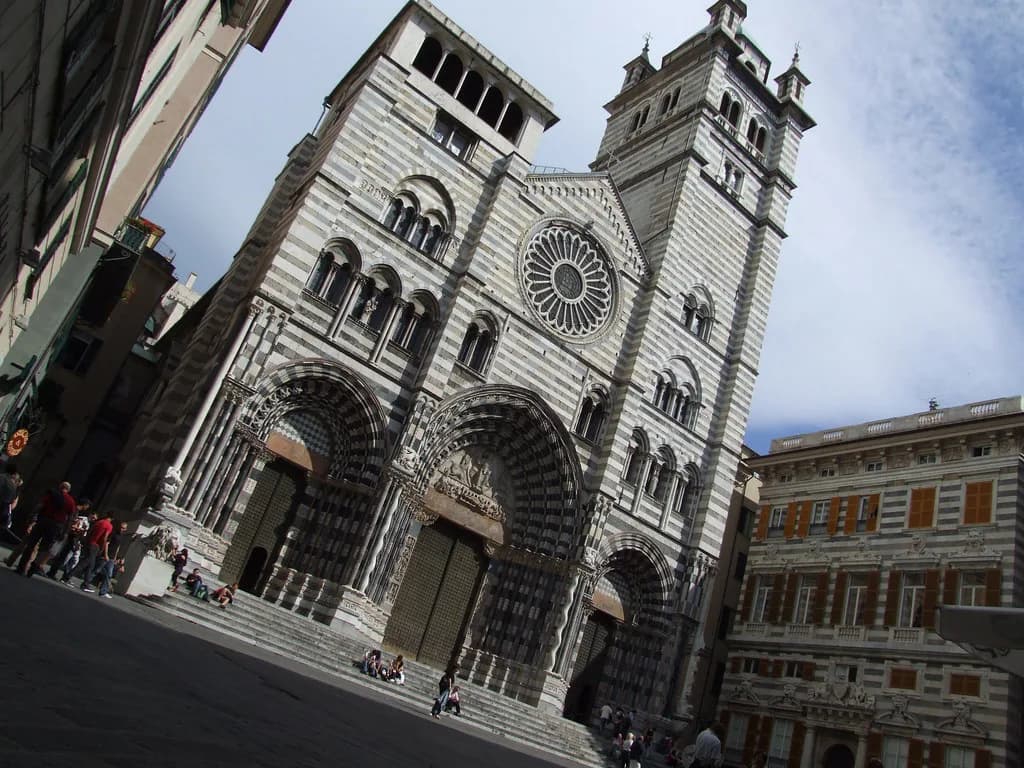
From Via Garibaldi, head into the caruggi, the narrow alleys of the old centre, toward the Cathedral of San Lorenzo and its striped black-and-white facade. The cathedral is a working church, so treat the interior as a place of worship rather than a sight on a list, and check locally whether any area is restricted at the time of your visit.
This is the point for a focaccia break, which is a Genoese tradition rather than a recommendation for one specific shop. Bakeries throughout the centre sell it by the piece, and a short stop keeps the morning moving. Our Genoa old town walking route sets out a more detailed line through the alleys if you want to extend this section.
Allow more time here than you expect. The centre is described as one of the largest historic quarters in Europe, and it is easy to walk further than planned while looping between small squares. Keep the cathedral and Via Garibaldi as fixed anchors so you can wander without losing the shape of the day.
Lunch and reset
For lunch, choose between a trattoria serving Ligurian dishes and a focacceria for something quicker. Both exist all over the centre, and there is no need to plan a specific address in advance. Look at what is on the tables and how full the room is, then commit rather than spending the middle of your day comparing options.
If you want to know what to order beyond pesto, the region's kitchen includes farinata, pansoti and seafood dishes tied to the coast. Our Genoa local food guide what to eat covers the dishes worth prioritising when you have limited meals in the city.
Use lunch as a genuine pause. One-day itineraries fail most often because the afternoon is loaded with more than the morning, and a slow midday break costs less than arriving at the Old Port already tired.
Afternoon option A: the Old Port museums
The Old Port, rebuilt in the 1990s to a design by Renzo Piano, is the maritime heart of the modern city. It holds the Aquarium of Genoa and the Galata Maritime Museum, and these are separate paid attractions, not a single combined visit. Trying to fit both into one afternoon means rushing through both.
The Aquarium is presented as one of the largest in Europe, with environments for species from dolphins and jellyfish to sharks. The Galata Maritime Museum tells the story of five centuries of navigation through interactive displays. Neither is a quick stop, so pick the one that matches your interest and accept that the other waits for another trip.
Tickets are sold separately and prices change, so check the official tourism portal and each attraction's own site before you go. Do not assume a city card covers every museum; confirm exactly what any pass includes, and for how long, on the page selling it.
Afternoon option B: the caruggi and Castelletto viewpoint
If museums are not the priority, skip the ticketed sites and spend the afternoon walking. Return to the caruggi, follow lanes you missed in the morning, and end with a ride up to the Spianata di Castelletto, a terrace above the rooftops, domes and bell towers. The lift is the practical way up according to published itineraries.
This option costs little beyond the lift and gives you a view that makes the city's shape clear. Confirm the lift's current operating times on the official portal before relying on it, especially in the evening. If it is out of service, the same terrace may be reachable on foot, though the climb is steep.
The viewpoint works well as the transition between afternoon and evening. Stay for the light, then descend toward the centre for an aperitivo.
Late afternoon add-ons: Boccadasse or Nervi
Boccadasse is an old fishing village of pastel houses and boats within the city, reached from Genova Brignole by bus toward Nervi and a short walk from the Caprera/Orsini stop. Nervi is a former fishing and trading village, now a district, with the Passeggiata Anita Garibaldi and the Parchi di Nervi. Both are separate from the centre and change your return timing.
Choose one, not both, if you have spent the day in the centre. Boccadasse suits a short late-afternoon walk and an aperitivo by the water; Nervi suits a longer promenade and parks. Exact bus and train details are best confirmed on the official portal on the day, since routes and times are not fixed in travel articles.
Evening: aperitivo and dinner
Close the day with an aperitivo in the caruggi, then dinner built around seafood or Ligurian classics. The alleys have plenty of small bars and restaurants, and choosing one near where you are staying reduces the risk of a long walk at the end of a full day.
If the weather turns, keep the evening indoors and adjust the next morning instead. Our Genoa rainy day covered walks and transport plan suggests how to reorganise a wet day around covered routes and public transport.
What to drop when you are behind schedule
Cut in this order. First drop the second Old Port museum, then the outlying add-on such as Boccadasse or Nervi, then any palace interior that requires a separate visit. Keep Via Garibaldi, the cathedral and one view of the city, because these give the day its identity and need little planning.
Cuttable stops are the ones with fixed entry and long dwell times, since they consume the most of an afternoon. Essential stops are those on the walking line itself, which cost only the time you choose to give them. Treat the schedule as a recommendation and reorder it around whatever is actually open on the day.
Practical notes before you go
Wear shoes that cope with uneven stone lanes, because the caruggi and the stepped alleys are not smooth pavement. Carry water in warm months and expect the centre to be busy around lunch. Avoid assuming that every church or palace interior is free or open; some are working religious spaces and others are separate ticketed collections.
Genoa's public notices matter. The municipal site publishes weather alerts, school closures and service notices that can affect a day on foot, so glance at it if conditions look unsettled.
For anything seasonal or event-related, check the current listings rather than any dated programme. Events change year to year, and an anniversary or festival mentioned in an older itinerary may already have passed.
Plan Your Visit
A one-day Genoa route works when it follows the city's own geography: palaces on the Strade Nuove, alleys and the cathedral in the middle, the Old Port in the afternoon and a view or a waterfront village to finish. Choose the museum afternoon or the viewpoint afternoon, not both, and leave something for the next visit.
Confirm current opening times, ticket arrangements and transport on the official tourism portal before you set out. If you discover that one day is not enough, which is likely, the obvious next step is a longer plan that adds the coastal districts and the Riviera beyond them.
Frequently Asked Questions
Is one day enough for Genoa?
One day is enough to orient yourself around the historic centre, Via Garibaldi and the Old Port, but not to see the city properly. Published itineraries suggest allowing at least three to five days to appreciate the main attractions and nearby coastal villages. Treat a single day as a taster and expect to leave things out.
Can I see the Palazzi dei Rolli in a day?
You can walk the Strade Nuove and see the palaces from the street in an hour or two, but the Rolli system is a network of noble residences rather than one museum. Access to interiors varies by building and by occasion. Check which palaces are open before you go and do not assume a single ticket covers several.
Should I choose the Aquarium or the Galata Maritime Museum?
Pick one. The two are separate paid attractions in the Old Port, and each takes a substantial part of an afternoon. The Aquarium suits travellers interested in marine life, while the Galata Maritime Museum suits those drawn to the history of navigation. Confirm current tickets and times on the official tourism portal.
What food should I try in one day in Genoa?
Start with focaccia from a bakery in the morning, then try pesto alla genovese, farinata or a seafood dish later in the day. The local kitchen is tied to the coast and the hills behind the city. Choose a busy trattoria or focacceria in the centre rather than planning a specific address.
Is the historic centre walkable in a day?
Yes, the centre is compact and easy to cover on foot, though the lanes are narrow and the ground is uneven. The main sights sit close together, but the walking adds up over a full day. Wear comfortable shoes and plan a midday pause.
Is Boccadasse or Nervi the better late-afternoon add-on?
Boccadasse is a small old fishing village within the city and suits a short walk and an aperitivo. Nervi is a district further out with a coastal promenade and parks, so it needs a longer block of time. Choose one and check current transport on the official portal before setting out.
Sources
Continue exploring
More guides you'll find useful





