
Ferrara One Day Itinerary: Castle, Cathedral and City Walls
Plan a realistic single day in Ferrara: castle exterior in the morning, cathedral and piazza at midday, then city walls or quiet streets in the afternoon.
On this page
Ferrara rewards a day trip because the historic centre is compact and flat, so you can move between the castle, the main square and the walls without relying on transport. This plan is a suggested pace, not an official schedule: it staggers the day so the busiest central sights come first and the open-air or residential edges fill the afternoon. Treat every time below as a starting point you adjust to your own energy.
The city is part of Emilia-Romagna and sits within a preserved circuit of red-brick walls, a setting that shapes how a single day works here. Much of the old town is pedestrianised, which makes walking the default and turns bikes into the local shortcut. If you want to go beyond the headline sights, the guide to hidden gems in Ferrara covers the overlooked corners that fit around this route.
Orientation: A Compact, Flat City Made for Walking
Ferrara's centre is small enough that the Estense Castle anchors almost everything: the main square, the cathedral and the shopping streets fan out from it on foot. The terrain is flat, and the city is famously bike-friendly, with a long cycle network that includes a loop around the walls. That combination is why a one-day plan is realistic here rather than optimistic.
The walls do more than frame the old town; they give you a ready-made route with a clear start and finish. If your legs or your schedule run short, you can walk a short stretch rather than the full circuit and still get the view back across the rooftops. Save the official city portal for practical checks such as local notices and transport information on the day.
Morning: The Estense Castle and Its Moat
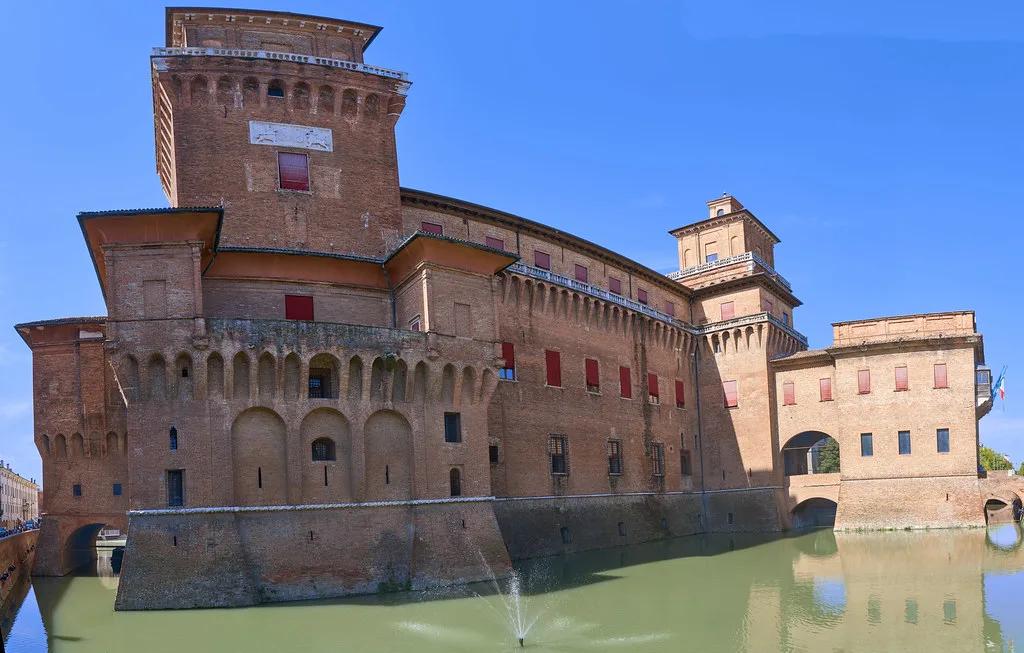
Start at the Estense Castle, the vast red-brick fortress at the heart of the city. Seen from outside, the moat, drawbridge and four towers explain why the Este family fortified their residence, and the brickwork sets the tone for the rest of the day. Give yourself time to circle it slowly, because the building changes character as you move around the moat.
Whether you go inside is a separate decision. The castle's own site is the place to confirm current opening days, ticket options and any temporary closures, since those details change and a blog post cannot be trusted for them. If the interior queue looks long, the exterior and moat walk are a satisfying substitute, and you can put the saved time into the afternoon.
Midday: Piazza Trento, the Cathedral and the Loggia
From the castle, walk the short distance to Piazza Trento, the liveliest square in the centre, flanked by the city hall and San Giorgio Cathedral. The cathedral's facade blends Romanesque and Gothic elements, with marble on the front and a plainer finish on the sides, a mismatch that reflects a long building history. Outside the city hall you can pick out statues of the Este family, including Niccolò III and his son.
Along the edge of the square, the Loggia dei Merciai preserves the medieval merchants' arcades beneath terracotta roofs; the shops are modern now, but the covered walkway still shows how trade shaped this corner of the centre. A market operates in the area too, though its quality is not the draw of, say, Florence's markets. Treat the arcades as a place to slow down rather than a shopping stop.
One trap is assuming that because the piazza is free, the cathedral interior is equally open and free. Church access rules vary, and a piazza visit does not include any ticketed collection nearby. Check signage at the door and the cathedral's own information before planning your day around going inside.
Lunch: Eat Slightly Off the Main Strip
Aim for lunch after the square rather than before it, so the central sights are done while you are fresh. The restaurants lining the main tourist street court passers-by with touts at the door; walking a few minutes further, into the streets around the old Jewish quarter, usually means a calmer table and a menu less geared to one-off visitors. Ferrara's own plates are what to look for: cappellacci, a filled pasta often served with ragù or butter and sage, and pasticcio ferrarese, a baked macaroni pie.
Osteria del Ghetto on Via Vittoria is one example in that quarter, with an entrance that is easy to miss and cappellacci among its dishes. Book or arrive early if you are travelling at a busy time, and check current opening days directly, because restaurant schedules shift with the season. A long lunch is a legitimate choice here; the afternoon plan below can be trimmed to fit.
Afternoon Option A: Walking the City Walls
Ferrara's walls are intact, unusual for a city with this much war and unrest in its history, and the circuit is protected as part of its UNESCO status. A dedicated track runs around the walls, roughly nine kilometres for the full loop, so you can choose a stretch rather than commit to the whole thing. The route is flat and easy to follow, and it offers a different view of the city from the one you get in the streets.
This is the best option if you want open air after a lunch that ran long, or if you have already seen enough church interiors. Bring water and sun protection in warm months, since the walls offer little shade in places. If you are cycling, the loop is the natural circuit to ride before returning the bike.
Afternoon Option B: The Streets of the Jewish Quarter
If the walls feel too exposed or you are short on time, spend the afternoon in the old Jewish quarter instead. Via Mazzini is the main axis, with the synagogue at number 95, and Via Vittoria and Via Vignatagliata are the other streets that define the area. The quarter's history goes back centuries, and its narrower lanes give you a quieter, more layered version of the city than the main square.
This option works well paired with a slow lunch, since the streets are close to the restaurants and you can wander without a fixed route. Keep an eye on doorways and courtyards rather than racing between named sights; the fabric of the quarter is the point. As always with religious buildings, check whether the synagogue is open to visitors before you build your afternoon around it.
Late Afternoon: Lanes Beyond the Core
With the main sights done, use the last hours to wander. The centre's cobbled streets are not the easiest to walk on, especially in thin-soled shoes, but they are what gives the old town its texture. Volte Street and Corso Ercole I d'Este are good places to drift, and the further you move from the core, the more ordinary daily life you see.
Ferrara can feel noticeably less crowded than Italy's headline cities, which makes this kind of unstructured time more rewarding than it might be elsewhere. If you want more specific corners to aim for, the hidden gems in Ferrara guide is a natural next read.
Getting There and Getting Around
Ferrara is easy to reach by train, with services from Bologna and Venice among the regional connections, though schedules change and should be checked with the operator. The station sits a short walk from the centre; the route along Viale Cavour is straightforward and level. On arrival, validate paper tickets before boarding, and confirm return times when you buy.
Once in town, walking covers the core and bikes cover the rest. Hire is available in the centre, and the flat terrain means even modest riders can handle the walls loop. Check rental conditions and helmet rules with the hire shop rather than assuming a standard arrangement.
Common Mistakes to Avoid
The biggest mistake is overpacking: cramming the castle interior, several museums, the full walls and a long lunch into one day leaves no room for the thing Ferrara does best, which is wandering. Another is treating any blog's timing as an official schedule; opening hours, ticket rules and closures belong to the operators. Confirm the details you care about at the source before you travel.
Finally, remember that free access to squares and grounds is not the same as free interiors, and that no single ticket covers every site in the city. Budget your day around the things you can verify, and leave the rest flexible. If you need to check local notices, the city's institutional pages are the sensible starting point.
Suggested Closing: Gelato and an Early Evening Piazza
End with gelato and a return to the piazza as the light softens. La Romana on Via Palestro, on the far side of the castle from the centre, is one option, with gelato made on site. Then walk back through the square for a drink and a final look at the castle across the moat, which is when the day's route makes most sense.
Plan Your Visit
Ferrara works as a one-day visit because the pieces sit close together: castle, square, lunch, walls or lanes. Build the day in that order, keep the timings loose, and verify anything volatile directly with the operator or the city before you go. That leaves room for the part most itineraries miss, which is simply walking. For related planning, see Ferrara Self-Guided Walking Route: Half-Day Historic Centre Plan.
Frequently Asked Questions
How many hours do you need for a one-day Ferrara itinerary?
A full day is comfortable if you want the castle exterior, Piazza Trento and either the walls or the Jewish quarter. Half a day covers the centre but leaves no slack for a long lunch or wandering. Treat any hour-by-hour plan as a suggestion and check opening times before you rely on them.
Can you visit Ferrara without a car?
Yes. Trains connect Ferrara with Bologna and Venice, and the station is a walkable distance from the centre. Once in town, the flat terrain and pedestrianised core make walking practical, and bike hire lets you cover the walls loop faster.
Is the Estense Castle worth seeing if you skip the interior?
The exterior alone is a worthwhile morning stop, with the moat, drawbridge and towers giving a clear sense of the Este family's power. If you want to go inside, check the castle's own website for current opening days and ticket options before you travel.
Where should you eat lunch in Ferrara on a day trip?
Look for a table slightly off the main tourist street, for example in the streets of the old Jewish quarter, where the pace is calmer. Cappellacci and pasticcio ferrarese are local plates worth seeking out. Confirm opening days directly with the restaurant.
Should you walk the city walls or explore the Jewish ghetto in the afternoon?
Choose the walls if you want open air and a longer walk, and the ghetto streets if you prefer shade, shorter distances and a quieter atmosphere. Both fit after a midday meal; you can also combine a short stretch of the walls with time in the lanes.
Can you visit Ferrara as a day trip from Bologna?
It is a natural day trip, with regular train connections from Bologna and Venice. Check current timetables with the train operator, since schedules change by season, and buy your return ticket when you arrive so the day has a clear end.
Sources
Continue exploring
More guides you'll find useful





