
Ferrara Two-Day Itinerary: Renaissance Core and Quiet Corners
Plan two slow days in Ferrara: the Este core, Palazzo dei Diamanti and Schifanoia first, then the Certosa, city walls and lesser-known churches.
On this page
Ferrara rewards a trip planned by density rather than by checklist. Put the packed Este core on day one and the emptier eastern and southern edges on day two, and you get two unhurried lunches instead of a rushed circuit of every church in the centre.
This is a suggested split, not an official route: the order, the lunch stops and the optional extras are ours. Because hours and ticketing can change seasonally, confirm current opening times with the museums themselves before relying on them.
Before You Go: Two Visits Worth Checking
Two interiors carry the plan: the Museo Schifanoia and the monastery of Sant'Antonio in Polesine. Both have specific access arrangements, and turning up without checking can cost you half a day, so confirm the current situation a few days before you travel.
InFerrara lists Schifanoia as open Tuesday to Sunday from 10:00 to 19:00, with the ticket office closing at 18:00. The same page gives a full ticket at €12 and a reduced €9 rate for 18–30s and over-65s, and lists free entry categories that include under-18s and MyFE Card holders; it also notes that standard hours can change, so check the museum page again before you go.
Sant'Antonio in Polesine opens to visitors in two windows on weekdays and on Sunday afternoon only; Ferrara Terra e Acqua gives the weekday times as 9:30–11:30 and 15:15–16:45, and the Sunday window as 15:15–16:45. InFerrara reports entry by free donation and small groups of up to 15 people, with a phone reservation recommended. Because the listings differ slightly on exact weekday times, ring ahead rather than trusting a single source.
Day One, Morning: Castle, Cathedral and Via delle Volte
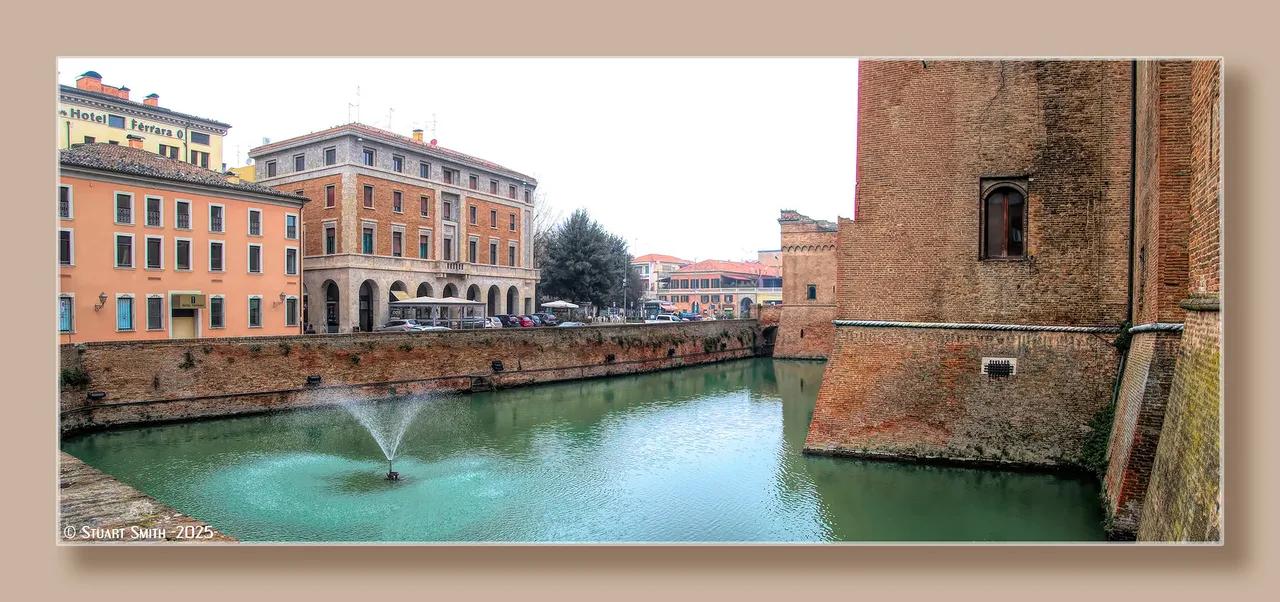
Start in the middle. The Estense Castle, begun in the late fourteenth century as a defensive fortress and later converted into a court residence, is a moated brick block with four corner towers, and walking its courtyard and moat is free. Whether you pay to enter and climb the Torre dei Leoni is a separate decision; the castle's own operator lists current tickets and interior hours, which are not repeated here.
Walk across to the Cathedral of San Giorgio, whose façade mixes a Romanesque lower register with a Gothic upper one and opens onto Piazza Trento e Trieste. Treat the exterior and the square as the free part of the morning; restoration work has covered parts of the façade in some years, so look at the notice on the door rather than assuming full interior access.
Finish the loop with Via delle Volte, a narrow medieval lane of brick arches that once linked warehouses to the shops and homes they served. It is short, shadowed and easy to combine with the cathedral, which makes it a good transition to lunch rather than a sight in its own right.
Day One, Lunch: Sit Down Properly
Ferrara's table is built for a long pause: cappellacci di zucca, the pumpkin-filled pasta, pinzini with cold cuts, salama da sugo, and the chocolate tenerina cake. Order two courses rather than a panino and the afternoon still works, because the next stops are minutes apart in the Addizione Erculea.
Book or arrive early for anything near Piazza del Municipio or the castle, where café terraces fill first. If you want a cheaper, quicker midday meal, the medieval side streets around Via San Romano hold small bakeries and pizza counters that work just as well.
Day One, Afternoon: Corso Ercole I d'Este and the Diamanti
Corso Ercole I d'Este runs north from the castle to the Gate of the Angels, the spine of the Herculean Addition laid out from 1492, and it is free to walk. At its most famous crossing, the Quadrivio degli Angeli, you find the Palazzo dei Diamanti with its façade of roughly 8,500 diamond-shaped stone blocks.
The palazzo's exterior is the point of the walk; inside are the National Picture Gallery and temporary exhibitions, ticketed separately and not included in any shared pass across the city's other museums. Decide on the day whether the gallery earns an hour of your afternoon.
Day One, Late Afternoon: Schifanoia and the Hall of the Months
Palazzo Schifanoia, a fourteenth-century Este retreat enlarged under Borso d'Este, holds the Salone dei Mesi, a cycle by the Officina Ferrarese painters Cosmè Tura, Francesco del Cossa and Ercole de' Roberti. Seven of the original twelve month sections survive, arranged in three registers from court life up to the planetary triumphs.
The museum lists a full ticket at €12 and a reduced €9 rate for certain age groups and cardholders, with children under 18, disabled visitors and MyFE Card holders among the free categories. Because the published hours note possible changes, confirm the day's opening before you set out.
Day Two, Morning: Sant'Antonio in Polesine
Day two turns quieter. Sant'Antonio in Polesine is the city's oldest continuously inhabited monastery, founded when Beatrice d'Este and her companions settled here in 1257 on what was then an island between branches of the Po. Behind the small entrance door are a cloister portico, a chapel with Beatrice's remains and the nuns' choir.
The choir chapels hold frescoes of the Giotto school from the early fourteenth century, among the few surviving paintings of that era in Ferrara, and the visit is led by a nun or volunteer. InFerrara reports entry by free donation and small groups of up to 15 people with phone reservation recommended, and Sunday access is afternoon only, so slot this in on a weekday morning or after 15:15 on a Sunday.
Accessibility is partial: the Musei di Ferrara page says the church is accessible to wheelchair users except for the side altars, chancel and sacristy, and Ferrara Terra e Acqua notes that dogs are not allowed. Plan a short, seated visit here rather than a long circuit.
Day Two, Midday: A Second Slow Lunch and a Green Pause
Keep the second lunch as unhurried as the first. The monastery sits in the medieval grid, so you can eat back towards the centre on foot, then walk north-east for the afternoon without crossing the city twice.
Parco Massari, a public garden between the Diamanti and the Certosa, gives you a free bench, cedars and a fountain before the walls. Across the street, the university botanical garden holds around 700 plant species; a travel blog reports free admission in recent years, but check current hours and access on site before planning around it.
Day Two, Afternoon: Walls and the Certosa
Ferrara's walls run about nine kilometres around the historic centre and can be walked or cycled, past gates, bulwarks and towers. Take a section rather than the whole ring: the tree-lined stretch between the Certosa and the northern gates is the easiest to add to a green afternoon.
The Certosa di Ferrara, founded in 1452 and later turned into the city's monumental cemetery, is a place of cloisters, arcades and carved tombs. Treat it as somewhere to walk slowly and respectfully; public visiting rules are not consistent across sources, so follow any notices at the gate. Related guide: Ferrara Three Day Itinerary: A Slow-Paced City Plan.
Day Two, Optional Close: Piazza Ariostea and the Side Streets
If daylight and energy remain, end at Piazza Ariostea, the elliptical square designed as part of the Herculean Addition and home to the Palio di Ferrara each year. It is free, open and a good place to watch the city on bicycles.
Then drift back through Via Boccacanale, Via delle Vecchie and the lanes of the former Jewish ghetto, where the synagogue and the MEIS museum anchor a different chapter of the city's history. None of this needs booking, which makes it the right kind of ending.
What to Cut if You Only Have a Day and a Half
Drop the Certosa and the botanical garden first; both are pleasant rather than essential, and losing them keeps the second morning calm. Keep Sant'Antonio in Polesine, which is short and unlike anything else in the centre.
If you have only one day, keep to the centre: castle courtyards, cathedral exterior and Via delle Volte in the morning, Schifanoia in the late afternoon, with the Diamanti walk fitted between them and lunch shortened. That still covers the Renaissance heart without pretending to cover the edges.
Practical Notes: Arrival and Getting Around
Ferrara sits on the main rail corridor between Bologna and Venice, and the station is a flat walk from the castle, so a car is a liability rather than a help inside the walls. Bikes are the local habit and rental shops exist in the centre; check current rental terms locally rather than relying on an old guide.
The city's own site is the place to check for street works, restricted traffic zones and one-off closures that could affect a walking route, and the tourist office inside the castle courtyard can confirm museum hours on the day.
Plan Your Visit
Two days in Ferrara work best when day one stays dense and day two stays loose. Book nothing except perhaps the Schifanoia ticket and the Polesine visit, keep both lunches long, and leave the castle interior as a game-time decision rather than a fixed appointment.
Recheck the two official museum pages a few days before arrival, since opening windows and prices are the parts most likely to shift. Everything else here is a suggestion about pace, and pace is the one thing in Ferrara you can control. For related planning, see Ferrara Neighbourhoods Guide: Where to Stay Inside the Walls. For related planning, see Ferrara One Day Itinerary: Castle, Cathedral and City Walls.
Frequently Asked Questions
Is Ferrara worth visiting for two days?
Yes, if you want the Renaissance core without rushing. One day covers the castle courtyards, cathedral exterior, Via delle Volte and Schifanoia; a second lets you reach Sant'Antonio in Polesine, walk part of the walls and see the Certosa, with a proper lunch on both days.
What should I see in Ferrara in one day instead of two?
Keep to the centre: the Estense Castle from outside, the cathedral façade on Piazza Trento e Trieste, Via delle Volte, then Corso Ercole I d'Este and the Palazzo dei Diamanti exterior, finishing at Schifanoia for the Hall of the Months. Skip the Certosa and the southern edges.
How do I visit Sant'Antonio in Polesine?
Go on a weekday morning or afternoon, or on a Sunday afternoon, since Sunday morning is closed. Entry is by free donation, visits are led and limited to small groups, and phone reservation is recommended. Confirm the current weekday windows by phone, because published times vary slightly between listings.
Do I need tickets for Palazzo Schifanoia?
Yes for the museum and the Hall of the Months. The museum publishes a full price, a reduced rate for certain ages and cardholders, and a list of free categories including under-18s, disabled visitors and MyFE Card holders. Check the current price and opening day on the museum page before you travel.
Can I walk the Ferrara city walls?
Yes, the walls form a loop of roughly nine kilometres around the historic centre and are used by walkers and cyclists. Most visitors take one section rather than the full circuit, for example the stretch near the Certosa, and combine it with a park or a cemetery visit.
What food is Ferrara known for?
Cappellacci di zucca, the pumpkin-filled pasta, is the signature first course, alongside pinzini with cold cuts, the spiced salama da sugo sausage and the chocolate tenerina cake. Build lunch around two of these rather than a quick sandwich, since the city rewards a slower table.
Sources
- What to see in Ferrara in one day: the itinerary | Italoblog
- What to see in Ferrara in 2 days (and where to eat)
- 24 Hours Sightseeing In Ferrara Italy & Nice Places For Food
- St. Anthony Polesine - Musei di Ferrara
- Monastery of Sant'Antonio in Polesine - Ferrara Terra e Acqua
- Monastery of Sant'Antonio in Polesine - InFerrara
- Museo Schifanoia - InFerrara
- 5 MINUTES OF ART - Palazzo Schifanoia - Ferrara Terra e Acqua
- A Week in Ferrara: The Best City You Weren’t Planning to Visit - Travel Guide - Mark Your Landing Spot
- to-be-seen
Continue exploring
More guides you'll find useful





