What to Do in Como When It Rains: Indoor Day Plan
Plan a rainy day in Como with churches, museums and a flexible lake plan. Learn how to reshuffle a wet-weather itinerary and what to check before you go.
On this page
Rain in Como is usually a scheduling problem rather than a reason to stay in. The lake softens the climate, so a wet morning often sits between drier spells, and the historic centre puts several covered stops within a short walk of each other. The sensible move is to build the day around buildings first and treat the water as an optional extra.
This plan is a suggestion, not an official itinerary. It assumes you are staying in Como itself and want to keep walking between stops to a minimum on a wet day. If your base is elsewhere on the lake, the same logic applies: pick one compact cluster and let the weather decide the order.
Why Rain Rarely Wastes a Day in Como
The lake moderates temperatures, which is why Como's summers are warm without being extreme and its winters stay cool rather than bitter. According to published monthly averages, July is the hottest month, with daytime highs around 27°C and nights near 17°C, while December and January average roughly 2.5-3.5°C. Those figures are averages rather than forecasts, so check a short-range forecast on the morning itself.
Rain is not evenly spread through the year. The same climate overview identifies May, June and August as the months with the most rainy days, and notes that summer showers tend to be short and localised. That matters for planning: a June downpour is often a pause rather than a washed-out afternoon, while an autumn wet day may call for a longer indoor block.
Think in half-days rather than full days. Decide which two or three covered stops matter most, put them in walking order, and leave a gap for a coffee or a dry bench. If the sky clears, you can add a short lakeside walk without having sacrificed the indoor plan.
Shape the Day by Walking Distance, Not by Ticket Type
The most useful organising principle on a wet day is geography. Group the Cathedral, the Basilica di San Fedele and the Basilica di Sant'Abbondio as a chain of covered stops in and near the centre, then decide separately whether the Tempio Voltiano or a museum interior fits the remaining time. Grouping by theme tends to send you back and forth across town in the rain.
A second principle is decision cost. Churches generally ask little of you beyond respectful dress and a quiet manner, so they work well as spontaneous shelter when a shower arrives earlier than expected. Ticketed interiors need a little more forward planning, so keep them for the block of the day you are most confident about.
Before leaving the hotel, settle one question: which stops are weather-proof and which depend on the lake being calm or visible. Anything in the second category becomes a bonus. If you want more ideas for the city beyond the obvious stops, the guide to hidden gems in Como is worth reading on a wet morning.
Churches as the Backbone of a Wet Day
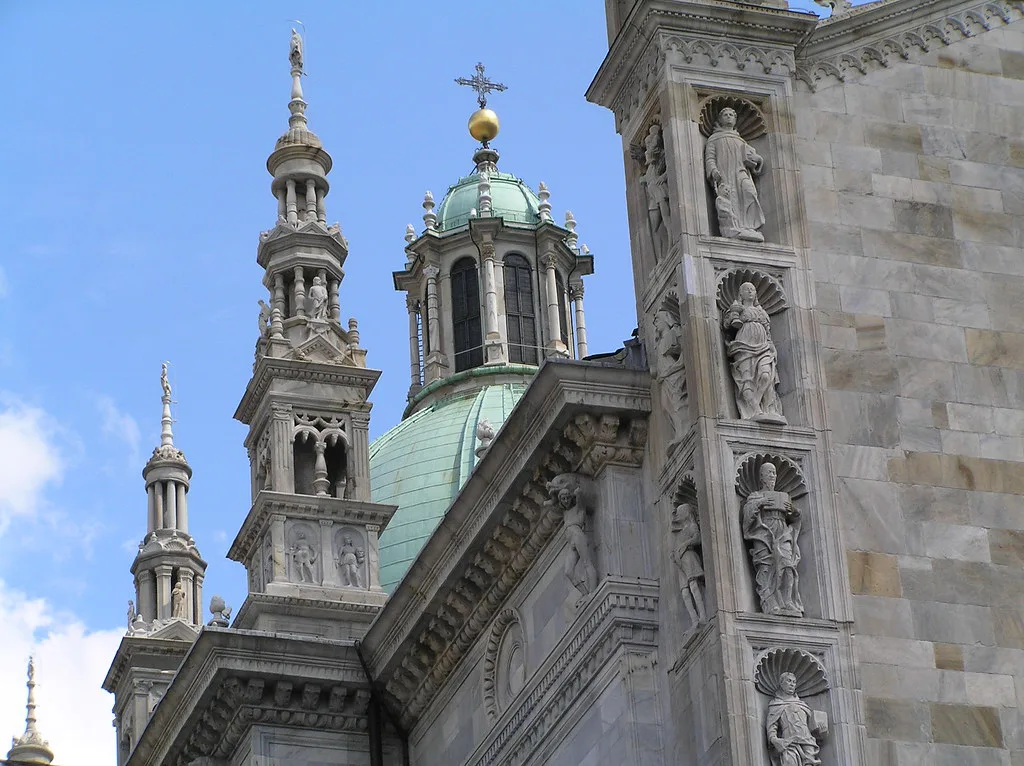
The Cattedrale di Como, the Basilica di San Fedele and the Basilica di Sant'Abbondio all appear among the city's indoor options for wet weather, which makes them a sensible spine for the day. They are also the stops least likely to be derailed by a change in the forecast, because you can step into one and out again without a booking decision.
Dress for the visit as well as the weather. Wet-weather clothing that drips is awkward in a church, so a compact umbrella and a layer you can remove indoors help. Shoulders and knees covered is the safe default for religious buildings in Italy, and it costs nothing to carry a light scarf for that purpose.
Treat each church as a 20-to-40-minute stop in your own plan rather than a fixed slot. That duration is an editorial suggestion: the city does not publish a visiting sequence, and opening arrangements are best confirmed locally, either at the door or through the parish or city channels, before you build the day around one building.
Sant'Abbondio sits outside the tightest part of the centre, so it works better as a deliberate excursion than as an accidental shelter. If the rain is heavy, do it in the same leg as your return towards the centre rather than doubling back. This keeps the walking exposed to the weather to a single stretch.
Tempio Voltiano and the Civic Museum Question
Como's city website lists an online ticket service covering the Pinacoteca civica, the Tempio Voltiano and the Cattedrale, which is the clearest official statement available on how these sites are ticketed together. Do not assume that one purchase covers every interior you plan to visit, and do not assume the opposite either: confirm the scope of the ticket on the city's pages before you commit.
The Tempio Voltiano also appears among the city's recommended indoor stops for rainy days, and it suits a wet afternoon because it is a single, focused visit rather than a sprawling complex. Check the current arrangements for the specific building on the day rather than relying on a general guide.
Expect to separate grounds from interiors. Many Italian sites let you walk up to and around a building without buying anything, while the collection inside is ticketed. If your budget is tight, decide in advance which interiors you actually want to see and use the rest as dry breathing space.
The city's own events and notices portal is a useful check for anything that might affect a visit, from roadworks to temporary arrangements. It is a city noticeboard rather than a museum site, so use it alongside the museum's own information rather than instead of it.
When the Lake Plan Collapses
Boat tours and lake crossings are the part of a Como trip most exposed to weather. Treat them as optional add-ons with a fallback rather than fixed appointments: if the water looks uninviting or the forecast is unstable, swap the boat for a long indoor block and keep the lake for another day. What operators do about cancellations or refunds varies, so ask the operator directly before booking.
If you have already paid for a water-based experience, contact the operator rather than deciding on the quay. Ask what happens in bad weather and whether an alternative date is possible. Do not rely on a general guide for a policy that belongs to a specific company.
A useful compromise is to keep the lake in view without committing to it. A short walk along the waterfront between showers, or a café with windows on the water, gives you the scenery without the exposure. On a genuinely wet day, the indoor spine of the plan should still hold without any lake time at all.
Rain by Season: What Changes
Spring and early summer are the trickiest period for a fixed plan. May and June bring a high share of rainy days, but also warm temperatures, which means showers alternate with pleasant spells rather than settling in. Waterproof shoes and a small umbrella matter more than heavy layers, and a flexible schedule pays off.
Autumn is often the better bet for a relaxed visit: from late September into mid-October the climate overview describes mild weather and thinner crowds, which makes the church-and-museum circuit more comfortable. It also means indoor stops are less crowded, so a wet day feels less like a scramble for shelter.
Winter brings a different trade-off. Daytime temperatures typically sit between roughly 3°C and 12°C, and the same overview notes that many hotels and restaurants close for the season. If you are visiting between November and March, confirm that your chosen base and preferred eating places are actually open before you rely on them.
A Suggested Half-Day and Full-Day Sequence
For a half-day, start at the Cathedral while the morning is freshest, walk to San Fedele, and finish with a coffee or a warm drink rather than adding another building. This is an editorial suggestion, not an official route; adjust the order to wherever you are staying and to whatever the sky is doing.
For a full day, put the Cathedral and San Fedele in the morning, take a proper indoor lunch break, and use the afternoon for the Tempio Voltiano or a museum interior. Sant'Abbondio fits best when you have enough daylight and are willing to accept one longer walk in the rain.
Keep one genuinely optional slot at the end of the day. If the weather improves, spend it on the waterfront; if not, spend it somewhere dry with a view. This structure means a bad forecast costs you an hour rather than the whole plan. If you have already read up on the city's hidden gems, use the spare slot for one of them rather than squeezing in a second museum.
Where to Dry Off Between Stops
Aim for the streets around the historic centre rather than a specific booking. Cafés and bars near the Cathedral and along the main shopping lanes give you a natural pause between covered stops, and you can judge the sky from the window before committing to the next walk.
Carry a small towel or a packable bag for wet jackets, and choose shoes with grip for polished stone pavements. These are small preparations, but they make the difference between a comfortable circuit of three or four stops and a miserable dash between two.
If you want one longer sit-down meal rather than several short breaks, place it in the middle of the day and make it the warm, dry anchor of the plan. Confirm the day's opening arrangements where you can, especially outside the main season, when the climate overview notes that some places shut.
Mistakes to Avoid on a Wet Day in Como
The first mistake is over-packing the schedule. Three covered stops plus a proper break is a realistic day in the rain; five is a recipe for wet clothes and short tempers. Leave the gaps in, and accept that an umbrella stop under an arcade counts as part of the plan.
The second is assuming every interior is free or that one ticket covers everything. The city lists an online ticket service for the Pinacoteca civica, the Tempio Voltiano and the Cattedrale, and the scope of that service is the thing to verify, not to guess.
The third is forgetting the season. Many hotels and restaurants close between November and March, and a wet winter day narrows your options further. Before you travel, check that your base, your chosen lunch stop and your indoor targets are operating on the dates you need.
Plan Your Visit
A rainy day in Como works best when the day is built around buildings and the lake is treated as a bonus. Start with the Cathedral and San Fedele, choose one ticketed interior such as the Tempio Voltiano or the Pinacoteca civica, and add Sant'Abbondio only if the weather and your energy allow.
Before you leave the hotel, confirm the ticket scope on the city's pages, pick a warm place for lunch, and decide which single stop you would drop if the rain sets in. That one decision is often the difference between a damp, rushed day and a calm one.
Frequently Asked Questions
What can you do in Como when it rains?
Build the day around covered stops in and near the historic centre: the Cathedral, the Basilica di San Fedele and the Basilica di Sant'Abbondio. Add one ticketed interior such as the Tempio Voltiano if you want a longer indoor block. Check the day's arrangements locally, and keep the waterfront as an optional extra if the weather lifts.
Does rain ruin a Lake Como trip?
Not usually. Much of what makes Como worth visiting is indoors or under cover, and showers in the warmer months often pass rather than settle. The plan only breaks down if you have committed to a boat trip you cannot move; treat water-based activities as optional and keep a dry alternative ready.
Which months are wettest on Lake Como?
Published monthly averages point to May, June and August as the months with the most rainy days, though summer rainfall is often short and localised. These are averages rather than a forecast, so check a short-range forecast for your dates and pack for showers rather than assuming a wet week.
Are Como's churches free to enter?
Entry arrangements vary by building and are not something to assume from a general guide. Check at the door or through the parish or city channels before you plan a visit around one. Carry a light layer for covered shoulders and knees, and keep a modest cash or card option in case a site asks for a contribution.
Is the Tempio Voltiano worth visiting on a wet day?
It is a compact, single-focus visit that suits an indoor afternoon, and it appears among the city's recommended rainy-day stops. Confirm current arrangements and how the city's online ticket service applies to it before you go, since the scope of that service is the thing to check rather than assume.
How do you adapt a boat-tour day if the weather turns?
Contact the operator directly rather than deciding on the quay, and ask what happens in bad weather and whether an alternative date is possible. Policies differ between companies, so a general guide cannot answer for a specific booking. Meanwhile, move the indoor stops earlier and keep the lake as an optional evening walk.
How should families or short-stay visitors adjust the plan?
Shorten the circuit. For a half-day, pair the Cathedral with San Fedele and stop for a warm drink rather than adding a third building. With children, alternate a covered stop with a café break and keep one dry, flexible option in reserve so the day can end early without waste.
Sources
Continue exploring
More guides you'll find useful