Marina District Cagliari Guide: Port Quarter, Market & Evening Strolls
Plan a slow visit to Cagliari's Marina quarter: port-side streets, San Benedetto market, evening strolls and easy links up to Castello and out to Poetto beach.
On this page
Cagliari's Marina is the port-side quarter where most visitors first touch the city, and that makes it a practical starting point rather than a box to tick. Ferries from Sicily and mainland Italy dock here, the airport bus brings arrivals in from Elmas, and the main train and bus stations sit right in town. From that base you can walk the flat streets by the water, look uphill to Castello, and decide how to spend the rest of the day.
This guide treats the Marina as a decision point. The waterfront streets, the covered market and the squares give you a compact orientation loop, while the medieval hill above supplies towers, views and museum collections. Below-ground history sits under a parish church in the quarter itself. Each stop below notes whether it is an outdoor walk or a paid interior, so you can build an honest half-day or full day.
For a wider set of lesser-known corners beyond the port streets, keep our hidden gems in Cagliari guide open as a companion. It pairs well with this walk because the Marina is flat and quick to cross, leaving time to branch out.
Why the Marina Works as a First Orientation Walk
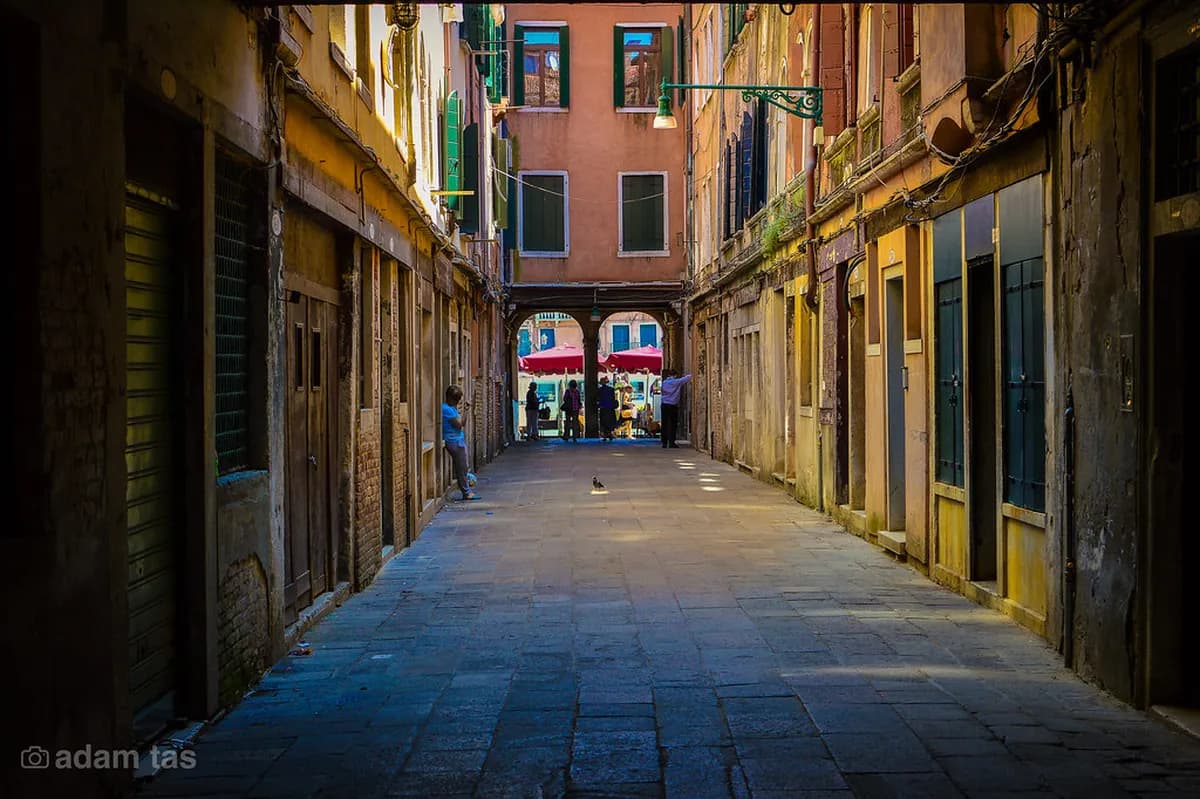
The Marina district sits between the harbour and the lower edge of the historic centre, so it functions as a threshold between arrival and sightseeing. Martha's Italy describes Via Roma, the main street, as having a covered sidewalk with shops and bars with outdoor tables, and several restaurants on the nearby streets. That combination of shade, seating and food makes it a sensible place to get your bearings before committing to a plan.
The quarter also works as orientation because the city's layers are visible from it. The source notes that Cagliari blends a lively modern city with prehistoric Nuragic, Roman and medieval roots, and its sights are a good introduction to Sardinian history, culture, food and traditions. Standing on the flat streets, you can see the hill of Castello rising above you and understand how the old defences related to the port below.
As a time budget, an editorial suggestion rather than an official figure: allow about two hours for the Marina streets, Piazza Yenne and a browse through the San Benedetto market, then add another two hours if you climb to Castello. The walking is short in distance but the hill makes the second half slower. Split the two halves across a morning and late afternoon if the heat is heavy.
How to Reach the Marina: Ferry, Airport Bus and Stations
Arriving by sea puts you directly in the quarter. Martha's Italy notes that ferries from Sicily and several places in mainland Italy arrive in Cagliari's port, which is the Marina's front door. If you come that way, you can walk off the boat and be among the Via Roma arcades within minutes, with luggage in tow.
By air, Elmas airport sits just outside the city, and the source states that a bus connects the airport to Cagliari. It also says the city's train and bus stations are right in town, with a rail line running from Cagliari to Sassari or Olbia in the north and long-distance buses connecting to other parts of the island. Treat these as orientation facts and confirm current timetables with the operators before you travel, since schedules change.
Once in town, the flat lower streets are walkable and local buses run through Cagliari and to nearby villages and towns, according to the same guide. Do not plan around specific line numbers or journey times here; those details are not confirmed by the sources. The practical takeaway is that the Marina needs no vehicle once you have arrived, which simplifies a short city stay.
For institutional information such as municipal notices or transport disruptions, the city's own portal is the reference point rather than a tourism page. It publishes alerts and civic news that can affect a day on foot.
The Walk Itself: Via Roma, Largo Carlo Felice and Piazza Yenne
Start on Via Roma by the port and walk inland rather than trying to cover every side street. The guide notes the covered sidewalk, shops, and bars with outdoor tables along this main street, and describes Piazza Yenne as a big square at the top of Largo Carlo Felice with lively outdoor bars and restaurants. Those three elements form a natural line: arcade, climb, square.
Piazza Yenne repays a pause because it is the hinge between the flat Marina and the uphill centre. Sit with a coffee and look back down Largo Carlo Felice toward the water; you get the geography of the quarter in one view. If you are travelling with children or slower walkers, this is the natural turning point before any climb.
A few blocks from the harbour is Piazza Sant'Eulalia, which the guide names as a distinct stop rather than a corridor. Keep it on the route between the waterfront and the market instead of doubling back for it later. The square is small, so it fits naturally into a fifteen-minute stretch of the walk.
Piazza Sant'Eulalia and Underground Cagliari
Below the Church of Sant'Eulalia, Martha's Italy describes Underground Cagliari as an exhibit that shows the continuity of life from the 3rd century BC through the 6th century AD. It is the one below-ground stop in the quarter and it sits under a specific church, so look for the church first and the entrance follows. Treat it as a separate visit from the church above, not part of the same experience.
The sources do not confirm a ticket price or opening hours for this exhibit, so check the operator's own information on arrival or before you set out. Do not assume the church's own hours apply to the archaeological area beneath it. If the underground is closed on the day you visit, the square and the nearby port streets still justify the detour.
Budget a modest slot here rather than a whole morning. The site is compact and works well as a contrast to the open-air walking above, especially in the middle of the day when the sun is strong. It also sets up the Castello climb nicely, because you have already seen how deep the city's layers go.
San Benedetto Market: Layout, Fish Floor and Stated Hours
Mercato di San Benedetto is the central covered market on Via Francesco Cocco Ortu, and the guide calls it a lively and fun place to visit. It notes a whole floor of fish stalls where browsing and photography are accepted, which makes it a comfortable stop for visitors rather than a trade-only hall. Arrive with an appetite for looking rather than a shopping list.
The same guide states opening hours of 7:00 to 13:00, closed on Sundays. That is a third-party description last updated in 2024, so verify the current schedule with the market or the city before building a day around it. The morning-only pattern, if it still holds, argues for putting the market first and Castello second.
There is no entry fee implied or stated for browsing the market hall, but do not extrapolate that to every stall or to anything you buy. For a regional tourism view of food and craft traditions around the island, SardegnaTurismo is a useful broad reference.
Eating in and Around the Marina
The sources support the general pattern rather than named restaurants: Via Roma has bars with outdoor tables, Piazza Yenne has lively outdoor bars and restaurants, and several restaurants sit on the streets near the port. Use that geometry to choose. A table on the arcade suits a quick lunch and people-watching; the square suits a longer evening; the side streets reward a short wander to see what is actually busy.
No specific Marina restaurant names, menus or prices are confirmed by the sources, so this guide does not invent them. Check menus posted outside before sitting down and confirm whether coperto or service charges apply. If you want to eat at the market, go before the stated closing time rather than assuming stalls serve food all afternoon.
Because the Marina is compact, a meal here rarely costs you sightseeing time. You can eat by the port and still walk up to Castello afterwards, or reverse the order and come down for dinner. The choice matters mainly in summer, when the uphill stretch is best done outside the hottest hours.
An Evening Passeggiata Through the Quarter
An editorial suggestion, not an official itinerary: give the evening about ninety minutes and keep it flat. Begin near the port on Via Roma, walk the arcades toward Largo Carlo Felice, cross Piazza Yenne, and loop back through the side streets toward the water. That route uses only described elements of the quarter and leaves the Castello climb for a cooler hour.
The sources do not document specific passeggiata customs, timings or dress codes in the Marina, so treat the stroll as a flexible habit rather than a scheduled event. The guide's description of outdoor tables and lively squares tells you where people gather, not when they arrive. Watch the streets as you go: if the arcades and the square are filling, that is your signal for the evening rhythm.
Check whether any events are scheduled before you plan an evening around a square, because the sources give no current calendar for the Marina. The city portal and the regional tourism site are the places to look for published programmes. Otherwise, plan on the streets themselves as the attraction.
Uphill to Castello: Bastione di San Remy, Towers and Cathedral Exteriors
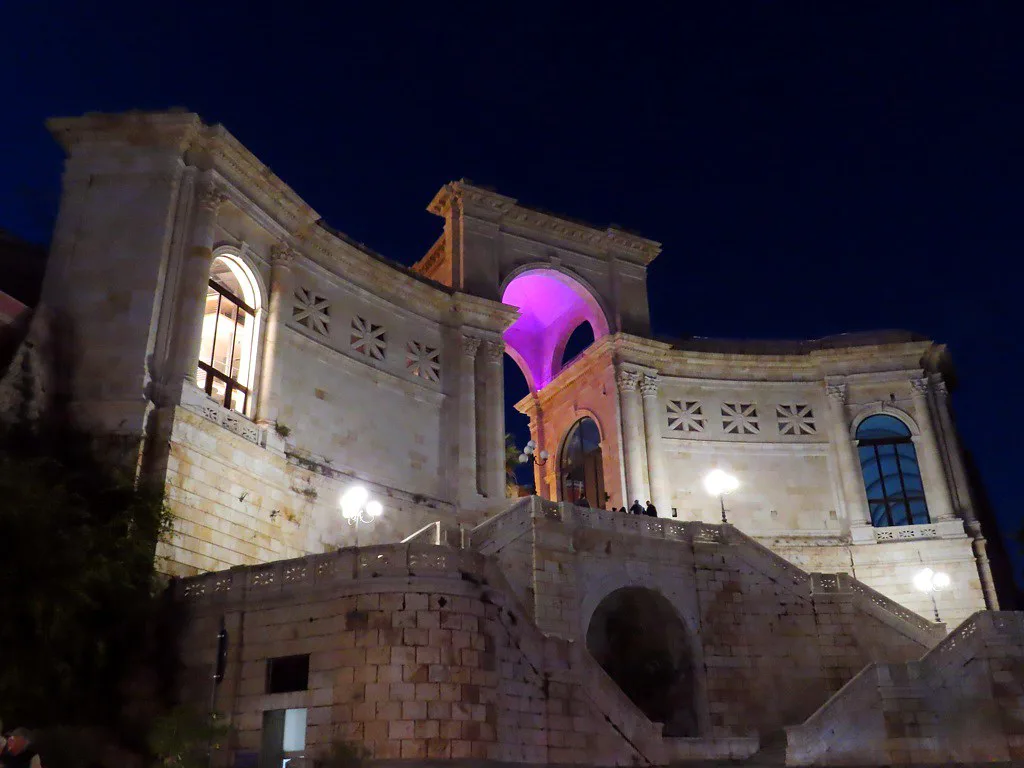
Castello is the oldest and highest part of the city, a medieval neighbourhood around the Bastione di San Remy, and the castle's rooftop has been converted into an open terrace with several bars and views over the city and the sea. That terrace is the reward for the climb and needs no ticket to enjoy. Approach it from the Marina side and the gradient does the rest.
Within the district the guide lists the Romanesque Cathedral of Santa Maria with its Baroque crypt and museum, the Archbishop's Palace, and two towers, San Pancrazio and the Torre dell'Elefante, part of the medieval defensive walls. It also notes that performances and exhibitions are often held at the castle, with an exhibition area inside. Keep interiors and towers as optional paid stops; the outdoor lanes and terrace are the free layer.
The sources give no ticket prices or opening hours for the towers, the cathedral interiors or the castle exhibition space. Verify each separately, and do not assume one ticket covers several monuments. For structured background on individual sights, our Cagliari Attractions hub is a better starting point than a single walk.
If You Have Longer: Museums, Poetto Beach and Molentargius
History-minded visitors can continue to the Citadella dei Musei, a museum complex in the former arsenal on Piazza Arsenale. The guide describes an archaeological museum covering Neolithic, Phoenician, Roman, early Christian and medieval periods, alongside a national art museum, an oriental art museum and an overlook point. Each collection is its own visit, so choose one rather than trying to sweep the complex.
For open air, Poetto beach is about two kilometres from the city centre and reachable by bus, according to the guide, which describes a long sandy beach with swimming and water sports. Between the city and the beach, Molentargius marsh holds migratory and water birds, including a large flamingo colony. That pairing makes a good half-day when the Marina feels finished.
Further afield, Su Nuraxi near Barumini, roughly forty miles north of Cagliari, is described as one of the top nuraghi to visit, with much of the surrounding village excavated, and it holds UNESCO World Heritage status. That is a separate day trip requiring transport, not a stroll from the port. The regional tourism site frames the wider island context if you are extending the trip.
If you want to push beyond the obvious Cagliari stops after the Marina, browse the Tuvixeddu necropolis and other under-visited corners in our hidden gems guide.
Practical Notes: Climate, Tickets and What to Verify
Cagliari has a typical Mediterranean climate with hot summers and cold winters, according to the guide, which makes the season the main planning variable. Summer walking is best split into morning and late afternoon, with the market and the underground exhibit filling the middle of the day. Cooler months suit longer stretches on the Bastione terrace and the uphill lanes.
Separate the free outdoor layer from the paid interiors consistently. The arcades, Piazza Yenne, the port streets and the open terrace above the Bastione are walking ground, while Underground Cagliari, the museum collections, the towers and any crypt or cathedral museum are entered on their own terms. Where a price or time is not confirmed here, check the operator directly rather than trusting a secondary summary.
The municipal portal is useful for alerts and civic notices that could affect a day in the city, but it is not a visitor opening-hours list. Use it alongside the operator pages for each paid site. For island-wide context such as regional events and seasonal ideas, the regional tourism site covers more ground than any single city guide.
Plan Your Marina Visit
Treat the Marina as your first hour in Cagliari and your last hour of the evening. Walk Via Roma and Largo Carlo Felice to Piazza Yenne, dip into Piazza Sant'Eulalia and the underground exhibit, and shop the market in the morning if the schedule holds. Then climb to Castello for the terrace view, and save Poetto and Molentargius for a longer stay.
Confirm the moving parts before you go: market hours, the underground exhibit's opening, and any tower or museum access you care about. None of those are fixed by this guide, and a quick check with each operator avoids a wasted climb. The streets, squares and terrace need no booking, so keep those as your flexible backbone.
Frequently Asked Questions
Is the Marina the oldest part of Cagliari?
No. The medieval hilltop district of Castello is described as the oldest and highest part of the city, while the Marina is the port-side quarter below it. The Marina is convenient and central, but it is not the historic core's highest or oldest layer.
Is San Benedetto market free to enter?
No entry fee is stated for browsing the covered market hall, and the guide presents it as a place to look around and photograph the fish floor. Any purchases are separate. Confirm current access and hours with the market before you go, since the published schedule is a third-party description.
Can you walk from the Marina to Castello and Poetto?
Yes to Castello: it is the uphill district directly above the Marina, reached on foot through the lower lanes to the Bastione di San Remy terrace. Poetto is different, about two kilometres from the centre and reachable by bus according to the guide, so plan it as a short trip rather than a walk from the port.
What can you see in the Marina quarter itself?
The core sights are the waterfront streets, Via Roma's arcades, Largo Carlo Felice and Piazza Yenne, plus Piazza Sant'Eulalia and the Underground Cagliari exhibit beneath the church. The San Benedetto market is the other main stop. Specific restaurant names and event dates are not confirmed by the sources, so check locally.
How do you get from Cagliari airport to the Marina?
Elmas airport lies just outside the city, and the guide states that a bus connects the airport to Cagliari, with the train and bus stations located in town. Confirm current routes, times and fares with the operator, because those details are not fixed here.
What is there to do in the Marina in the evening?
A flat loop from the port along Via Roma to Piazza Yenne, then back through the side streets, uses the quarter's described bars, restaurants and squares. The sources do not document specific evening customs or timings, so watch where the tables and squares fill and follow that rhythm. Check published programmes for any scheduled events.
Sources
Continue exploring
More guides you'll find useful