Castello District Cagliari Guide: Towers, Cathedral and Steep Streets
Plan a slow walk through Cagliari's Castello district, from the Bastione di Saint Remy to the cathedral and museum, with tips for the steep streets.
On this page
Castello is the district that gives Cagliari its skyline: a walled quarter perched on a limestone hill, reached by climbing rather than strolling. That ascent is the single decision that shapes a visit, because it determines what you see first, how much energy you have left for the museums and where you finish. Plan the climb early, keep the downhill leg for the end of the day, and the district rewards you with terraces, medieval stonework and long views over the rooftops and the sea.
The quarter is the largest of Cagliari's four historic districts, and it still keeps much of its medieval character, with ancient gates and walls encircling most of its perimeter. It was founded by the Pisans in the 13th century, who fortified it with walls, towers and ramparts, and it later served as political, military and religious capital under Pisan, Spanish and Piemontese rule. Walking it today means reading those layers in the stone as you go. Further visitor details appear in Visit Castello - Cagliari in Cagliari | Live the World.
Orientation: One Hill, Four Districts
Castello occupies a limestone hill above the rest of the city, which is why the district feels enclosed and separate from the streets below. Its location, rather than any single sight, is the reason to visit on foot: narrow cobbled streets thread between historic buildings, and the edges of the hill open onto sudden views. Treat the hill as the map and plan a route that crosses it rather than looping back.
Distances inside the walls are short, but gradients are not, so a route that looks trivial on a map can take far longer than expected. Place the highest point early, group the cathedral and the museum close together, and leave the descent for the afternoon when your legs are tired. This is planning advice rather than official guidance.
One common confusion is Piazza Yenne, a lively square lined with cafes, restaurants and shops that many visitors pass on the way up. It works well as a pre-climb coffee stop or a post-descent reward, but do not assume it sits inside Castello's boundaries just because it appears in the same walking route.
A Short History of Walls, Towers and Rulers
The Pisan foundation in the 13th century left the district its defensive skeleton: ramparts, gates and towers that still define how you enter and leave the quarter. Later dominations added palaces and churches on top of that frame, so the architecture you pass moves from military stone to civic and religious grandeur within a few minutes of walking. That compression is what makes a short walk here feel dense with history.
The Royal Palace is a good example of reuse: it now houses the prefecture and the Council Chamber of the Province of Cagliari, so it reads as a working civic building rather than a museum piece. Look at it from the street and register the change of function rather than expecting to wander its rooms. Sardinia more broadly rewards this habit of reading buildings for their second lives, a theme that runs through the island's official tourism material.
Arriving and Starting the Climb
Wherever you begin in the lower city, the practical task is the same: gain height once, deliberately, and then stay up. Stairs and stepped alleys are part of the fabric here, so start the day with the ascent while you are fresh rather than saving it for the hottest hour. Carry water and wear shoes with grip, because polished cobbles and stone steps are uneven underfoot.
For a first visit, an editorial suggestion of roughly two to three hours inside the walls covers the main viewpoints, the cathedral and a museum stop without rushing. That figure is a recommendation, not an official estimate, and it excludes time spent eating or lingering on terraces. If you add a long museum visit or a slow lunch, plan closer to a half day.
Check current city information before travelling if you need specific transport details, since routes and service patterns change and are best confirmed at the time of your trip. The municipal site publishes service and mobility notices that are more reliable than any fixed list in a guide.
The Bastione di Saint Remy: The Pause That Earns the Climb
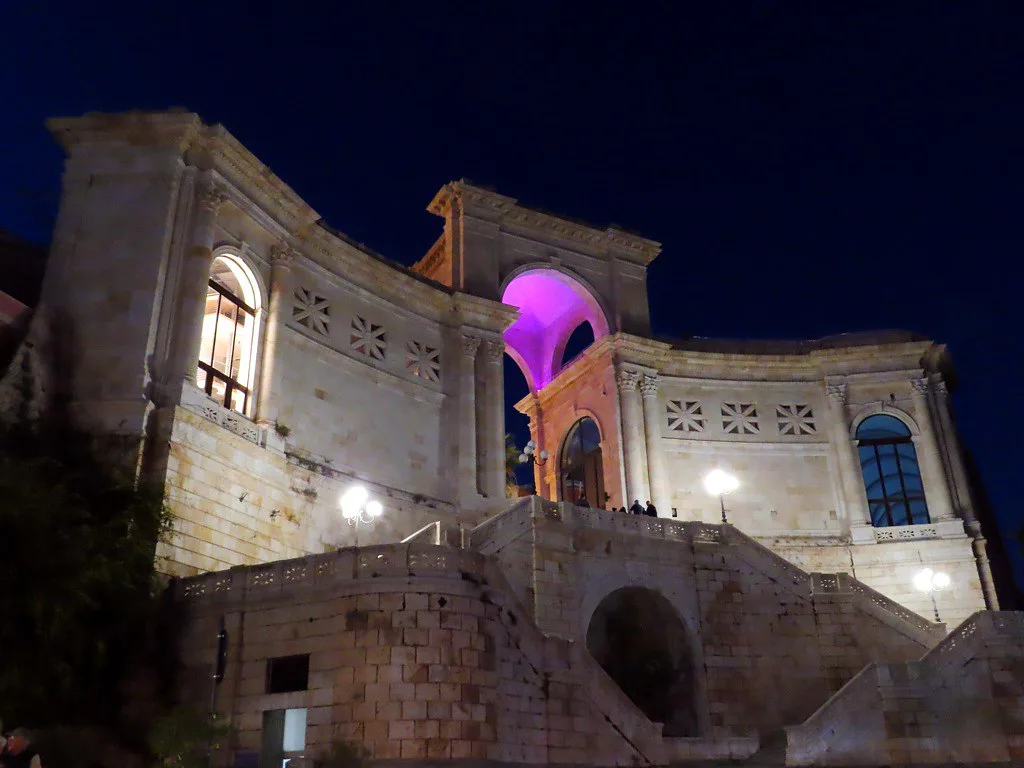
The Bastione di Saint Remy is the district's great terrace, a viewpoint that opens onto the rooftops of Castello and the surrounding neighbourhoods, with the Mediterranean beyond. It is the natural first stop after the climb, because it delivers the payoff of the ascent in one panorama before you disappear into the lanes. Come here before the light hardens, and again at the end of the day if you can manage it.
Treat the terrace as a place to stop rather than a sight to tick off: sit, look, and use the pause to orient yourself against the towers and rooftops you are about to walk among. Views like this are also the reason to keep the camera in your pocket for part of the climb and simply look.
The Cathedral of Santa Cecilia
The Cathedral Church, dedicated to Santa Cecilia, is one of the architectural highlights of the district and sits within easy reach of the main lanes. Its position makes it a sensible anchor for the middle of your walk, with the museum and the terraces arranged around it. Read the facade and the surrounding stonework as part of the same medieval fabric rather than as an isolated monument.
Entry arrangements for churches in Italy vary from parish to parish and can change with restoration work or services, so confirm on arrival rather than relying on a fixed rule. If the doors are closed for a service, step back into the lanes and return later; the district is compact enough that a second pass costs little. Further visitor details appear in Visit Castello - Cagliari in Cagliari | Live the World.
The National Archaeological Museum and Its Collections
The National Archaeological Museum, located within the district, holds an impressive collection from Sardinia's ancient civilisations, including the Nuragic and Phoenician cultures. That pairing is the reason the stop justifies its time: the Nuragic material explains the island's towers and tombs that you will meet elsewhere on your trip, while the Phoenician pieces place Cagliari in a Mediterranean trading world. Arrive with those two threads in mind and the galleries become a map of the island.
Admission prices, opening hours and any ticketing arrangements are not fixed here, and museum schedules shift with seasons and refurbishment. Check the museum's own published information on the day you plan to visit, and treat any ticket as covering that collection only rather than the district's churches or towers. For a wider set of city sights with their own visiting notes, browse the Cagliari Attractions hub before you build the day.
Walking the Medieval Fabric
Beyond the named sights, the pleasure of Castello is the walking itself: narrow cobbled streets, ancient gates and stretches of wall that still hold the quarter's shape. Pace the steep sections by planning short legs with a pause between them, and let the gradients set your rhythm rather than a list. The lanes are the district's real exhibit, and they cost nothing to wander.
If you want to extend a slow day beyond the walls, the hidden gems in Cagliari guide suggests quieter corners of the city that pair well with a morning in Castello. Read it before you finalise your route so the two halves of the day connect.
Where to Eat Without Guessing
The district has cafes and restaurants that serve both residents and visitors, but rather than chasing a name, judge a place by what you can see from the street: a short, changing menu, a busy room at lunchtime and prices displayed outside are all reasonable signals. Sit-down meals make sense after the climb, when you want to rest, while a quick coffee suits the start or end of the walk.
Because menus, opening days and seasonal closures shift constantly, verify on the spot instead of relying on a guide written months earlier. If a place is packed with local office workers at midday, that is a better clue than any curated list, and it keeps you flexible as you move through the lanes.
Practical Tips for Steep Streets, Heat and Timing
The best time to visit Castello is during spring and autumn, when the weather is pleasant and the tourist crowds are smaller, and the district comes alive with cultural events and festivals. Summer heat makes the climb harder and the stone lanes hotter, so shift walking into the morning if you travel in the warmer months.
Pack water, wear closed shoes with grip and accept that some routes involve steps; step-free alternatives are not documented here, so anyone with mobility needs should check specific access in advance with the individual site rather than assume a route. Keep bags light, because you will carry them up and down stairs all day.
Structure the day as a one-way route: enter from one side, cross the high ground and descend on the other, so you never retrace the steepest sections. That single habit saves energy and makes a two-hour walk feel far easier than a loop of the same length.
For a broader picture of how the island is presented to visitors, the regional tourism portal collects cultural and practical information across Sardinia and helps place Cagliari within a longer itinerary.
Half-Day Route versus a Fuller Day
On a half day, climb first to the Bastione di Saint Remy for the view, walk the lanes to the Cathedral of Santa Cecilia, and finish with a single focused pass through the National Archaeological Museum. That sequence keeps the hardest walking early and leaves the descent for the end, with one proper pause built in.
With a full day, add a slower meal inside or just outside the walls, a second visit to the terrace in different light, and time to read the Royal Palace and the surviving gates rather than pass them. You can then continue downhill into the rest of the historic centre, using the lower city's cafes and shops as an evening reward, and consult the hidden gems in Cagliari guide to choose where that second half takes you.
Plan Your Visit
Castello rewards a walker who plans around the hill: climb once, cross the high ground and descend on the far side. Put the terrace first, the cathedral and museum in the middle, and leave the steepest lanes for when you still have energy.
Confirm museum timetables and church access on the day, keep the visit flexible around weather, and use the city's published information for anything transport-related. Then let the lanes set the pace.
Frequently Asked Questions
How long does it take to walk around Castello in Cagliari?
As an editorial suggestion rather than official guidance, allow roughly two to three hours inside the walls for the main terrace, the cathedral and one museum stop, and closer to a half day if you add a long lunch or an extended gallery visit. The steep gradients matter more than the distance, so build in pauses.
Is Castello hilly or steep to walk?
Yes. The district sits on a limestone hill above the city, and its cobbled streets and stepped alleys involve real gradients. Plan the climb for when you are fresh, wear shoes with grip and carry water; anyone with mobility needs should check specific access with each site in advance.
What can you see in Castello for free?
The lanes, surviving walls and gates, and the views from the Bastione di Saint Remy terrace are the district's no-cost pleasures. Churches often have their own entry arrangements and museums are ticketed collections in their own right, so confirm on arrival rather than assuming one ticket covers everything.
Is the National Archaeological Museum worth visiting in Cagliari?
It holds notable Nuragic and Phoenician collections, which make it worthwhile if you want to understand the island's towers, tombs and Mediterranean trading past. Expect to spend real time there, and check the museum's current opening and ticketing information directly before you go.
Where should I start a walk through Castello?
Start from the lower city and climb to the Bastione di Saint Remy first, so the steepest effort comes early and the panorama orients you. From there work through the lanes to the cathedral and museum, then descend on the opposite side to avoid retracing steps.
What is the difference between Castello and the rest of Cagliari's historic centre?
Castello is the walled district on the hill, the largest of the city's four historic quarters, with a medieval character shaped by Pisan fortifications and later rulers. The streets below are more open and commercial, so the contrast in atmosphere is part of the reason to make the climb.
Sources
Continue exploring
More guides you'll find useful