Cagliari 2 Day Itinerary: Historic Centre and Coast Plan
A slow two-day Cagliari plan: day one in the Castello lanes and bastions, day two on the Poetto coast or at nearby archaeology, with honest transit tips.
On this page
Two days is enough for Cagliari if you accept a simple division: one day on the limestone hill of Castello, one day on the water. The old town rewards slow walking rather than list-ticking, and the coast gives you a genuine choice between a city beach and a half-day archaeology run. Treat the order below as a suggestion you can bend around heat, energy and whatever you choose to book.
The Comune di Cagliari runs Arte e cultura and Turismo sections on its institutional site, which is the sensible first stop for orientation and for anything the city itself announces. Regional tourism material covers the wider island but not your specific entry times.
Why Two Days in Cagliari Works
Cagliari compresses an unusual amount into a small footprint: a walled medieval quarter on a hill, a huge city beach, and wetland and archaeological sites within reach. That means two days can feel unhurried if you resist adding a third destination each afternoon. The trade-off is depth, since you will see the shape of the city rather than exhaust it.
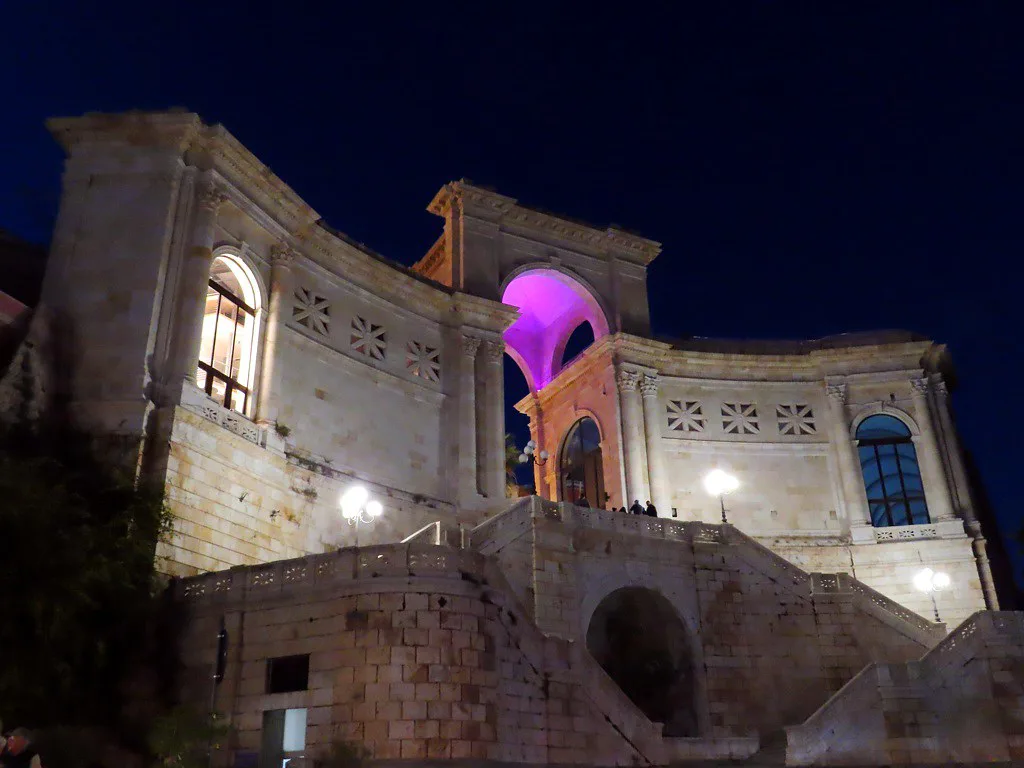
The vertical layout is the single most useful thing to understand before you plan. Castello sits above the harbour districts, connected by steep, cobbled lanes and stairways, with the Bastione di Saint Remy acting as a monumental link between levels. Build your day around climbs rather than criss-crossing them.
For a sense of what sits outside the headline sights, the hidden gems in Cagliari coverage is a good companion read before you lock the schedule.
Before You Go: Choosing Your Day-Two Direction
Day two has three honest shapes. Option A stays in the city with Poetto beach and the Molentargius-Saline wetlands. Option B takes a car south to the Roman site of Nora near Pula and the coves around Chia. Option C goes inland to Su Nuraxi at Barumini and the Giara di Gesturi plateau, which is a full day on the road.
Pick one. Combining Nora with Barumini, or Poetto with a Barumini round trip, produces a day spent mostly in a vehicle. If you have no car, Option A is the natural choice because a public bus network serves the beach.
Opening hours, entry fees and whether interiors are open on your dates are not fixed facts you should assume. Check the cathedral, tower, museum and archaeological sites directly with their operators or the city's tourism pages in the week before you travel, and note that some monuments keep separate opening arrangements from the churches beside them.
Day 1 Morning: Into Castello, the Cathedral and the Elephant Tower
Start early and climb into Castello on foot, entering through the streets that lead up from the lower districts. The reward is a dense grid of lanes, noble facades and sudden terraces. Wear shoes with grip, because polished cobbles are unforgiving in wet weather or with a rolling suitcase.
The Cathedral of Santa Maria is the quarter's centrepiece, with Pisan-Romanesque bones overlaid by later Baroque and Neo-Romanesque work and a crypt holding relics of Sardinian martyrs. Treat the building and its interior as two decisions: many churches allow visitors into the nave at no cost, while sacristies, crypts or museum spaces can be ticketed or opened only at set times. Confirm which applies on the day rather than assuming one ticket covers everything.
Nearby, the Torre dell'Elefante is recognisable by the small marble elephant carved into its stonework and offers one of the classic elevated views over the city and the Gulf of Angels. Towers of this kind typically cap the number of people allowed up at once, so ask about access and any entry charge when you arrive instead of budgeting from old guidebooks.
Day 1 Afternoon: The Bastione as Your Sunset Anchor
Make the Bastione di Saint Remy the fixed point that orders the rest of day one. Its broad terrace and cafes face the gulf, and the light at the end of the afternoon is the reason most people linger. Arrive with time to spare rather than racing up at the last minute.
Between the cathedral, the tower and the bastion, leave slack for the walking itself. A common mistake is stacking a museum visit into the same afternoon; if you want one, choose a single small collection and accept that you will skip something else.
The city's own site is worth a look for temporary exhibitions and cultural programming that may coincide with your dates, since the Comune publishes its Arte e cultura activity there. Seasonal events come and go, so check what is actually running rather than relying on a schedule you read months earlier.
Day 1 Evening: Eat Down the Hill in Stampace or Villanova
For dinner, walk down rather than chasing a beachfront table. Stampace and Villanova are the historic quarters below Castello, and both put you among everyday trattorias rather than a seasonal strip. This is also where you will find the traditional Sardinian pasta and seafood cooking the island is known for.
Expect to eat later than you might at home, and to book ahead for anything well regarded in high season. Specific restaurants, menus and prices change constantly, so verify current opening nights and reserve directly rather than planning around a fixed list.
Day 2, Option A: Poetto Beach and the Molentargius Wetlands
Poetto is Cagliari's long city beach, a broad sweep of pale sand backed by kiosks and a promenade, generally described as several kilometres long. Because it faces the gulf and sits right against the city, it suits a slow day with swimming, a walk along the shoreline and a view back towards the Sella del Diavolo promontory.
Directly behind the beach lies the Molentargius-Saline Natural Park, a former salt-working wetland of freshwater and salt basins known for its resident pink flamingos alongside herons, cormorants and stilts. Bring binoculars and go early or late for better light and quieter hides.
Cycling is the natural way to cover the park's marked trails, but do not assume a rental point or a fixed rate will be waiting: confirm on arrival whether bikes are available, what they cost and how far the permitted routes extend. The same caution applies to beach kiosks, sunbed hire and any boat trips, all of which are seasonal.
Public buses connect the centre with Poetto, so a car is unnecessary for this option; ask at your accommodation or check the local operator's current map for which service to take. Drivers should note that parking near the beach fills quickly on summer weekends.
Day 2, Option B: Nora and the Chia Coves by Car
Nora, on the Capo di Pula south of the city, is a Phoenician foundation that grew into a Roman town, and it is the rare archaeological site where the ruins sit directly against the sea. Expect mosaic floors, the remains of baths and temples, and a Roman theatre still used for performances. Plan a couple of hours on site rather than a quick photo stop.
Continue to Chia, where a chain of sandy bays runs along the coast. Su Giudeu is the best known, with shallow water and a long beach, while Cala Cipolla is a smaller cove among granite and juniper, a good second stop if parking is tight. Carry water and food, since beach bars operate seasonally.
This option needs a car. Road distances are modest on paper but the coast road is slow in summer traffic, so treat Nora and Chia as one day out rather than adding a third stop. Check the site's current opening days before you set off, because archaeological parks often keep restricted hours outside peak season.
Day 2, Option C: Su Nuraxi and the Giara di Gesturi
Su Nuraxi di Barumini is Sardinia's most important nuragic complex and a UNESCO World Heritage site, with a central Bronze Age tower ringed by walls and the stone huts of a village. Access to the excavated interior is generally organised through guided entry, so ask the operator about tour times and tickets when planning rather than arriving mid-afternoon.
Nearby, the Giara di Gesturi is a basalt plateau of cork oak woods and seasonal ponds where small wild horses roam. Sightings are never guaranteed, so treat the plateau as a landscape walk with a chance of horses rather than a certainty.
This is the longest of the three options and the least suited to a two-night stay unless archaeology is your priority. Driving yourself is the practical choice; a car also lets you stop at smaller nuraghe and villages on the way.
Transport Reality Check
The historic quarters are best done entirely on foot, and the climb between harbour level and Castello is the price of the views. For Poetto, local buses run between the city and the beach, though route numbers, frequencies and ticketing change, so confirm with the operator on arrival.
A car earns its cost only for Options B and C. For a city-only two days it is a liability, between limited parking in the centre and restricted traffic zones in the old quarters. If you do drive, check where you may legitimately park before setting out.
The regional tourism portal publishes pages on getting to Sardinia and moving around the island, which helps with the airport transfer and any onward plans. Nothing in this itinerary carries official endorsement from the city or the regional tourism board; both are simply orientation sources. Further visitor details appear in SardegnaTurismo - Sito ufficiale del turismo della Regione Sardegna.
Where to Base Yourself for Two Nights
Castello puts you inside the postcard but hands you a steep walk with every bag and every late dinner. Marina is level with the port, lively and close to restaurants and ferries, which suits short stays better than it suits light sleepers. Poetto trades atmosphere for direct sea access and a bus ride back into town.
For two nights, the deciding question is what you want outside your door at night. Choose Marina or the lower quarters for dining and easy returns, Castello for quiet streets and morning light, Poetto for water.
Budget, Booking and Pacing
Book your accommodation early in June through August and around any major event, and reserve one dinner. Leave everything else flexible: entry to individual monuments, museum add-ons and beach extras are better decided on the day, once you know opening hours and the weather.
Note that Cagliari's cultural calendar shifts year to year. Monumenti Aperti ran across Sardinia from 18 April to 8 November 2026, and Noi Camminiamo in Sardegna took place from 30 September to 4 October 2026, both now past. Check the current edition dates rather than relying on those.
Practical Pitfalls
Steep cobbles, midday heat and long beach walks are the three things that undo optimistic plans. Carry water, wear supportive shoes, and schedule the hill for the morning and the flat coast or buildings for the hot hours.
Summer beaches and parking fill early, and the wetlands are busiest at weekends. If your dates fall in high season, plan Poetto for a weekday morning and keep the afternoon loose. Anything advertised as current, from ticket prices to opening times to boat schedules, should be checked with the operator rather than assumed from an older guide.
Extending the Trip or Digging Deeper
With a third day, add Villasimius and the Capo Carbonara marine area, or take a wine-tasting stop in the hills around Serdiana. Both slot in better as an extra day than as an overloaded second one.
If you like the quieter side of the city, the Tuvixeddu necropolis and other overlooked corners deserve time; the hidden gems guide covers them without dressing them up as secrets.
Plan Your Visit
Two days in Cagliari come down to a single decision made early: hill and coast, or hill and ruins. Decide before you book accommodation, since base, transport and pace all follow from it.
Then verify the volatile details, including hours, entry fees, bus services and restaurant nights, close to departure and directly with each provider. The plan above is a structure; the specifics are yours to check. For related planning, see Cagliari 3-Day Itinerary: Two City Days, One Day Out.
Frequently Asked Questions
Is two days enough to see Cagliari?
Two days covers the Castello historic centre and either the Poetto coast with the Molentargius wetlands or one archaeology day trip. It is not enough for both Nora and Su Nuraxi, which sit in opposite directions and each take most of a day.
Is Cagliari walkable from the cruise port?
The port sits below the historic quarters, and the climb into Castello is on foot through steep cobbled lanes and stairways. The Bastione di Saint Remy helps link the levels, but travellers with limited mobility should plan shorter loops or use local transport for the climb.
What can you do for free in Cagliari?
Walking the Castello lanes, the terrace at the Bastione di Saint Remy, the Poetto shoreline and the public paths of the Molentargius-Saline park cost nothing to access. Church naves are often open to visitors, but crypts, towers and ticketed collections are separate, so confirm what is free on the day.
Should you choose Poetto beach or a day trip to Nora on day two?
Choose Poetto if you want an unhurried day without a car, with swimming and wetland birdwatching nearby. Choose Nora and Chia if you have a vehicle and prefer Roman ruins and cove beaches, accepting that the coast road is slow in summer.
Do you need a car for a two-day Cagliari itinerary?
No for the historic centre and Poetto, which are served on foot and by local buses. A car matters only for Nora, Chia, Su Nuraxi or the Giara di Gesturi, and central parking and restricted zones make it a burden for city-only days.
Is Cagliari worth visiting for tourists?
Yes, for the combination of a walled medieval quarter, a long city beach and accessible archaeology, all within a compact area. Plan around the climb and the heat rather than trying to see everything, and verify opening times before you commit to a site.
Sources
Continue exploring
More guides you'll find useful