Cagliari 3-Day Itinerary: Two City Days, One Day Out
A walkable three-day Cagliari plan: Castello and the cathedral, San Benedetto Market, Poetto or Molentargius, and a Nora or Chia day trip with practical pacing.
On this page
Cagliari rewards a short trip because the pieces sit close together: a walled hilltop district, a waterfront promenade, a market hall and a long beach all belong to the same city. The trade-off is terrain. Castello sits above the lower districts, so the order you visit things in matters more than the distance on a map. This plan is a suggested shape for a long weekend, not an official programme, and you can shift an afternoon without breaking the trip.
One detail to front-load: San Benedetto Market runs over two levels and is liveliest early, with the good produce and fish gone by lunchtime. Treat the market as a morning anchor on your second day rather than an afternoon stop. For opening times, ticket rules and transport, check each site's own page before you set out.
Why Three Days Suits Cagliari
A compact historic centre means you can cover the headline sights on foot, but the hills make a rushed day feel longer than it is. Splitting the city across two days leaves room for a market morning, a viewpoint, a church interior and a slow evening without cramming. The third day then goes to the coast or to archaeology outside the city.
Sardinia's regional tourism portal treats the island as a year-round destination, grouping places and events by month and season rather than as a summer-only proposition. That framing helps when you plan a long weekend outside high season: the city holds up, and a coast day depends more on weather than on the calendar. Further visitor details appear in SardegnaTurismo - Sito ufficiale del turismo della Regione Sardegna.
Before You Go: How the Old Town Is Layered
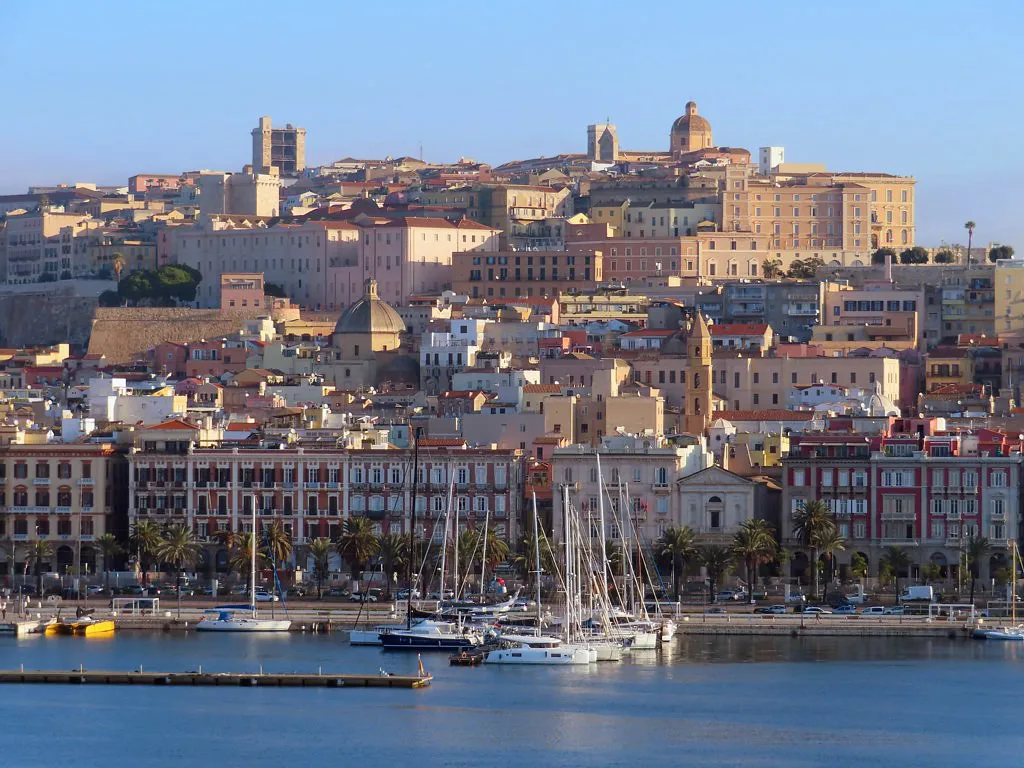
Cagliari's centre stacks vertically. Castello occupies the high ground behind pale limestone walls, with tight alleys and archways inside, while Bastione Saint Remy links that upper district to the lower city and the Marina area near the port. Walking orientation is easier once you accept that you will climb between levels rather than stroll flat.
Plan each day so the uphill stretch comes early and the descent comes later, ideally ending near the waterfront. Cobblestones and stairs are part of the experience, so wear shoes that handle them and keep afternoon plans light if the morning involved a climb. The city's official site is the place to check for civic notices, alerts and any municipal calendar items that might affect a visit. Further visitor details appear in Comune di Cagliari.
Day 1 Morning: Castello's Walls and the Cathedral
Start high. Enter Castello and give the morning to its lanes, bastions and rooftop views, then step into the Cattedrale di Santa Maria, whose Pisan-Romanesque front hides a Baroque interior and a crypt below. Treat the cathedral as a working church: cover shoulders and knees, and keep quiet when services are on. Check the cathedral's own notices for which parts are open on your date.
To find the cathedral and its neighbours without a car, look at the Cagliari attraction guides, which explain visiting each named site individually. Whether the crypt and sanctuary are open is a detail you should confirm at the entrance, and if a service closes part of the building, the surrounding streets still justify the climb. Keep the Torre dell'Elefante in reserve as a short add-on if the morning runs ahead of you. For wider planning, see Cagliari Attractions: Visitor Guides to 13 Sights.
Day 1 Afternoon: Down to Saint Remy and Along Via Roma
Descend to Bastione Saint Remy, the neoclassical terrace that connects Castello to the lower city. Its limestone arches and wide viewpoints make a natural pause between the hilltop and the port, and the promenade below often hosts exhibitions that add a reason to linger. The structure dates to the late nineteenth century, so it belongs to Cagliari's newer layer rather than its medieval one.
Finish with a slow evening along Via Roma, the palm-lined waterfront strip facing the harbour, where arcades and cafés make an easy end to the day. If you want to push beyond the obvious sights, look at the hidden gems in Cagliari, which list corners and smaller sites that reward an unhurried hour.
Day 2 Morning: Market First, Then the Amphitheatre and Gardens
Go to San Benedetto Market early. The hall spreads over two levels and fills with fish, pecorino, bottarga and produce, but by lunchtime the stalls wind down and the best of the day is gone. Arriving late narrows the experience to a walk-through rather than a proper look, so treat the market as your morning anchor.
From there, head to the Roman Amphitheatre, cut into the hillside and dating to the second century AD. A guided tour adds context that ruins alone do not give, but confirm current visiting arrangements on site or through the operator before building your morning around it. Then slow down in the Botanical Garden, where themed zones and thousands of plant species offer shade between sightseeing stops. For the practicalities of each, use the Cagliari attraction guides rather than relying on a general blog.
Day 2 Afternoon: Flamingo Flats or Poetto Beach
Choose one afternoon, not both. The Molentargius wetlands beside the city are the quieter option, with lagoon scenery and flamingos to watch at a distance, best with binoculars and patience. Poetto Beach is the opposite energy: roughly eight kilometres of sand where people swim, kite-surf and settle in for an aperitivo. The regional tourism portal also lists the Stagno di Cagliari among its naturalistic highlights, so the lagoon is a reasonable alternative to the beach when the wind picks up.
If wind or rain rules out the water, move the afternoon inland to the Basilica di Nostra Signora di Bonaria on its hill, where the story of a statue washed ashore in the fourteenth century sits alongside harbour views. Whichever you pick, leave the evening free rather than scheduling a second outdoor stop.
Day 3, Choice A: Nora and Its Seaside Archaeology
Nora, on the southwest coast, layers Phoenician origins with Roman baths, mosaics and an amphitheatre facing the sea, all in an open-air setting where waves form the soundtrack. It suits travellers who would rather read ruins than lie on sand, and beaches nearby let you combine the two if the weather holds. The regional tourism portal's Sardinia sections list Nora among the archaeology and coast options, but always check the site's own opening arrangements before travelling.
The Cagliari destination page does not publish a door-to-door transport schedule for Nora; the operator or the site itself is the place to confirm how to reach it. Ask your accommodation or the local tourist office how to get there, confirm the archaeological area's visiting arrangements, and budget the day around one main stop rather than several. Nora is also a natural stop when your accommodation shortlists options; the same page covers the surrounding coast.
Day 3, Choice B: The Chia Coast and Pula
For coastline instead of archaeology, head for Chia and its beaches, with Pula as a natural stop on the way. Pula is a small town with its own centre to wander, and the surrounding coast is the drawn-out reward. This choice trades historical depth for a slower day of swimming and shoreline walks.
As with Nora, the Cagliari page does not verify bus routes, train services or travel times, so do not copy a schedule from a blog. Confirm how you will get there and back with a current transport or tourism source, and keep the plan flexible enough that a change in the weather does not strand you.
How to Get Around the City
The central districts of Castello, Marina and Villanova are compact and manageable on foot, but expect hills and cobbles. Public transport and taxis exist for the further stretches, most usefully for reaching Poetto Beach rather than using them inside the centre. Build your day around walking order, not around maps that flatten the gradient.
For details on buses and local services, the Comune di Cagliari publishes municipal information, including mobility sections you can consult close to your travel date. For day trips, the regional tourism portal is also a sensible starting point for seasonal events and island-wide orientation rather than any single itinerary.
Where to Eat: Use Anchors, Not a Fixed List
Rather than committing to named restaurants from a blog, use two anchors. The San Benedetto Market area gives you a morning of food shopping and the chance to assemble a picnic, while the Marina district near the port offers a dense cluster of dining options for the evening. Both let you decide on the day and leave room for a long lunch if you are keeping the afternoon light.
One practical note: Italian restaurants tend to open for dinner after 7:30 pm, so plan an aperitivo rather than an early meal. Sardinian cooking rewards curiosity, from fregola with clams to pecorino and bottarga, and the market is the place to learn what to look for. The Cagliari hidden gems guide includes smaller food stops and market corners if you want to spread your eating across the day.
Small Decisions That Change the Trip
Dress is a real constraint in churches: cover shoulders and knees, and carry a light layer even in warm weather. Check opening arrangements for each church and monument the day before. The city's main page carries civic alerts and notices, but not one consolidated tourist timetable for every monument, so confirm with each site. Further visitor details appear in Comune di Cagliari.
Hill fatigue is the other variable. If the morning involved Castello's climb and the afternoon a beach, you have done enough; pushing a third stop into the evening rarely pays off. A three-day trip works because it leaves slack, not because it packs every hour.
Where to Stay for a Beach-First or Old-Town-First Trip
Staying in or near Castello or the Marina puts the historic sights, viewpoints and restaurants within walking distance, which suits a two-city-day plan. Staying near Poetto Beach flips the trade-off: beach mornings become effortless, but every visit to the old town involves a trip in. Neither source publishes a fixed transfer time, so choose according to how often you expect to go back and forth.
For a focus on the city's quieter corners, base yourself centrally and spend the spare hours on the hidden gems in Cagliari, which sit alongside the main sights rather than replacing them. Wherever you stay, confirm the location against your day-trip departure point before booking.
Plan Your Visit
Three days in Cagliari comes down to accepting the terrain and choosing one afternoon activity rather than stacking them. Two city days plus one day out gives you Castello, the market, a beach or lagoon and a coastline or ruins without rushing any of it.
Before you go, verify the details that change: opening arrangements for the cathedral, amphitheatre and archaeological areas, transport for the day trip, and any weather alerts a coastal plan depends on. The Comune di Cagliari's notices and the regional tourism portal are the sensible starting points. For related planning, see Cagliari in One Day: A Castello to Poetto Itinerary.
Frequently Asked Questions
Is three days enough for Cagliari?
Yes, if you split the time sensibly. Two days cover Castello, the cathedral, Bastione Saint Remy, San Benedetto Market and one of the afternoon options between Molentargius and Poetto. The third day goes to Nora, Chia and Pula, or a slower day in the city if the weather turns.
How walkable is Cagliari's historic centre?
The central districts of Castello, Marina and Villanova are compact and easy on foot in terms of distance, but Castello sits high above the lower city and the streets are cobbled. Plan the uphill stretch earlier in the day and end near the waterfront, and use transport for Poetto rather than the centre.
Should I choose Nora or Chia for a day trip from Cagliari?
Pick Nora if archaeology and an open-air seaside site appeal; pick Chia with Pula if you want coastline, swimming and a small town to wander. Confirm how to reach either destination with a current local source before travelling, since published routes and services change.
Sources
Continue exploring
More guides you'll find useful