
Two Days in Assisi: A Slow, Walkable Itinerary
A suggested two-day Assisi itinerary: basilica and town centre first, then Eremo delle Carceri and San Damiano, with walking notes and meal advice.
On this page
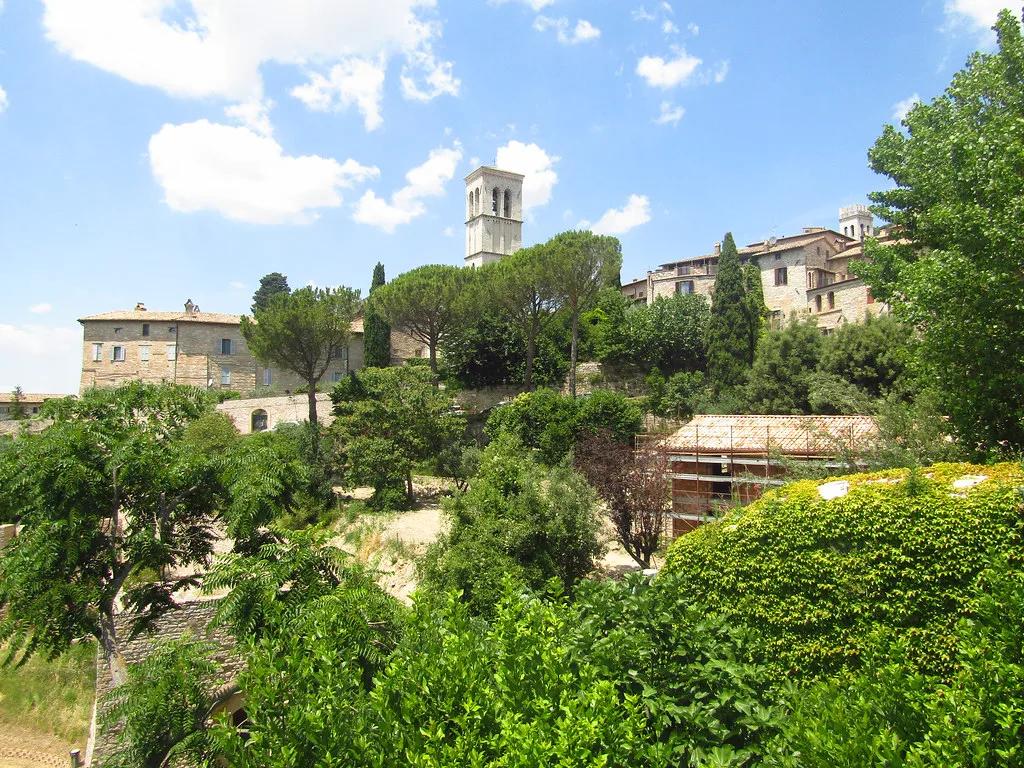
Assisi is small, but it sits on the slopes of Monte Subasio in Umbria, so a two-day visit is as much about gradients as it is about sights. One source describes the town as roughly 19 kilometres east of Perugia, on those same hillsides, which explains why short walks here can feel longer than the map implies.
The plan below is our suggestion, not an official programme: day one stays with the Basilica of San Francesco, the civic square and the fortress, while day two heads uphill toward Eremo delle Carceri and drops back through San Damiano. It is designed so the busier, monument-heavy stops do not swallow the whole weekend.
If you want to fill the gaps between major sights with quieter corners, keep the hidden gems in Assisi guide open alongside this plan. It works best as a supplement, not a replacement, to the main walk.
Orientation: A Hill Town, Not a Flat Grid
Assisi's medieval centre is built on rising ground below Monte Subasio, with the historic streets climbing and descending throughout the day. That geography is the single most useful thing to plan around, because a short distance between two churches can still mean a stiff flight of steps or a sloping lane.
A practical rule is to group stops by elevation and work with the land rather than against it. Wear shoes that grip stone, carry water on the uphill sections, and treat the middle of the day gently if the weather is warm. The town is compact enough that you will pass the same squares more than once.
A general guide to the city, such as Assisi Online, is useful for the wider map of churches, convents and civic buildings, and for checking the range of places to stay and eat in town.
Day One Morning: The Basilica of San Francesco
Begin day one at the Basilica of San Francesco d'Assisi, the town's defining monument and a UNESCO World Heritage Site. The complex is built on two levels, and visitors can see frescoes in both the Upper and Lower Churches, including the cycle of Saint Francis associated with Giotto.
Give the basilica a proper block of the morning rather than treating it as a photo stop. Note that the church itself and any separate museum or cloister areas are different questions, so check what is open and what requires a ticket on site or on the basilica's official information rather than assuming one entry covers everything.
After the basilica, walk down through the lower lanes toward the centre. This is the moment to slow down and let the town reveal itself; the first morning at the basilica is the busiest part of the two days, so it makes sense to get it out of the way early.
Day One Midday: Piazza del Comune and the Roman Forum
Piazza del Comune is Assisi's civic heart, framed by historic buildings including the Palazzo del Capitano del Popolo and the Temple of Minerva, a first-century BC Roman structure that still stands in the square. It is a natural pause between the basilica and the afternoon sights.
The Roman Forum archaeological site preserves ancient paving and building traces from the first century BC. It is compact and absorbing, and pairs well with lunch because the surrounding lanes have bakeries, cafes and trattorias within a short walk.
For lunch, think in categories rather than chasing a single best address. A bakery or cafe suits a light midday meal, while a trattoria or osteria is better for a sit-down plate of Umbrian cooking. The local food culture is noted for its organic and regional character, so menus built around local ingredients are a reasonable signal.
Day One Afternoon: Santa Chiara and the Rocca Maggiore
In the afternoon, head to the Basilica di Santa Chiara, dedicated to Saint Clare and holding her tomb, with artwork and frescoes inside. It sits in a different part of the centre from San Francesco, so plan it as part of a walking loop rather than a separate excursion.
Then decide about Rocca Maggiore, the medieval fortress dating from the twelfth century. The reward is a panorama over Assisi and the surrounding countryside, but the climb is genuinely uphill. This is the hardest effort of day one, so save it for cooler hours and skip it without guilt if your legs are done.
If you want to compare individual monuments before committing your afternoon, the Assisi Attractions hub gathers visitor guides to the main sights. Reading one page per site helps you decide where to linger and where an exterior look is enough.
Day One Evening: Eating and Sleeping by Category
Assisi has accommodation across the spectrum, from hotels in the historic centre to guesthouses, religious houses and agriturismi on the surrounding slopes. Staying in the centre removes an evening climb, while a rural stay trades convenience for quiet and valley views.
Dinner follows the same categorical logic. Trattorias and osterias in the centre suit a straightforward plate of pasta or cured meats, while wine bars and enoteche work for a lighter evening. Rather than chasing a single best address, choose by the walk back to your bed and the atmosphere you want.
Day Two Morning: Up Toward Eremo delle Carceri
Day two heads uphill and outward, toward the wooded slopes of Monte Subasio. Eremo delle Carceri is a monastery and hermitage in the forest above town, associated with the place where Saint Francis retreated to pray; visitors can walk through the woods and see the hermitage itself.
This is the calmer half of the itinerary. Start early to avoid the midday heat on the climb and to enjoy the forest before the day fills. The surroundings here are peaceful rather than monumental, which is precisely the contrast with day one. Confirm current access arrangements before setting out, since hermitage sites can adjust visitor access seasonally.
The walk out of town is part of the experience rather than dead time. Take water, allow for shade breaks, and turn around if the weather changes; there is no need for a summit mentality on a two-day trip.
Day Two Midday: San Damiano and the Descent
Coming back down, stop at San Damiano, the convent associated with Saint Clare and the early Franciscan story. It sits below the main town on the descent, which makes it a natural pause on the way back rather than a separate excursion from the centre.
This is where the second day's slower rhythm becomes obvious. Instead of queueing for major monuments, you are moving through smaller sites and olive-groved slopes. A simple lunch near the lower town or back toward the centre fits better than a formal sit-down, and the lanes reward exactly this kind of drifting.
Day Two Afternoon: Green Space or an Easy Return
If your legs allow, add the Bosco di San Francesco, a wooded area managed by the FAI just below the basilica, which offers shaded paths and a break from stone and crowds. It is a good counterweight to two days of churches and squares.
Otherwise, keep the afternoon light. Return to the centre for a slow coffee, revisit a favourite church interior, or simply enjoy the views from the upper lanes. Two days in Assisi do not need to be full days; leaving something unseen is the best argument for coming back.
Walking Logistics and What to Cut First
Layer the plan so the hardest climbs happen in cool hours: the Rocca on day one and the hermitage path on day two both belong in the morning or late afternoon. Cobbles are slippery when wet, and the cumulative up-and-down of the town is more tiring than the raw distance suggests.
If time or energy runs short, cut the Rocca and the fortress climb first, then trim the afternoon green space. Keep the basilica, the civic square and the hermitage, since those three carry the most distinctive parts of the Assisi experience. Taxis and local buses can shorten the approach to outlying sites, but check current services locally rather than relying on any fixed timetable.
If You Only Have One Day
A compressed version is genuinely possible: many guides consider Assisi feasible as a single day, concentrating on the Basilica of San Francesco, a walk through the medieval streets, Piazza del Comune, and, if time allows, a short trip to Eremo delle Carceri. What you sacrifice is the slow second half: the convents, the forest and the unhurried meals.
With one day, choose a hierarchy in advance: basilica in the morning, square and lunch at midday, Santa Chiara or the Rocca in the afternoon depending on your appetite for climbing. Book accommodation well ahead in peak seasons, when availability tightens and last-minute rates rise, as travel guides commonly advise.
Where to Go Next in Umbria
Assisi sits close to Perugia, which makes it an easy leg in a wider Umbrian route. Keep journey planning flexible and check current transport options locally rather than building the day around a single connection.
For more corners of the same town, browse the Assisi Attractions hub and the hidden gems guide before you go; both help you choose which sights deserve your time on a repeat visit. From there, Umbria's smaller hill towns make natural next stops.
Plan Your Visit
Two days in Assisi work best as a slow climb: basilicas and the civic heart first, then the woods and hermitage above town. The plan above is a suggestion to bend around weather, energy and opening arrangements, not a fixed schedule. Check current access, tickets and any seasonal changes before you travel. For related planning, see Basilica di Santa Maria degli Angeli Assisi: Visitor Guide.
Frequently Asked Questions
Is two days enough for Assisi?
Yes, two days give a comfortable pace: one day for the Basilica of San Francesco, Piazza del Comune, Santa Chiara and the Rocca, and one for the Eremo delle Carceri and San Damiano. That split keeps the busier monuments separate from the quieter hillside, and the plan here is a recommendation rather than an official itinerary.
Can you visit Assisi in one day instead?
It is possible and commonly done: concentrate on the basilica, the medieval lanes and Piazza del Comune, and add the hermitage only if time and energy allow. You will trade away the slower second half — the convents, the forest paths and unhurried meals — so decide in advance which sights matter most to you.
How much walking is involved in an Assisi itinerary?
Expect constant short climbs and descents on cobbles rather than long flat stretches, because the town sits on the slopes of Monte Subasio. Group stops by elevation, wear shoes with grip, and put the Rocca and the hermitage path in cooler hours. Exact distances and times vary by route, so judge them on the ground.
Sources
Continue exploring
More guides you'll find useful





