Basilica di Santa Maria degli Angeli Assisi: Visitor Guide
Plan a visit to the Basilica di Santa Maria degli Angeli in Assisi, the vast church wrapped around the tiny Porziuncola chapel, with practical orientation tips.
On this page
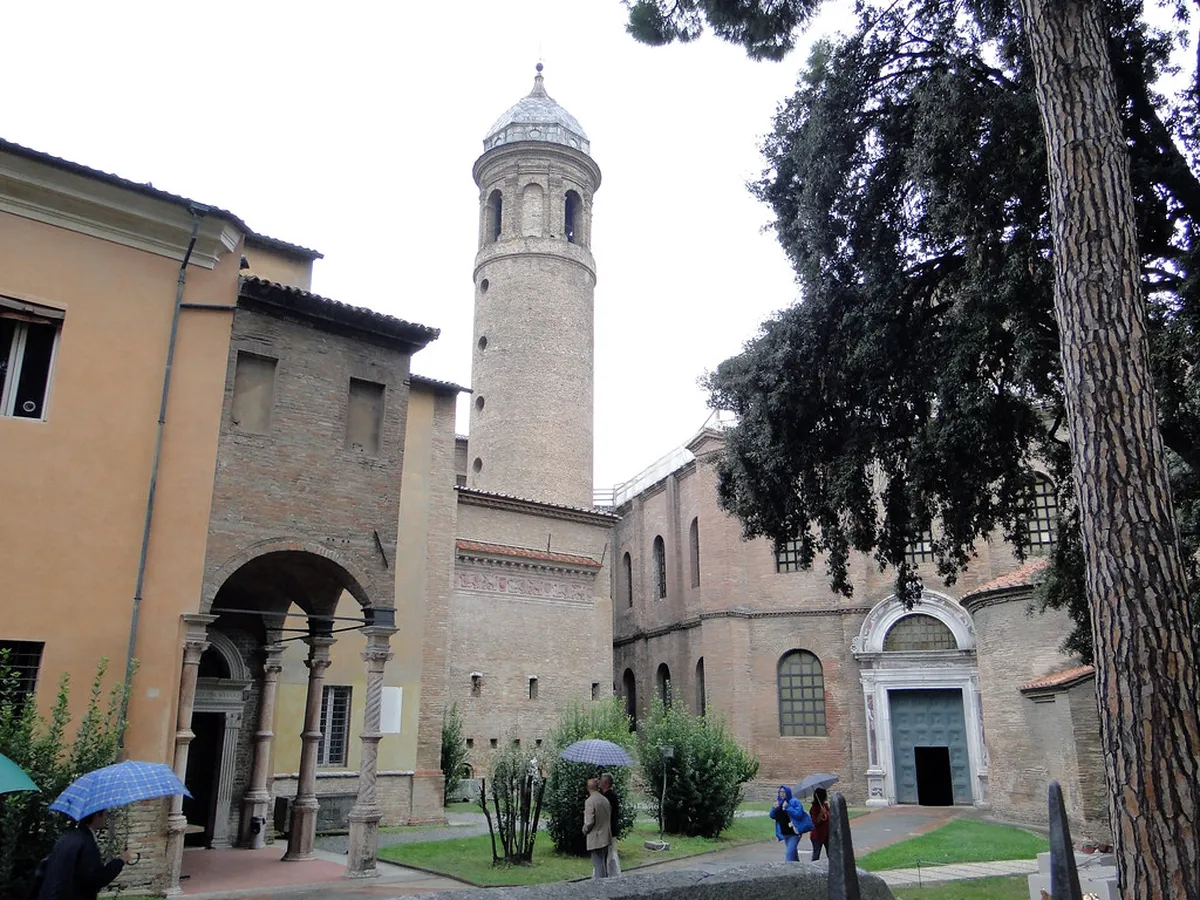
Almost everything about the Basilica di Santa Maria degli Angeli is a study in scale. A monumental church in the flat settlement below Assisi shelters a chapel so small that you can circle it in moments, and that contrast is the reason the visit stays with people. The building exists to protect the fragile room at its centre, not the other way around.
The site sits in Santa Maria degli Angeli, the modern town at the foot of the hill, rather than inside Assisi's walled centre. That geography shapes how you plan the day: many travellers pass through on the way up or down the hill, and a little thought about sequencing saves a lot of walking. Use this guide to decide what to see first, how long to linger, and which corners of the complex are easy to overlook.
Why the Scale Feels Backwards
A reference guide describes the Porziuncola as measuring just 7 by 4 metres, a tiny space with a small apse. Standing inside the vast basilica, that measurement explains everything: the church was built as a protective shell for one of the most venerated rooms in the Franciscan world. Treat the size difference as the organising idea of your visit rather than a curiosity, and the architecture stops feeling odd.
Where the Basilica Sits and Why It Matters
The basilica stands in Santa Maria degli Angeli, the flat settlement at the foot of the hill below Assisi's historic centre, where it works well as a first or last stop of the day. Arriving by train, the site is practical to see before heading uphill; arriving by car, it can be easier to stop here before dealing with the restricted traffic zones and parking areas of the centre. That flexibility is the main practical argument for putting the basilica at the edge of your itinerary rather than in the middle. Further visitor details appear in Assisi Religious Sites Guide for First Visits - Umbria Tours.
One source notes that the area around the Porziuncola originally lay outside the city limits. That history is worth keeping in mind as you cross between the modern town and the walled centre, because the two feel like separate places with separate rhythms. For a broader view of how this site fits alongside the town's other monuments, the Assisi Attractions hub maps the major sights and their relative positions.
The Porziuncola: The Tiny Chapel at the Heart
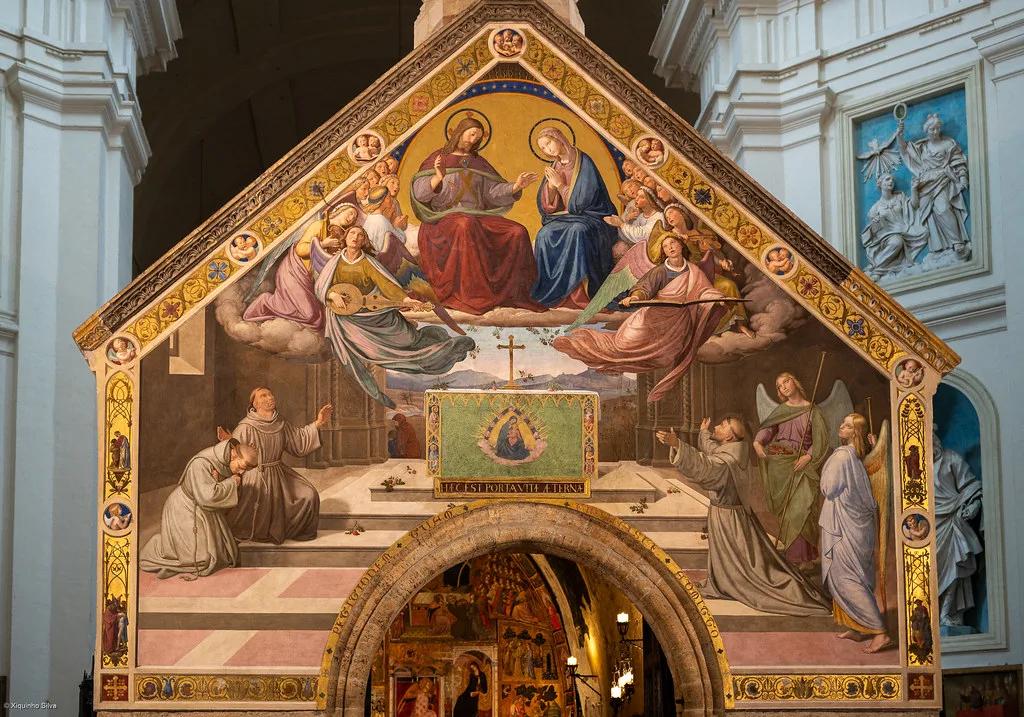
The Porziuncola is the small chapel enclosed within the basilica, and it anchors the Franciscan story. According to the cited guide, the chapel became Francis's favourite place after he repaired it, and it was there that Clare renounced worldly goods and embraced poverty. Francis died on the evening of 3 October 1226, a date that gives the site its enduring pull for pilgrims.
Look at the entrance door, which is noticeably out of proportion with the tiny building. The same guide records that it was widened in 1900 to cope with growing crowds of pilgrims seeking the plenary indulgence associated with entering the chapel. That detail reframes the whole room: it is not a museum piece but a working pilgrimage destination, and the queue at the door is part of its history.
The Transito Chapel and the Rose Garden
Inside the basilica, a chapel marks the spot where the convent infirmary once stood, precisely where Francis died in 1226. The Cappella del Transito is easy to walk past when you are focused on the Porziuncola, so deliberately look for it and give it a few quiet minutes. It is one of the places where the complex's history feels most immediate. Further visitor details appear in Basilica of Santa Maria degli Angeli - Assisi, Italy - ItalyGuides.it.
Beyond the cloister lies the rose garden, tied to a tradition about Francis punishing his body by rolling in the thorns, which miraculously disappeared as they touched him. Treat the story as tradition rather than verified fact, and enjoy the garden as a breathing space away from the crowds. This is the corner to save for last, when the main flow of visitors has moved on.
Reading the Building Itself
The basilica was designed by Galeazzo Alessi in collaboration with Vignola and has a plan of three naves. Despite its size, the style stays deliberately essential, directing attention toward the artworks inside rather than to the shell around them. Understanding that intention makes the interior legible: the architecture is a frame, and the Porziuncola is the picture.
A gold statue of the Madonna stands on top of the church, visible against the sky from the piazza outside. Notice it on arrival as a way to fix the building in your mind before you go in, then look again as you leave. Outside, the church's role in civic and religious life shows in the piazza, which also hosts events and pacifist gatherings linked to Assisi's ecumenical reputation.
Arriving by Train, Car or on Foot
Because the basilica sits in the flat town rather than the hill centre, the arrival method changes the order of your day. Travellers arriving by rail can reasonably see the complex before climbing to Assisi, since the station is on this lower ground. Drivers may find it simpler to stop here before navigating the centre's traffic restrictions and parking areas. Confirm current transport options and any local access rules with the tourist office before you travel, as these details change.
Walking down from Assisi's centre is feasible but involves a real descent and a steep climb back, especially if you add San Damiano on the way. For visitors with limited mobility, young children, or a full day of sightseeing, a taxi is the more sensible choice for the return leg. Plan the downhill direction first and treat the uphill return as the part that needs energy or a vehicle.
Respectful Visiting: Dress and Atmosphere
This is an active place of worship, not only a monument, so dress respectfully and keep voices low, particularly in the major basilicas. Shoulders and knees covered is a sensible default in Assisi's churches, and it is advice rather than a published regulation. Access can also be adjusted during services, feast days or special celebrations, so build some flexibility into your timing.
If you want a calmer experience, morning is often the better window, and the same holds for the complex as a whole. Check current opening times and any service-related restrictions directly with the basilica or the local tourist office before setting out, since the organisers publish those details and they are not fixed here. The Assisi tourism portal lists contact details for the local tourist information service.
If Your Time Is Short
With only a few hours, the choice between the Basilica di Santa Maria degli Angeli and the Basilica of St Francis is the main decision. St Francis's Basilica holds the saint's tomb and a celebrated fresco cycle, and the Upper Basilica is filled with light and art, so allow at least an hour and a half there if art is a priority. Santa Maria degli Angeli offers something different: the deepest connection to Francis's early community and the place where he died.
For a fuller picture of Assisi's quieter corners beyond the headline churches, the guide to hidden gems in Assisi is a useful companion when you are deciding where to spend a spare hour.
Pairing the Basilica With the Historic Centre
If you have a full day, the sensible sequence is to add the Cathedral of San Rufino, Chiesa Nuova and San Damiano to the Basilica of St Francis in the centre. San Rufino's Romanesque facade is among the finest in Umbria, and both Francis and Clare were baptised there; the Basilica of St Clare holds the Crucifix of San Damiano and offers one of the most peaceful pauses in town. The basilica at the foot of the hill then becomes either the opening or closing chapter rather than a detour.
Keep in mind that Assisi is steep and paved with stone, so comfortable shoes matter more than an ambitious checklist. Leave some unplanned time after the church visits to sit on a bench overlooking the valley or wander the quieter edges of the centre. The town rewards a slower pace, and the basilica's scale contrast lands better when you are not rushing between sites.
Plan Your Visit
The Basilica di Santa Maria degli Angeli works best when you let its odd proportions guide you: arrive, notice the enormous shell, then find the tiny chapel it was built to protect. Add the Transito chapel and the rose garden, and allow a little time outside in the piazza. Before you go, confirm current opening times, service closures and transport options with the basilica or the Assisi tourist office, since those details are published locally and change through the year. For related planning, see Two Days in Assisi: A Slow, Walkable Itinerary.
Frequently Asked Questions
Is the Porziuncola inside the Basilica di Santa Maria degli Angeli?
Yes. The basilica was built around the small chapel and encloses it completely, so you see the Porziuncola after entering the church. The contrast between the tiny chapel and the vast building around it is the defining feature of the visit, and it explains why the church's style stays so plain.
Can you walk from Assisi's historic centre to the basilica?
You can walk down from the centre to the flat town where the basilica stands, but the return leg is uphill and genuinely tiring, and it becomes harder if you add San Damiano on the way. Many visitors take a taxi back up, particularly with children or limited mobility. Check local transport options before you set out.
How much time should you allow for the basilica and the Porziuncola?
No official duration is published, so treat this as a personal suggestion rather than a rule. Most people need a modest amount of time for the church, the chapel, the Transito chapel and the rose garden, and those interested in the Franciscan story will want longer. Build in slack in case services restrict access to parts of the complex.
What is the Transito chapel and where is it?
It is a chapel inside the basilica marking the place where the convent infirmary stood and where Francis died in 1226. It is easy to miss when your attention is fixed on the Porziuncola, so look for it deliberately and give it a few quiet minutes before moving on to the rose garden.
Should you visit Santa Maria degli Angeli or the Basilica of St Francis first?
Let your arrival method decide. If you come by train, the basilica at the foot of the hill is practical to see before heading up; if you drive, stop here before tackling the centre's traffic restrictions and parking. Either way, allow at least an hour and a half at the Basilica of St Francis if its frescoes matter to you.
How do you reach the basilica if you arrive by train?
The basilica sits in the flat settlement of Santa Maria degli Angeli below Assisi, which makes it a natural first stop when arriving by rail, before continuing uphill to the historic centre. The organisers and the local tourist office publish current transport details, so confirm routes and any access restrictions before travelling rather than relying on outdated guidance.
Sources
Continue exploring
More guides you'll find useful