
Free Things to Do in Assisi: Churches, Squares and Walks
A slow, low-cost guide to free things to do in Assisi: the historic centre, Piazza del Comune, Roman remains and church exteriors, plus honest trade-offs.
On this page
Assisi sits on the western slope of Monte Subasio, looking over the valleys of the Chiascio and Topino rivers, and that geography shapes any low-cost visit. The streets climb and switch back, so the best free experiences are often the ones you reach on foot rather than the ones you pay to enter.
The city is closely tied to Saint Francis, who lived and died here, and to Saint Clare, whose story runs through the same streets. That legacy fills the old town with churches and squares you can approach from the outside without spending anything.
This guide treats free as a practical category: public lanes, civic squares, church exteriors, views and the general atmosphere of the historic centre. It deliberately avoids claiming which interiors are free or paid, because those arrangements change and are best confirmed at each site or at the tourist office in Piazza del Comune.
What Is Genuinely Free in Assisi
Start with the distinction that saves the most confusion: streets, piazzas, gates and the townscape itself are public space, while museums, cloisters and many interiors are separate paid experiences. A single ticket for one site does not normally open every door in a complex, so decide site by site rather than assuming one purchase covers a whole basilica.
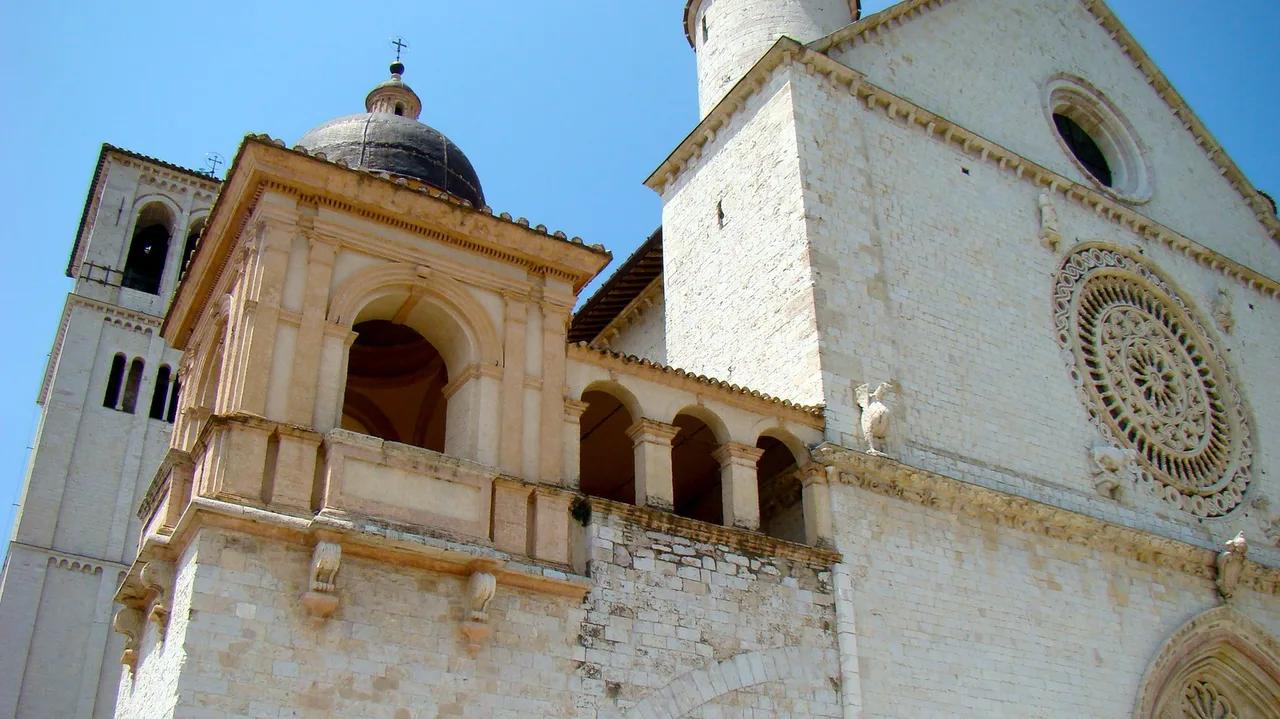
Church exteriors and the squares in front of them are part of the everyday city, and that is where much of Assisi's atmosphere lives. Standing in front of the Basilica of San Francesco, Santa Chiara or the Cathedral of San Rufino costs nothing, and the facades themselves carry centuries of history worth reading before you decide whether to go further inside. For wider planning, see Assisi Attractions: Visitor Guides to 7 Sights.
Where the line falls inside a church is exactly the kind of detail you should verify on arrival rather than trust to an old blog post. Ask at the entrance, check notices at the door, or stop at the tourist information point in Piazza del Comune, 22, which the city portal lists as the place for visitor information.
Budget for the fact that free sightseeing still has costs in time and energy. The lanes are steep, the distances between the main basilicas are longer than the map suggests, and a slow day covering the centre on foot can be more tiring than one paid museum visit.
Wander the Historic Centre and Via San Francesco
The old town is compact enough to explore without a plan, and that is part of its appeal. Via San Francesco runs through the heart of the centre toward the basilica, lined with shops, doorways and side lanes that reward wandering rather than rushing. ItalyGuides lists the street, the gates of Porta Nuova and Porta San Francesco, and the Loggia of the Comacini Masters among the city's landmarks.
The gates are a useful mental map: Porta Nuova and Porta San Francesco mark entries into the walled centre, and once inside you can loop between churches and squares without needing transport. Wear shoes that handle cobbles and steps, and keep the climb in mind when planning how much you want to cover before lunch.
The car-free feel of the historic lanes makes slow walking the default mode, and that suits a free day. Pick a direction, follow the stone streets uphill, and let the views between buildings do the work rather than chasing a checklist.
Piazza del Comune and the Temple of Minerva
Piazza del Comune is the civic heart of Assisi and one of the easiest free stops in the city. The square brings together the Palace of the Priors, the Palazzo del Capitano del Popolo and the Temple of Minerva, a Roman facade that survives in the middle of the medieval townscape.
Treat the Temple of Minerva as something to read from the street: columns, pediment and the way the ancient front has been absorbed into later buildings. ItalyGuides notes that the square also holds the Palace of the Priors and the Palazzo del Capitano del Popolo, so a single pause here covers several layers of the city's history at once.
This is also the natural place to sit, rest and reset before climbing again. Cafes surround the square, but you are not obliged to buy anything to enjoy the space, and the tourist information point nearby makes it a sensible first stop for maps and current notices.
Roman Assisi Seen From the Street
Assisi's Roman past is not confined to a single ticketed monument. ItalyGuides describes an amphitheatre from the first century BC whose structure is not completely visible because medieval houses were built into its perimeter, leaving the original plan readable in the elliptical arrangement of the buildings around it.
Because those buildings are private homes, the amphitheatre is not open for visits, but walking the surrounding streets is free and worthwhile. You are reading urban form rather than entering a site, so approach it as a short detour with low expectations of signage and a high payoff in understanding how the city layers its centuries.
A travertine arch from the Roman theatre also survives, and the Temple of Minerva in Piazza del Comune gives you a third piece of the ancient city. Together these fragments make a free Roman thread through the centre, provided you accept that you are looking at remains from outside rather than touring excavated interiors.
Rocca Maggiore: The Hill and the Views
The Rocca Maggiore sits on a hill above the city, and ItalyGuides records that the fortress dates to the early Middle Ages, was destroyed in a revolt in 1200 and was rebuilt by Cardinal Albornoz in 1356. Treat the climb and the views as the free part of the outing and the fortress itself as a separate decision.
Walking up gives you the best sense of Assisi's setting on the slopes of Monte Subasio, with the valleys opening below. Set aside enough time for the ascent and descent, carry water, and turn back without regret if the gradient or the weather makes it unpleasant; the lower viewpoints still reward you.
Do not assume the hill walk and the fortress share the same access arrangements. Check the entrance and any conditions on the day, and keep the distinction clear so that a free walk does not turn into an unplanned paid visit.
Church Exteriors and Basilica Squares
The Franciscan and Clarissan churches anchor the city, and their squares and facades are free to approach. The Basilica of San Francesco, the Basilica of Santa Chiara, the Cathedral of San Rufino and Santa Maria degli Angeli below the old town all appear in ItalyGuides' list of Assisi's principal sites, alongside smaller churches such as San Damiano and Santa Maria Maggiore.
Approach each one as an exterior first: the setting, the stonework and the way the building meets the street or square. At Santa Maria degli Angeli, for example, the small Porziuncola church survives inside the much larger basilica, and ItalyGuides notes it as the place where the Franciscan community settled.
Once you step inside, rules and arrangements vary, and the honest approach is to check at each door rather than carry assumptions from the previous church. Some interiors are quiet places of worship with their own expectations of behaviour, which matters as much as any ticket question.
Dress respectfully and keep your voice low in churches whether or not you pay for anything. The squares outside are where you can linger, eat a picnic and watch the city move, and that freedom is the most reliable free pleasure in Assisi.
The Franciscan Landscape on Foot
South of the old town, the Church of San Damiano sits in the landscape where Clare's community took shape, and ItalyGuides describes it as the small church where Clare and her companions began the Poor Clares. The walk down and back is part of the experience, so allow time for the gradient in both directions.
Higher up, the Eremo delle Carceri sits at the foot of Monte Subasio, and ItalyGuides records that Francis often withdrew there in search of solitude. The wooded slopes above Assisi are the frame for these walks, but do not assume that paths, hermitage grounds or park land carry any particular access or pricing arrangement; check locally before relying on it.
Walking in the Subasio landscape is the slowest and most satisfying free activity in the area, provided you respect distance and weather. Carry water, wear proper shoes, and treat the countryside as working land rather than a theme park.
Honest Trade-Offs: Crowds, Hills and Time
The main Franciscan sites draw pilgrims and tour groups, and the busiest hours around the basilica squares can make quiet contemplation difficult. Plan the popular stops earlier or later, and use the middle of the day for lesser-visited lanes and piazzas instead.
Assisi's gradients are real: the climb from the lower town to the Rocca, or the walk down to San Damiano and back, costs energy that a flat city would not. Build rests into the day and accept that a free itinerary can be physically harder than a paid one.
Add-ons are where budgets quietly expand: guided tours, audio guides, shop purchases and cafe stops. Decide in advance which of these you want, and treat everything else as optional so that the free day stays free in practice as well as in theory.
Suggested Half-Day and Full-Day Free Routes
For a half day, a suggested route is to start at Piazza del Comune, read the Temple of Minerva and the surrounding palaces, then walk Via San Francesco to the Basilica of San Francesco and finish with the exterior and square. This route is compact, mostly downhill in one direction, and leaves the afternoon open for a rest or a single paid interior if you choose.
For a full day, add the Roman thread through the amphitheatre lanes and the theatre arch, then climb toward the Rocca Maggiore for the valley views before descending to San Damiano. Keep the order flexible and drop the climb if the weather turns; the free day should not become a forced march.
If you have only one day, choose the centre and one outlying walk rather than trying to cover everything. The Basilica of San Francesco, Piazza del Comune and the lanes between them give you the essence, and a single hill walk adds the landscape that makes Assisi distinctive.
Practical Notes Before You Go
Use a paper or offline map, because the lanes twist and phone signal is not guaranteed in every corner. The city portal Assisi Online groups practical sections on parking, traffic restrictions, buses and reaching Assisi by train or plane, which is useful for planning the arrival before you start walking.
Treat all opening hours, ticket arrangements and event dates as things to confirm rather than facts to assume. The city portal maintains a news and events section, and the tourist office in Piazza del Comune can tell you what is actually happening during your stay.
For context on how much the city rewards slow exploration, a longer planning read on lesser-known corners helps set expectations. Our guide to hidden gems in Assisi pairs well with this free-focused route, and similar budget thinking applies if you are comparing Italian cities and want ideas on free things to do in Florence.
Pair a Free Day With One Paid Interior
The best value in Assisi is not a single attraction but the combination of free atmosphere and one carefully chosen paid interior. Spend the morning on the lanes, squares and exteriors, then put your budget into the one interior whose art or history matters most to you.
That approach keeps the day slow and affordable while still giving you depth. Confirm current arrangements at the door or at the tourist office, and let the city's steep streets set the pace rather than a fixed checklist.
Frequently Asked Questions
What can you see in Assisi for free?
Public streets, piazzas such as Piazza del Comune, church exteriors, gates and viewpoints are the reliable free experiences. Roman remains such as the amphitheatre perimeter and the theatre arch can be read from the street, though the amphitheatre buildings are private homes and not open to visit. Check at each church entrance for current interior arrangements.
Is the historic centre of Assisi walkable on a budget?
Yes, the walled centre is compact and best explored on foot, with Via San Francesco linking the main squares and churches. The trade-off is gradient: the lanes climb, and the walk to the Rocca Maggiore or down to San Damiano adds real effort. Wear supportive shoes and build in rests.
Which parts of Assisi's church sites are free to enter?
Exteriors, squares and the public space around the basilicas are free, but arrangements inside individual churches vary and can change. Rather than rely on secondhand claims, ask at the entrance or stop at the tourist information point in Piazza del Comune, 22, and follow notices on site.
Can you see Roman remains in Assisi without buying anything?
You can see the Temple of Minerva facade in Piazza del Comune, the elliptical footprint of the amphitheatre beneath medieval houses, and a surviving travertine arch from the theatre. These are street-level encounters rather than tours of excavated interiors, so expect to read the city's layers from outside.
How long do you need for a free walking day in Assisi?
A suggested half day covers Piazza del Comune, Via San Francesco and the exterior of the Basilica of San Francesco comfortably. A full day lets you add the Roman lanes, the climb toward the Rocca Maggiore and the walk to San Damiano, with time to rest between climbs.
What should you skip if you only have one free day in Assisi?
Skip trying to reach every church and hill in one day. Prioritise the historic centre, one basilica exterior and one walk, and drop the Rocca climb if weather or energy is short. Fewer stops with unhurried time usually beat a rushed circuit.
Sources
Continue exploring
More guides you'll find useful





